
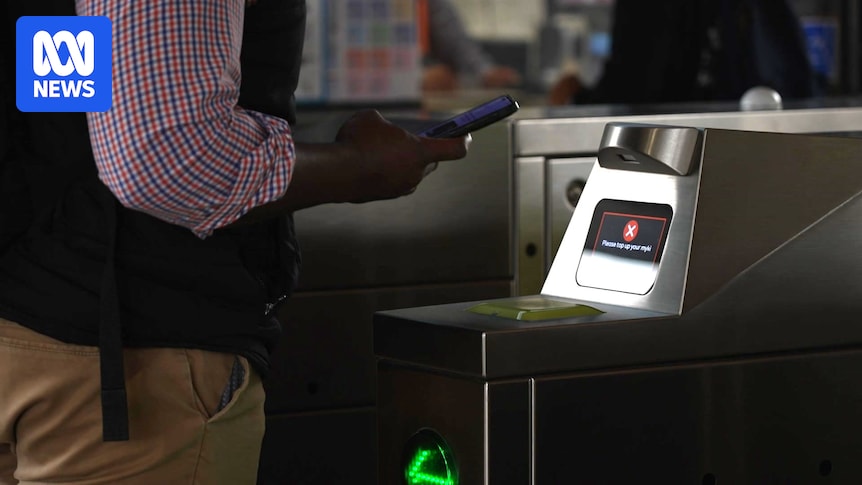
It is “unclear” whether Victoria’s long-awaited overhaul of myki ticketing is delivering the state value for money, with the budget and deadline for the project to deliver ticketless travel blowing out due to government failures, Victoria’s financial watchdog has found.
In 2023, the state inked a $1.7 billion deal with US technology firm Conduent to overhaul and run public transport ticketing, including setting up tap-and-go payments, which are common around the world.
But the Victorian Auditor-General’s Office found the Department of Transport was unable to demonstrate value for money.
“Overall, value for money for this investment is unclear,” auditor-general Andrews Greaves wrote in a report that was tabled in parliament.
He said the transport department did not have a proper benefit management plan, and had used anecdotal evidence from New South Wales to estimate tap-and-go payments would reduce fare evasion by 35 per cent and reduce concession fraud by 50 per cent.
He also found that while the project was on track to meet a “reset” 2028 deadline, there were many future risks that the transport department had yet to plan for.
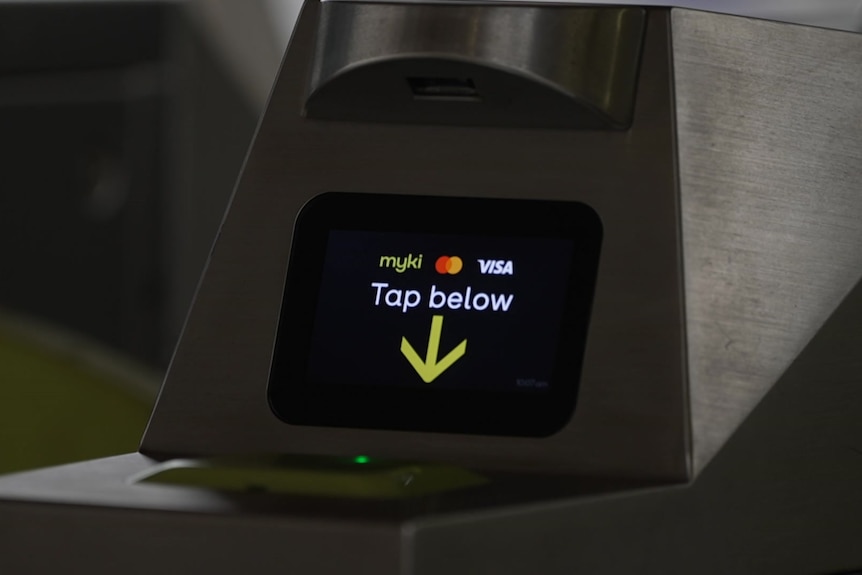
A trial of tap and go ticketless travel began on Monday on the Craigieburn and Upfield rail lines in Melbourne, and the Ballarat and Seymour V/Line routes in regional Victoria. (ABC News)
Tap-and-go payments allow commuters to use credit cards or phone payments instead of tickets.
A trial of the technology began on four lines this week and is only available for full fares.
Under the Conduent contract, the state wants concession fares to be available for tap-and-go travel.
Concession holders make up a third of all passengers.
This is a complex process and is not due to be rolled out until 2027.
But work on the project has been paused while new government policies, such as free travel for teenagers, are considered.
Mr Greaves’ report found the total project cost would be $2.8 billion over 15 years.
Schedule for delivery declared ‘unrealistic’
The project’s budget has already blown out by $136 million and the deadline delayed by 18 months over disputes between Conduent and the transport department.
These could have been avoided, Mr Greaves’s report said.
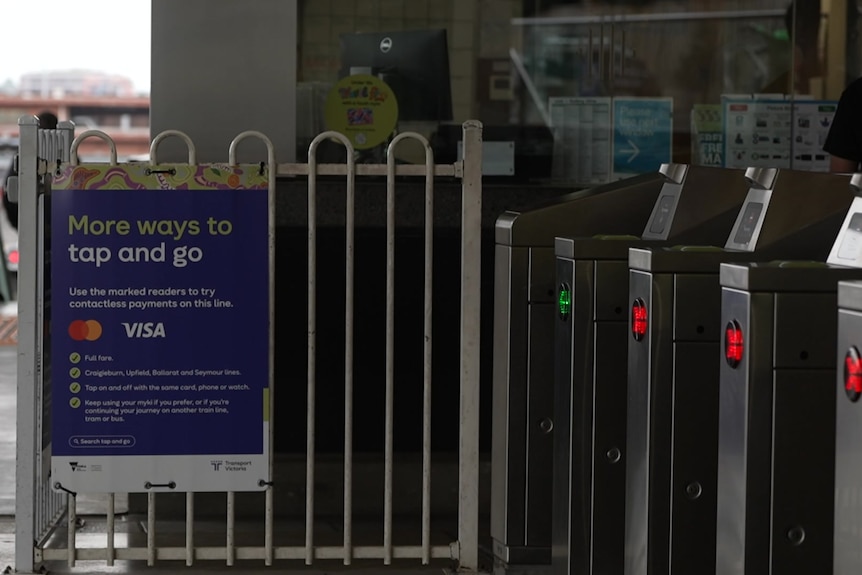
There’s been a $136 million budget blowout for the delayed roll out myki credit card and phone payments. (ABC News)
He said the transport department knew there were risks about intellectual property from the previous myki provider and that Conduent’s “delivery schedule was overly optimistic and did not contain enough detail”.
“Ultimately, the schedule was proven to be unrealistic ” he said.
The report also warned the state government had not planned for future risks in the roll out of concession fares and ticketless travel into regional and rural Victoria, which is due by 2028.
The appointment of Conduent in 2023 attracted criticism at the time, with concerns raised over its international track record.
Mr Greaves found that while the tender process for the contract was effective, the department failed to appoint a probity auditor and instead appointed a probity advisor.
“This probity advisor attended all key meetings and managed potential conflicts of interest and other probity issues throughout the procurement process,” the report found.
“Because they gave advice on aspects of the procurement, they were not independent and did not perform the same role as a probity auditor.”
The state government said delivering a new ticketing system was complex.
“International experience shows major upgrades to ticketing systems usually take around four years — as was the experience in Sydney,” a spokesperson said.
“We’re delivering the projects Victorians need — we’re also making it easier for people to catch public transport.”
Shadow Transport Minister Matthew Guy said Victorians had every right to be concerned about the government’s spending.
“There’s lack of probity on building sites, there’s lack of probity on the way the government operates and now again on the ticketing system upgrades,” he said.
“This is another billion dollars that the government has spent but we’re not sure what the outcome is or will be, it’s not on time, it’s not on budget and it’s not going to be.”