
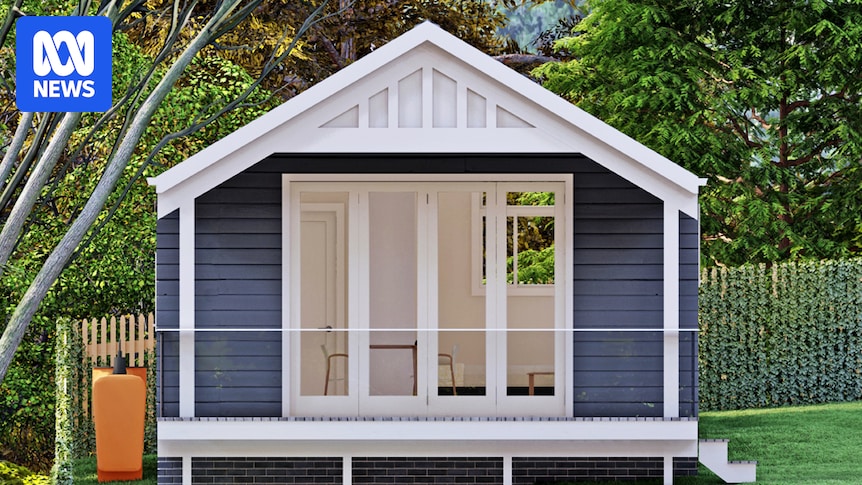
An urban planning expert says Tasmania’s plan to increase the size of granny flats will improve housing affordability, as the purpose of second dwellings changes across the country.
Tasmanians will soon be able to build second dwellings that are 50 per cent larger than the current size, with the allowance increasing from 60m2 to 90m2.
The state’s Housing and Planning Minister, Kerry Vincent, said this increase would support families to build medium-density housing more easily.
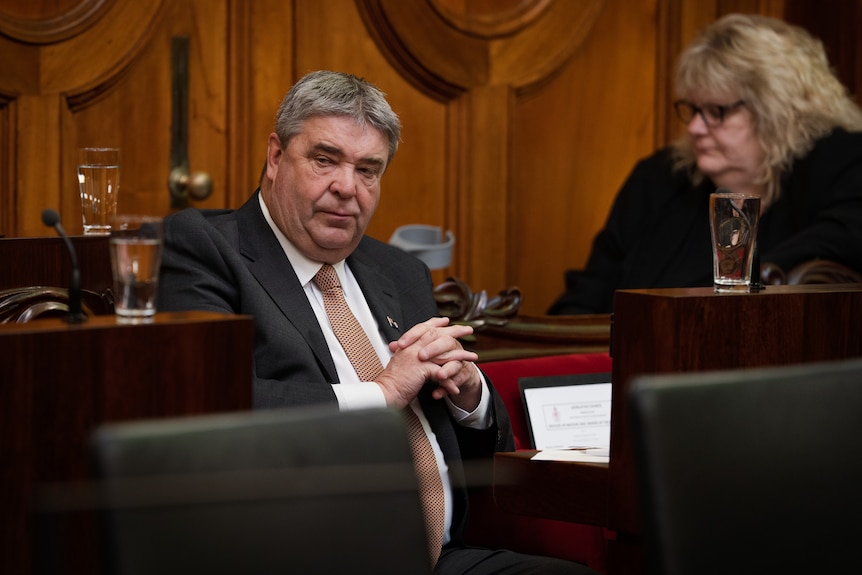
Tasmanian Housing and Planning Minister Kerry Vincent says the increase in size will allow families to embrace medium density living. (ABC News: Simon Farrell)
“It’s a better use of the land, higher density, and able to cater for children or family members still being able to live in the vicinity of the family unit,” Mr Vincent said.
Urban planning researcher from Griffith University, Dr Heather Shearer, said this was a very good move from the Tasmanian government, and other states should follow suit.
“It will go a reasonable way of alleviating some of the housing affordability issue without building high rises everywhere,” Dr Shearer said.
“It’s a nice, sensible way of increasing density in a gentle way.”
She said the traditional stereotype of a “dependent family member”, such as a granny living in a family’s second dwelling, was changing.
“It’s extraordinarily popular for people to, whether it’s their children or whether it’s a young family or whatever, to stay on the same property.”
She said by allowing these dwellings to be bigger, it would open up their use to more people.
“If you talk about 60 square metres, it’s quite small.”
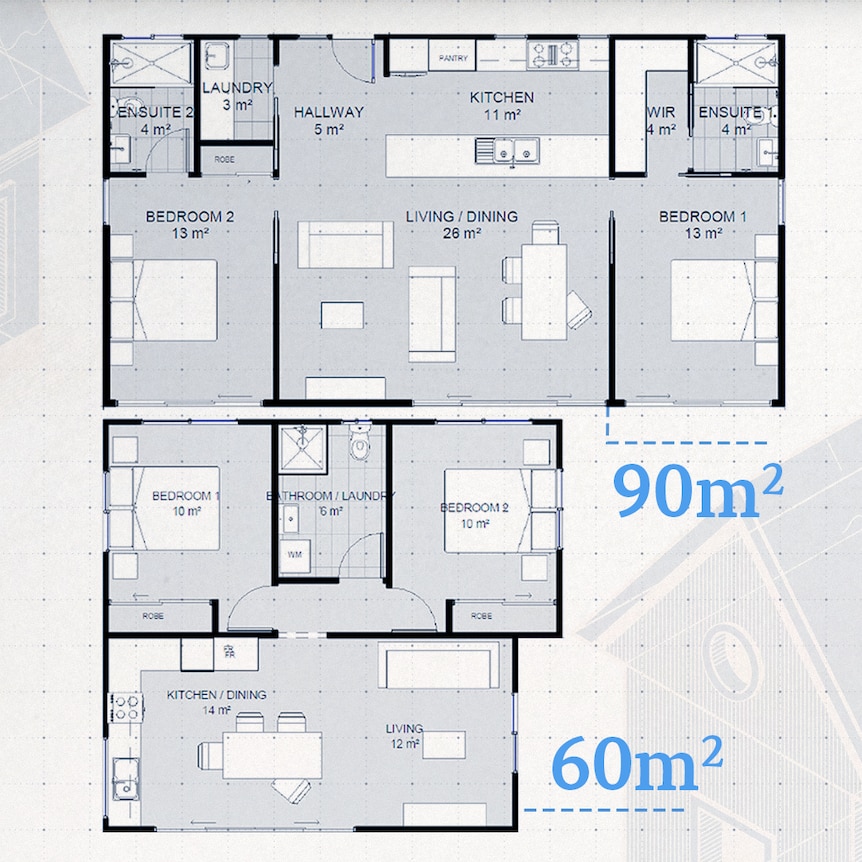
The difference in floor plans for a 60m2 granny flat compared to a 90m2. (ABC News: Magie Khameneh)
No national standard for granny flat planning
The changes will be made via an amendment to the Tasmanian Planning Scheme.
Dr Shearer said it could be difficult to navigate the different planning rules, which vary from state to state:
Victoria: Any second dwelling up to 60m2 in size does not need a planning permit.New South Wales: NSW was the first state to introduce laws to bypass councils when building granny flats in 2009, but they can still not exceed 60m2.Western Australia: A planning approval is not required for a second dwelling up to 70m2.Queensland: The rules vary from council to council as to how large they can be, but the state government passed laws in 2022 to enable home owners to rent their granny flats to anyone.South Australia: Cannot exceed 60m² and needs to share utilities and a driveway with the main home, but can be rented to anyone.
Dr Shearer said by allowing the dwellings to be rented to anyone, it showed their use was changing.
While she said the change would not help people get into the market from a purchasing perspective, it would help with rental affordability and stock.
According to Domain’s latest quarterly rental report, Hobart’s vacancy rate was just 0.3 per cent.
Dr Shearer expects the popularity of secondary dwellings to keep on growing, as they provide an alternative for generations of families to live on the same property.
“It also gives you the opportunity to increase density in already existing suburbs without having to cut down more trees, without having to add to the road congestion,” she said.
Dr Shearer said having clear, explicit laws reduced the risk of people illegally building dwellings or making modifications.
“If it’s regulated from the beginning, you have much more chance of having something built to all the proper standards that doesn’t sort of impact upon amenity or impact upon any environmental issues or anything like that,” she said.