
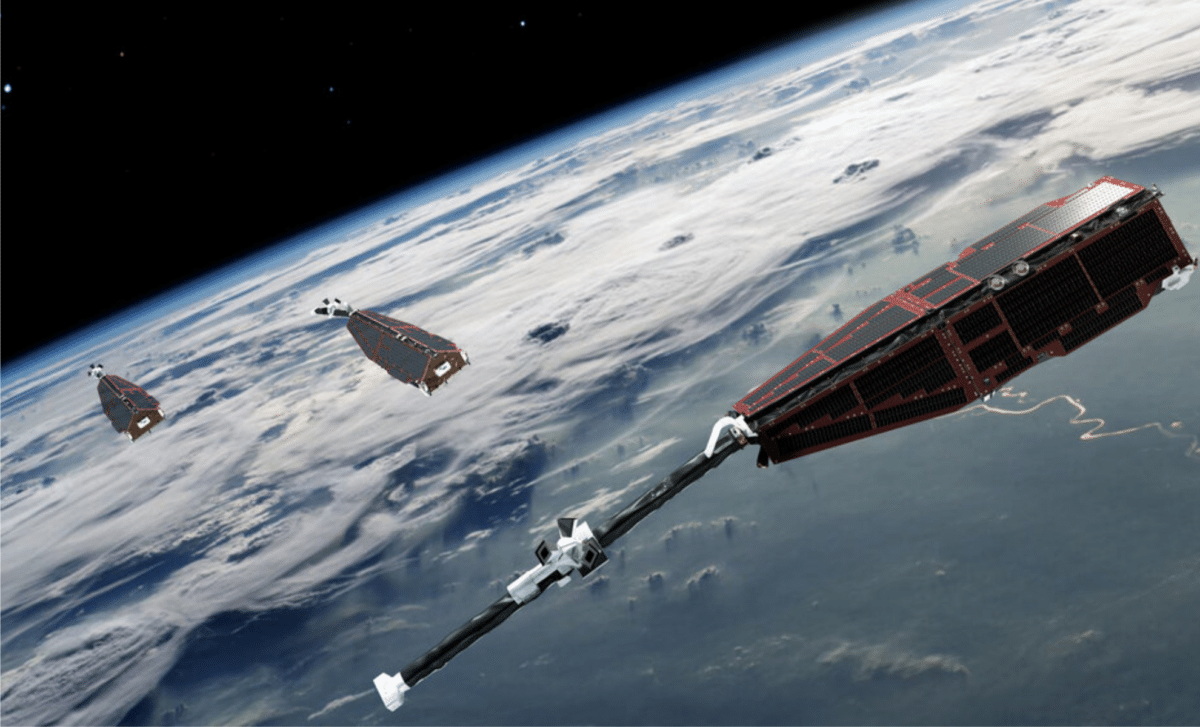
In January 2026, ESA’s CryoSat satellite, primarily designed to monitor polar ice, detected a powerful geomagnetic storm triggered by an X-class solar flare. This was made possible after the satellite’s magnetometer was upgraded with new software, allowing it to measure fluctuations in Earth’s magnetic field with scientific precision. The data gathered by CryoSat, which complemented observations from ESA’s Swarm mission, provided important insights into the impact of solar storms on Earth’s magnetosphere, marking a significant achievement in satellite technology and Earth observation. This new capability was highlighted in a recent study published in Geophysical Research Letters.
CryoSat’s New Role: Measuring Geomagnetic Storms
ESA’s CryoSat satellite has long been a cornerstone of polar ice research, known for its precise radar measurements that track minute changes in ice sheets and sea ice. However, an unexpected upgrade has transformed CryoSat into a crucial instrument for measuring Earth’s geomagnetic field, including fluctuations caused by solar flare events.
Originally, the satellite’s magnetometer was designed purely to control its orientation in space, helping CryoSat stay on course while studying ice. This operational tool ensured that CryoSat maintained its position, ensuring its advanced radar instruments could accurately target Earth’s ice-covered regions. However, in late 2025, ESA remotely upgraded the magnetometer’s software, enabling it to record and measure the variations in Earth’s magnetosphere. This seemingly small upgrade opened the door for CryoSat to join ESA’s other magnetic field research missions, like Swarm, in contributing to geomagnetic studies.
ESA’s Mission Manager for Swarm, Anja Stromme, called this an “accomplishment” that benefits the broader geomagnetic research community. For the first time, CryoSat, typically confined to ice data, was able to complement dedicated magnetic missions with scientifically valuable measurements of geomagnetic storms.
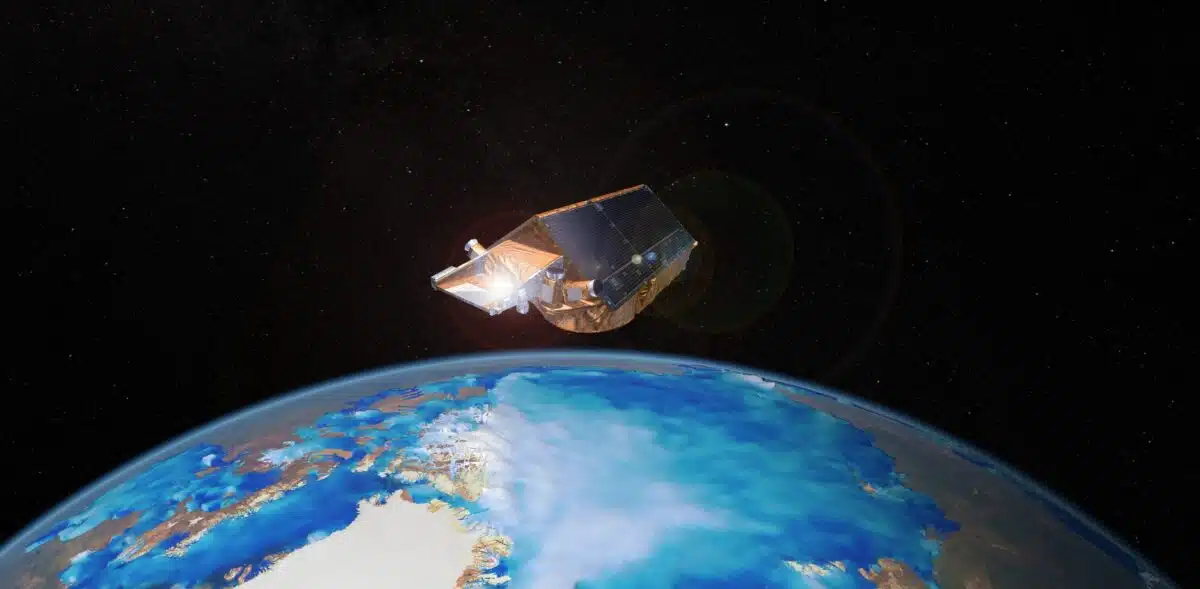 CryoSat key to measuring sea-ice thickness
Credit: AWI/ESA/geoGraphics
Unveiling the Mystery of Geomagnetic Storms
In January 2026, CryoSat put its newly acquired capabilities to the test when a massive X-class solar flare sent powerful radiation toward Earth. This triggered one of the most intense geomagnetic storms ever recorded, with spectacular auroras visible in regions far south of their usual range. The storm caused disturbances in Earth’s magnetic field, reaching unprecedented levels of intensity.
CryoSat’s magnetometer was able to capture these fluctuations with remarkable precision, providing data that mirrored the observations of ESA’s Swarm mission. This collaboration marked a significant milestone in space exploration and geomagnetic science, showing how satellites designed for one purpose could adapt and make invaluable contributions to other scientific fields. This achievement was detailed in a recent study published in Geophysical Research Letters.
“This innovation is both unique and exciting,” said Tommaso Parrinello, ESA’s CryoSat Mission Manager. “By leveraging data from a system that’s been used for 16 years to control satellite orientation, we can now generate valuable scientific data without any additional cost.”
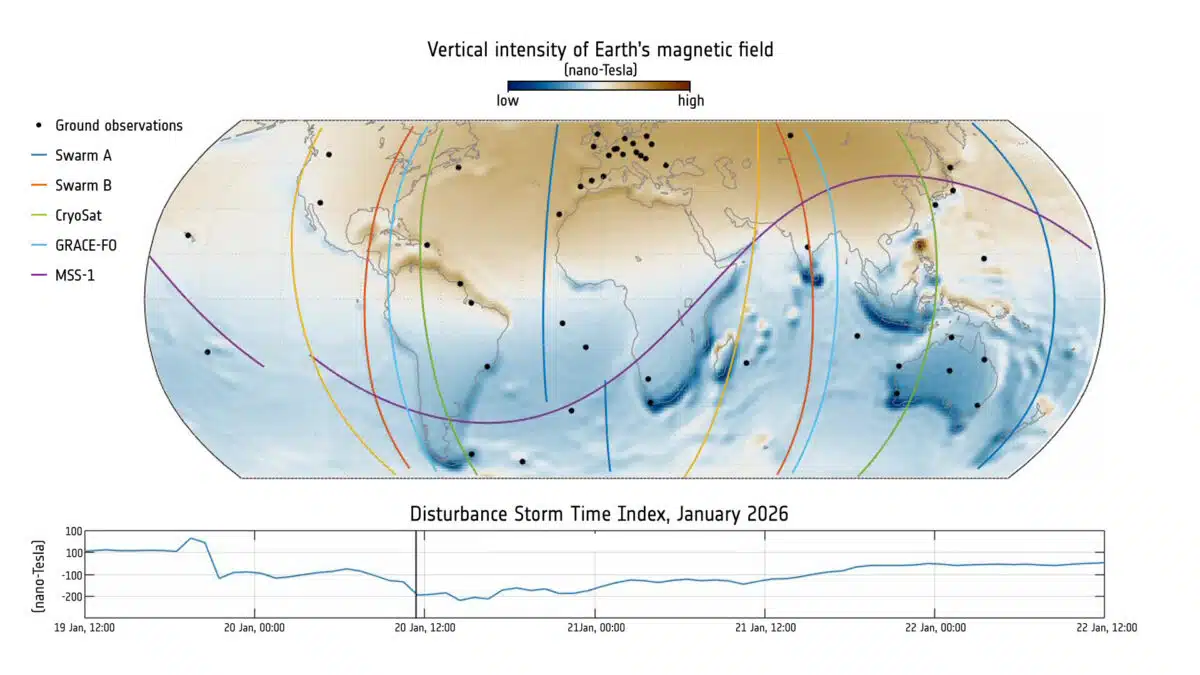 Earth’s magnetic field during peak solar flare, January 2026
Credit: ESA (data source: A. Grayver/University of Cologne, and N. Olsen/DTU).
CryoSat’s Unexpected Contribution to Science
For nearly 16 years, CryoSat’s primary mission was to observe polar ice, using radar technology to measure ice thickness and detect changes beneath the surface. But with the new software upgrade, the satellite could now accurately track geomagnetic storm data as it passed over Earth. This has allowed the scientific community to receive high-quality, complementary data alongside other magnetic field-focused missions, such as Swarm, ESA’s dedicated mission to study Earth’s magnetic environment.
CryoSat’s new magnetometer data complements Swarm’s findings, providing an additional perspective on Earth’s geomagnetic conditions. The precision and low noise levels of CryoSat’s measurements are what make this data so valuable. Scientists are now using the satellite’s findings to refine models of how solar events impact Earth’s magnetosphere.
“It’s about using existing systems in innovative ways,” Parrinello explained. “We’re not just measuring ice; we’re now capturing data that helps us understand the powerful forces affecting our planet’s magnetic field.”