
There’s something incredible about riding a bicycle for days without ever sharing the road with cars. No shoulder riding, no close passes, no right hooks, just a ribbon of trail stretching through forest, farmland, and river valleys. For cyclists who value uninterrupted journeys, North America offers a handful of exceptional fully off-road routes—the kind of rides where the world slows down, and every mile feels like its own story.
While fully car-free routes are rare in North America, the ones that do exist are deeply rewarding. Here’s a look at the continent’s longest off-road cycling trails to check out this summer.
Great Allegheny Passage and C&O Canal Towpath
~540 km / 335 miles — Pittsburgh → Washington, D.C.
The Great Allegheny Passage and C&O Canal Towpath is North America’s crown jewel of continuous off-road cycling. Starting in Pittsburgh, the trail immediately offers a contrast to city life: urban streets soon give way to leafy rail corridors and gentle valleys carved by rivers. Riding this trail, you feel the weight of history beneath your tires. Former rail lines take you over restored viaducts, alongside abandoned stations, and even through the cool darkness of the Big Savage Tunnel—a long, atmospheric passage that feels like its own adventure.
The first section is smooth and predictable, ideal for loaded touring bikes, but it quickly becomes more textured as you enter Appalachian farmland and forested stretches. Small towns appear intermittently, offering just enough amenities to refuel without breaking the rhythm of your ride. Crossing state lines into Maryland, the trail transitions into the C&O Canal Towpath, a slightly rougher, stone-lined corridor that follows the Potomac River for hundreds of kilometres. Here, moss-covered lockhouses, crumbling aqueducts, and quiet stretches of towpath immerse you in 19th-century engineering and rural charm.
By the time you reach Washington, D.C., you’ve experienced a diverse journey through natural beauty, history, and human ingenuity, all without encountering a single car.
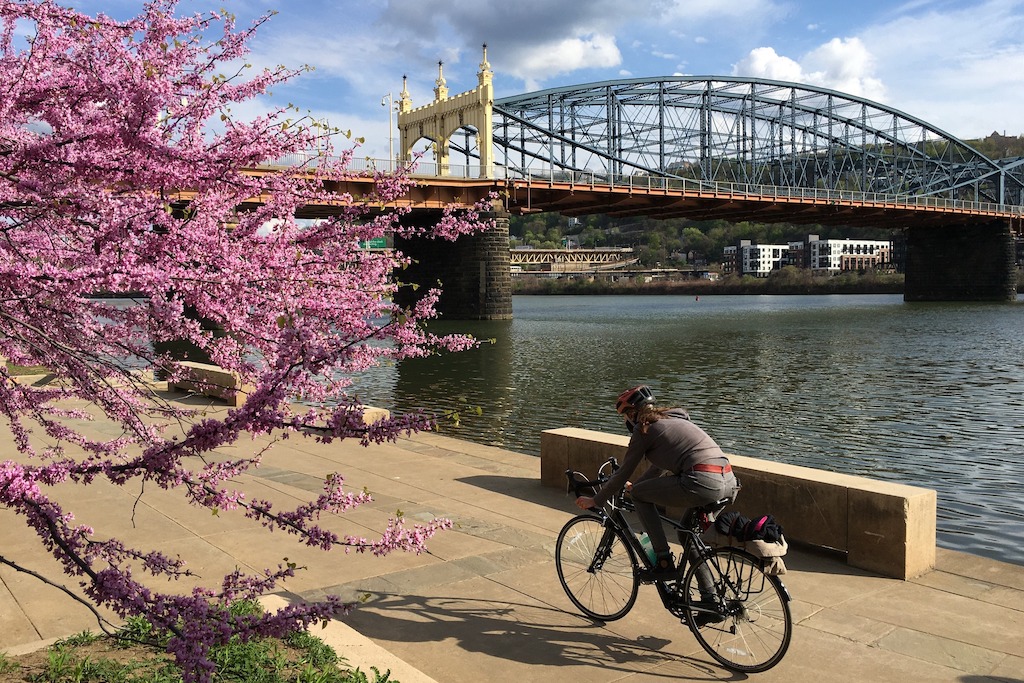
The Great Allegheny Passage trail
Confederation Trail, Prince Edward Island
~449 km / 290 miles — Across Prince Edward Island
The Confederation Trail is the embodiment of peaceful, multi-day riding. Unlike the industrial corridors of Pennsylvania and Maryland, Prince Edward Island’s trail is quiet and pastoral. Riding end-to-end, on the 273-km main trail, you’re treated to gentle, rolling landscapes punctuated by red soil, farmland, and coastal forest. The former railway line provides a consistent crushed gravel surface, making it approachable for touring bikes and ideal for long-distance riders seeking a smooth ride.
Along the way, small villages, historic towns, and local markets dot the trail, offering just enough civilization to restock and rest. Yet, much of the route feels remote. You pass through long stretches where the wind in the trees and the crunch of tires on gravel are your only companions. Wildlife is common, particularly in the island’s northern sections, where deer and foxes might cross your path.
The Confederation Trail is not just long—it’s rhythmically immersive, with enough continuity that cyclists can truly settle into a multi-day pace. It’s a reminder that in North America, simplicity, quiet, and a deep connection to the landscape can make even modest distances feel epic.
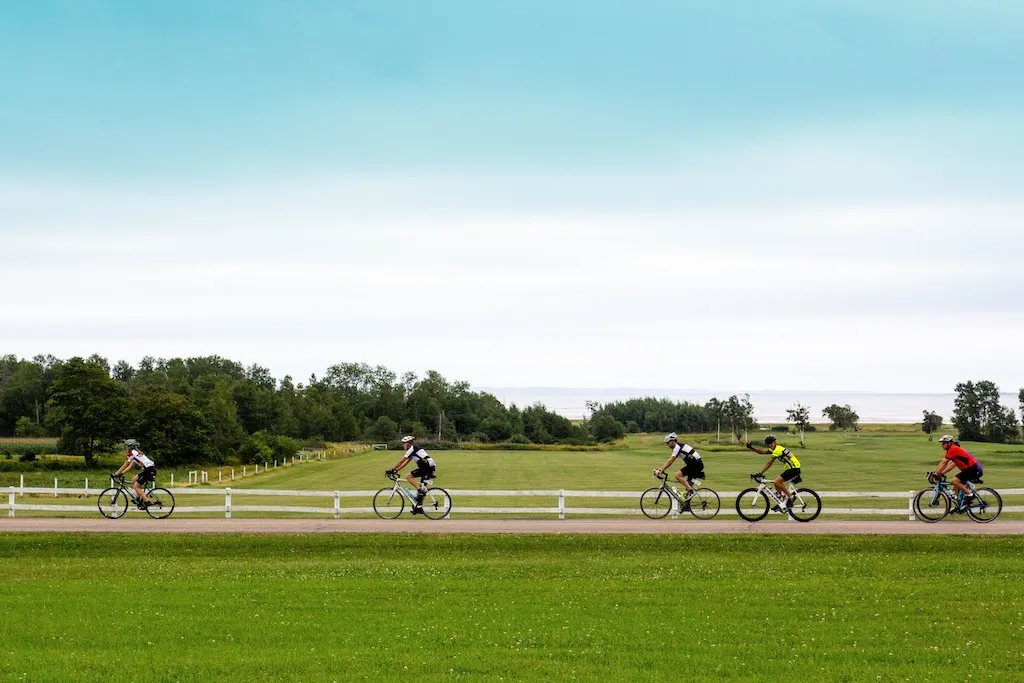
Confederation Trail in PEI (photo: Destination Canada)
Katy Trail State Park, Missouri
~385 km / 240 miles — Along the Missouri River
Missouri’s Katy Trail State Park is a lesson in the power of gradual discovery. Following the Missouri River through gently rolling farmland, the trail stretches nearly 385 kilometres from Clinton to Machens. As the longest continuous rail trail in the U.S., it’s designed for comfort and consistency: a smooth crushed limestone surface, clear signage, and gentle grades make it accessible to riders of all skill levels. Yet it never feels sterile—the trail’s charm lies in the slow revelation of history, scenery, and small-town America.
Towns along the Katy Trail reflect the state’s German heritage. You’ll find small cafés serving fresh-baked goods, historic train depots converted into visitor centers, and artisanal shops tucked along the route. The Missouri River provides a constant companion, its winding course mirrored in gentle bluffs and open farmland. Cycling here is meditative; every mile builds a sense of momentum, punctuated only by the occasional river crossing or forested stretch.
It’s a route that proves long-distance, fully off-road cycling doesn’t need extreme terrain to be memorable—sometimes, consistency and quiet charm are enough to keep you pedaling.
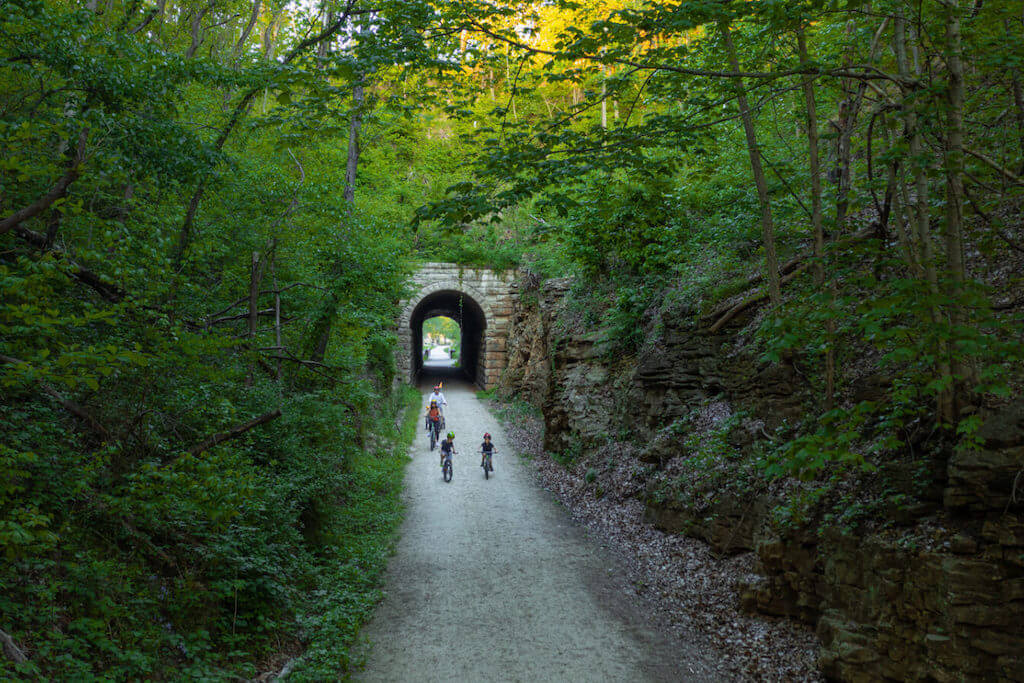
Katy Trail, Missouri
Ohio to Erie Trail
~525 km / 326 miles — Cincinnati → Cleveland
The Ohio to Erie Trail is Ohio’s signature long-distance off-road cycling route, stretching from the Ohio River in Cincinnati to Lake Erie in Cleveland. The ride begins in the city’s bustling riverfront parks before slipping onto leafy suburban greenways and quiet river corridors. Almost immediately, riders leave the traffic behind, following former rail lines, canal towpaths, and dedicated multi-use trails that carve through farmland, forests, and small towns.
The southern section is a mix of smooth asphalt and crushed limestone, ideal for loaded touring bikes, winding through neighborhoods, suburban parks, and riverside paths. Small towns like Loveland, Xenia, and South Lebanon offer cafes, bike shops, and quiet streets where cyclists can pause without losing momentum. As the trail approaches Columbus, it threads through the city’s parks and riverfront corridors, blending urban scenery with off-road riding.
North of Columbus, the route becomes increasingly rural, passing through gently rolling farmland, forested valleys, and historic towns such as Mount Vernon and Millersburg. Here, limestone and packed-earth surfaces dominate, and quiet rural roads bridge the few incomplete trail sections. In the northern portion, the trail follows the historic Ohio & Erie Canal Towpath through the Cuyahoga Valley, past restored locks, old canal infrastructure, and scenic parkland. By the time you reach Cleveland, the trail opens onto lakeside parks and city greenways, completing a journey that combines natural beauty, small-town charm, and engineering heritage, all on a fully off-road corridor.
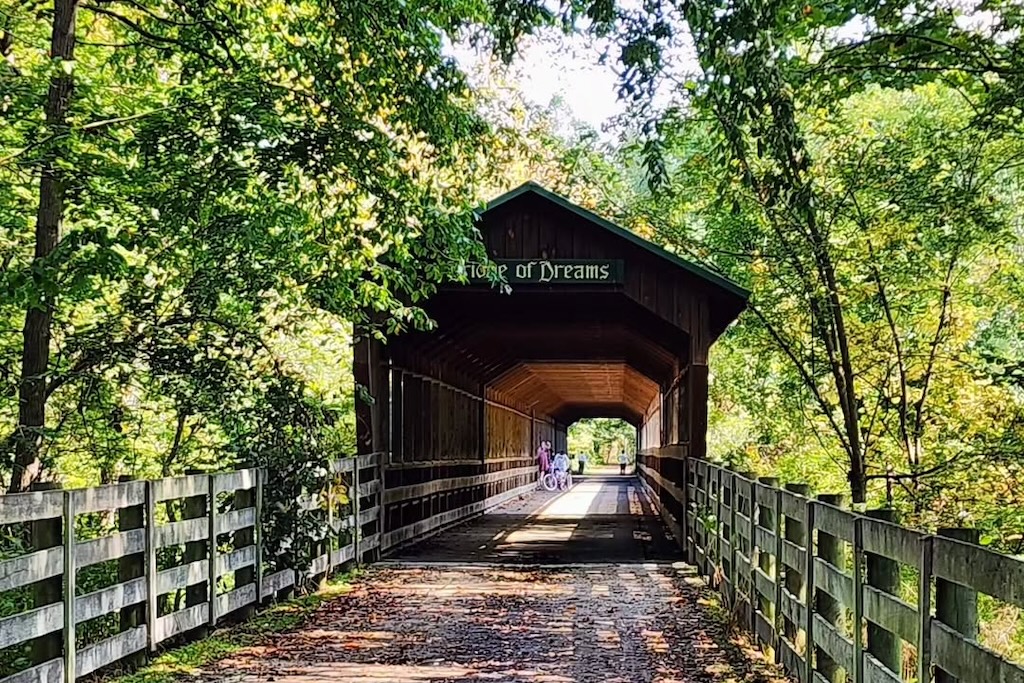
The Ohio to Erie Trail
Erie Canalway Trail, New York580 km / 360 miles — Buffalo → Albany
New York State’s Erie Canalway Trail is a masterclass in historic cycling corridors. Stretching across the state, it follows the route of the Erie Canal and includes long sections of rail trail, towpath, and purpose-built multi-use paths. Most of the trail is fully off-road, offering riders a sense of continuity that is rare for such a long distance.
Along the Erie Canalway, cyclists move through a variety of landscapes. The western section features broad farmland and industrial-era towns, while the central corridor winds through quiet forested areas and historic canal towns. Locks, aqueducts, and restored canal infrastructure provide constant reminders of the trail’s 19th-century origins. The eastern sections gradually transition to more urban landscapes as you approach Albany, but the corridor maintains its uninterrupted character.
The trail combines history, scenery, and accessibility, making it one of the most compelling multi-day off-road rides in North America.
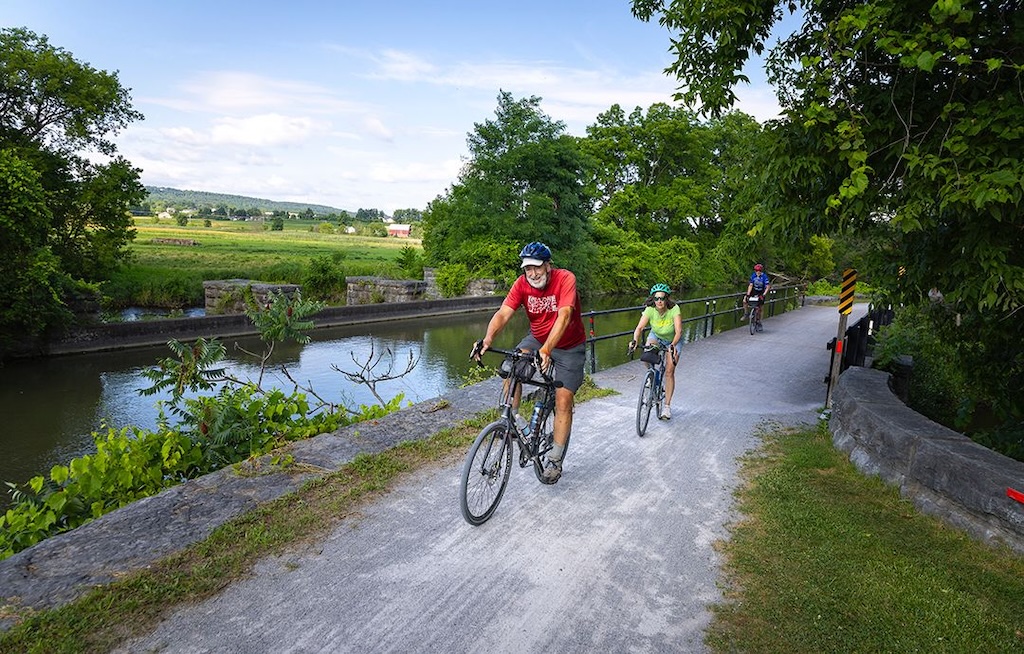
Photo: Erie Canal Trailway National Heritage Corridor
Le P’tit Train du Nord, Quebec
234 km / 145 miles — Montreal → Mont-Laurier
For riders seeking a shorter yet fully polished experience, Le P’tit Train du Nord delivers. Built on a former railway, the trail runs north from Montreal into the Laurentians, connecting small villages, lakes, and forested hills. The surface is consistently smooth, mostly crushed stone, with signage and trailheads well maintained.
This trail feels intimate yet expansive. Early in the ride, suburban outskirts fade quickly into forested valleys and small villages with cafés and artisan shops. Lakeshore stretches and rolling hills break up long sections of forest, offering visual variety. Multi-day touring is easy thanks to abundant lodging and resupply points, and the ride’s gentle grades make it approachable even for fully loaded touring bikes.
Le P’tit Train du Nord demonstrates how careful infrastructure and thoughtful planning can make a shorter route feel epic.