
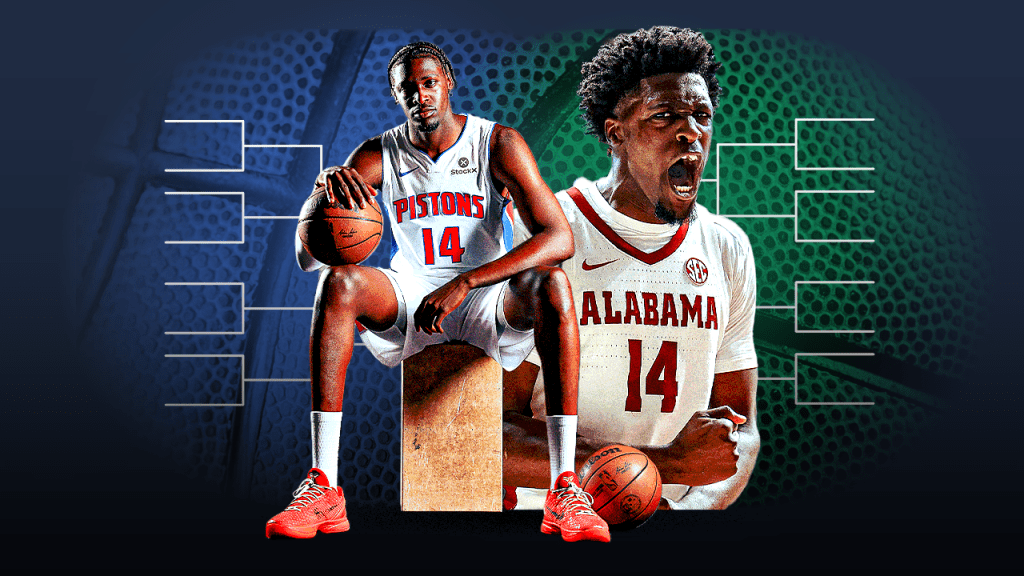
The 2026 NCAA Men’s Basketball Tournament could be the last one played without former NBA players suiting up for college teams.
If that sounds like madness, you haven’t been following the trajectory of antitrust litigation attacking NCAA eligibility rules. Courts across the country have landed in conflicting positions on whether the NCAA and its member schools may limit athlete eligibility when those athletes now operate in a labor market and when eligibility rules haven’t been bargained with a players’ union.
The litigation has played out while the NCAA has softened its application of eligibility rules to allow former G League players—who, like NBA players, are unionized employees—former NBA Draft picks and former European pros (so long as their compensation is limited to what can be construed as actual and necessary expenses) to play. The NCAA continues to prohibit players who sign NBA contracts, including two-way contracts. However, that distinction has been challenged by basketball player Charles Bediako, who has signed two-way contracts and whose lawsuit to return to play at the University of Alabama is on appeal.
The ultimate decision in Bediako’s case will not be binding on similar cases brought by other basketball players in any of the 49 other states, Washington, D.C., or Puerto Rico. In other words, judges in Bediako-like cases could reach opposite conclusions.
There has never been a more chaotic and disrupted time for college athlete eligibility.
For a long time, the NCAA has limited eligibility in one sport to four seasons of intercollegiate competition—including JUCO and Division II competition—within a five-year period. Until the post-House settlement world, where college athletes can be paid by schools via revenue-sharing and sign lucrative NIL deals, this system seemed sensible and withstood legal challenges.
After all, college athletes are students. That means they typically graduate after four or five years and then move on to another phase of life, whether that involves entering the workforce or attending graduate school. There was little controversy about how long a college athlete could remain a college athlete, since college is a transitional period from adolescence into adulthood.
The NCAA has also generally prohibited players who were previously professionals in that sport from playing on a college varsity team. For a long time, this prohibition made sense; college sports were for amateur athletes who were full-time students.
Limiting college athletes to four seasons and excluding former professionals also helped distinguish college sports as a unique product that appeals to fans. If college athletes could play into their mid-to-late 20s, or later, and if former pro athletes could return and take roster spots away from freshmen, college sports might look more like minor league sports. That’s a problem since minor league sports are far less popular with fans and less attractive to television networks and other key partners.
The legal hurdle for the NCAA and its members is that the new world of college sports increasingly resembles professional sports, at least for some athletes at power conference schools. That transition makes NCAA eligibility rules more vulnerable to legal challenge because, as courts have held, some Division I college athletes should be treated as participants in a labor market. A labor market is one in which people sell their services to buyers. Here, college athletes are the sellers and colleges are the buyers. When buyers agree to limit how they compete for labor, they invite antitrust lawsuits alleging unreasonable restraints on competition.
This litigious dynamic doesn’t occur in the NFL or NBA because pro sports eligibility rules are collectively bargained with players’ unions, and collectively bargained rules are exempt from antitrust scrutiny. In contrast, college athletes can’t unionize under U.S. labor law because they’re not currently recognized as employees, and employee status is one of several prerequisites for unionization.
While not employers of athletes, colleges can now directly pay athletes up to 22% of the average power conference athletic media, ticket and sponsorship revenue. Those payments are in addition to athletic scholarships—which cover tuition, housing, health resources and other benefits—as well as NIL deals athletes sign with third parties.
That’s a lot of money on the line for college athletes.
It is therefore unsurprising that some college athletes, particularly those who can earn six or seven figures and whose professional prospects are uncertain, have attempted to remain eligible long after classmates have moved on to the next phase of life. These athletes can try to satisfy full-time enrollment requirements by enrolling in graduate programs.
There has been no shortage of athletes willing to sue to stay. Ever since then-Vanderbilt quarterback Diego Pavia filed suit in 2024 seeking to play beyond his NCAA eligibility and won an injunction to play the 2025 season, more than 60 college athletes have brought similar lawsuits. The NCAA has prevailed in most, but not all, of these cases, and litigation continues in courts across the country.
Some judges believe the NCAA and its member schools may limit eligibility without violating antitrust law, while others view the four-seasons-in-five-years rule as a problematic restraint. Judges simply disagree, producing inconsistent rulings that neither preempt nor nullify one another. This patchwork of outcomes is a serious problem for a national organization like the NCAA, which seeks to apply and enforce rules uniformly across member schools and conferences.
Bediako’s case is a natural extension of the Pavia line of lawsuits. Both challenge eligibility restraints as labor market limitations that cause more harm than good to competition—specifically, the sale of athletic labor to institutional buyers. The idea of a former NBA player suiting up for a college team may sound preposterous, but perhaps it should not.
The NCAA has already deemed eligible not only former G League players, but also former European professional basketball and professional hockey players. A limiting principle that permits athletes from certain professional leagues but not the NBA is likely to raise judicial eyebrows, particularly if courts view that distinction as cherry-picking.
To the extent that the Pavia line of cases results in expanded eligibility, athletes like Bediako will have even greater incentive to sue. If an NBA career fizzles out while the clock to return to college sports—where athletes can receive revenue-sharing payments and NIL income—is still ticking, some players may want back in.
Congress could theoretically end these lawsuits by exempting rules governing NCAA athletes from antitrust scrutiny. Alternatively, and perhaps more realistically, Congress could pass narrower legislation exempting NCAA eligibility rules alone. President Donald Trump, who recently convened a roundtable on college sports, appears inclined to sign such legislation. Yet despite significant attention, no comprehensive bill to reform college sports has advanced in the 2020s, and with midterm elections approaching, the timing for legislative action seems far from ideal.
The U.S. Supreme Court could also step in by reviewing an NCAA eligibility case and issuing guidance that would bind lower courts. That is possible given the conflicting rulings nationwide in Pavia-inspired cases, but the Court agrees to hear only about 1% of cases.
Another possibility is that colleges recognize some D-I athletes as employees, with schools and conferences acting as joint employers, allowing athletes to unionize and collectively bargain eligibility rules. In that scenario, conferences would play a central role. Because conferences are private entities governed by federal labor law, they could, at least in theory, negotiate with athletes even where state law restricts unionization at public universities. It is an intriguing solution but not one popular with colleges or the NCAA.
The most likely outcome is simply more litigation and more conflicting decisions, including over whether former NBA players may one day join former G Leaguers and European professionals on college courts.
Whether that future excites or alarms fans, the law—not nostalgia or tradition—will determine who suits up in March.