
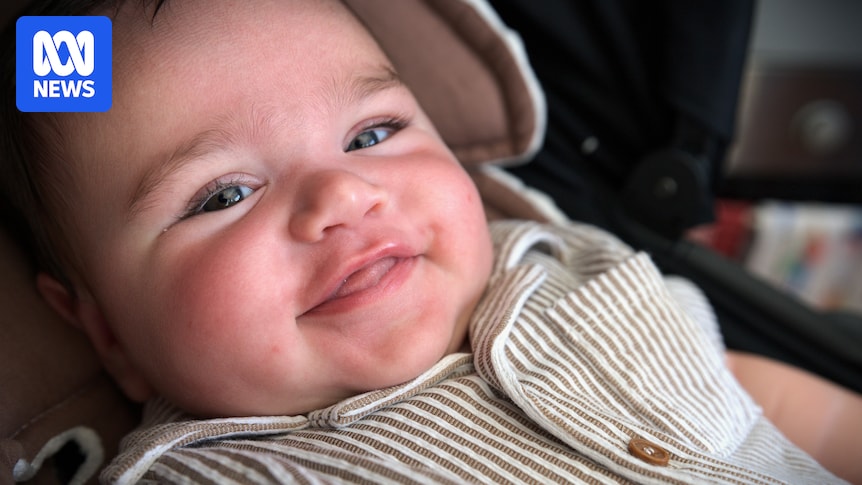
As a first-time mother, Whitney Fordham was worried when she learned she was pregnant.
“I was scared about pregnancy; to be honest, I never wanted kids. I was never maternal,” the proud Cullunghutti, Jerrinja, Wandi Wandandian woman said.
It was a big lifestyle shift that she was unsure she could adjust to, along with managing her fear of needles and medical interventions.
“Everyone tells you about the sleepless nights and the massive toll it has on your body and all of the scary things that can happen,” she said.
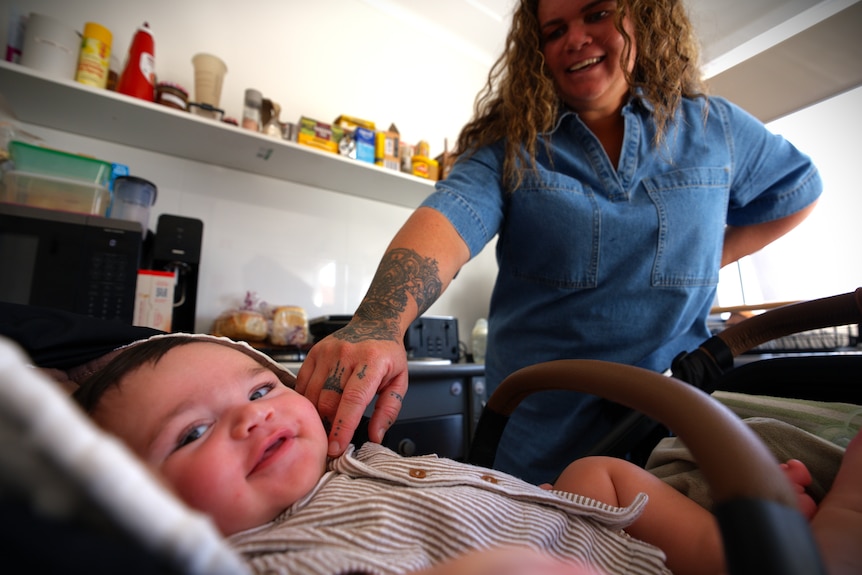
Whitney is enjoying spending time with her six-month-old son. (ABC: Adam Wyatt)
Compounding Ms Fordham’s fears, was the news that she was a high-risk patient because of her BMI.
Based on the south coast of New South Wales, she was told she would have to travel to a larger hospital, away from family and the regional hospital she hoped to attend.
“I totally understood it, but … for that opportunity to be taken away from me, it hurt,” she said.
“BMI is just numbers on a bit of paper, and doesn’t define who I am.”
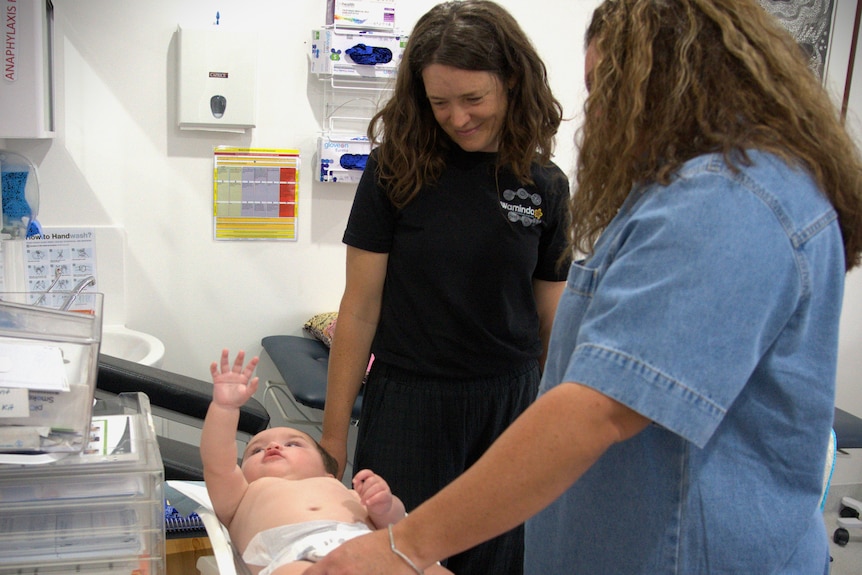
Midwife Rosie (left) checks Mikaere’s weight. (ABC: Adam Wyatt)
Supported by Waminda, a local Aboriginal health service, Ms Fordham and her midwife Rosie Downing attended high-risk appointments together that resulted in the delivery of baby Mikaere at the local hospital, through their Birthing on Country program.
“It’s embedded in our culture, birthing our babies on country, naturally, and [it’s] just like a place of belonging for us.”
Giving birth was a surprising experience for Ms Fordham.
“I loved it right up until I was due and would be pregnant all over again,” she said.
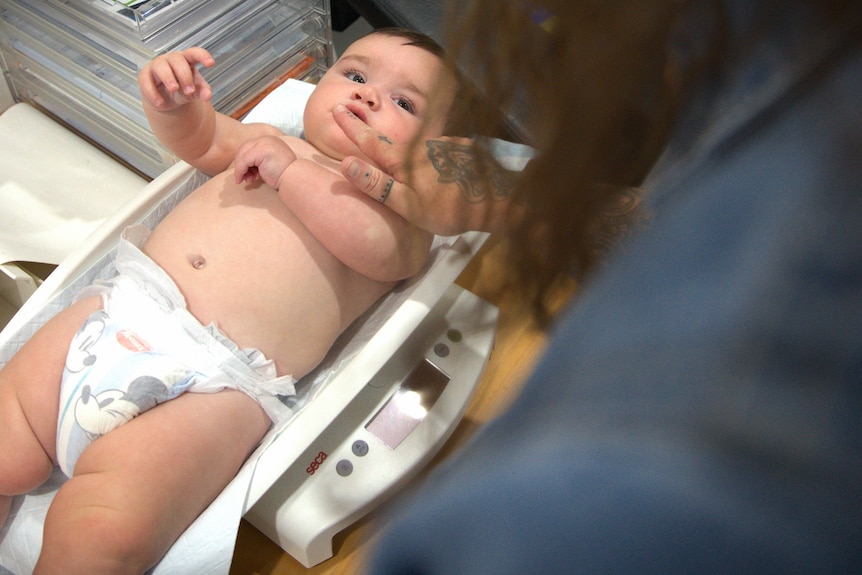
Mikaere is a happy and healthy baby. (ABC: Adam Wyatt)
Mikaere came three weeks early but was born at a healthy birth weight — which is between 2.5 kilograms and nearly 4.5kgs.
Visiting the clinic for a check-up, Ms Downing said he was “thriving”.
“So, he was 2.92kg when he was born, which at 37 weeks is a beautiful healthy birth weight,” she said.
“He’s growing so well. It’s so nice to see him so healthy, thriving and strong.”
However, not all First Nations babies are meeting this benchmark.
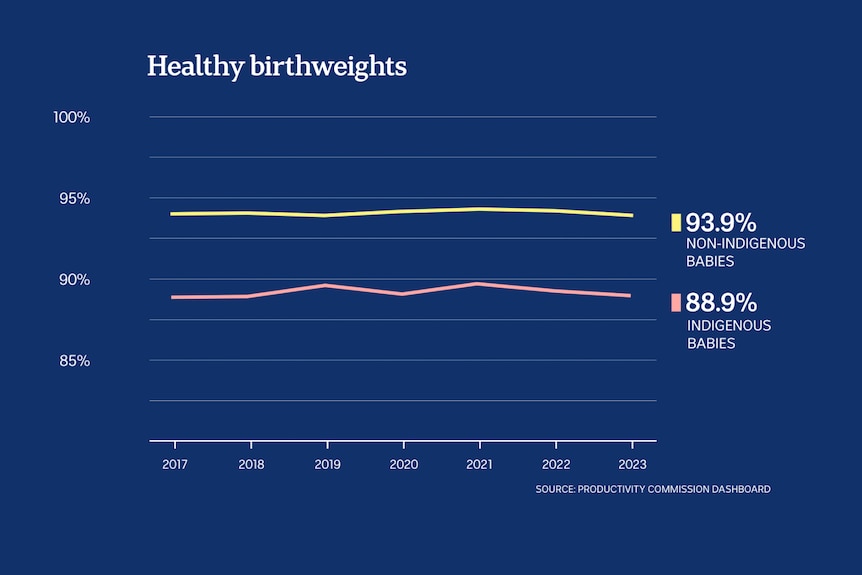
The percentage of Indigenous babies born healthy is similar to 2017. (ABC/ Productivity Commission)
According to the latest Closing the Gap data released by the Productivity Commission today, only 88.9 per cent of Indigenous babies were born at healthy weight across the country, compared to 93.9 per cent of non-Indigenous babies.
The goal is to get 91 per cent of babies born at a healthy weight in just five years’ time.
Factors behind low birth weight
Birth weights can have significant impact on a child’s life according to Yvette Roe, from the Molly Wardaguga Institute for First Nations Birth Rights at Charles Darwin University.
“It’s like starting a race and you’re behind the start line,” Dr Roe said.
Is the gap closing for Indigenous kids?
“So babies are small, they’re sick, that means their lungs might not be developed, their brains are not at full capacity … they are susceptible to illness”.
Weight at birth under 2.5kg is more common than above 4.5kg in the Indigenous population. Evidence shows low weight can increase the risk of infant mortality and as children age, health implications can include chronic diseases such as diabetes and cardiovascular disease.
A range of factors contributing to low birth weight can include smoking, a mother who is underweight, living with health conditions such as diabetes or low attendance at antenatal appointments.
Access to good antenatal care can sometimes come down to lack of regional maternal services and food insecurity.
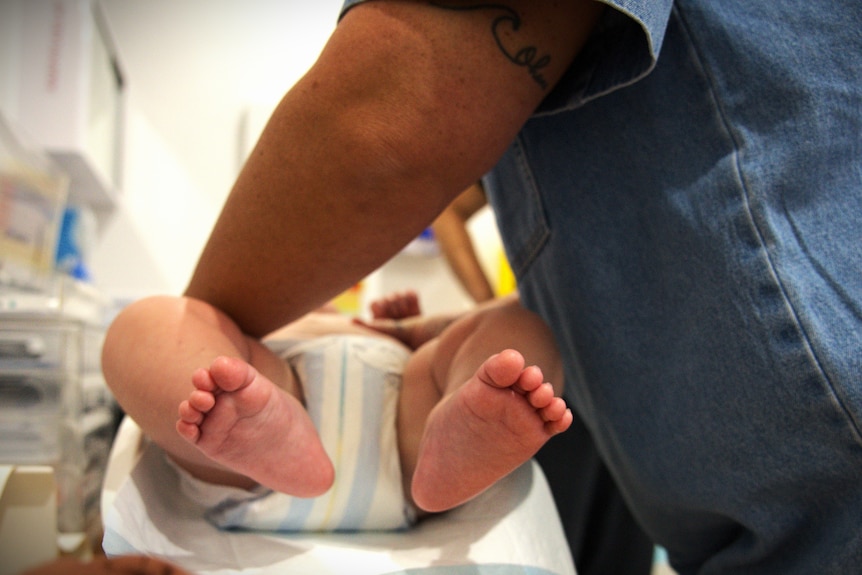
Baby birth weights are one of 19 Closing the Gap targets. (ABC: Adam Wyatt)
Waminda’s Birthing on Country program focuses on continuity of care to build trust and support for the whole family that baby will join, like asking about mental health care and housing.
“We can offer emotional and psychological support … to really give that mum and baby the best step forward,” Ms Downing said.
“Women are not having to go and retell their story to a different service or having to step into a space where they might not feel as safe.”
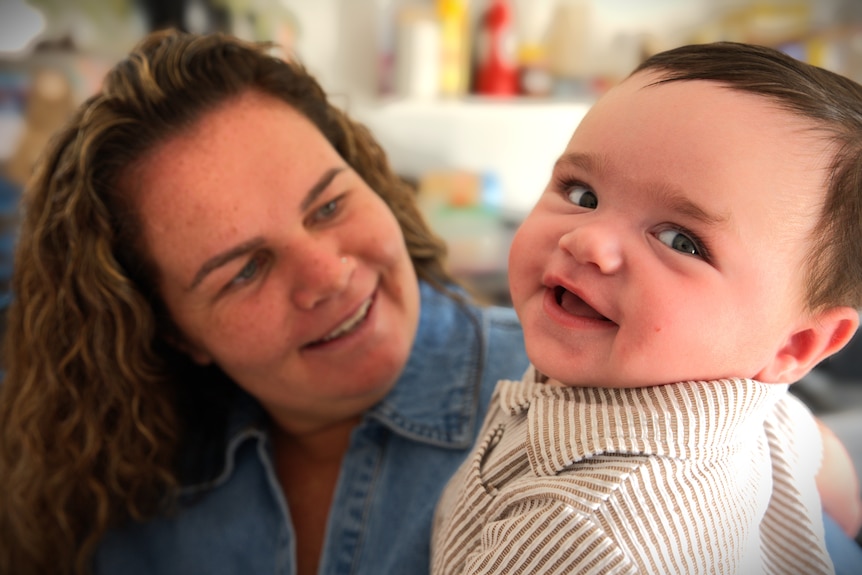
Whitney is a first-time mum with baby Mikaere. (ABC: Adam Wyatt)
Although Ms Fordham works as a health practitioner at Waminda, she turned to the midwifery team for antenatal care after hearing “traumatic birthing stories” from friends and family and credits them for her successful birth.
“I just feel that with the wrap-around support services and the love bubble from Waminda, just shifts your whole mindset,” she said.
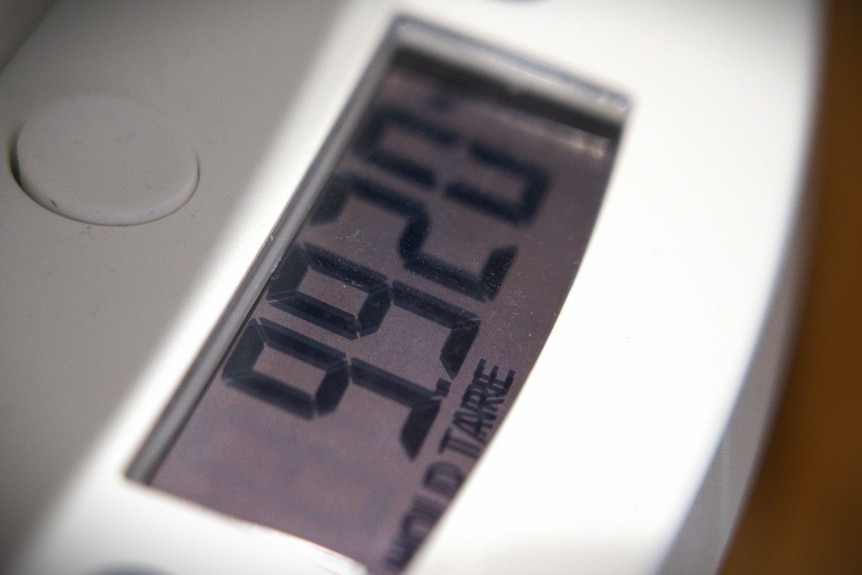
Checking in on how the baby is growing. (ABC: Adam Wyatt)
Nationally, babies in very remote areas and in the most socio-economically disadvantaged areas were more likely to be born at low weights.
“The housing stock is completely insufficient,” Dr Roe said.
“The cost of living there, food, financial security, is very poor so we need a whole of community approach to this and when you do have a whole community approach, you will see these gains in the health system, especially around mums and bubs,” she said.
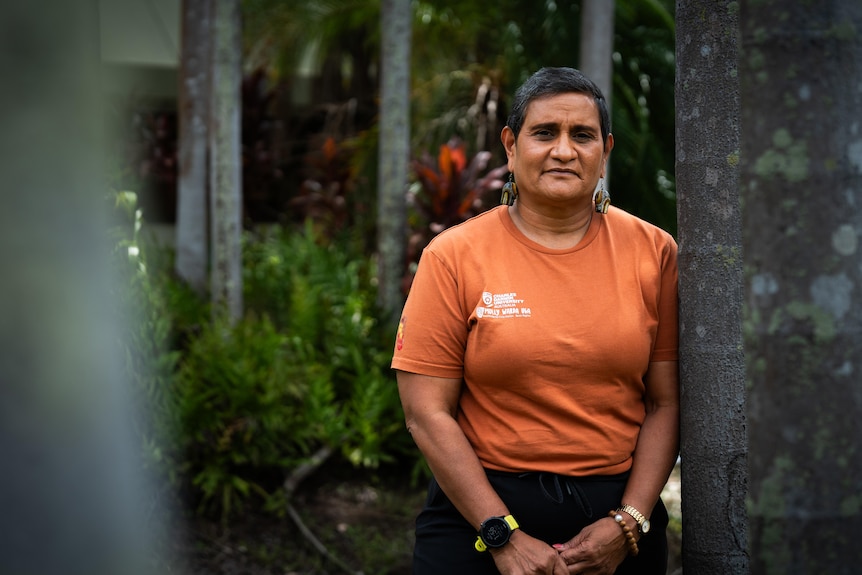
Yvette Roe is a researcher and advocate for Birthing on Country. (Supplied)
A recent study among First Nations women who used the Waminda service found they had significantly more normal vaginal births, were more likely to be exclusively breastfeeding after leaving hospital and had greater engagement with culturally safe wellbeing programs.
Another study of the Birthing in Our Community program in Queensland found mothers were less likely to have a preterm birth (before 37 weeks) and it reduced the removals of newborn babies.
Dr Yvette Roe, a Njikena Jawuru woman who was one of the authors of the studies said with tailored supports designed by community there are positive outcomes.
“What we often see is the system failure where mum falls out of the system and she’s not getting the timely and the critical support she needs during this time,” she said.
“We need to reconfigure the system [so] that it is mum and bub centred, but also it’s resourced appropriately from the primary healthcare sector to the hospital sector.”
The importance of reaching healthy birth weight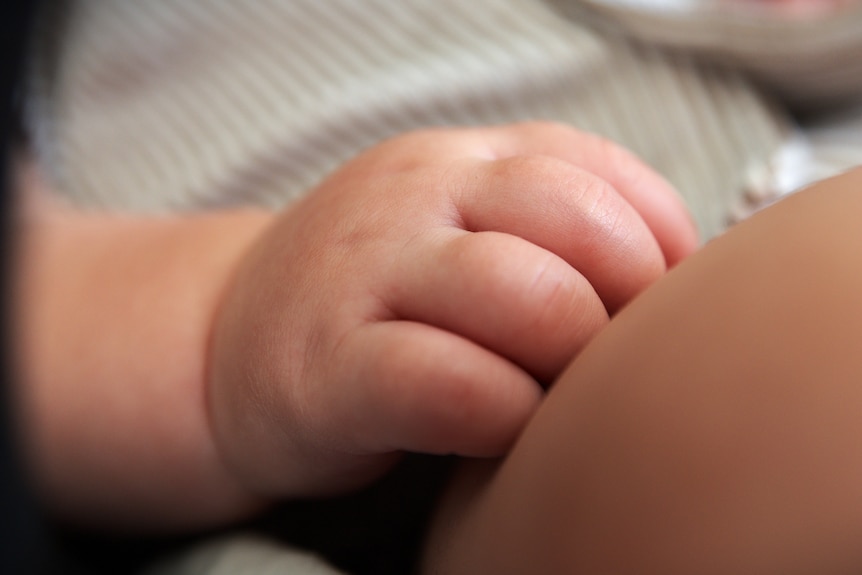
Giving birth to babies over 2.5kg helps improve health outcomes. (ABC: Adam Wyatt)
The Northern Territory and Western Australia recorded the lowest percentages — 85.6 per cent and 86.3 per cent of babies born a healthy weight respectively. WA was the only state worsening and not on track to be met by 2031.
In Perth, Rhonda Marriott, the inaugural Pro Vice Chancellor, Ngangk Yira Institute for Change at Murdoch University and a former midwife, said the data shows that the “systems are failing mums” by not providing appropriate care where they live.
“If we look at remote services then quite often they’re fly in and fly out. So you’ve got no continuity of care,” the Nyikina academic said.
“We don’t have maternity services that are providing the full care, antenatal service, labour and postnatal. It’s a system failure and it’s a workforce failure.”
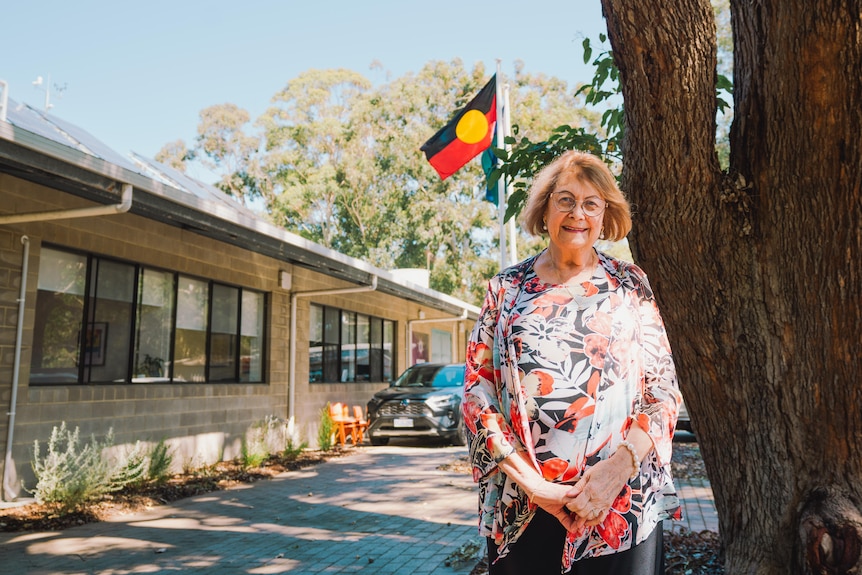
Professor Marriott wants to see more investment to support First Nations mothers in WA. (Supplied: Murdoch University)
This year the federal government announced another $44.4 million in funding for ten Birthing on Country services with 75 per cent of the funding committed to Aboriginal Community Controlled Services and the rest to university projects working in collaboration with First Nations communities and services.
Waminda is one of those services, but Dr Roe said, while this is a good start it is “just the tip of the iceberg” for what is needed.
Professor Rhonda Marriott agrees.
“That’s like a drop in the bucket when you think of the size of Western Australia and the size of Queensland. You know, it doesn’t even touch the sides.”
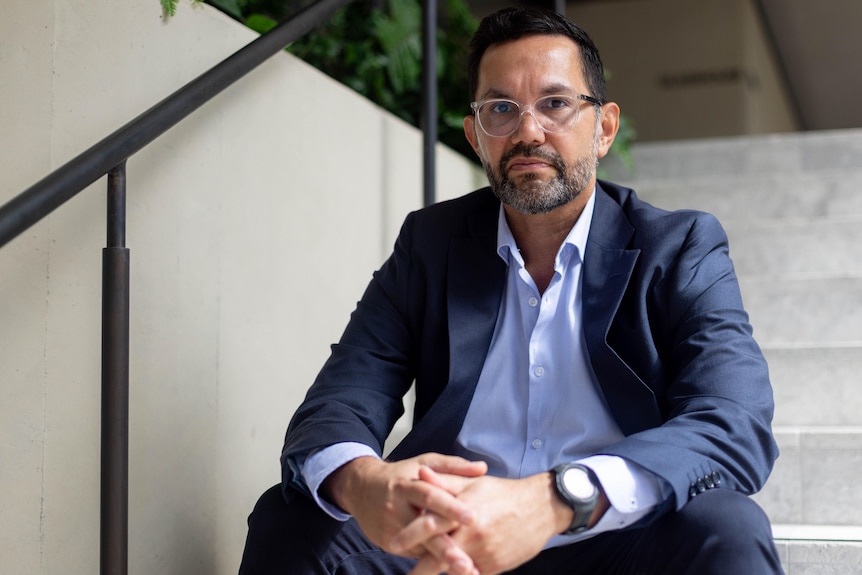
Commissioner Button says governments need to do business differently to close the gap. (ABC: Luke Bowden)
Productivity Commissioner Selwyn Button also called for urgent investment.
“Where we’re seeing the limited traction around initiatives is where governments aren’t working in true partnership with communities and community control organisations to invest in those solutions,” he said.
“The evidence shows that those things do work. And in order for us to look at accelerating growth across the targets, we need to do more of it.”
Little progress on Closing the Gap
On Wednesday night the Productivity Commission updated six out of 19 targets with new data, which show if the government is on track to meet the 2031 deadline.
Out of the six updated, the rate of suicide continues to worsen, which is at the highest rate since 2017, and the number of adults imprisoned has also increased.
Land and sea rights continue to show good improvement and are on track. However, baby weights worsened from improving but not on track, to now being similar to when it began in 2017, and youth justice also hasn’t improved since then.
While more updates are expected later this year, this data drop shows a total of four targets are on track, five are improving but not on track, two show no change from the baseline and four are worsening.
If you or anyone you know needs help:Lifeline on 131 114Kids Helpline on 1800 551 800Beyond Blue on 1300 224 63613 YARN on 13 92 76Suicide Call Back Service on 1300 659 467MensLine Australia on 1300 789 978Headspace on 1800 650 890ReachOutSANE on 1800 187 263Call triple-0 if you need immediate care
A government spokesperson said the “data reinforces the need … to continue working together to achieve the outcomes.”
“The data underscores the need for state and territory governments to take action to improve outcomes in areas where they hold the levers for change.”
Lidia Thorpe, independent Victorian senator has reiterated her call for a system of financial penalties and incentives to be embedded within the agreement.
“Closing the Gap is an ineffective distraction that does not address the most fundamental injustices First Peoples face,” the Gunnai, Gunditjmara and Djab Wurrung senator said.
“This framework has no real enforceability, no accountability for states and territories, and no recourse for our people when governments breach their commitments or violate our rights.”
The next round of Closing the Gap data updates will be released in July, and a review is due to begin later this year.