
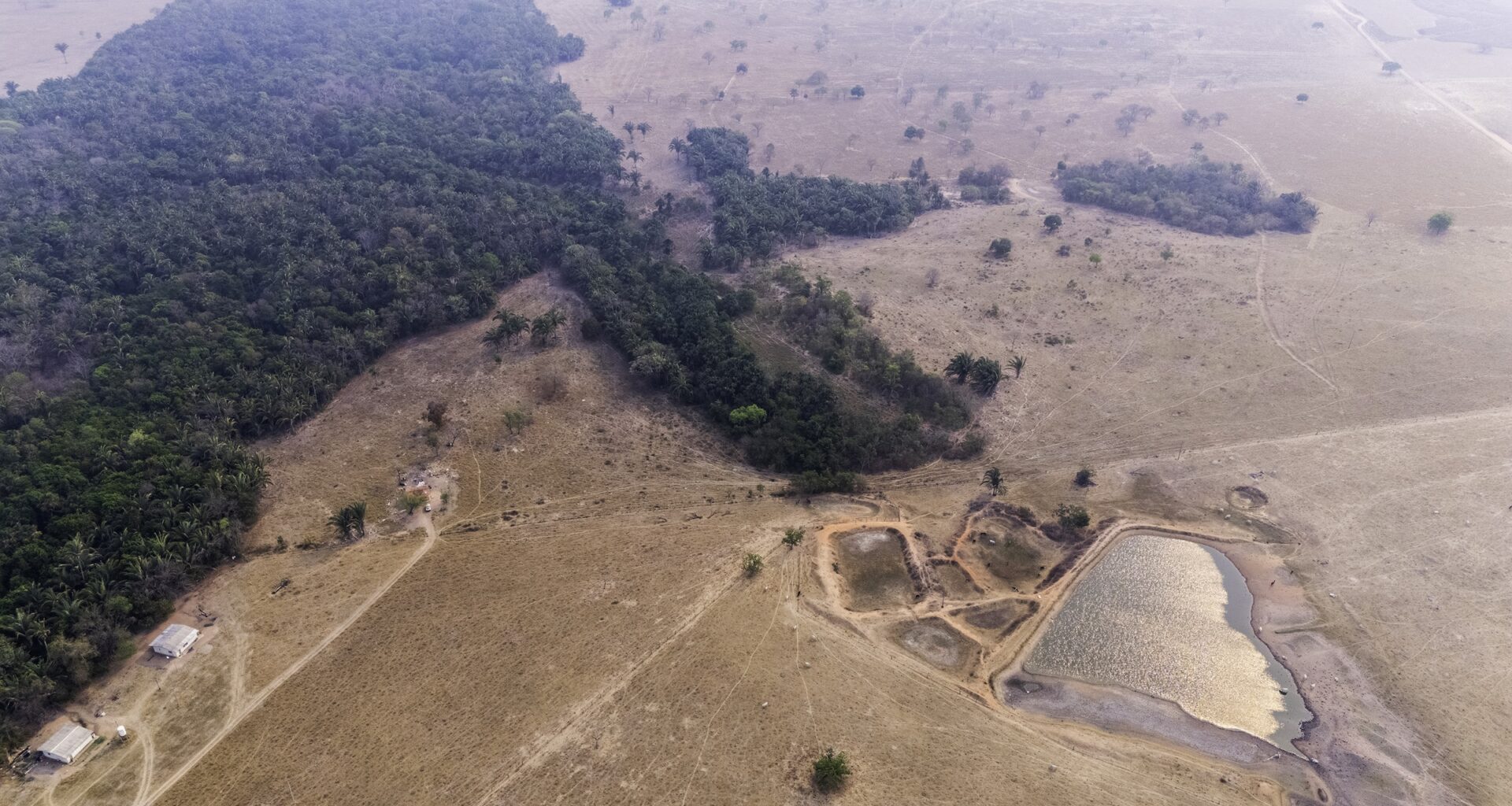
Agribusiness accounts for roughly a fifth of Brazil’s economy and about 40% of exports. While it is a major economic engine, it is also responsible for over 90% of deforestation and about a quarter of national emissions, with cattle ranching and soy production the main drivers of deforestation.Agricultural innovation transformed states like Mato Grosso from non-arable land into global farming hubs. Now, agribusinesses and researchers in Brazil are exploring whether similar innovation can boost regenerative farming to restore degraded pasturelands and reduce further deforestation caused by agriculture.REVERTE, one of Brazil’s largest agricultural regeneration projects, led by Swiss pesticide producer Syngenta, aims to restore 1 million hectares (2.5 million acres) of degraded pastureland by 2030. Over the next decade, Brazil aims to restore 40 million hectares (100 million acres) of degraded land.Restoring degraded pasturelands will not be enough to halt deforestation for agriculture in the Cerrado and Amazon, experts warn. They say that without robust land-use governance, enforcement of forest protections and binding private-sector commitments, productivity gains risk fueling further expansion rather than reducing pressure on Brazil’s ecosystems.
See All Key Ideas
SINOP, Brazil — In Brazil’s Mato Grosso state, the country’s agricultural heartland, vast stretches of lush Amazon rainforest and Cerrado savanna give way to seemingly endless fields of soy. Located in a transition zone where the Amazon and Cerrado meet the Pantanal wetlands, about 90% of the state’s area was once covered in native vegetation. But from the 1970s onward, agricultural innovation and public policies — including subsidies that encouraged farmers to settle and clear land in Mato Grosso — allowed the agricultural frontier to advance rapidly, turning Mato Grosso into one of Brazil’s main farming powerhouses.
The Amazon, the world’s largest tropical rainforest, covers about 60% of Brazil. The Cerrado, one of the world’s most expansive savannas, spans some 2 million square kilometers (772,000 square miles) of tropical grasslands, trees and watersheds that regulate rainfall patterns and temperatures. About a fifth of the Brazilian Amazon has been deforested since monitoring began in 1985, and nearly half of the native vegetation of the Cerrado biome has been cleared for cattle and soy. Some of Mato Grosso’s former vast soy fields and cattle pasture have been left degraded — eroded grasslands that function neither as forest nor productive farmland.
At a Biancon Group farm in Mato Grosso’s Itaúba municipality, Ivan Biancon, co-owner of the family-owned agribusiness group, scoops soil into his hands and lets it fall. The soil, he says, is now healthy enough to grow cotton, corn and soy beans. When he and his brother, Igor, first arrived, “these were all lands degraded from cattle ranching.” Their entire business spans about 45,000 hectares (111,200 acres) across five farms employing some 250 people. Biancon became the first farm to join REVERTE, a regenerative agriculture program that offers low-interest loans, technical support and customized plans to restore 1 million hectares (2.5 million acres) of degraded pastureland by 2030.
Over the past six years, Brazilian agribusiness has caused almost all of the deforestation in Brazil’s Amazon and Cerrado biomes. That expansion continues today, though at slower rates, as global demand for cattle and soy, Brazil’s top agricultural products, keeps growing. Now, the Brazilian government, civil society organizations and the private sector are exploring whether restoring up to 40 million hectares (100 million acres) of degraded land could reduce pressure on forests. The idea is to shift agriculture from being a driver of deforestation to part of the solution through regenerative practices and sustainable finance. Yet, challenges remain as doubts over scale and long-term oversight cloud the promise of regeneration: without stronger forest governance and binding private-sector commitments, some experts tell Mongabay that any productivity gains in agribusiness would not necessarily translate into less deforestation, as farmers may simply become more competitive and expand operations further.
Agricultural innovation to restore degraded lands
“The Cerrado had problems with very poor soils and lots of plagues and diseases,” says Marcos Sawaya Jank, senior professor and coordinator of the Isper Global Agribusiness Center in São Paulo. Now, some agribusiness actors are asking whether the same innovations that converted the Cerrado into agricultural lands and enabled large-scale deforestation could instead help repair degraded land. “Brazil has very important lessons to give the world in terms of innovation in tropical agriculture, but it sets a very bad example on deforestation,” Jank says.
Cattle ranching is the main driver of deforestation in Brazil, accounting for 78% of all commodity-attributed deforestation between 2018 and 2022, mostly due to pasture expansion. This is followed by soy production (4.6%), according to WWF’s 2025 “Amazon Footprint” report. From 1993 to 2023, Brazil’s soy production rose more than sixfold, from 23 million to 152 million metric tons, according to a 2025 study by the Escolhas Institute, a Brazilian think tank. Yet, pesticide and chemical fertilizer use, which causes soil degradation, loss of biodiversity, contamination of water bodies and risks to human health when used excessively, has grown much faster than soybean production. In 1993, Brazilian farmers produced 23 bags of soy foe every kilogram of pesticides; today, they’re down to just seven bags per kilo. Brazil is the world’s top user of pesticides, responsible for about a fifth of global agricultural consumption.
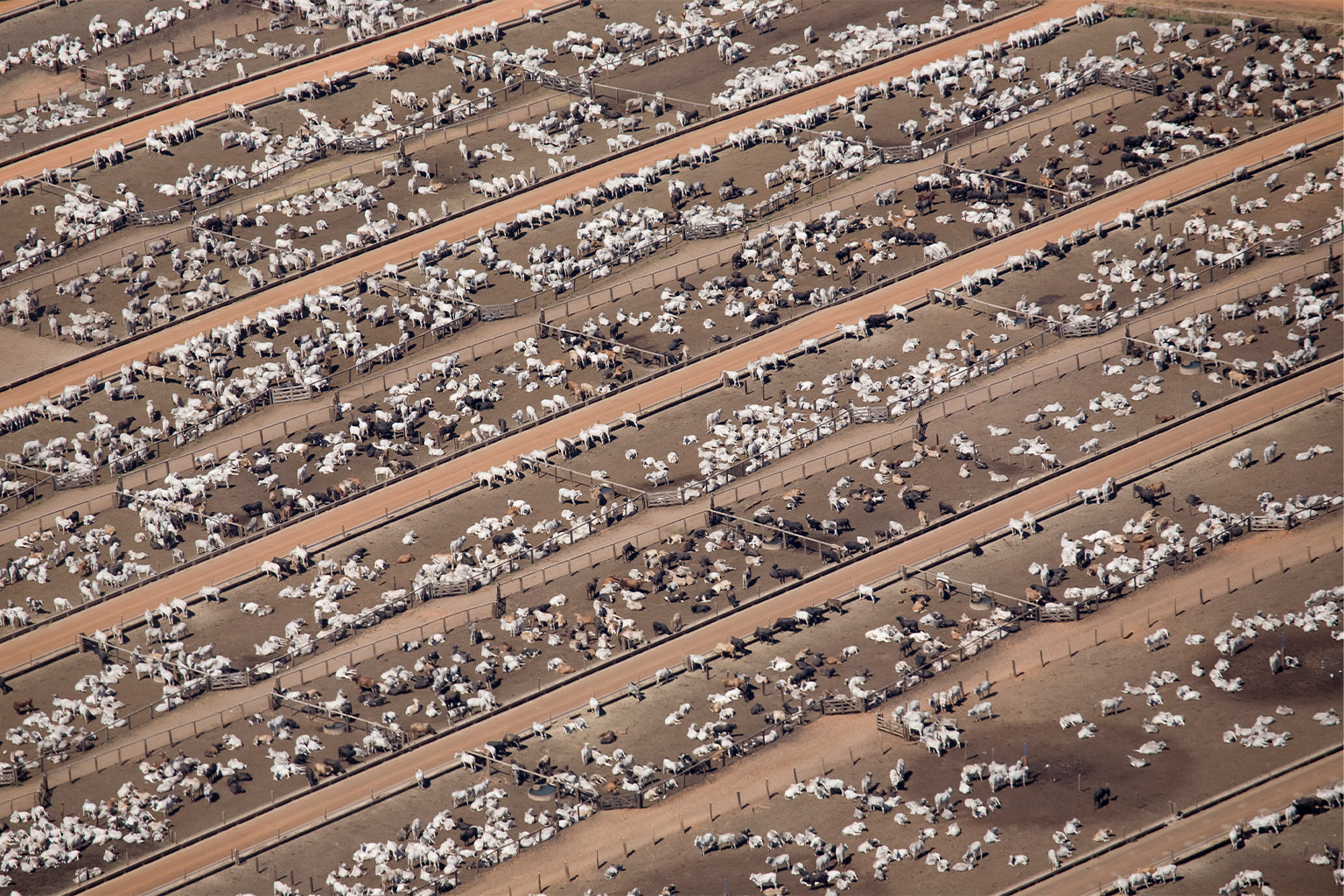 Cattle ranching remains Brazil’s biggest driver of deforestation. Extensive cattle ranch Estância Bahia, in Água Boa, Mato Grosso state. Image © Daniel Beltrá/Greenpeace.
In Brazil, deforested land is typically first prepared for cattle pasture, allowing farmers to grab and consolidate ownership over the land, some of which is later used for soy plantations, says Edgar de Oliveira Rosa, director of conservation and restoration at WWF Brasil. Cattle ranching and soy “work together,” he says.
Extensive cattle ranching can cause degradation of pasturelands, and farmers often prefer to deforest new lands instead of restoring the degraded ones. Restoration is costly, Ivan Biancon notes, so without financing, farmers often choose to clear new areas instead. He acknowledges that “extensive cattle ranching doesn’t create development or employment,” and that it often leaves pasturelands completely degraded.
“It is very hard for vegetation to come back, and trees will not come back,” Biancon says. The Cerrado alone contains about 11 million hectares (27 million acres) of degraded pasture, of which nearly 9 million hectares (22 million acres) could be used for agriculture if restored.
Brazil has about 100 million hectares (250 million acres) of degraded pastureland, with estimates that up to 40 million hectares could be restored under initiatives like the National Program for the Conversion of Degraded Pastures into Sustainable Agricultural and Forestry Production Systems (PNCPD). “These areas are very important, they are not producing what they could,” Oliveira says.
REVERTE is one attempt to restore degraded lands and preserve native vegetation by incentivizing and supporting farmers to expand planted areas over degraded pastures instead of clearing native vegetation. The initiative is organized by the Syngenta Group, a major Swiss-based producer of pesticides and genetically modified seeds, and U.S.-based conservation NGO The Nature Conservancy, and is funded by Itaú BBA, the investment arm of Brazil’s largest private bank, Itaú Unibanco. The program aims to recover 1 million hectares of degraded land and turn it into productive areas by 2030. It was designed in 2019 and to date has incorporated 411 farms across 11 states in Brazil. As of early 2026, 281,800 hectares (696,300 acres) of degraded lands were being restored through REVERTE, with funding of more than $396 million (more than 2 billion Brazilian reais), according to Syngenta’s press office.
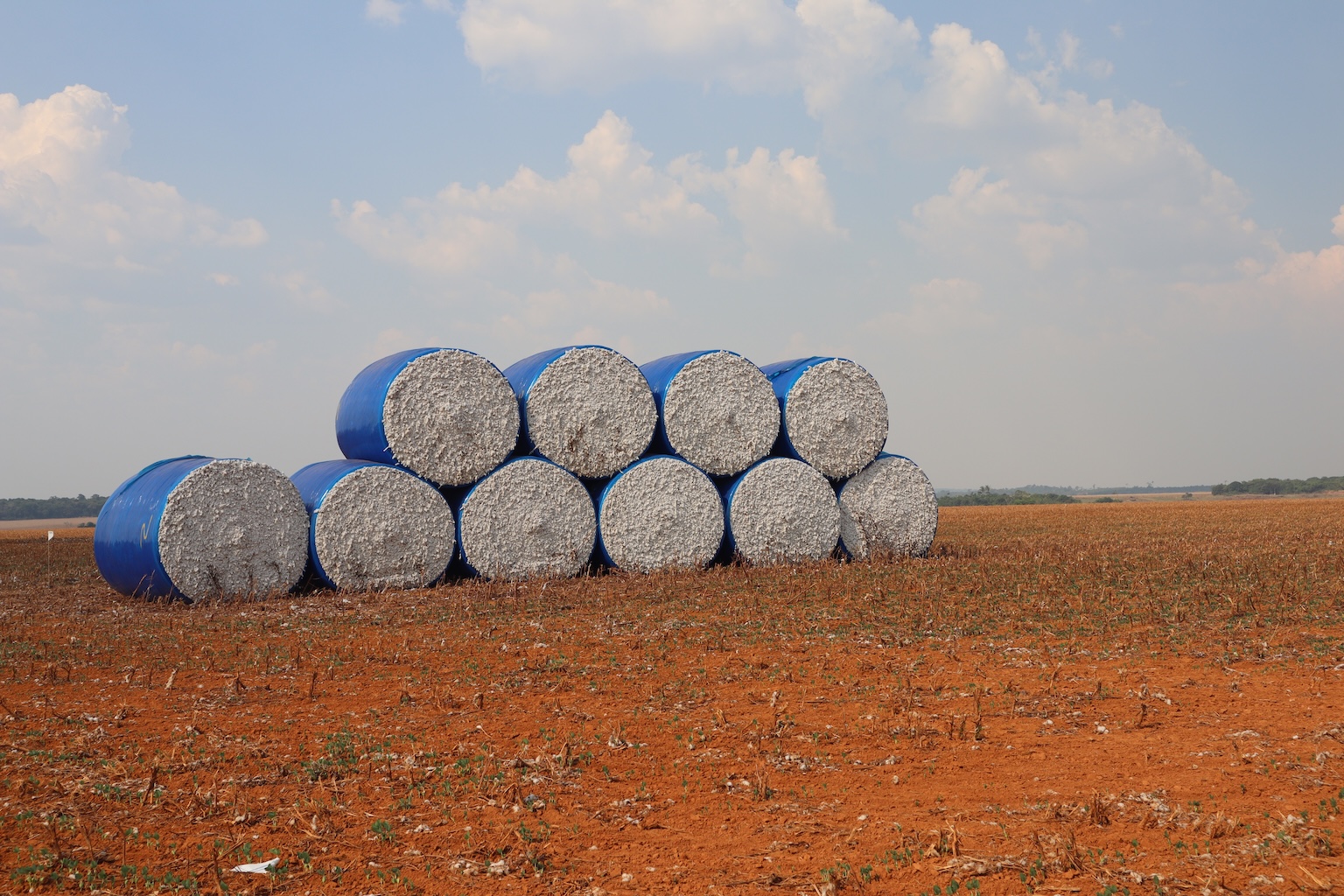 Cotton at the Biancon farm. Image by Mie Hoejris Dahl.
Sustainable finance is central to the program. “We needed long-term financial mechanisms, because restoration of degraded pasture doesn’t happen from one day to another,” says Juliana Mangueira, subdirector of sustainable agriculture at TNC Brasil. “You need patient capital and risk management.”
The program is based on biodiversity-themed bonds worth up to $75 million, with an additional $250 million in green bonds issued by Itaú BBA to fund various biodiversity conservation and social initiatives, including REVERTE. Itaú BBA’s wider goal is to reach 1 trillion Brazilian reais (about $190 billion) in financing for sustainable activities by 2030. Farmers who participate in REVERTE receive 10-year loans, paying interest only the first three years.
Climate change poses major risks to Brazil’s farmers. They can reduce these risks by practicing no-till farming (growing crops without plowing the soil), integrating nitrogen-fixing plants into cropping systems, using biological inputs rather than agrochemical ones, and adopting integrated agricultural systems, says João Adrien Fernandes, head of ESG Agro at Itaú BBA. He says the adoption of such practices also “makes business better,” helping farmers adapt to climate change and become more profitable.
Only in recent years has restoration of degraded pasture gained attention, Mangueira says. It’s important to prioritize soil health when farming, ensuring adequate water access, nutrients and production breaks, says Ben Rivoire, sustainability and crop value manager at the International Seed Federation (ISF), a global industry association promoting seed trade, plant breeding and intellectual property protection for seeds. He adds that to help depollute degraded lands, it’s necessary to go through a nitrogen fixation process — replenishing soil nitrogen naturally — as well as to breed and select the right grass crops.
At their farm in Itaúba, the Biancon brothers say that after joining REVERTE, the soil structure on their land has improved significantly, allowing them to grow cotton, a picky crop that’s sensitive to insect pests. “Here, these were all degraded lands,” some years ago, before joining REVERTE, Ivan Biancon says.
Gabriel Moura, an agronomist at Syngenta, says it usually takes two to three years to transform degraded soil through good agricultural practices, including the use of limestone, which neutralizes acidity in soils. He says the Biancon farm has moved from unproductive land to yields close to the national average in just a few seasons.
“There were degraded lands that now produce food. The world needs more food. Show me a better problem to solve,” Moura says. “The Brazilian government now wants to replicate this.”
Mangueira says regenerative programs like REVERTE can help maintain forests, improve soil biodiversity and water retention, create more diverse landscapes, and reduce emissions by improving production methods. To qualify for the REVERTE program, farms must have had no deforestation after 2018. Moura says that at Syngenta, “we analyze and verify weekly, by satellite, the state of native vegetation areas.” The program doesn’t seek to reforest lands, but to prevent further deforestation.
Still, only about 4,000 hectares (10,000 acres) of the Biancon brothers’ 45,000 hectares (111,200 acres) have been recovered through the REVERTE program. “We’re all thinking about how to scale and mainstream these solutions more,” Mangueira says.
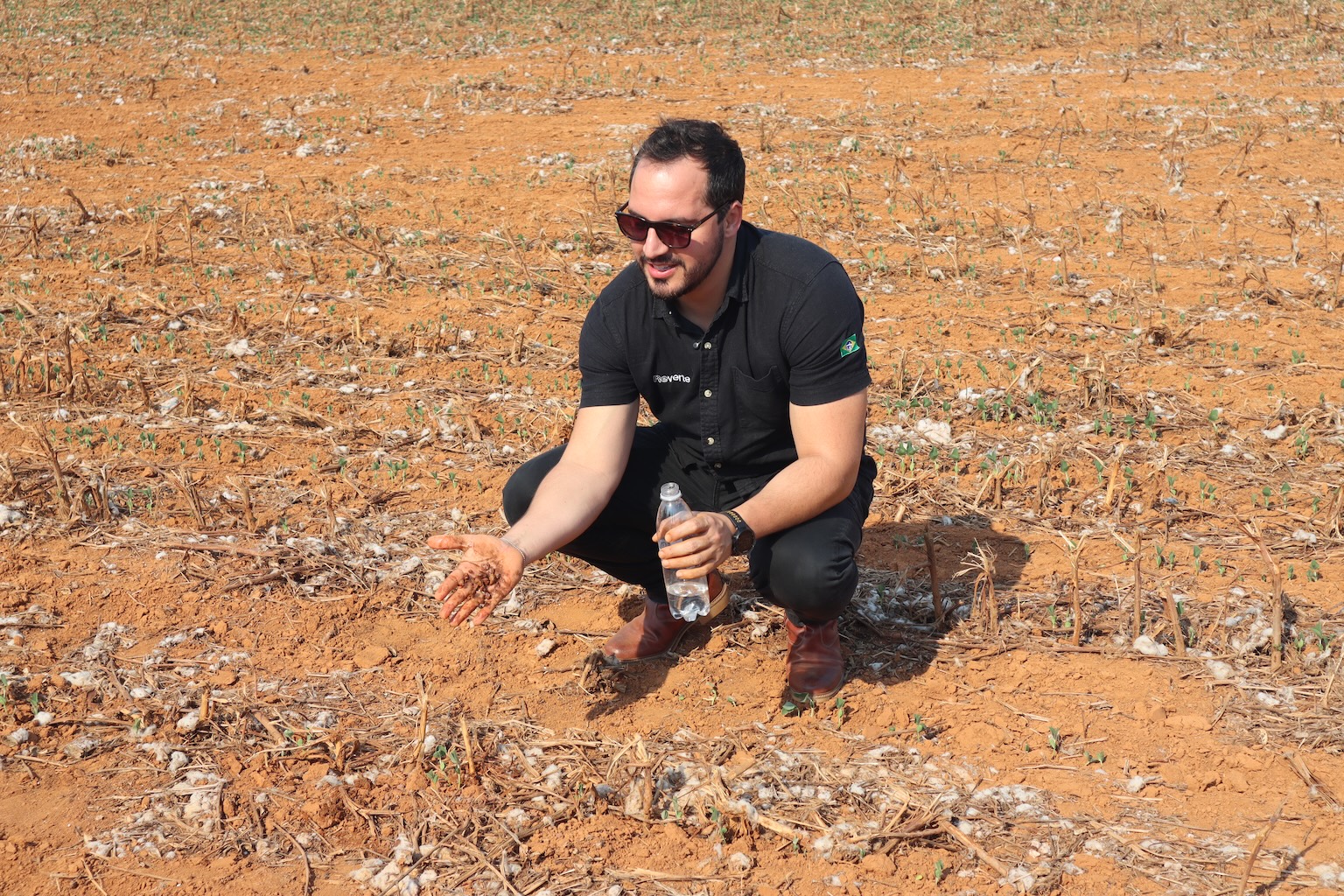 Gabriel Moura, an agronomist from Syngenta, says that the Biancon farm has moved from unproductive land to yields close to the national average in just a few seasons. Image by Mie Hoejris Dahl.
Another challenge is what will happen with participating farmlands when the program ends after 10 years. “When you start to be very profitable and your production is more tight and organized, it’s very difficult to go back to a very extractivist kind of production,” Mangueira says. But there are no guarantees that this will not happen, given that REVERTE does not have requirements for farmers after the program ends.
Brazil has become a leading innovation hub for tropical agriculture, says Jank, the agribusiness professor. He credits Embrapa, the Brazilian Agricultural Research Corporation, an arm of the agriculture ministry, as being “fundamental to start tropical agriculture in Brazil.”
The country has effectively adopted no-till agriculture and advanced seed innovation, boosting crop resilience and yields. Brazil’s grain productivity increased by 206% from 1970 to 2020, according to Embrapa. More recently, the adoption of artificial intelligence has also helped improve agricultural outcomes; global investment in AI use in agriculture is projected to grow from $1.7 billion in 2023 to $4.7 billion by 2028.
“Here in Brazil, we have a lot of technology to produce in a much more sustainable and less damaging way,” WWF’s Oliveira says. While Brazilian agriculture has made a lot of productivity gains, “cattle ranching still has very low productivity and causes a lot of land degradation,” and while many farmers in Brazil “are top of class,” there are still “a lot of errors” — for instance, with farmers being overly dependent on inputs, overusing pesticides and fertilizers, Oliveira says.
Syngenta, one of the world’s largest agrochemical firms, generates significant revenue from pesticides, some of which are classified as highly hazardous or banned in some jurisdictions. Public Eye, a Swiss NGO, has called Syngenta’s marketing of active ingredients in low- and middle-income countries like Brazil “scandalous double standards,” since the same ingredients are banned in the company’s home country, Switzerland — a situation at odds with the company’s sustainability branding. Across various legal proceedings, regulatory reviews and NGO complaints, Syngenta has been criticized for selling pesticides associated with poisoning, environmental contamination and risks to human health. In 2024, IBAMA, Brazil’s environmental protection agency, filed a lawsuit against Syngenta alleging environmental damage linked to pesticide contamination. While that case is still in litigation, in 2025 a public civil action questioned whether the Syngenta herbicide atrazine contaminated soil and water.
Brazil’s restoration ambition
In 2023, President Luiz Inácio Lula da Silva signed a decree to establish the PNCPD, also known as Caminho Verde Brasil, or Green Path Brazil, to revive 40 million hectares of the country’s approximately 100 million hectares of degraded pasturelands by 2033. The program looks for different mechanisms of financing, blending public and private finance.
Before that, the Brazilian government had already launched initiatives to make agriculture more climate-smart. In 2010, it launched the ABC Plan, a low-carbon initiative to recover 15 million hectares (37 million acres) of degraded pastures by 2020; that goal was later raised to 30 million hectares (74 million acres) by 2030, including targets for no-till areas, integrated systems and biological nitrogen fixation.
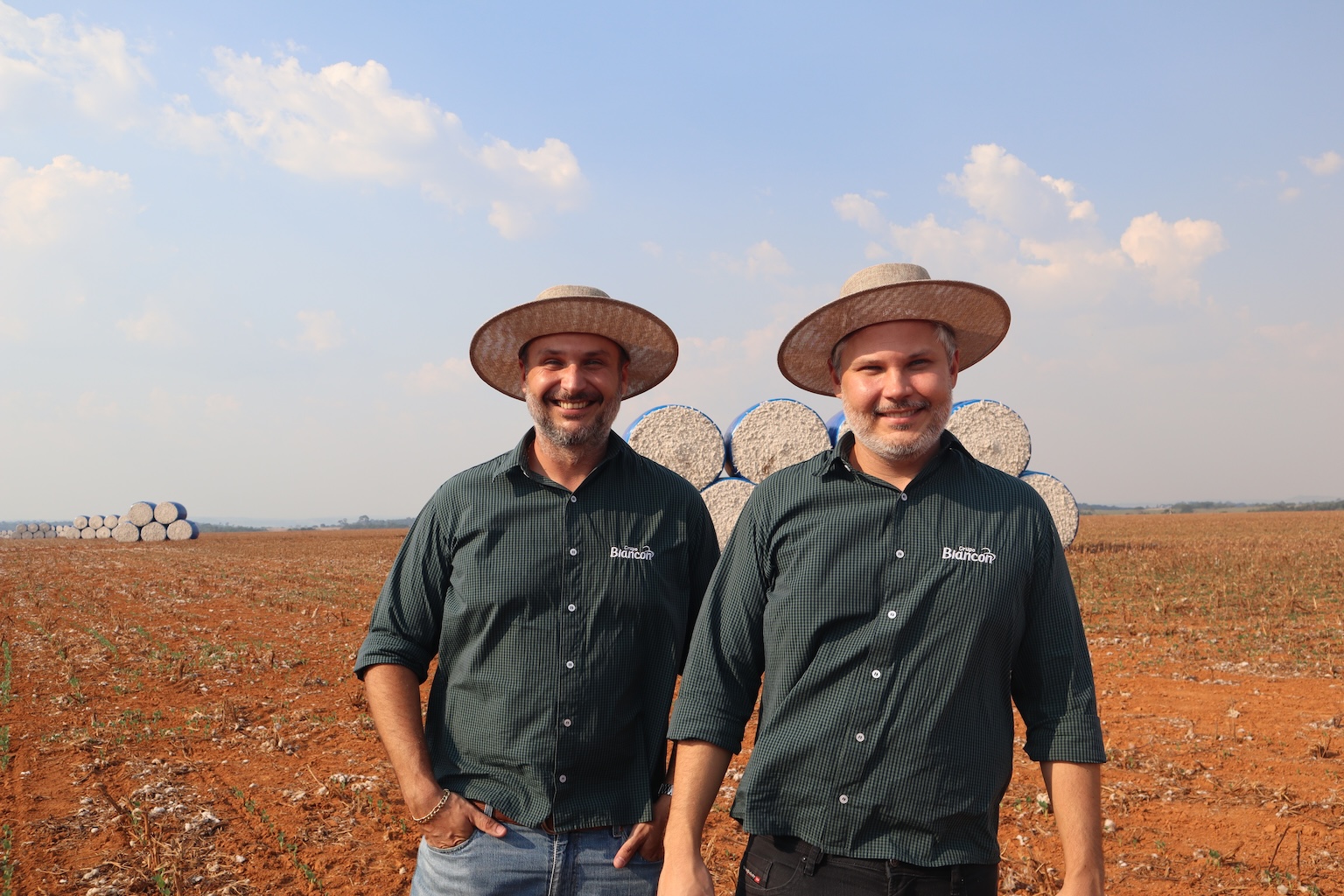 On their farm, brothers Ivan and Igor Biancon have worked to restore the soil damaged by cattle ranching and now grow cotton, corn and soy beans. Image by Mie Hoejris Dahl.
Oliveira says the government’s plans are positive, as they give farmers more time to pay back for sustainable agriculture initiatives, while not funding farmers who deforest more land. “It’s a way of connecting one issue to another; it makes it viable,” he says.
However, promoting rehabilitation of degraded pasturelands is far from enough, according to Oliveira. “We need public policies to stop expansion,” Oliveira says. “We also need the private sector to stop buying from deforested lands.” He adds that when agriculture becomes more efficient, it doesn’t necessarily mean it limits the area it uses by doing more with less; if it becomes more competitive, it can expand even more.
Future outlook
More deforestation is expected as Brazil’s agricultural frontier continues to expand, especially in response to booming soy demand. Chinese retaliation amidst the U.S.-China trade war has seen the world’s top soy buyer shift its purchases away from the U.S. and toward Brazil, which since 2019 has been the world’s largest soy producer.
In 2006, traders and major soybean producers signed the Amazon Soy Moratorium that prohibited the trade of soy grown on Amazonian plots deforested after 2008. While the voluntary agreement has been somewhat successful in limiting deforestation from soy plantations in the Amazon, legislative and market pressures are now mounting on companies to abandon it. In August 2025, Brazil’s national antitrust regulator, CADE, briefly suspended the moratorium, but a federal court immediately reinstated it. In early January, several major soy traders announced their withdrawal from the agreement.
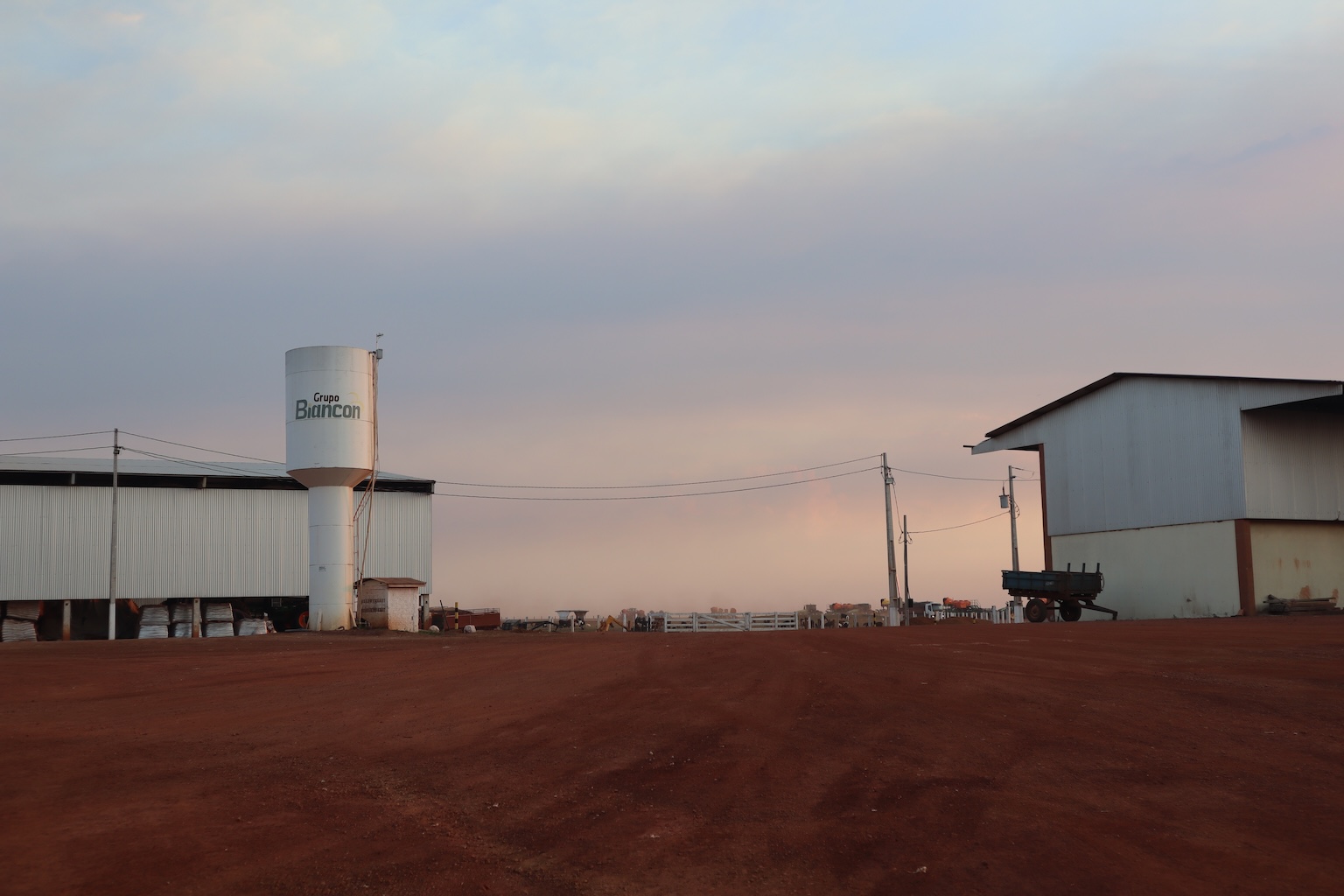 The Biancon farm in Mato Grosso’s Itaúba municipality. Image by Mie Hoejris Dahl.
Collaboration between the agricultural sector and environmental organizations is often challenging because in Brazil agriculture has become polarized, according to Oliveira and Mangueira. Oliveira says environmental protection is often seen as going against economic development, but the opposite is true. Environmental protections are needed for agriculture to survive in the long term, and “the most affected by deforestation and climate change will be the rural sector,” Oliveira says.
Mangueira says it’s part of TNC’s mission to achieve conservation goals through close collaboration with the private sector, including the agribusiness. “Agriculture has historically played a role in land-use change, but is also an important part of the solution,” she says. She adds that it sends an important signal to the market and the agricultural sector to have a large corporation like Syngenta and Brazil’s biggest bank focus on regenerating lands.
Rivoire from the International Seed Federation says another important element is to promote forest maintenance and reforestation, including through the Tropical Forests Forever Facility (TFFF), a $125 billion Brazil-led global fund for tropical forest conservation. He says sustainable agriculture initiatives need better access to finance, adding that current funding of food production systems accounts for less than 5% of total climate funding. It’s estimated that transforming food production systems will require around $1.1 trillion per year — nearly 40 times current investment levels, Rivoire tells Mongabay.
“It is known that degraded forest and deforestation account for 10% of emissions. Therefore, investing in ambitious reforestation programs, starting with quality plants and seedlings, could help and support climate action,” Rivoire says. “We need to stop deforestation and start reforestation.”
Banner image: Farm in Mato Grosso, Brazil. Image by ©FAO/Max Valencia.
FEEDBACK: Use this form to send a message to the author of this post. If you want to post a public comment, you can do that at the bottom of the page.
