
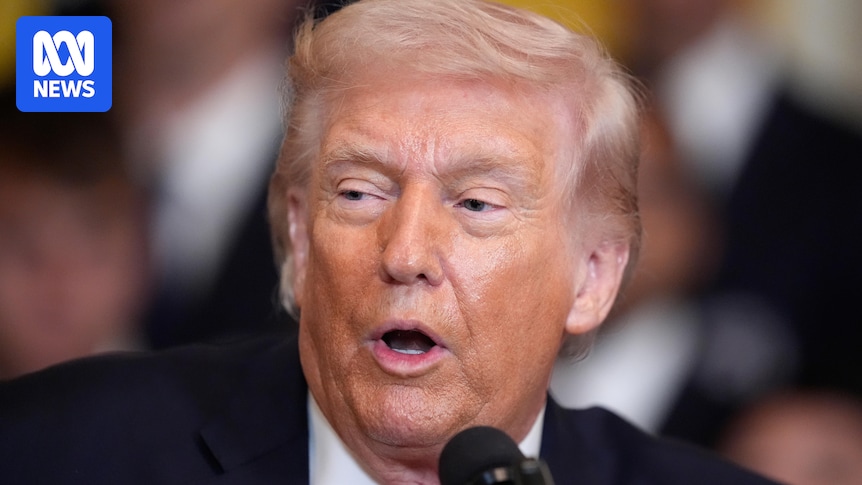
On the scale of Donald Trump insults towards friends and allies, this was of a lower order. Nothing like what’s been directed at British Prime Minister (he’s “no Winston Churchill”) Sir Keir Starmer.
Still, when the US president disapprovingly lumped Australia in with a list of other allies who had refused to help re-open the Strait of Hormuz, it was too much for one leading conservative.
Iran war live updates: For the latest news on the Middle East crisis, read our blog.
Not for the first time, Andrew Hastie showed he’s unafraid of taking on Trump and his MAGA hat-wearing supporters on the right of Australian politics.
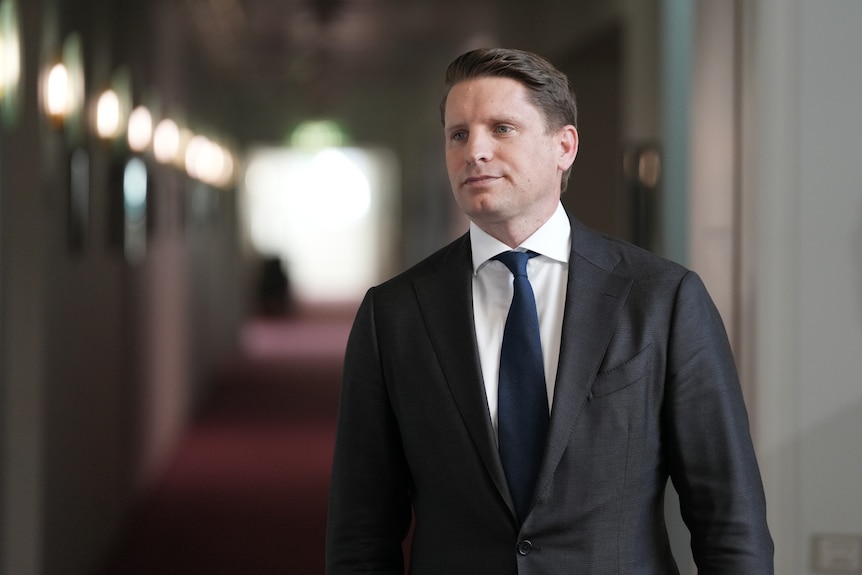
Shadow Industry Minister Andrew Hastie has said he thinks US President Donald Trump’s outburst at Washington’s allies was “petulant”. (ABC News: Matt Roberts)
“It was a petulant post from a president under pressure,” blasted Hastie, accusing Trump of lacking respect for a long-standing ally.
Australia wasn’t consulted on the war, already has a surveillance aircraft deployed to the region, and has its own national security interests much closer to home, he told ABC Radio National.
It was a more forceful pushback than anyone in the government could mount, publicly at least.
A privately bipartisan sentiment
For good measure, Hastie also took aim at the bigger problem — the apparent lack of any Trump plan to end this war. “As I like to quote Mike Tyson, ‘Everyone has a plan until they get punched in the face,’ and the enemy always has a vote.”
Privately, the sentiment is bipartisan as this war drags through its third week with no sign of resolution.
Loading
“There’s no plan, it’s chaotic,” says one senior Australian government figure, who insists there was no specific request for any assistance in the Strait of Hormuz, formal or informal. Not even a phone call.
Trump names Australia in outburst over lack of ally support in Iran
Hastie’s intervention again demonstrated the cut-through of the former special forces commander, while exposing fault lines amongst rival conservative camps.
Where One Nation’s Pauline Hanson (who famously dined at Mar-a-Lago with Gina Rinehart) won’t say a bad word about Trump, even as the oil crisis deepens, Hastie is unafraid.
Where One Nation’s Barnaby Joyce says Australia should send a navy ship to patrol the strait, without even being asked, Hastie is more realistic.
His approach is Australia-first, not Trump-first.
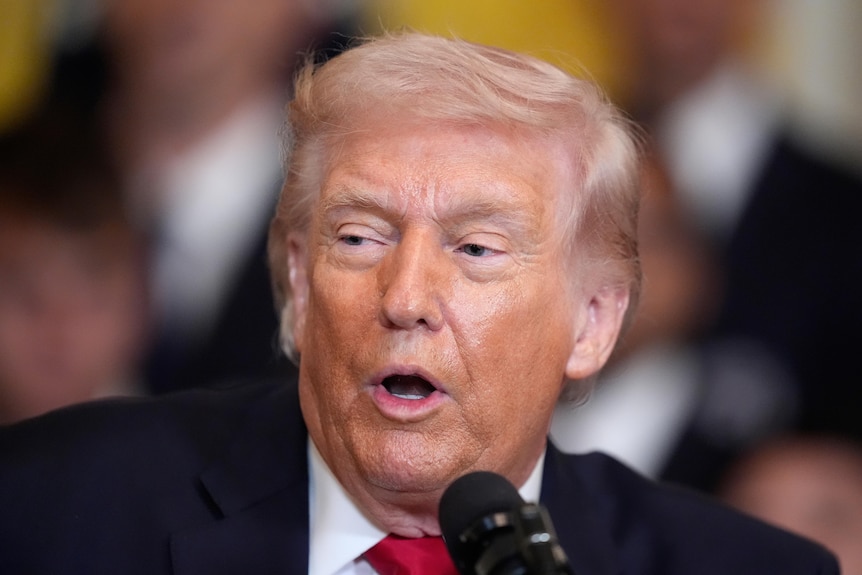
Donald Trump issued a blistering statement lashing NATO and other allies, including Australia, for refusing to participate in the United States and Israel’s war on Iran. (AP: Alex Brandon)
Cracks emerge in the Trump administration
No US ally has sent navy ships to escort oil tankers through this dangerous stretch, where Iran has demonstrated an ability to wreak havoc with relatively cheap drone and missile attacks.
More importantly, the Pentagon hasn’t taken the risk of sending one of its own ships through the strait either. At least not yet.
While allies largely ignored Trump’s pressure and derision this week, cracks also emerged within the administration itself.
Trump isolates himself abroad, and at home
Director of the National Counterterrorism Centre Joe Kent quit in opposition to the war, claiming “Iran posed no imminent threat to our nation”.
It’s a point most US allies, including Australia, have been unwilling to make.
The Albanese government has sidestepped the question of whether Iran posed an “imminent” threat, while maintaining it cannot be allowed to acquire a nuclear weapon.
The US and Israeli air strikes have inflicted serious damage on Iran’s leadership and missile capability. The impact on Iran’s remaining stockpile of enriched uranium is less clear.
It would be difficult for Trump to declare any sort of “victory” while the Iranian regime still holds its enriched uranium and control over the main choke-point in global oil supply.
Loading
The alternative, of sending ground troops in to secure the uranium and the Strait of Hormuz, is hardly appealing either.
Whatever happens, two and a half weeks of war has already delivered a profound impact beyond the war zone itself.
It’s straining alliances and damaging the global economy.
Meanwhile, a budget looms
The extent of economic damage in Australia is being closely assessed by Treasury. As the ground continues to shift, it’s modelled bad, worse, and disastrous scenarios, depending on how long this war continues.
In a major pre-Budget speech today, Treasurer Jim Chalmers will reveal the latest Treasury thinking. He’s not pretending inflation wasn’t already a problem before this crisis, but warns the outlook is now far more dire.
Inflation could rise above 5 per cent. And as for economic growth: “Treasury estimates that GDP would be 0.6 per cent lower in 2027 and even by 2029 would still be below where it would have been without the conflict.”
Political analysis that matters
Even if a speedy resolution to the war is found, the damage to oil and gas infrastructure in the Middle East means the economic impact will have a long tail. No snapback, in other words.
Chalmers sees this crisis as “a reason to go further, not slower” on reform.
He will today promise a May budget squarely focused on three ambitious reforms. “A savings package. A productivity and investment package. And a tax package.”
Expert analysis on the Middle East:
The treasurer is suggesting he won’t waste this crisis. And importantly, he is not flagging more spending on cost-of-living relief for households. It’s a change from Labor’s approach to the post-COVID inflation spike.
But even the best minds at Treasury can’t know what will happen with global oil supplies, or how Trump plans to end this war, with or without the help of allies.
David Speers is national political lead and host of Insiders, which airs on ABC TV at 9am on Sunday or on iview.
Loading…