
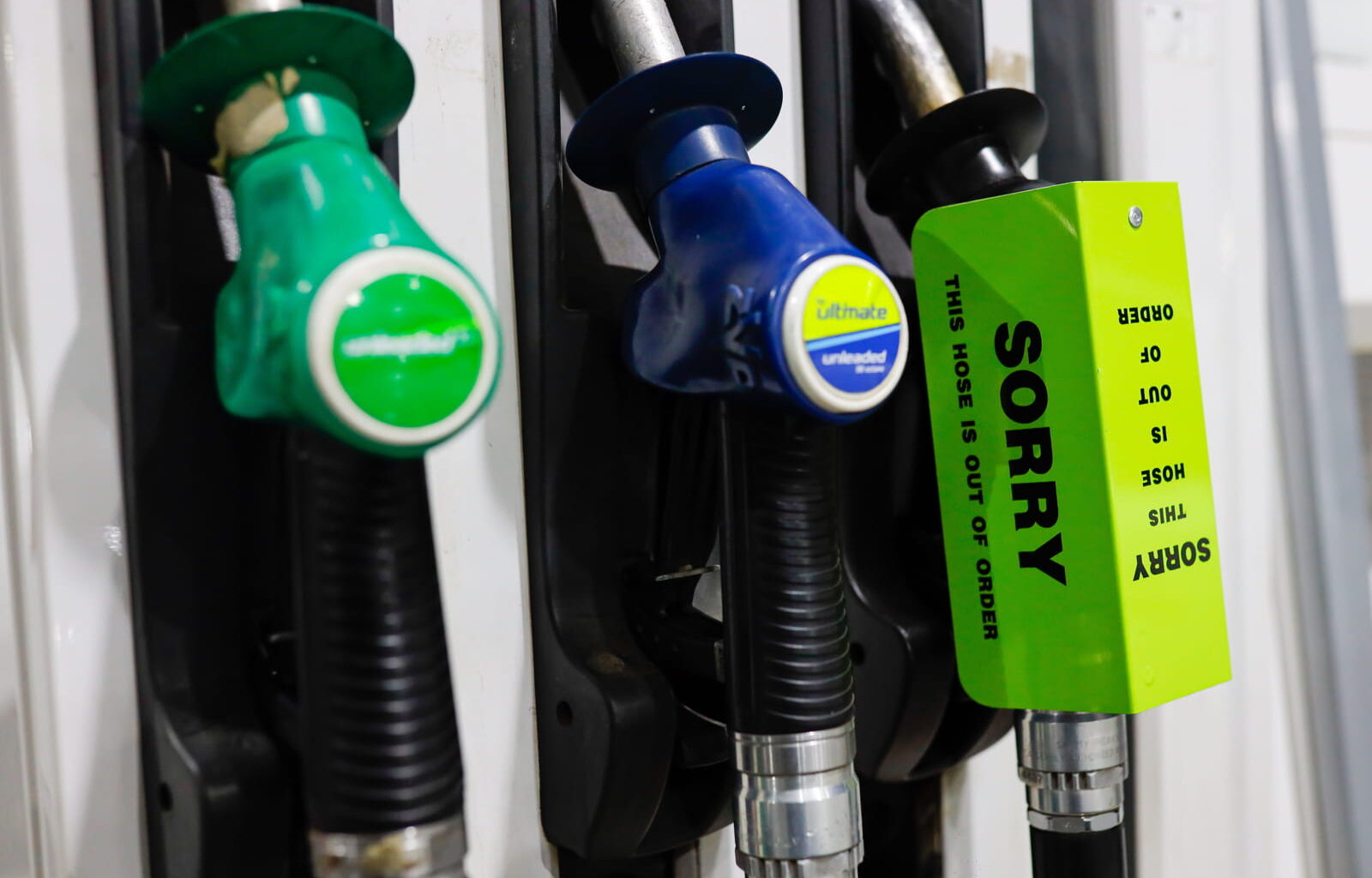
With global insecurity once again exposing Australia’s dependence on imported fuel, the lack of long-term policy memory and action by Canberra justifies a public “we told you so”. No recent Australian government can say it was not warned.
In Australia’s immediate history are the disastrous supply chain disruptions of Covid and the war in Ukraine, both of which sparked a reminder of the follies of complacency. Now in 2026, Australia finds itself with the same perverse sense of déjà vu.
Sadly, the current fuel security issue was entirely predictable and, in fact, comprehensively predicted.
The “fair-weather” approach that plagues Australia’s fuel security could not contrast more starkly with the concerted action that has been directed towards critical minerals.
Many media and policy commentators are afflicted with a chronic short-term focus that characterises Australia’s political treatment of energy security. And many have forgotten that little more than a decade ago, the 2014–15 senate inquiry into Australia’s transport energy resilience and sustainability examined the very issues in which the country is currently mired; fuel supply shortages brought on by global instability.
In its prescient evidence to the inquiry, Engineers Australia stated: “[The] policy equivalent of ‘the cheque’s in the mail’ is worrying. Liquid fuel in transit to Australia through some of the world’s geopolitical hotspots is not fuel security, it is wishful thinking.”
Indeed, over the past decade, a diverse range of organisations – for example, the Australia Institute, Australian Strategic Policy Institute, Engineers Australia, the Maritime Union of Australia, the Lowy Institute and NRMA) has forecast our current problem. Whether the topic is liquid fuel security, energy security more broadly, or the overarching issue of national security, Australia simply cannot say it was not warned.
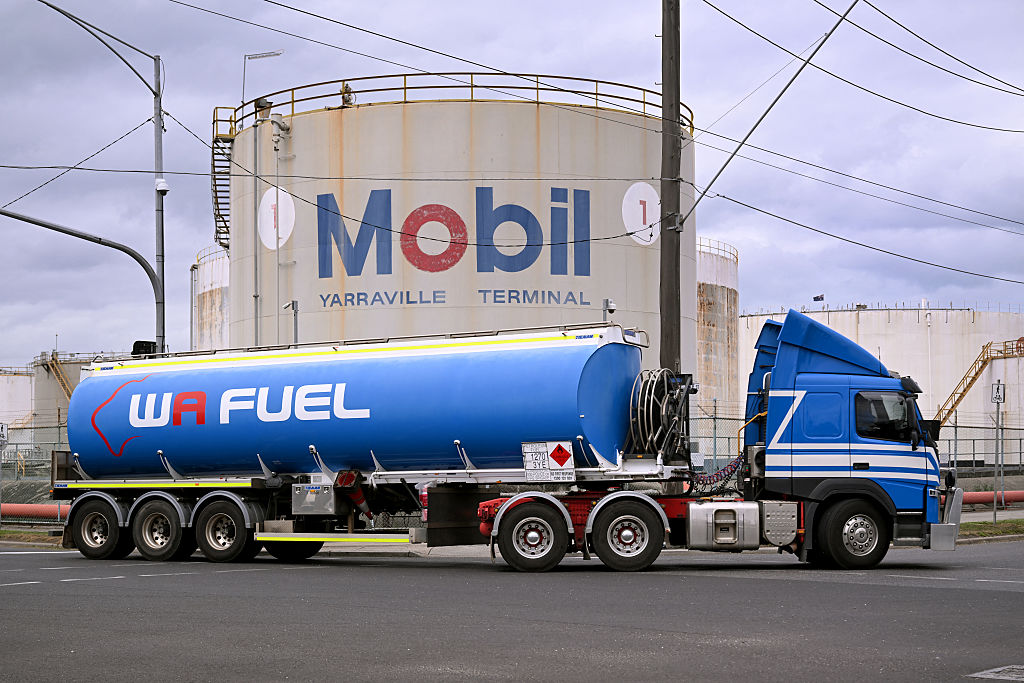
A fuel distribution centre in the inner-western suburbs of Melbourne, Australia (William West/AFP via Getty Images)
As New Zealand’s Foreign Minister Winston Peters recently stated, both Australia and New Zealand ought to have known that some of their oil refineries should have been kept open. New Zealand now has no onshore refining capacity, and Australia only has two remaining refineries. As Peters remarked, the current situation is the result of both countries “being far too cocky about the world circumstance [they’re] in”.
The cockiness Peters describes was visible even before the 2014–15 inquiry. The preceding 2013 parliamentary report into Australia’s oil refinery industry concluded that:
“… changes in domestic refining capacity to date will not impact on Australia meeting its liquid fuel requirements. There are reliable, mature and highly diversified international fuel supply chains, which provide Australia with economic security … Australia’s supply chains and infrastructure [will] continue to meet local fuel demands”
Everything is fine, until it is not – the same policy approach with the same predictable outcomes. When it comes to national security, “market-based solutions” do not age well, and this exposes a major tension between commercial interests and national security interests.
It is undeniable that large-scale onshore storage of any commodity is expensive. Industry does not want to foot the bill, and nor should it. This leaves government to do the heavy lifting. And in an already stretched fiscal environment, expenditure on something consistently assured to be unnecessary would not be well received by an agitated electorate.
A much better policy approach to these complex problems has played out in the critical minerals debate, particularly evident in the cooperation seen between historical trade sparring partners the European Union and Australia. While it is de rigueur to criticise policy incompetence and inaction, in the case of critical minerals, things are progressing and the mistakes of the past appear to have been learned.
The EU still relies on China for 100% of its heavy rare earth element supply. Within the realm of national security, sole-source arrangements from partners who have a record of weaponising trade are a major concern.
Indeed, the “fair-weather” approach that plagues Australia’s fuel security could not contrast more starkly with the concerted action that has been directed towards critical minerals security, where clear and direct policy steps were taken to militate against this real threat to global supply.
The 2014–15 policy recommendations of Engineers Australia towards liquid fuel security are a model example of policy best practice in the face of identified threats. For critical minerals, the approach has been adopted almost to the letter:
“[recast the] sector as a national capability with people, skills and education that can generate innovative products and services, rather than a commodity supplier where the location of the production is irrelevant”.
The EU–Australia approach is textbook. Agree a problem, form multilateral international partnerships, build close cooperative relationships with industrial operators, use price support mechanisms to encourage long-term investment in material supply and refining capacity, then negotiate international trade agreements to open export markets for raw commodities and refined materials.
Australia’s experience with critical minerals shows that effective policy options are available, and there is a template for action. The missing element is political will and a clear-eyed recognition of history … but we were warned.
This research is part of the EU Centre of Excellence in Critical Minerals at the University of Canberra, EUOzCRM – 101176236 – ERASMUS-JMO-2024-COE, co-funded by the EU Erasmus+ Programme. The views expressed are solely those of the author and are independent of sources providing support.