
The outbreak of war in the Middle East means the Australian economy is now in an environment where the risks are “high and rising”, according to the latest Financial Stability Review published today.
Despite that, the Reserve Bank insists Australia’s financial system is still “resilient” and that the vast majority of households will be able to weather the two interest rate hikes it has announced — so far.
If a major economic downturn were to happen, the nation’s banks are “well positioned to absorb significant loan losses while continuing to support the economy through lending to households and businesses”, the RBA said.
RBA governor warns of the recession we might have to have
The biggest risk that the RBA identified is the “potential for elevated geopolitical tensions to spill over into a severe international shock”.
“The conflict in the Middle East could trigger a larger shock that destabilises the global economy, particularly if supply disruptions to oil and other commodity markets are prolonged,” the central bank warned.
Since the United States and Israel’s decision to attack Iran in late February, the price of crude oil has spiked well above $US100 per barrel, leading to a rapid surge in Australian petrol prices.
Earlier this week, Treasurer Jim Chalmers conceded this may lead to inflation rising above 5 per cent, if the Middle East war dragged on and the Strait of Hormuz, through which one-fifth of the world’s oil flows, remained closed.
“Tensions among major global powers also have the potential to escalate, hostile cyber and other actions are intensifying, and strains in the international rules-based order are increasing alongside the risk of global geo-economic fragmentation,” the RBA noted in its report.
Artificial intelligence and ‘significant downgrades’
The RBA also flagged the high valuations of artificial intelligence (AI)-related investments to be another major risk to Australia’s financial stability.
That is particularly if there is a “sharp revision” on the “productivity benefits” of AI, leading to a “significant downgrade in profitability forecasts and asset valuations”.
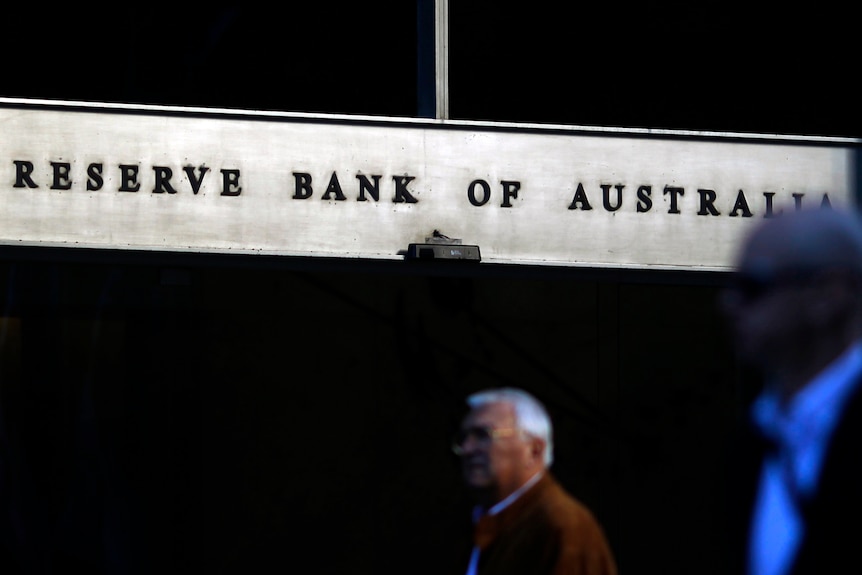
The RBA has issued two interest rate rises this year. (Reuters: Tim Wimborne)
The bank warned that: “Negative consequences for assets quality in the financial system and investment plans in the real economy could result.”
Indeed, another related risk it has previously flagged, which the RBA still sees as a significant issue, is that share and bond markets worldwide “remain vulnerable to sharp corrections” — especially if “the optimistic outlook” of the AI sector is “substantially revised”.
Despite that, it said “risk premia” across global markets remains “fairly low by historical standards”.
In other words, the RBA is suggesting investors appear to be quite relaxed, largely ignoring the potential risk of a significant market upheaval.
Given that share markets are still close to record highs, despite their recent falls, it is possible people are underestimating the magnitude of the risks their investments could be exposed to.
Over-reliance on China
One of Australia’s other major weaknesses is its over-dependence on its largest trade partner, China.
The RBA said China’s economy continued to grapple with weak demand, low inflation, a years-long slump in property prices, surging government debt, and “amplified tensions with some trade partners” — without naming the United States explicitly.
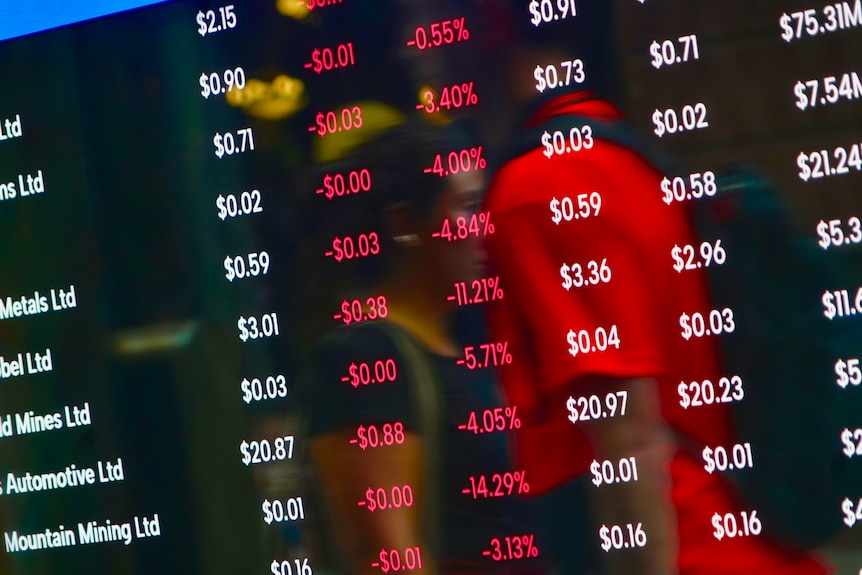
ASX falling amid war with Iran. (ABC News: John Gunn)
“A disruptive crystallisation of these vulnerabilities could sharply increase risk aversion in global financial markets and result in reduced demand for Australian goods and services,” the RBA noted.
The RBA believes it is not inconceivable that a “perfect storm” of these weak Chinese economic conditions could occur, which would have a significant impact on Australia’s economy.