
Australia’s unemployment rate rose to 4.3 per cent in February, up from 4.1 per cent, surprising economists.
Economists had forecast about 20,000 new jobs would be created, leaving the unemployment rate steady at 4.1 per cent.
Even though the number of employed people rose by 48,900 to 14,748,700 — more than double what was forecast — the unemployment rate also climbed due to an increase in the percentage of people aged over 15 actively looking for work.
The so-called participation rate rose by 0.2 percentage points to 66.9 per cent.
Follow the day’s business news on our live blog.
Some of those extra people looking were yet to find work, so the number of unemployed people grew by 35,000, which contributed to the 0.2 percentage point increase, according to Australian Bureau of Statistics.
“This month we saw fewer people who were unemployed and waiting to start a job in January move into employment in February, compared to recent Februarys,” head of labour statistics Sean Crick said.
“We also saw more people remaining unemployed this month compared to recent Februarys.”
RBA governor warns of the recession we might have to have
The release of the figures comes after the Reserve Bank board increased interest rates for the second time this year, to 4.1 per cent, pointing to inflation concerns.
The war in the Middle East has led to a spike in global oil prices, driving up costs in Australia.
Reserve Bank governor Michele Bullock said the “board’s strategy had not changed”, when asked by the media whether unemployment had to increase to help bring down inflation.
“The board’s strategy is still to try and maintain as many of the gains in employment as it can,” she said.
“We don’t want to see a recession or a large rise in unemployment if we can avoid it.”Loading…Part-time employment up
While the total number of people employed grew by 48,900, most of that was in part-time jobs.
Part-time employment increased by 79,000 people, while full-time employment fell by 30,000 people.
Why economists hate low unemployment
“This month we saw more people move into part-time employment, particularly those aged 65 and over,” Mr Crick said.
“Additionally, this month we saw that fewer people are leaving jobs to retire compared to a year ago.”
The growth in both employment and unemployment has resulted in a 0.2 percentage point increase to the participation rate, which was 66.9 per cent in Feburary.
“We recognise that the labour market outlook is starting to look tenuous,” KPMG Australia chief economist Brendan Rynne said.
“With a higher interest rate environment and higher cost of living outlook due to increased petrol prices, it seems people are looking to secure their household budgets by increasing their participation in the labour market,” he said.
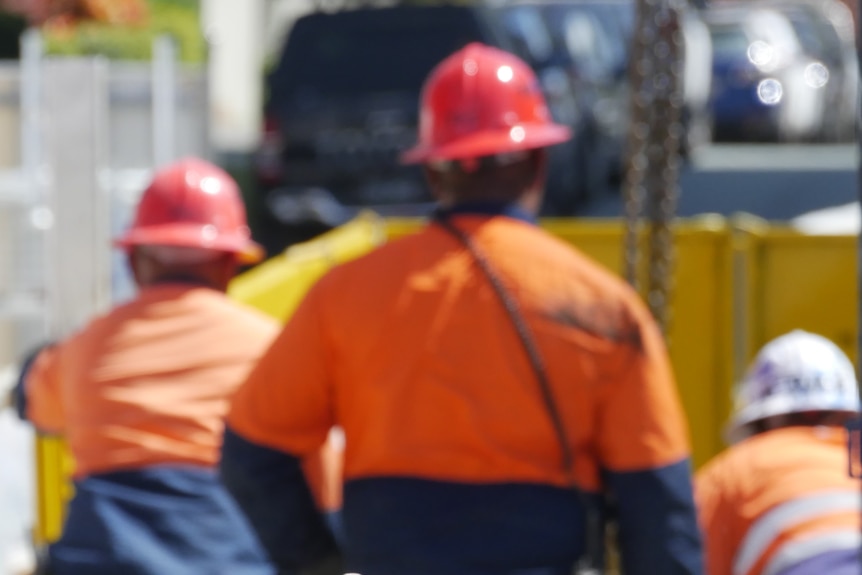
People looking to enter the workforce accounted for part of the increase in the unemployment rate. (ABC News: Steve Keen)
Oxford Economics Australia economist Harry McAuley said the labour showed “early signs of slowing down in February”.
“Based on Tuesday’s rates decision and the ongoing conflict in the Middle East, we have bumped up our unemployment forecasts,” he said.
“We now expect near-term unemployment to rise slightly faster through 2026 and peak at just shy of 4.6 per cent in early 2027.”
Loading…Rates could rise again in May
Annual inflation was at 3.8 per cent in January, but Treasurer Jim Chalmers said there was a “very real” prospect that it would reach 5 per cent this year due to the ongoing conflict in the Middle East.
“With inflation set to approach 5 per cent, the renewed rise in the unemployment in February won’t prevent the RBA from hiking rates further,” Capital Economics Asia-Pacific head Marcel Thieliant said.
Why did the RBA raise rates as households face petrol price double whammy?
He says the increase in the unemployment rate can be explained by a rise in the number of people employed combined with an increase in the participation rate, resulting in almost 84,000 people looking for work.
“As a result, the unemployment rate jumped back up form 4.1 per cent to 4.3 per cent,” Mr Thieliant said.
“That’s still barely higher than the 4.2 per cent recorded last year and in line with the RBA’s forecast that it will reach 4.3 per cent by June.
“Most importantly, the RBA thinks that the labour market is still too tight to meet its inflation target.”
Betashare chief economist David Bassanese says signs of a positive labour supply response, along with the lift in the unemployment rate, are likely to be welcomed by the RBA.
“My base case remains that the RBA is on track to raise rates in May, following another uncomfortably high March quarter CPI report in late April,” he said.