
The Athletic has launched a Cricket WhatsApp Channel. Click here to join.
Cricket. You don’t need to be fit to play, right?
That trope is still often trotted out about the game, often by casual observers and always to the despair of its regular followers. Yes, that was probably once true. And yes, there are doubtless plenty who still yearn for that yesteryear; the days when many of the sport’s great and good were famed for what would now be considered sub-optimal preparation.
Hydration came from watering-holes not water, and the only runs involved were those scored out in the middle.

BEAT OUR EXPERTS
Predict how you think the tournament will
play out. Can you beat one of our experts?
But modern cricketers are, almost without exception, fine athletes, built to withstand the wear, tear and duration of their chosen discipline(s). To prove as much, The Athletic joined Lancashire County Cricket Club’s men’s team for their pre-season fitness testing day. And, well… we learned that the hard way.
It is a Monday morning at Old Trafford. Not Manchester United’s football stadium but a venue of the same name a six-hit away. It hosts international cricket, but primarily serves as Lancashire’s home ground.
Although the first over of the 2026 domestic summer of English cricket is weeks away, those present require neither bat nor ball. Instead, ahead of us is a day that some love, others love to hate, and a few simply hate. All, though, know its importance.
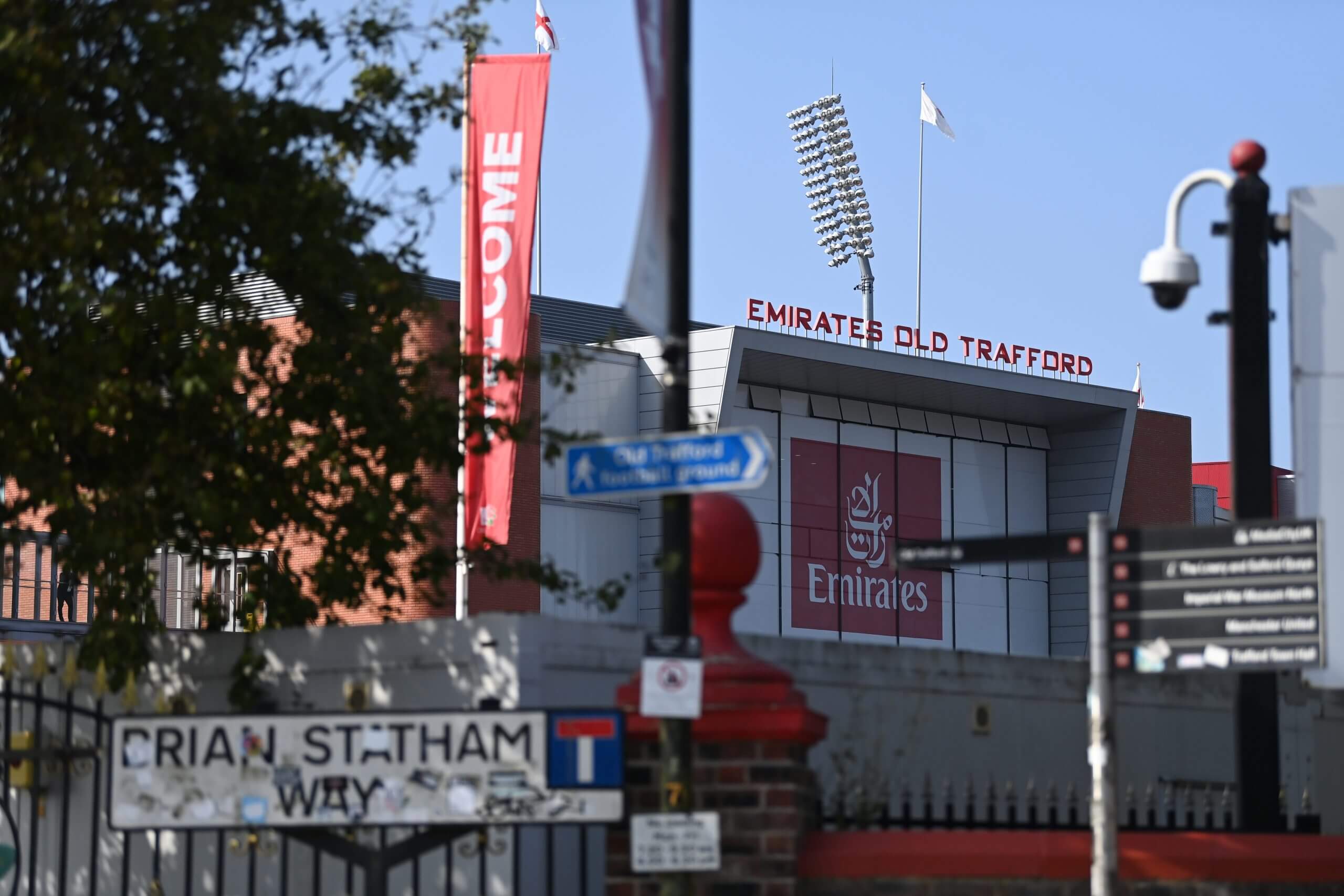
Old Trafford, the Manchester home of Lancashire County Cricket Club (Gareth Copley/Getty Images)
The British winter split Lancashire’s squad. Some spent the dark, cold days beavering away in Old Trafford’s gym and indoor nets. Others chased both leather and sunshine abroad, playing either in various T20 franchise leagues, for national teams or in club cricket.
By 8.30am, the players’ area is buzzing. Figures, tall and short, muscular and slender, clutch a slice of peanut-butter toast, a granola-filled bowl or a coffee.
Over by a trio of physio benches, a queue of shirtless players has formed, as each squad member must have his skin-fold measurements taken by lead strength and conditioning coach Tom Webster.
Callipers in hand, Webster calls out the reading for eight sites on the body, the sum of which gives an individual’s total score. It is one of three tests, along with sprints and a 2km (1.24 miles) time-trial run mandated by the England & Wales Cricket Board (ECB).
“When everyone thinks about skin folds, straight away they think about who is going to be overweight and who needs to lose weight, don’t they?” Webster explains.
“But just as important are the ones that need to gain some muscle to be strong and robust. I’m more worried when they get a really low score. For me, that is more of a concern than the other end of the scale — you can always trim down. Each athlete will have their own focus and goal.”
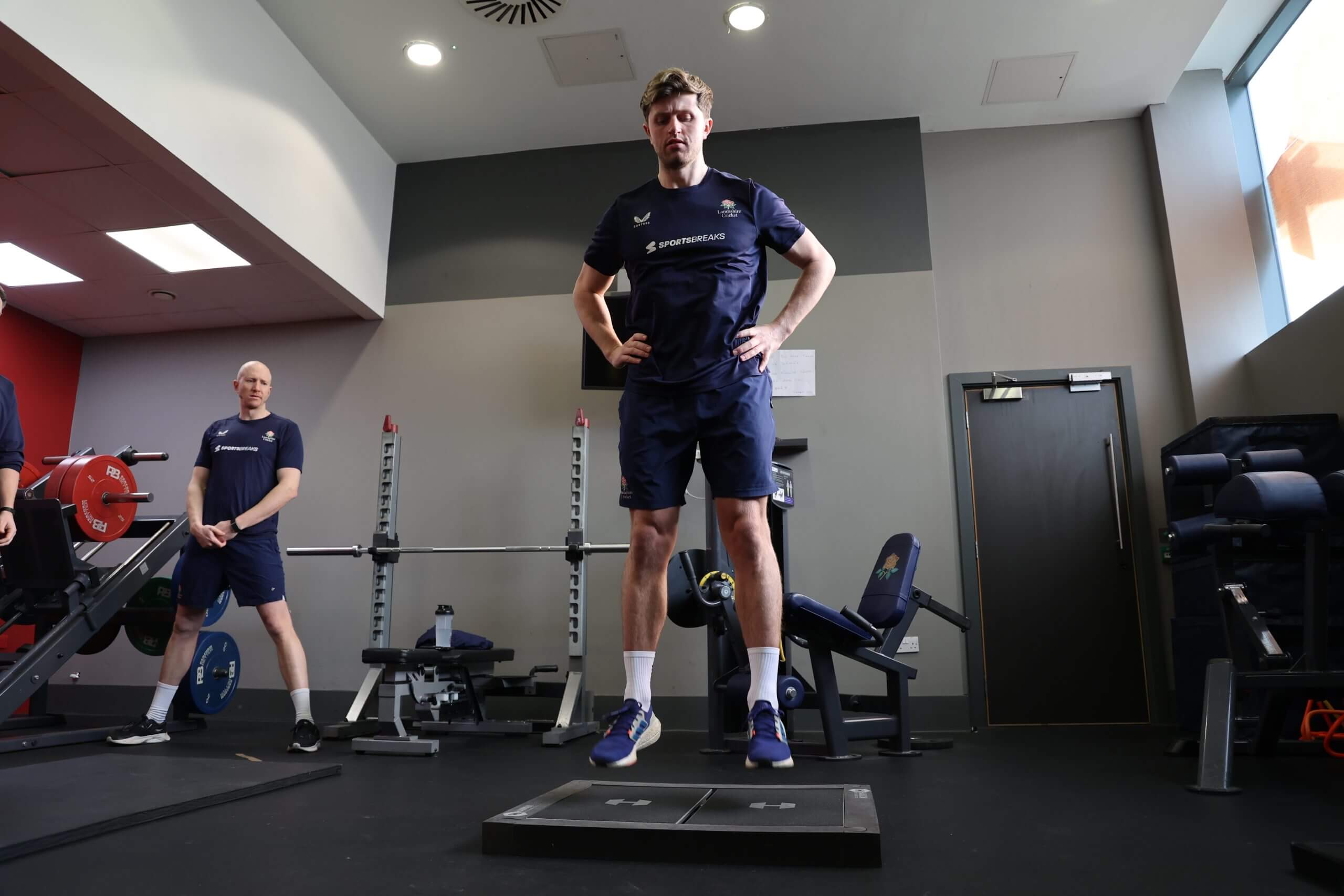
Jack Blatherwick conducts the standing jumps while team-mate Luke Wells watches on (Lancashire County Cricket Club)
Next, it is downstairs for standing jumps. Feet on the floor; hands on hips; wait for the beep; jump. Simple. The Athletic, going in between the efforts of Jack Blatherwick and Luke Wells, manages 27cm (just under 11in).
“A good jump is anything above 40cm,” says Christina Carr, a member of Webster’s staff. Some light journalistic pressure ends in Carr reluctantly agreeing that 27cm is a decent start for a non-professional athlete. Blatherwick and Wells are the squad’s best two jumpers, each exceeding 50cm.
It was an unfair sandwich to be the filling in.
The leaps, like many of the day’s exercises, are measured by Hawkin Dynamic Force Plates. The state-of-the-art technology enables Lancashire to run all testing in-house and ensures the gathered data is objective and precise.
Such advantages are what director of cricket performance Mark Chilton, who, having played for Lancashire between 1997 and 2011, now oversees all elite and pathway cricket, is most proud of.
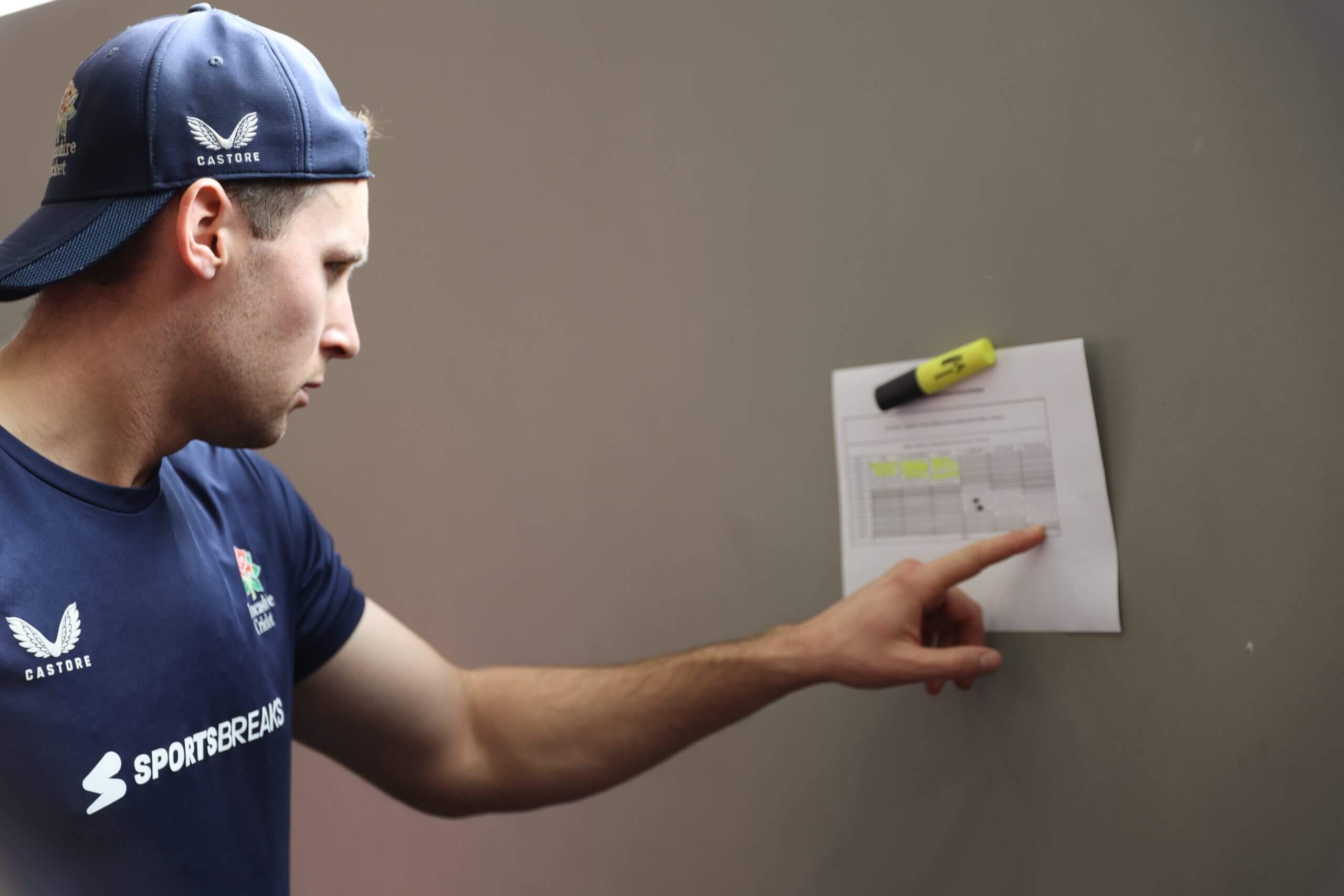
Tom Hartley checks what manner of pain awaits (Lancashire CCC)
Chilton also sings the praises of a team consisting of four full-time physiotherapists, three full-time strength and conditioning coaches, plus a doctor, a nutritionist and a psychologist. The women’s team have a similar-sized staff.
“We pride ourselves as a club in taking that part of the players’ development really seriously,” Chilton says. “We do have high expectations and push them in this area. But we’re doing it for the right reasons, not just to beast them.
“It is based on a lot of research, data and evidence that suggests that if you get yourself in this type of condition, you’ve got more chance of getting out on the field (as part of the Lancashire first team). That is ultimately what every player should be striving for.”
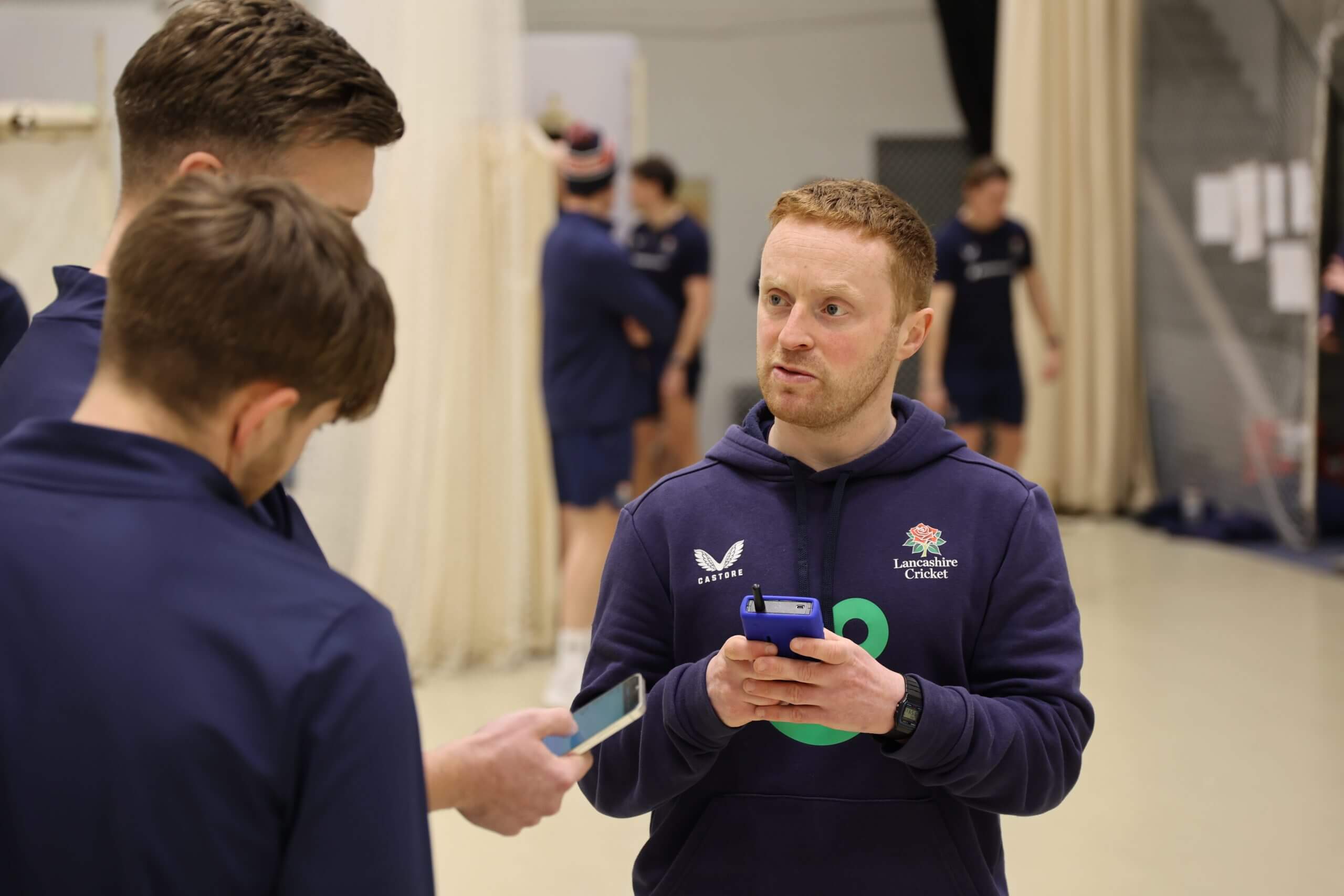
Lancashire’s lead strength and conditioning coach Tom Webster (Lancashire CCC)
Lancashire also ensure staff members are available at as many youth-level games as possible.
“The (age-group) pathway is voluntary, so we don’t push it too hard,” Chilton adds, “but we try to embed those professional behaviours into them a bit earlier, so that the transition then between the top end of pathway and being a pro is a little more seamless.”
At 9.25am, herded by former England opener Keaton Jennings, the squad cross to the indoor sports hall and begin some gentle running and stretching. What felt to The Athletic like a smart idea at the time of pitching this article is suddenly daunting.
Joining in a fitness test with 20-odd professional athletes can only end in embarrassment.
Newly-signed all-rounder Paul Coughlin spots your correspondent’s discomfort and begins explaining everything happening. Once suitably warmed-up, sprint testing begins; 40 metres (44 yards) in total, with their times measured over the first 20m and then for the rest.
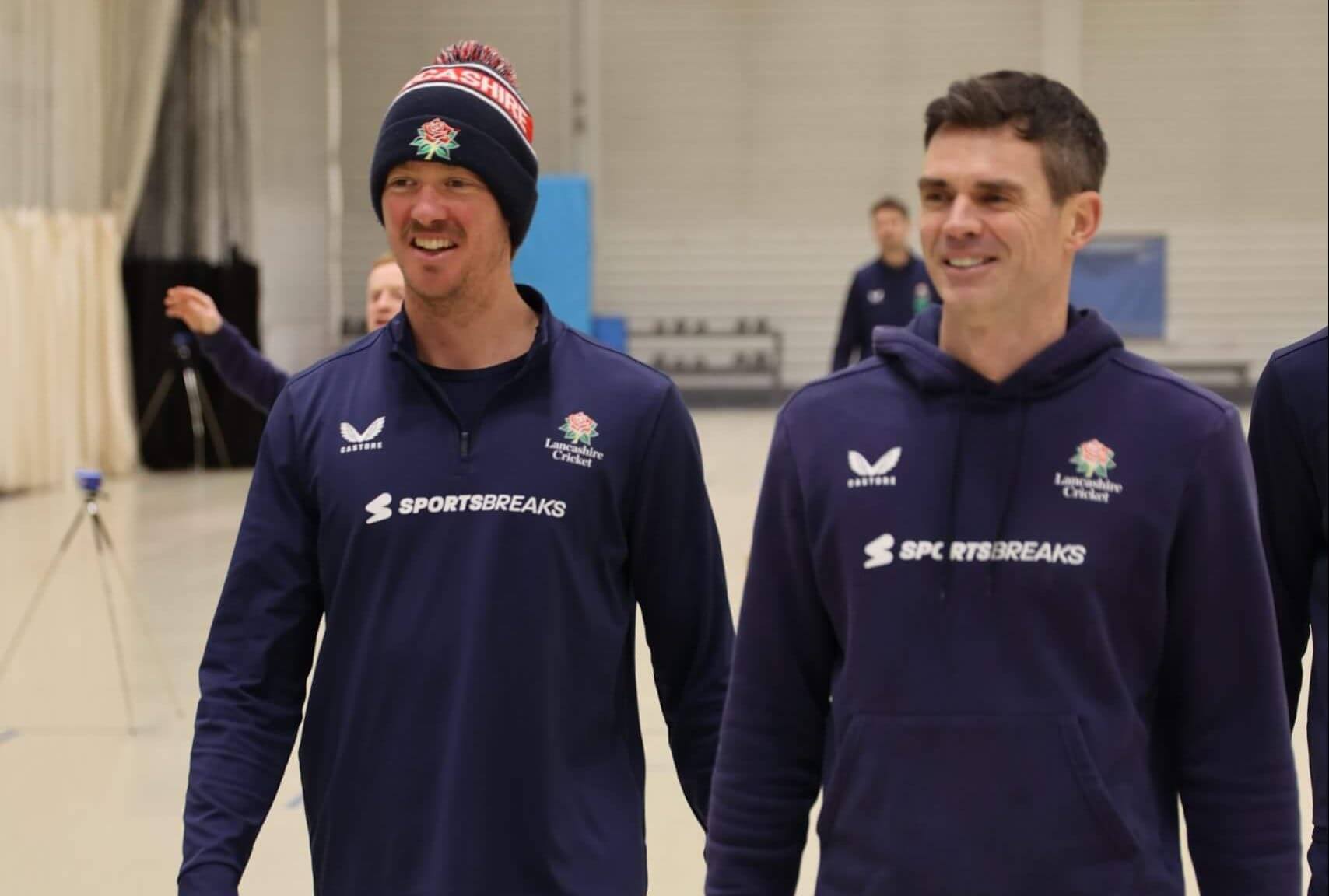
Keaton Jennings, left, and Sir Jimmy Anderson prepare for the sprint tests (Lancashire CCC)
An orderly queue forms, a clear divide visible. The quick ones, generally those nearer to age 20 than 30, head keenly to the front. At the back is a gaggle of thirty-somethings (and one forty-something) whose aims are limited to respectability and the avoidance of hamstring damage. A crash mat is positioned at the end of the hall, just in case.
Coughlin is rapid, earning admiring glances. He is 0.4 seconds faster than the team-mate who ran before him. It doesn’t sound like much but, as Jennings points out, “that’s over 20 metres. If you multiply that over a longer distance…”
The Athletic goes last, with a flying start leading to peak speed at the halfway point. Encouragement, or maybe it is laughter, echoes around the room and the left hamstring twangs slightly; veterans Wells and Jennings are down at the end, smiling and pointing out the heightened risk of injury that comes with irregular sprinting.
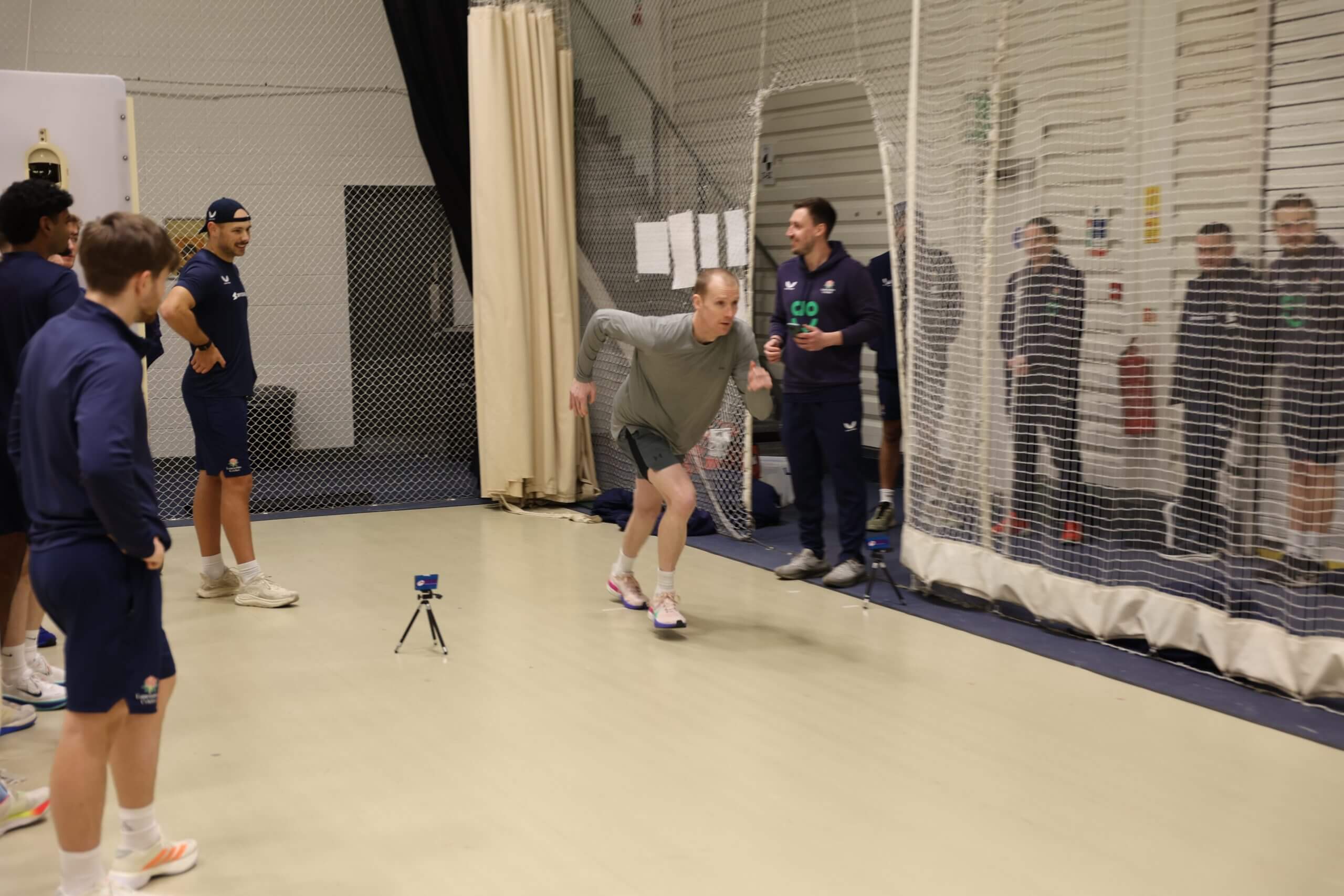
Sam Dalling starts his sprint test as the Lancashire squad scrutinise his prowess (Lancashire CCC)
With a sweat now broken, the day’s main event begins.
In the split-room gym, the players break off into pre-allocated groups of four or five, rotating around a series of exercises designed to measure either maximum capacity or endurance.
The Athletic is with England spinner Tom Hartley, all-rounder George Balderson, quick bowler Blatherwick and first-year professional Arav Shetty. A 20-minute gap in the schedule gives our group just enough time for some caffeine and a natter.
Hartley last played a Test match in March 2024, but was part of the England Lions squad (effectively a B team) that shadowed the full men’s side on tour in Australia over the winter. “Webby is a great man — he cares a lot,” he says. “He wants to see everyone do better, to make sure that each week they are getting better, faster, stronger. My fitness has come a long way since I signed (professionally in 2019).”
Even while he is abroad, Hartley is under Webster’s watchful eye.
“Lancs will give me a core programme to follow, and I’ll do that during the gym slots we get. The ECB team will aid us in doing those programmes, and they may sometimes adjust it, depending on how we are feeling or how intense the cricket is.”
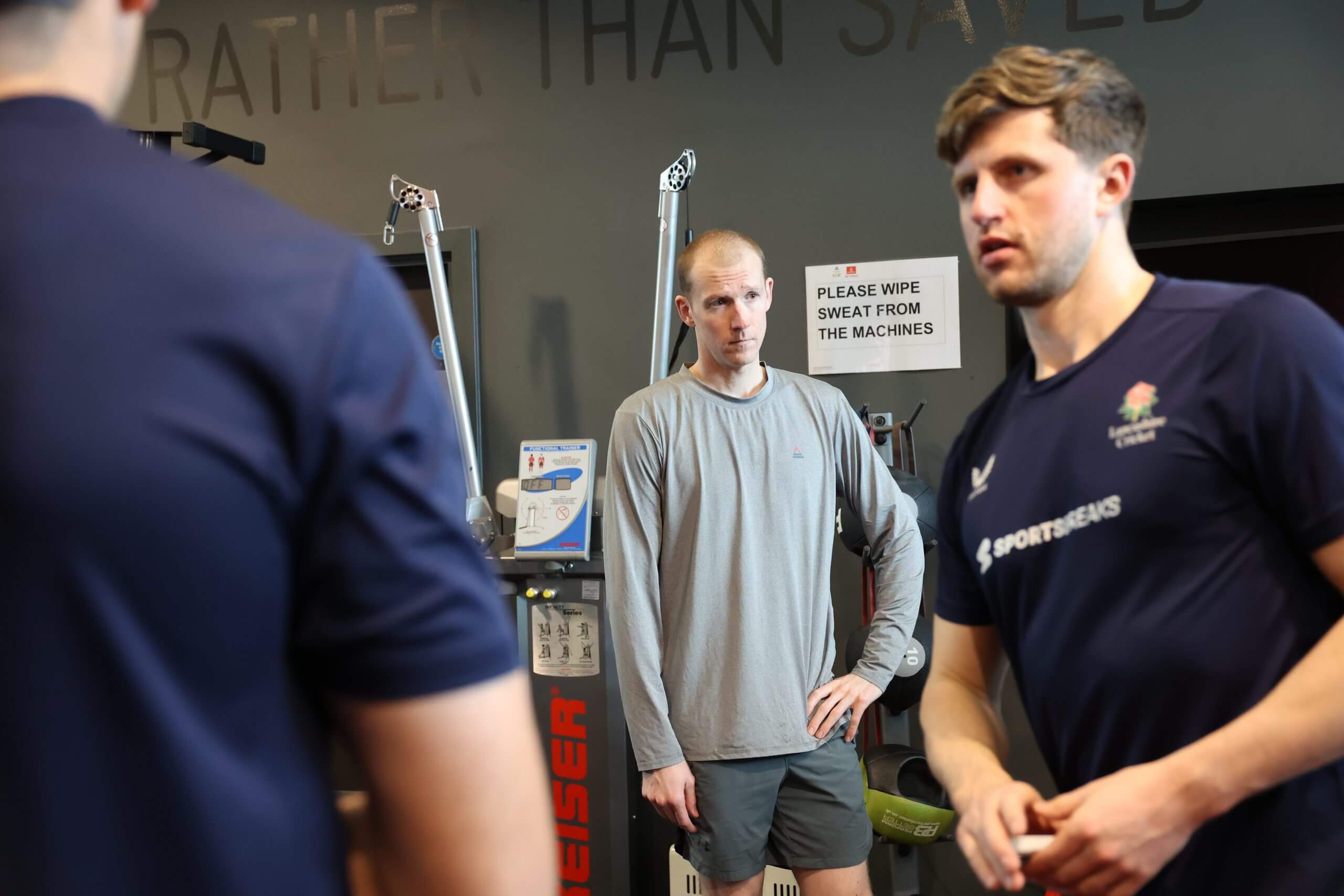
Our man frets as Blatherwick prepares for the next test (Lancashire CCC)
“That’s one of the biggest things that’s changed in the 12 years (since he started),” Webster adds later. “So many of the boys go off and play franchise tournaments. We had England under-19s players, Lions players, international players, there are so many moving parts, but we still have a duty of care to them, even when they are on the other side of the world.
“Each player will have their own individualised gym and running programmes, with me and Sam (Byrne, head physio) checking in at least weekly.”
For those remaining in England, such as Blatherwick and Balderson, the off-season is somewhat different. A six-week break begins on the season’s last day in September, and then it is back to work.
“It’s my favourite time of the year,” Webster says, eyes twinkling. “None of the lads think that, but I definitely do. I give them four weeks completely off, and then in that last two weeks they get sent a ‘Return to training’ programme. That’s about getting them moving again, getting back into it.”
What follows, after initial testing similar to what the players are currently completing, is six weeks of intense physical training. The squad’s Monday to Friday programme involves hypertrophy (building muscle), volume-focused gym work and endurance-based running sessions.
As Jennings explains, “It’s about getting to the season knowing that you’ve got enough in your legs to actually get through it. A day in the field involves covering between 12 and 15 kilometres (over nine miles). Bowlers might do between 20 and 25 kilometres, with a lot of sprinting. If I bat for a full day, that might be another 15 kilometres.”
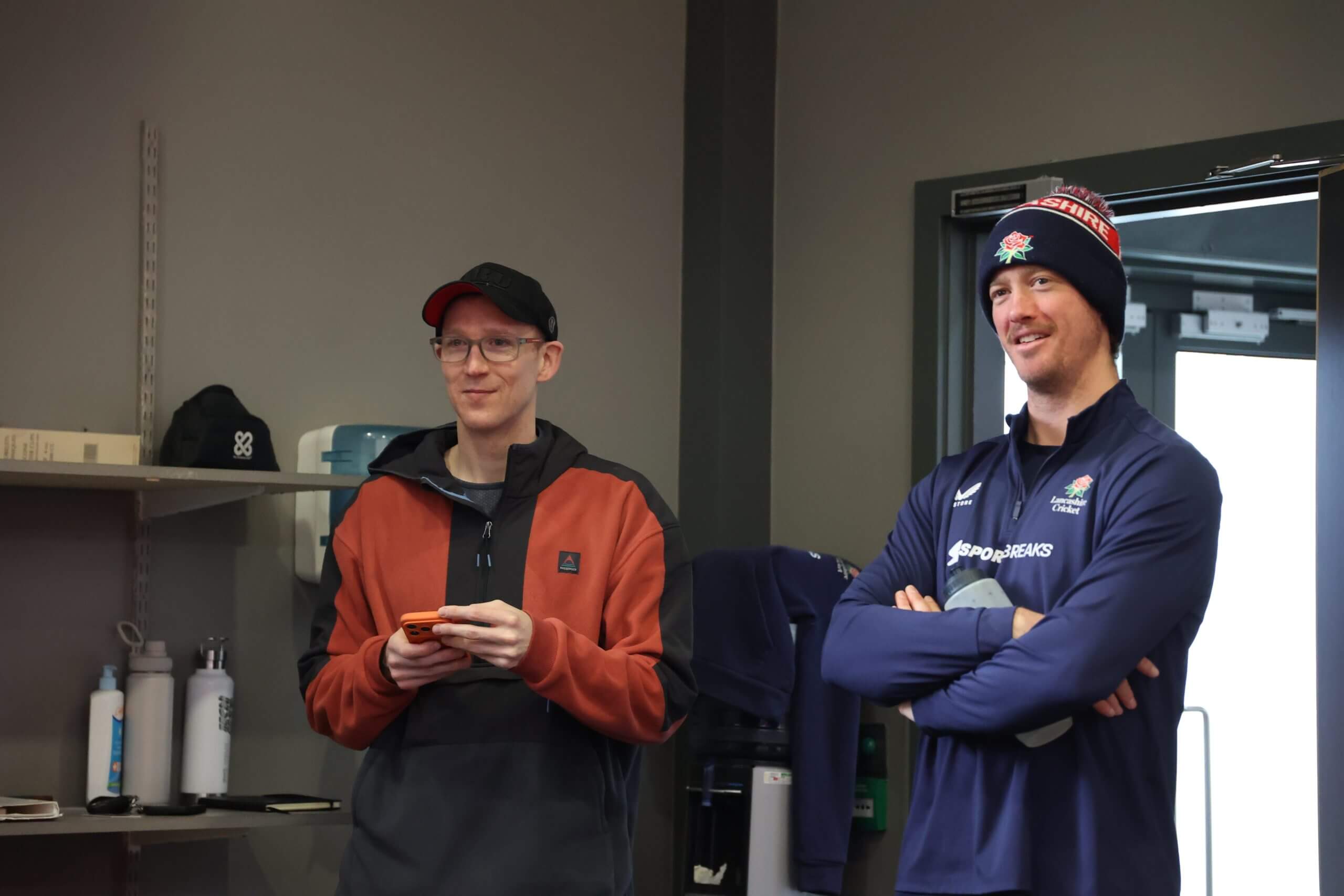
Skipper Jennings talks work loads with Sam (Lancashire CCC)
Before Christmas, cricket-based work is non-mandatory and, to break the monotony, Webster and his team incorporate away days. Recent months have seen the squad hiking at Rivington Pike, north of Manchester on Lancashire’s West Pennine Moors, and enjoy a training session at the Premier League’s nearby Burnley Football Club via Blatherwick’s friendship with their defender Joe Worrall.
During a two-week festive break, the players are expected to continue working away from the ground, with another testing day upon return. Then, from January, three compulsory cricket sessions are added to continued fitness work. The next two six-week blocks are separated by a “de-load week, where we try and keep all the intensity but decrease the volume, so everyone does half-sessions,” Webster says. “That gives the body a chance to refresh and adapt to all the different pressures it has been under.”
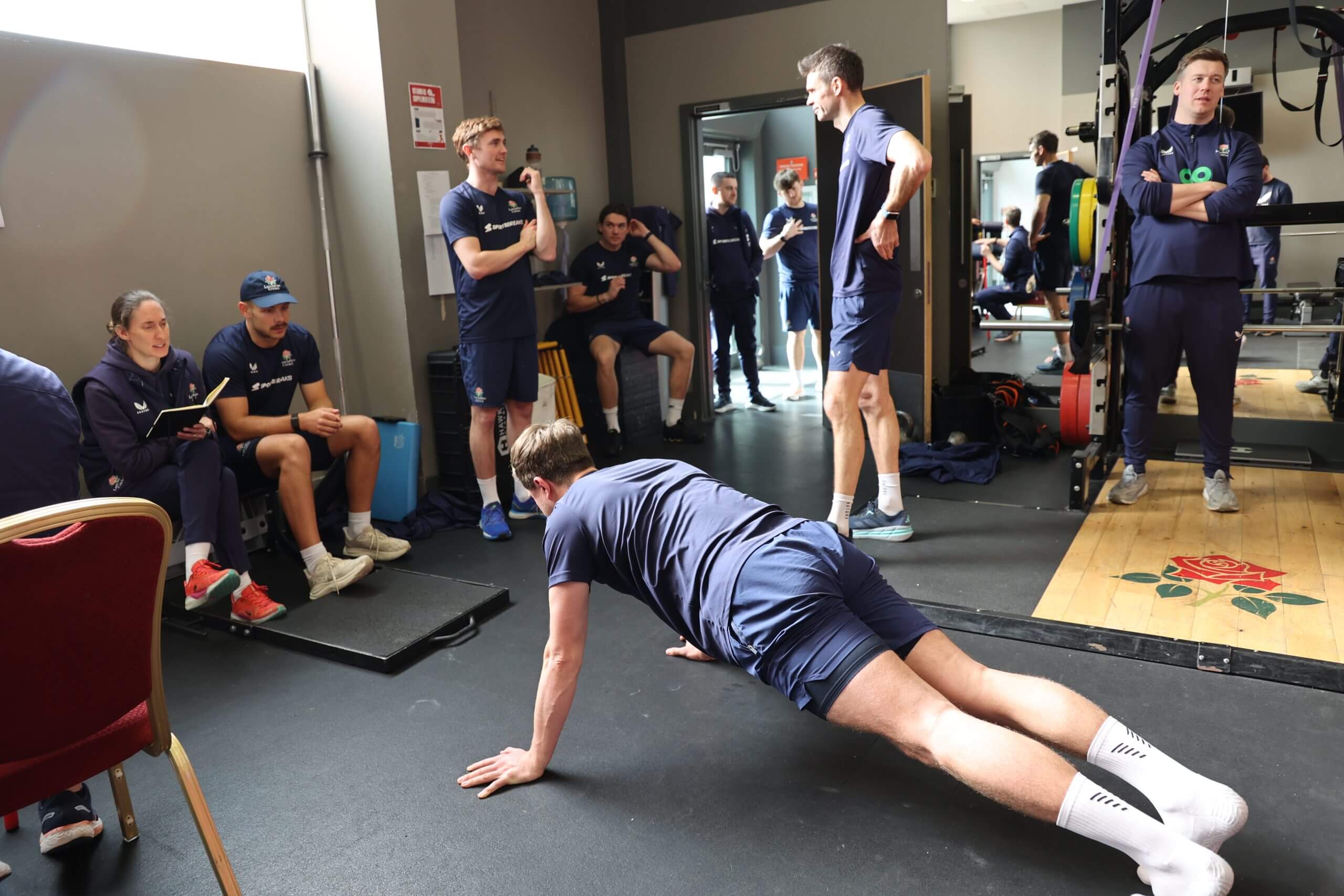
Plank time (Lancashire CCC)
Hartley’s phone buzzes. It is Webster. He is ready for them.
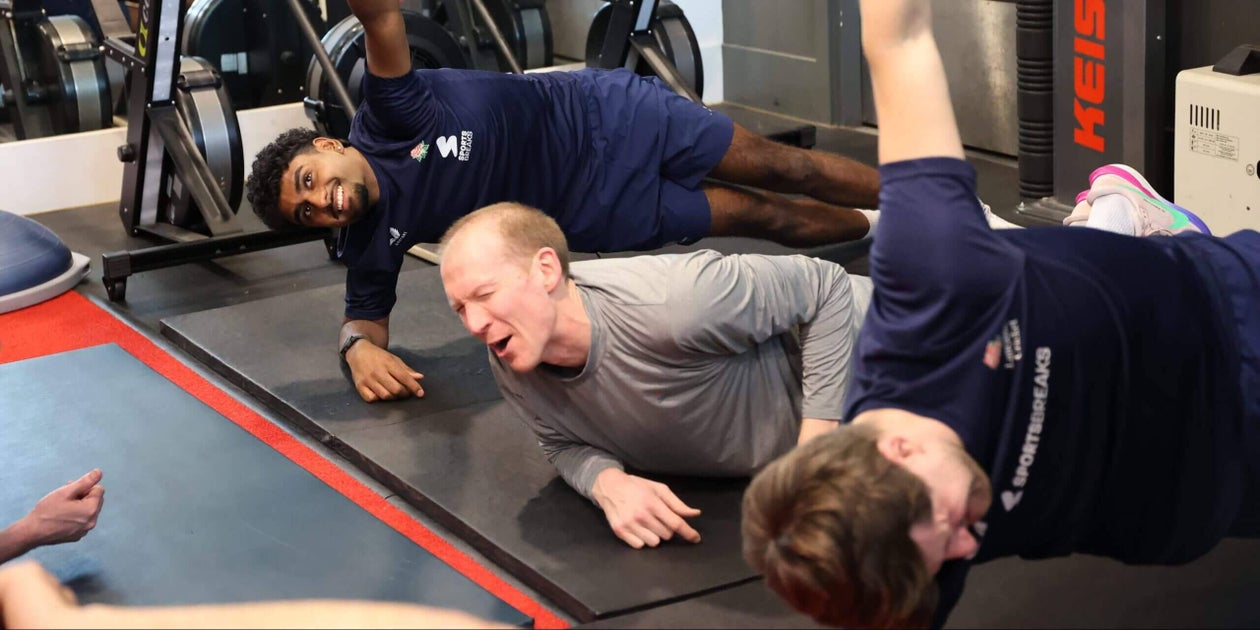
First to be tested is the trunk, via a series of extended planks, side-planks and supine holds.
“Trunk endurance and strength is crucial for whatever part of cricket they do,” Webster says. “Whether that’s pulling through the crease when bowling, or rotational strength to be able to hit a six — some people think that (launching the ball a long way as a batter) is just about big arms, big biceps, but look at the base that the boys get and where they hit from.
“Similar to baseball players, it all comes from a strong trunk and lower body base. They need that explosive power.”
Blatherwick insists that having Olivia Dean’s songs playing is the best way to distract from the pain of three 120-second holds. The Athletic fares well at the standard plank but falls agonisingly short when it comes to side planks. The quartet of professionals with me make it look easy.
The supine hold involves climbing onto a raised sit-up bench and holding the body mid-air while Byrne whispers gentle encouragement and ensures the necessary elevation is maintained. The Athletic’s 90-second hold time is enough to pass the test, and mild approval is received. (The abdominals are still sore as I write this a week later.)
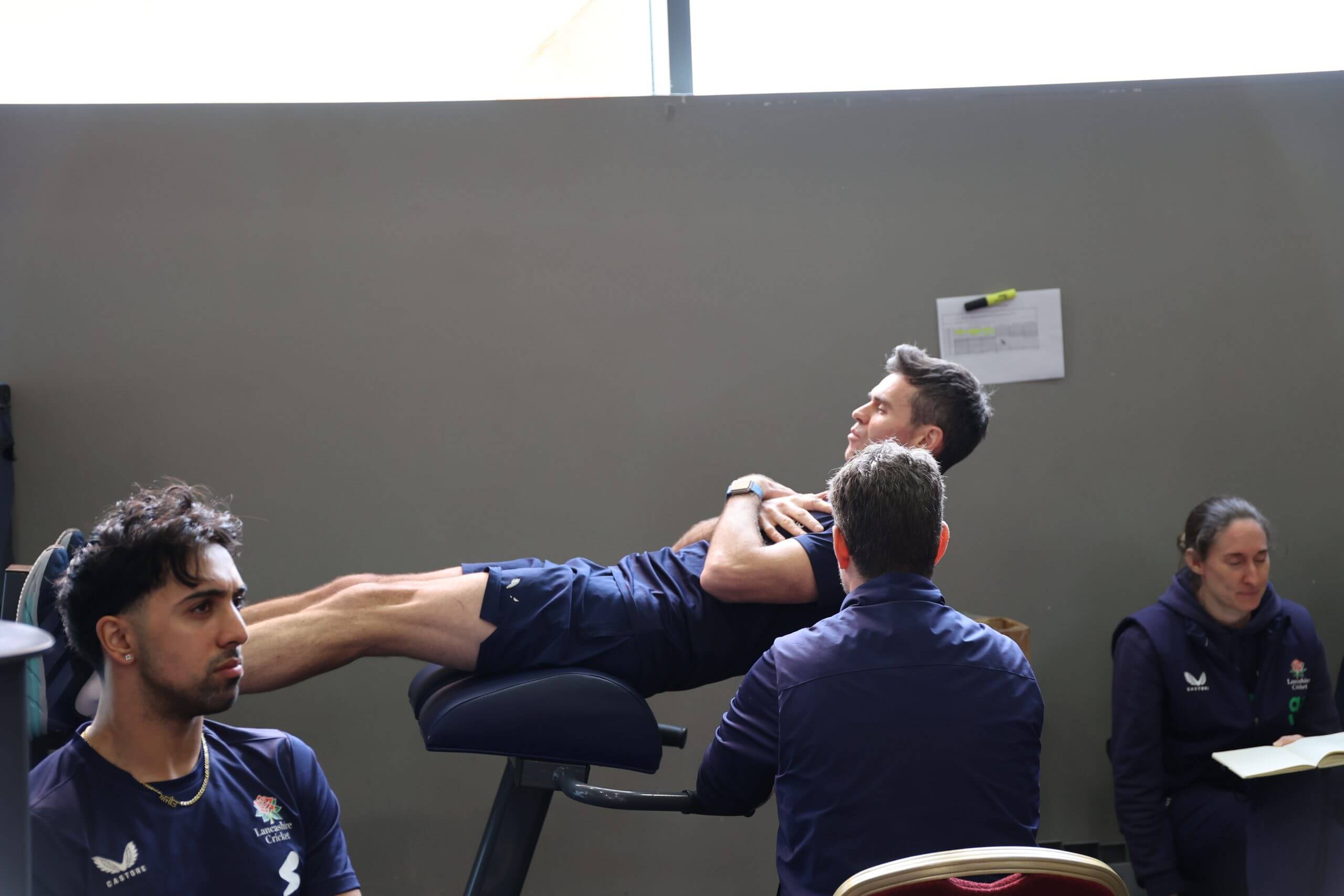
Knight of the realm Anderson performs a supine hold (Lancashire CCC)
The capacity and endurance exercises take place next door, to the background noise of a metronome set at 42 beats per minute.
Some are more recognisable — press-ups and calf raises to failure, hip-thrusts. Others, at least to the layperson, are more niche.
Take the barbell mid-thigh pull, which measures maximum isometric force by having the player pull against an immovable bar for a few seconds. The participant is not moving but the sweat still drips.
While supervising, physio Elliott Horton explains how the data gathered in these tests is used by his team.
“It’s for prehab,” he says. “If someone has 100 Newtons of strength on their left quadricep but only 50 on their right, we need to redress the balance. And if someone does get injured, we have this data as a marker to measure where they need to get back to in order to be ‘normal’.”
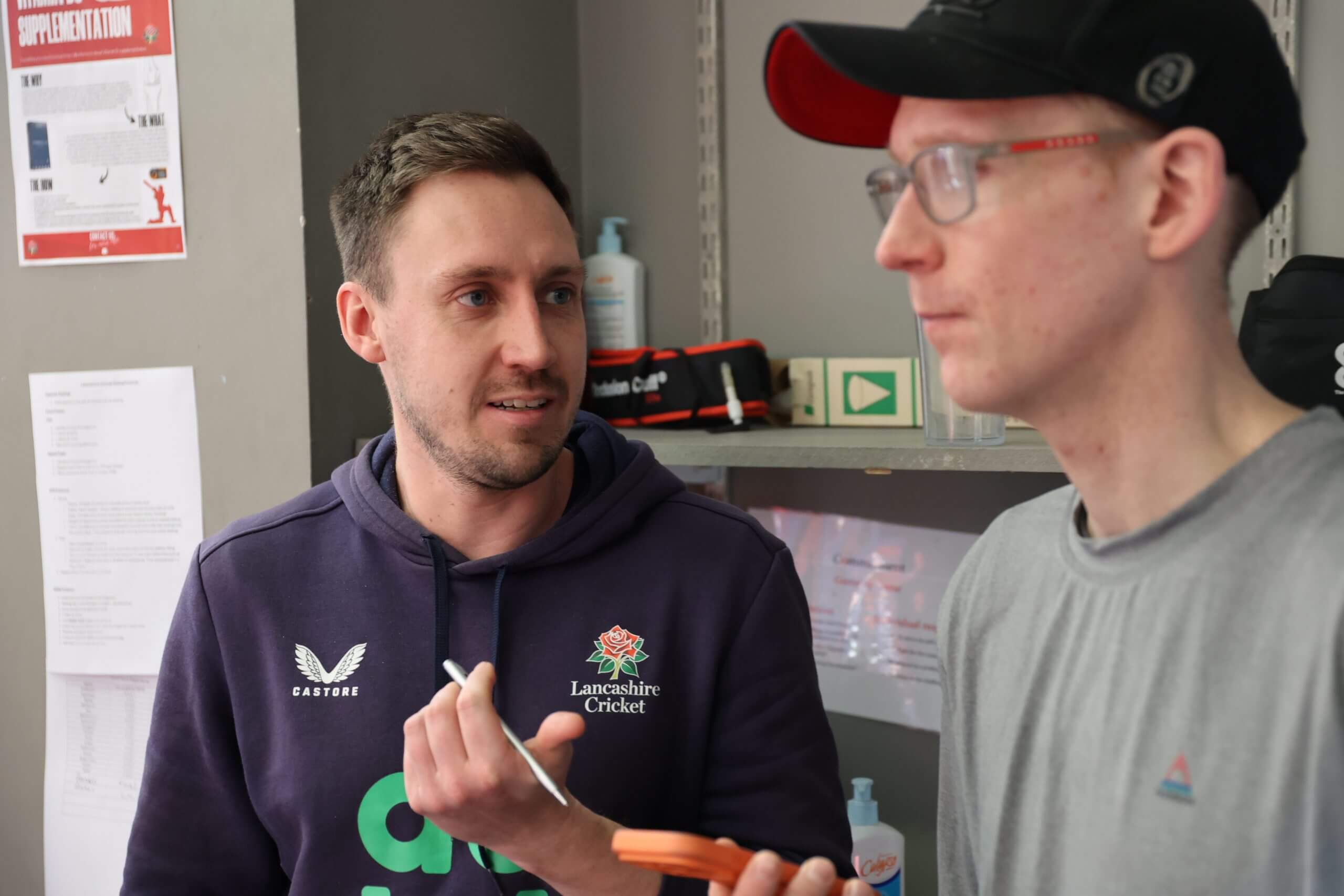
Physio Elliott Horton talks Newtons – not the kind with figs in (Lancashire CCC)
Noticeable is the level of encouragement across the squad. There is competition and plenty of laughter whenever breath can be caught, but, as Balderson puts it, “in the past, there’s been a lot of benchmarking against each other. But Webby has spoken about trying to compete with yourself more than the other people.”
And that makes sense. There are those in the group who are tall and naturally powerful, and others with slighter, more natural-looking frames. A 17-year-old England youth international in Joe Moores and a bona-fide world great in Sir Jimmy Anderson, 43. Setting generic benchmarks would be pointless.
As thinking, science and athleticism have developed, these tests were changed. Each year, the day is designed collaboratively by the strength and conditioning coaches and physios.
Horton is adamant that the current exercises were selected because they do not lead to post-session soreness.
Untrue.
It is comforting to know at least one of their subjects had burning calves for a few days afterwards.
It is Thursday, and the squad reassemble at Trafford Athletic Club, a couple of miles from the cricket ground, for their 2km run.
Previously, they might have completed the bleep and Yo-Yo tests — both involve shuttling between cones, placed 20 metres apart, at ever-increasing speed — but those have now been ditched.
Charlie Barnard, a 21-year-old left-arm-spin bowler, finishes in six minutes, 40 seconds. Four others record sub-seven-minute times, while the squad average is 7:20 — the equivalent to 16.4kmph (10.2mph), an unattainable speed for all but the fittest humans.
Webster is clearly delighted. Over 50 personal bests have been achieved in all, and his next task is to create a leaderboard based on the scoring system he has developed.

Barnard recovers after his eye-catching time (Lancashire CCC)
“They’re all trying to finish as high up the table as they can, but most important is the feedback report for each individual,” he says.
“Naturally, not everyone can be top of the leaderboard, and the main thing is that they are all improving compared to where they were previously. Each time they test, they each get individual, realistic goals that they can strive for. That is key. We like PBs (personal bests).”
A long and gruelling season awaits in the summer, but the winter work will serve the Lancashire squad well.
Cricketers unfit? You’ve got to be kidding.