
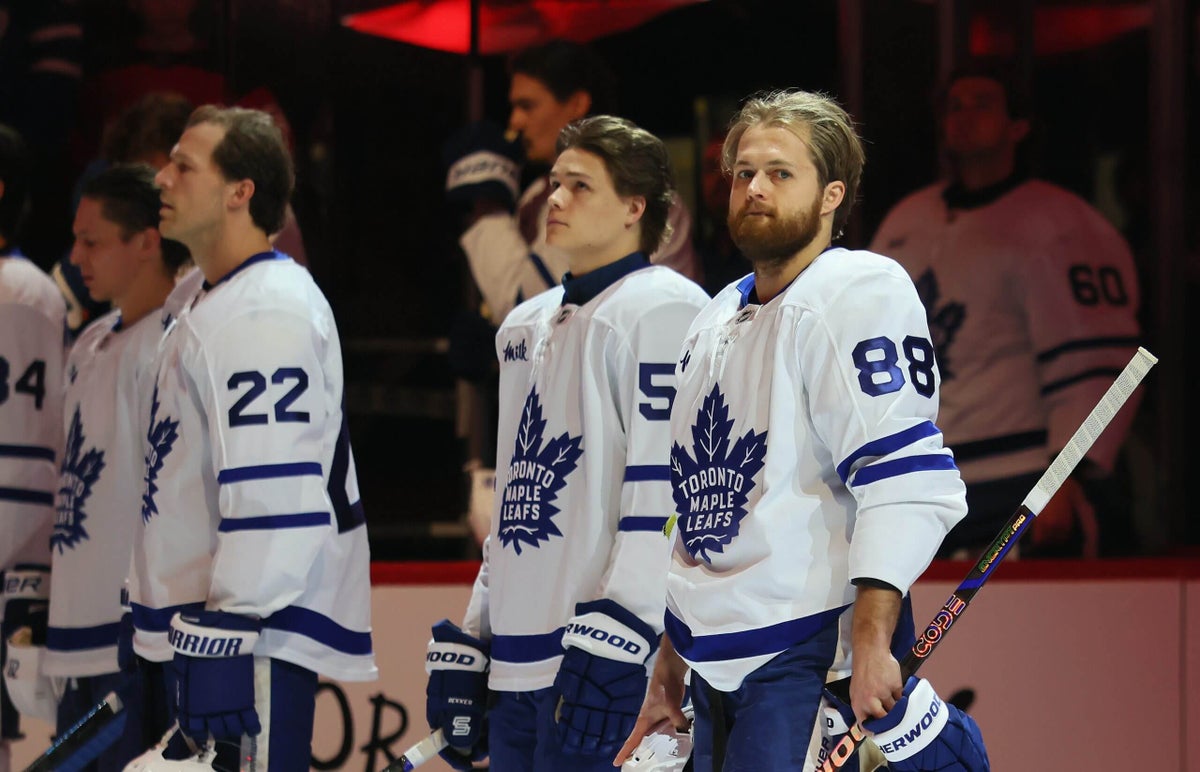
There’s a scary world potentially awaiting the Toronto Maple Leafs this offseason.
One in which Auston Matthews decides he can’t win in Toronto and no longer wants to play for the Leafs. In that world, the Leafs may have no choice but to trade Matthews and maybe even begin tearing the roster down.
There’s a school of thought that the Leafs should start the teardown this offseason, no matter what. That there is no path back to contention and the team, whoever is in charge, should just accept it now and get on with it.
Here’s why a teardown should be an option of last resort.
A draft pick problem
When the Leafs intentionally bottomed out in the 2015-16 season, there was a grand prize waiting at the end — a first-round pick that turned out to be first overall and brought Matthews to Toronto.
Tear it down this summer — and break bad essentially — and there may or may not be a prize waiting at the end of the 2026-27 season. That, of course, is because the Leafs don’t own their own 2027 first-round pick outright.
It might belong to the Bruins. It might belong to the Flyers. It might belong to the Leafs.
The status of the pick will only sort of begin to crystallize in the weeks ahead, thanks to the conditional 2026 first-round pick that went to Boston in the Brandon Carlo trade. If that pick falls in the top five, the Leafs will keep it, but then lose their top picks in 2027 and 2028.
If the ’26 pick falls outside the top five, on the other hand, the Leafs will send it to the Bruins and maybe shuttle their 2027 first-round pick to the Flyers — if it doesn’t fall in the top 10. And if it does land in the top 10, well, then the Leafs will keep the pick and send an unprotected first to Philadelphia in 2028 — which, if the teardown were to take effect this summer, could conceivably become the first overall pick.
All of which is to say that bottoming out won’t necessarily come with the reward of a top young player(s), which, in some ways, defeats the purpose.
The superstar trade challenge
A full teardown would presumably mean trading the two best players on the roster, Matthews and William Nylander, in the hopes that they bring back a barrel full of present and future goodies.
Simple, right? Well, not exactly.
Matthews and Nylander both have full no-movement clauses in their contracts, which means both would dictate their respective trade destinations. And that means those teams wouldn’t necessarily have to give the Leafs everything they want, knowing they are a destination of choice.
Which means a return that’s maybe not as rosy as it should be, given the talent in question.
The New York Rangers extracted only a conditional third-round pick and prospect Liam Greentree for Artemi Panarin at this year’s trade deadline because Panarin, with a no-movement clause in his contract, controlled his fate and sought an extension with any trade. It’s not a perfect comparison, certainly. Panarin was a 34-year-old pending UFA who sought and eventually got that extension from the Kings. Matthews and Nylander are younger, still in and around their primes, with term on their contracts. And the Leafs wouldn’t be trading them at the deadline but rather in the offseason.
What the trade illustrates is the power of the no-movement clause and the impact it can have on trades.
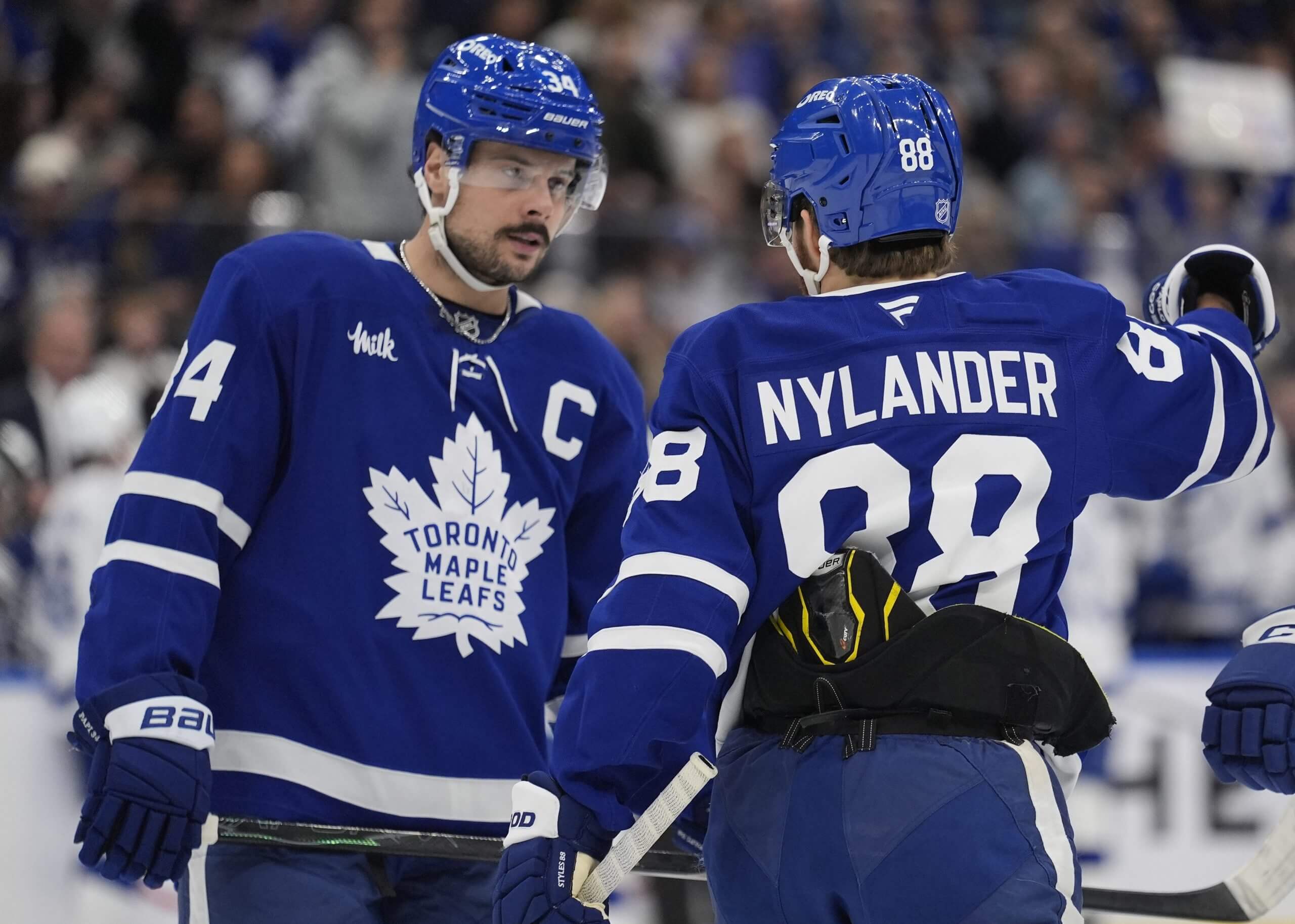
Auston Matthews and William Nylander both have full no-movement clauses in their contracts. (John E. Sokolowski / Imagn Images).
Another consideration to keep in mind: NHL stars never seem to fetch as much as they should in trades, not like in the NBA (Luka Dončić trade notwithstanding!) or MLB.
This past December, the Canucks dealt Quinn Hughes, either the best or second-best defenceman in the NHL, to the Wild and got back the following: A 2026 pick that will fall late in the first round, a young forward of TBD upside in Liam Ohgren, a young centre of TBD upside in Marco Rossi and a young defenceman of TBD upside in Zeev Buium.
A handful of lottery tickets, in other words, some better than the others.
What may have scared many teams off and thus limited the return: Hughes has only one more year left on his contract and might not stick around after the trade.
Now, maybe Matthews, who has two years to go, and Nylander, who has another six remaining, bring back more in a trade because of it — though, again, the no-movement clause would inevitably loom over the entire process.
Maybe the Leafs get lucky like the Ottawa Senators did when they dealt Erik Karlsson (as his contract was nearing its end) for a bunch of stuff that included Josh Norris and a first-round pick that became Tim Stützle. Or maybe they don’t and end up with what the Senators nabbed for Mark Stone: Oscar Lindberg, who played 20 games, prospect Erik Brannstrom, who now plays in Switzerland and a second-round pick who ended up playing 13 NHL games.
Even the Matthew Tkachuk trade, which seemed like a win initially for the Flames, now looks like a misfire with the way things have gone for Jonathan Huberdeau.
The value of superstars
Matthews and Nylander aren’t over-the-hill stars either.
Matthews will be 29 in the fall. And while maybe he’s no longer a 60-goal scoring Selke Trophy candidate, he might just be a 40-goal scoring Selke Trophy candidate.
Nylander will be 30 in May. It hasn’t been a great season for him, certainly. However, he still ranks 12th in the NHL in points per game. He is producing at a 99-point pace.
It is hard to find great players like this, something the franchise experienced in the decade after Mats Sundin left.
The Leafs can’t win with them, right? Maybe, maybe not.
Steve Yzerman famously didn’t win his first Stanley Cup with the Red Wings until he was 32. The San Jose Sharks reached the 2016 Stanley Cup Final when Joe Thornton was nearing his 37th birthday. Joe Pavelski, who led the team with 14 goals that postseason, was 31 going on 32.
The Leafs don’t feel anywhere near that kind of team right now. But with smart leadership in the days, weeks and years ahead, they could still contend down the road with Matthews and Nylander.
The head coach consideration
What does this roster (with some important and admittedly needed tweaks to make this offseason) look like with an upgrade in the coaching department?
The Blue Jackets have been, literally, the best team in the NHL since they swapped Dean Evason for Rick Bowness in January.
In-season changes tend to always spur some kind of bump, so here’s a better example of what the Leafs would be shooting for with a different person behind the bench: The Washington Capitals, who went from 80 points and missing the playoffs with the old-school Peter Laviolette, to 91 points and a playoff berth in year one with Spencer Carbery followed by 111 points and the best record in the Eastern Conference in year two.
Two more examples: The Boston Bruins’ resurgence this season under first-year coach Marco Sturm and the Pittsburgh Penguins’ shocking turnaround under Dan Muse.
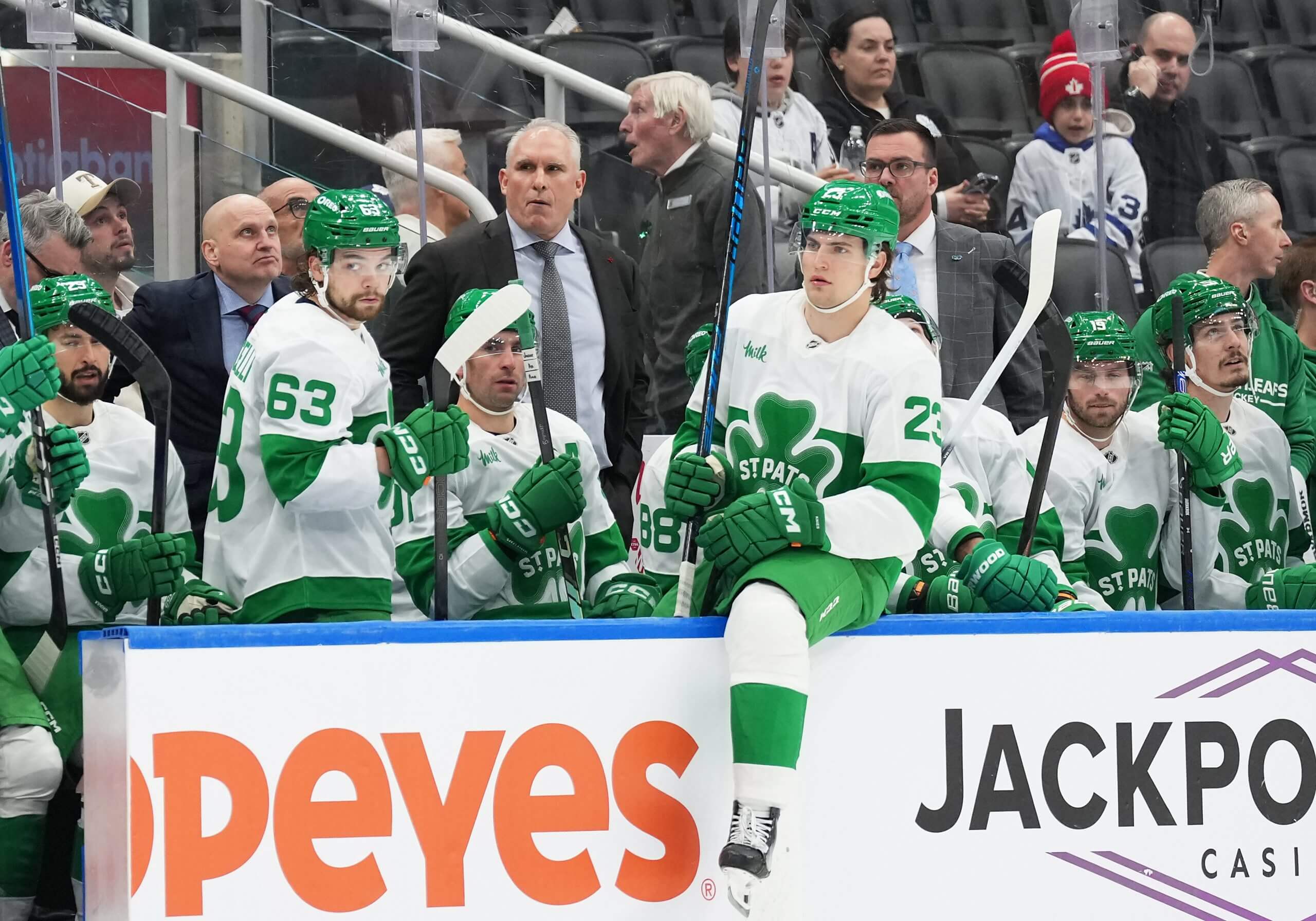
What would the Maple Leafs look like with a new coach? (Nick Turchiaro / Imagn Images)
Brad Treliving’s front office has certainly made mistakes in roster construction, but it’s not like there’s no talent here.
The Leafs have …
• One of the 5-10 best centres in the world in Matthews
• One of the 10-12 best wingers in the world in Nylander
• A first or second-line left winger on the rise in Matthew Knies
• Two top-four (if aging) defencemen in Jake McCabe and Chris Tanev (assuming full health, a giant question certainly)
• An emerging top-nine winger of TBD upside in Easton Cowan
• A John Tavares who, while showing signs of age, can still score (and who should perform better if asked to do less)
• Three decent to good goalies with varying question marks (one of whom may be traded)
• Useful 4-5-6 defencemen such as Brandon Carlo and Oliver Ekman-Larsson (assuming one or both isn’t dealt in the offseason)
Even Morgan Rielly, who has had the two worst seasons of his career under Berube, might look better playing for a coach with a system that has the Leafs controlling the puck more often. Not defending as much, essentially.
One question I’ve pondered all season: If the Leafs had the best coach in the NHL, whoever that is, would they be a better team? I think the answer is unquestionably yes. Maybe there’s no way to land that coach, but someone great (Pete DeBoer?), all the same.
The wilderness risk
It’s tempting to think that by tearing it all down now, the Leafs can spring back to life in 2-4 years and contend again.
And maybe, if everything breaks right, that’s true.
It’s just as easy to enter the playoff-less wilderness, however, and get lost there indefinitely, especially if the management is wobbly.
The Chicago Blackhawks, even with a shiny young star in Connor Bedard, are about to miss the playoffs for the eighth time in nine seasons after a sterling run of success. The Buffalo Sabres are about to make the playoffs for the first time after 14 straight misses.
The Detroit Red Wings were forever a playoff lock until they weren’t. They are on the verge of ending a drought of nine seasons.
There isn’t always light at the end of the tunnel. Not right away.
It’s become easy to forget the Leafs’ own decade in the wilderness before Matthews and company arrived in 2016. Those years were … bleak.
The young talent problem
What makes that prospect all the more likely: A farm system that’s among the NHL’s worst in The Athletic’s estimation. It was telling that the first three players called up after the deadline were Jacob Quillan, Bo Groulx and Michael Pezzetta.
Nor are the Leafs currently stocked with a bounty of great picks (though a top-five pick this summer remains possible).
The quantity and quality of prospects would almost certainly improve in the event of a teardown, but not to the point of a quick turnaround. Not with the Leafs’ own first-rounders unavailable in two of the next three drafts. And not with the time it takes for those picks and/or prospects to become real NHL contributors.
The Leafs could just be plain old bad for a while.
The most attractive course for the Leafs if they can convince Matthews to stick around: A rebuild-retool hybrid.
Look to continue to restock the cupboards with picks, prospects, and/or young players by moving Ekman-Larsson and/or Carlo in the offseason. Trade younger in other words and replace them either in free agency or through trade.
The Leafs may not be able to solve all of their roster issues this offseason, but they can certainly upgrade one, two, or even three positions — acquire a solid top-four defenceman who can move the puck, say, and a top-six centre who maybe isn’t a star but is steady and dependable.
And then maybe by next year’s trade deadline, the Leafs, back in playoff contention again, can keep upgrading elsewhere and then upgrade some more in the summer of 2027.
Difficult? Yes. Still the best option for now? Also yes. A teardown is far from foolproof.
— Stats and research courtesy of Hockey Reference and Puck Pedia.