
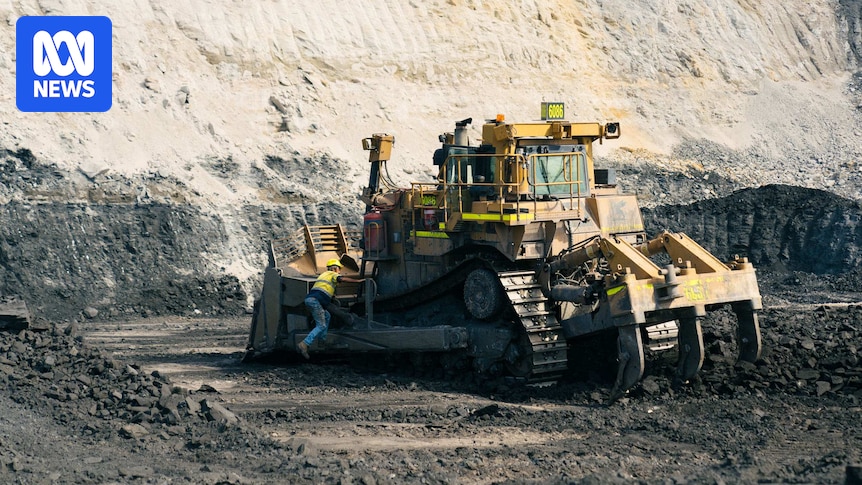
Workings left by an embattled coal miner could cost West Australian taxpayers billions to rehabilitate, a task a prominent botanist warns could be “impossible”.
Griffin Coal may no longer be responsible for the clean-up and restoration of its Collie mine site under amendments to its mining agreement passed by WA’s Legislative Council on Tuesday.
The Indian-owned company, already the recipient of a multi-million-dollar taxpayer lifeline due to its central role in fuelling WA’s power system, may be released from “its obligations and liabilities relating to decommission and rehabilitation” of the mine, around 200 kilometres south of Perth.
As well as extending the mine’s life until 2031, the updated agreement permits the government to remove state forest classification from land within or immediately next to the mine.
The changes must still be approved by WA’s Legislative Assembly, where the government holds a 46-13 majority.
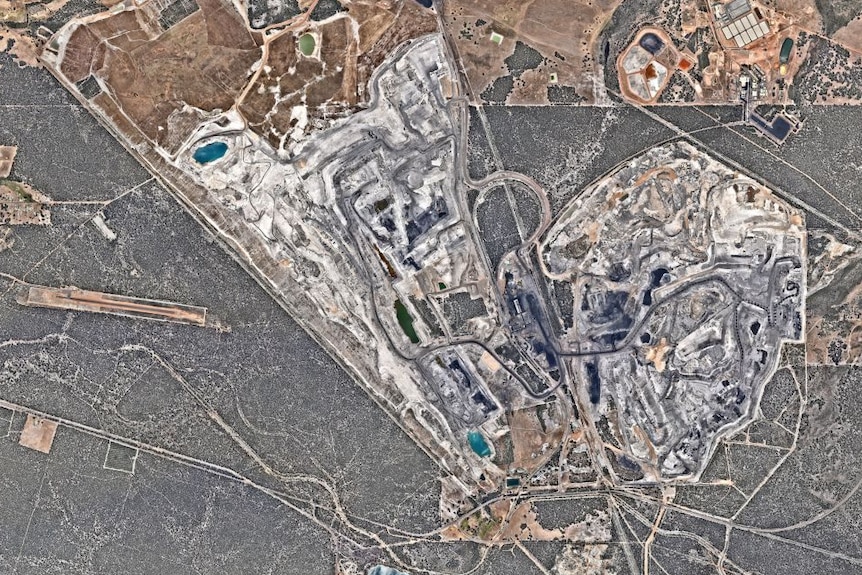
Satellite image of the mine workings near Collie. (Supplied: Nearmap)
The site, which can be seen from space, was once home to wetlands and Jarrah forests, before mining began in the 1930s.
The mine has been in receivership since 2021, when its Indian owners pulled the plug after years of operational difficulties and mounting losses.
Griffin is more than $1 billion in debt, but is the sole supplier to the Bluewaters Power Station, responsible for generating around 15 per cent of the state’s electricity supply
In January, the government announced it would extend the life of the mine for five more years and continue to support it financially.
Rehab beyond technical capacity
Botanist Kingsley Dixon advised Griffin on the feasibility of rehabilitation in 2019.
“I indicated to them that with current technologies, this was beyond our technological capacity to bring back a native vegetation system,” he said.
“In the scheme of things, this was very hard, maybe even in the too hard basket.”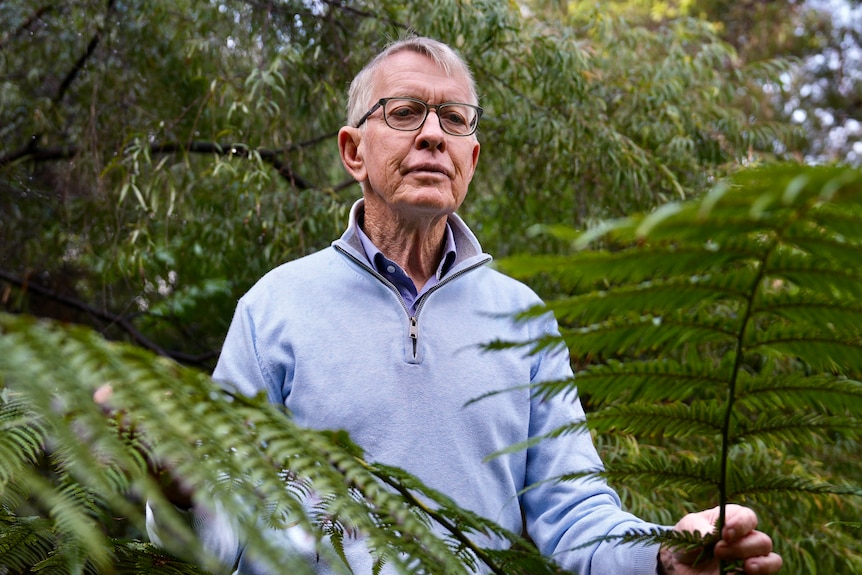
Kingsley Dixon advised Griffin on rehabilitating the site in 2019. (ABC News: West Matteeussen)
Professor Dixon said the costs of rehabilitating the site could be in the “thousands of millions”.
But locals could be heavily impacted if rehabilitation fell by the wayside, he said.
“Let’s hope the decommission of the Griffin coal pits doesn’t go the way we’ve seen of the Mt Isa mines in Queensland, where nothing much was done and we had major breaching of toxins,” he said.
‘Dangerous precedent’
Historically, mining companies have paid for all, or part of, the clean-up once operations cease at mine sites.
The clause is the first of its kind handed to a mining company in WA, and could cost taxpayers billions of dollars.
Premier Roger Cook told reporters this week the Griffin agreement was struck nearly a century ago, when decommissioning processes were “minimal”.
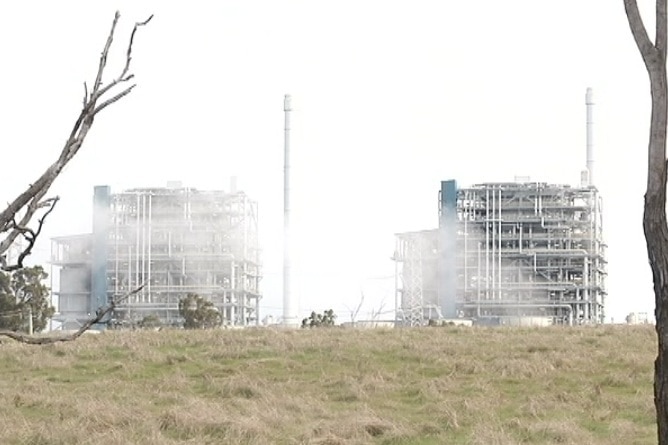
Griffin continues to supply critical coal for nearby power stations like Bluewaters. (ABC News: Roxanne Taylor)
“Griffin has been mining for over 100 years so these are legacy projects,” he said.
“We’re having conversations about what the future looks like.”
A government spokesperson said Griffin’s clean-up obligations were not changing for now.
An effort by the Greens to have the changes thrown out was voted down in parliament late on Tuesday.

Greens MLC Jess Beckerling says the change to the agreement sets a dangerous precedent. (ABC News: Rhiannon Shine)
Greens MLC Jess Beckerling said the clause sets a poor example for other mining agreements across the state.
“Normalising enabling big corporations to simply walk away from their environment-wrecking practices is simply not good enough and must not be enshrined into law,” she said.
“This is obviously a really dangerous precedent that’s being set for future mining operations.”