
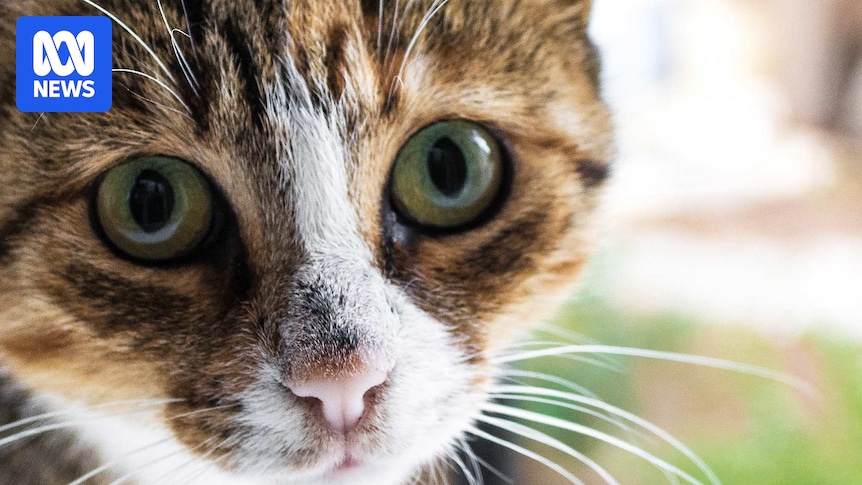
Kangaroo Island Council is considering banning the introduction of cats to the island, as it attempts to eradicate feral cats.
Mayor Michael Pengilly said the council was “very keen” on what he called a “last cat policy”.
“That doesn’t mean granny with her cat is going to lose that overnight, that’s not going to happen at all,” Cr Pengilly said.
“It would rid Kangaroo Island of [feral] cats and not allow any more cats in, it’s just as simple as that.”
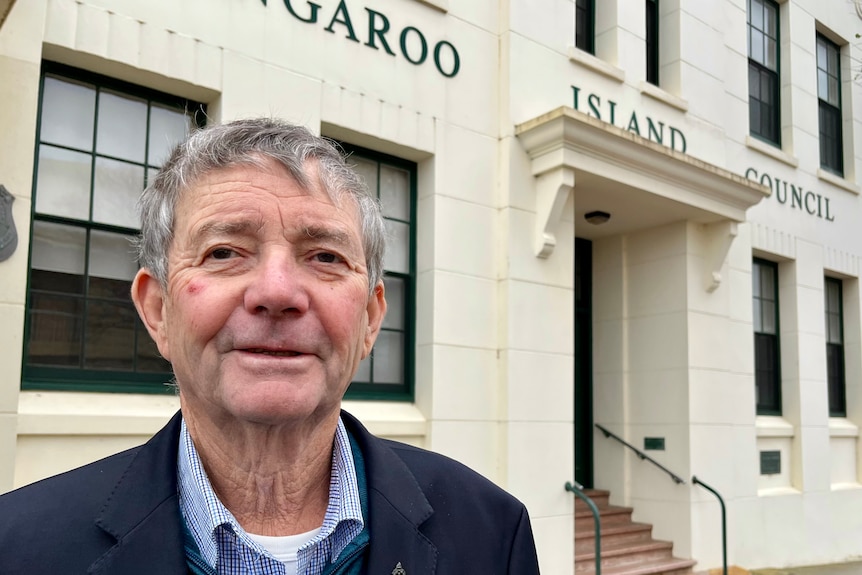
Kangaroo Island mayor Michael Pengilly said the council is supportive of a “last cat policy”. (ABC South East SA: Caroline Horn)
“Ultimately we would like no cats on Kangaroo Island.”
The South Australian island, located 110 kilometres south-west of Adelaide, is Australia’s third largest, after Tasmania and Melville Island.
More than one-third of Kangaroo Island is protected as nature reserves but it has been battling a feral cat problem, with over 50 native species on the island predated on by cats.
Total eradication could take up to 30 years
Cr Pengilly said its proposed “last cat policy” was “not that far advanced” yet, and would likely be implemented “in tandem” with the state government.
“It’s an idea that the current council would like to see put in place,” he said.
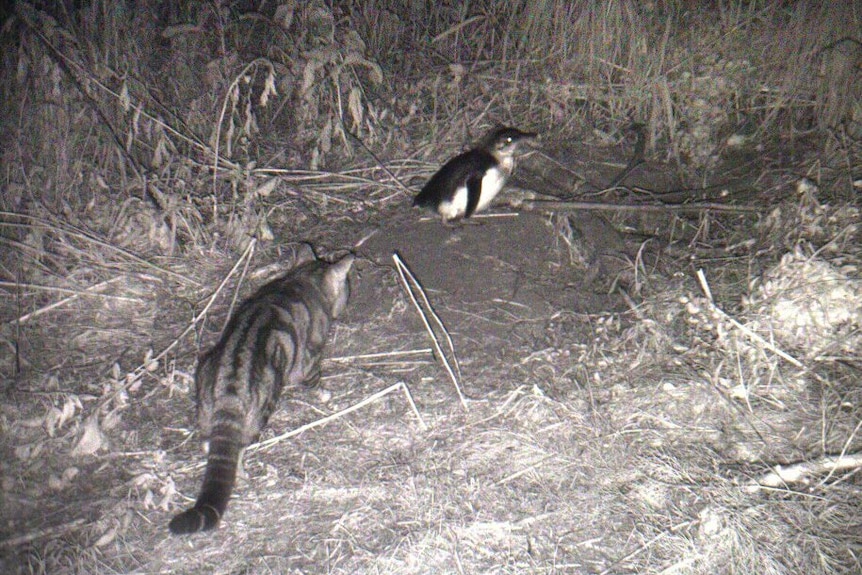
The Invasive Species Council says feral cats threaten Kangaroo Island’s wildlife, including vulnerable penguin colonies. (Supplied: Invasive Species Council )
“It’s simplistic to think we could just make it happen, because it’s not that simple. To get an ideal outcome it could take 10, 20, 30 years, I just don’t know.”
“Well and truly past my use-by-date, I think, when that happens.”
Cr Pengilly believes the “overwhelming” majority of Kangaroo Island locals would be in favour of the project.
“You’re always going to get a hard core that don’t agree with it, and we accept that,” the mayor said.
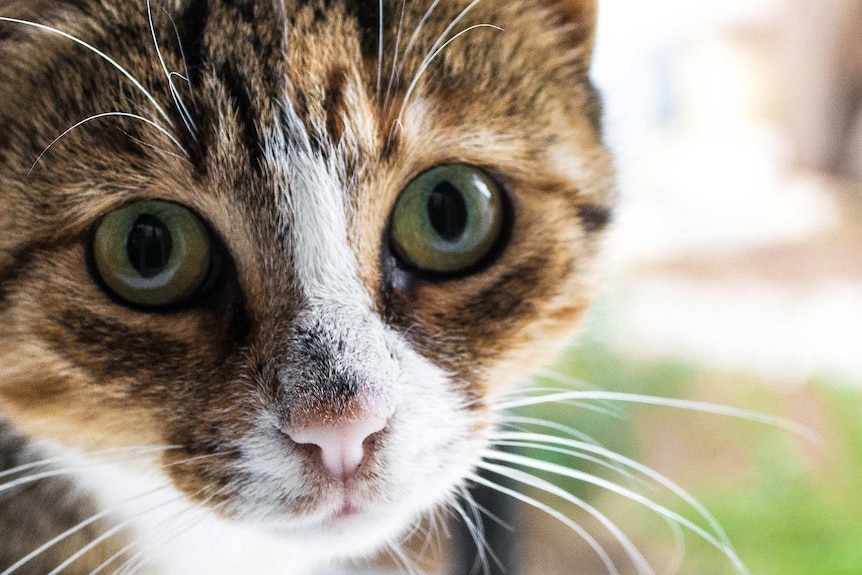
The ‘last cat policy’ would not mean responsible cat owners losing their pets overnight, Cr Pengilly said. (Flickr: Mohamed Aymen Bettaieb, CC BY 2.0)
“It’s not aimed at people with their moggy sitting home on their lap behaving itself.
“But, bear in mind, the minute a cat goes out of the house it becomes a feral animal.”
The council aims to totally eradicate feral cats by 2030, which would make it one of the world’s biggest inhabited islands to be free of the animals.
Invasive Species Council chief executive Jack Gough agreed pet cats could undo the island’s ongoing eradication efforts.
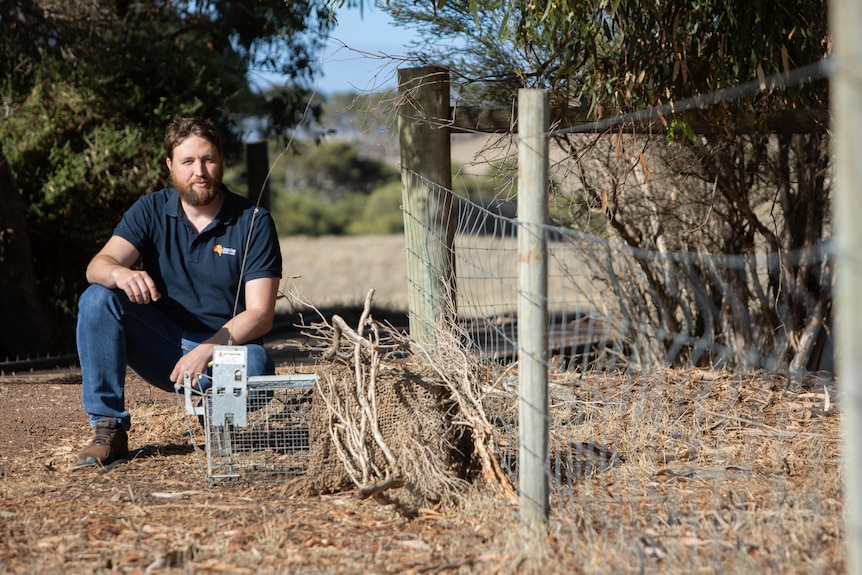
Jack Gough says while Kangaroo Island’s feral cat population has been reduced, the last few are often the most difficult to catch. (Supplied: Invasive Species Council )
“One of the biggest risks is a couple of people have a couple of cats not registered, not desexed, that get out and have some kittens,” he said.
Your Say: Tell us what matters to you this SA election
“Then you start the process over again and no one wants to be doing that when you’ve spent millions of dollars to get to that point.”
A state government spokesperson said the local landscape board “meets regularly with council to discuss cat management, including domestic cats”.
“The government will consider this issue alongside any legislative changes required while balancing environmental protection, animal welfare and community interests,” they said.
Catastrophic consequences
As well as preying on more than 50 native species on the island, feral cats spread diseases — like toxoplasmosis.
Mr Gough said the toxoplasmosis parasite was causing a $12 million decline in annual sheep production.
On the island, the parasite’s impact on livestock through feral cats was “enormous”, according to Cr Pengilly.
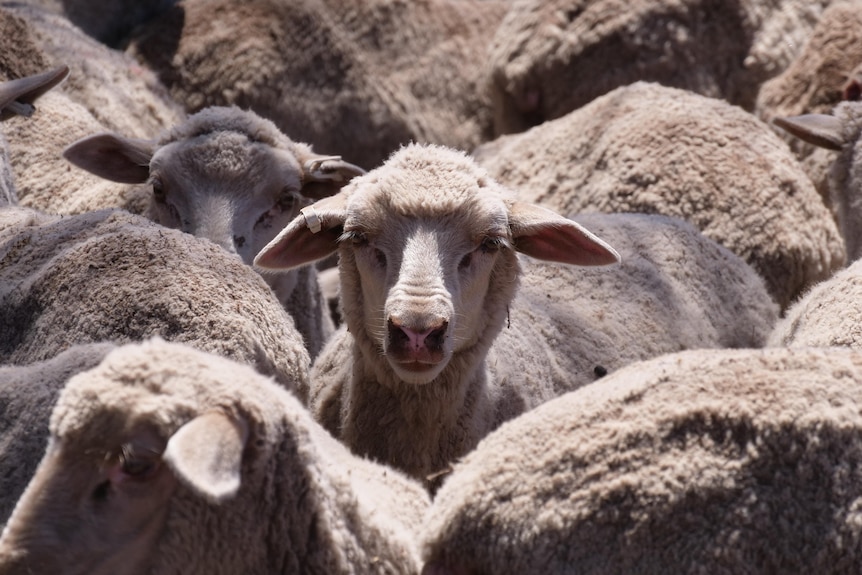
Toxoplasmosis is spread to livestock through cat faeces, and can cause stillbirth and weak lambs. (ABC Rural: Isabella Kelly )
“[Feral cats are] vicious creatures and they’ve got enormous teeth on them, they’re highly proficient killers,” he said.
“They’re awful things, so we’ve just got to do something about it.”Eradication project
An ongoing project is close to eradicating feral cats from the Dudley Peninsula on the island’s east.
“It’s only about a quarter of the island, so there’s a long way to go,” Mr Pengilly said.
Mr Gough said the peninsula’s eradication project was “incredibly ambitious”.
“There’s an opportunity for the dunnarts, the echidnas, the penguins, the sea lions, for all the native wildlife there that’s endangered … to get those cats gone once and for all,” he said.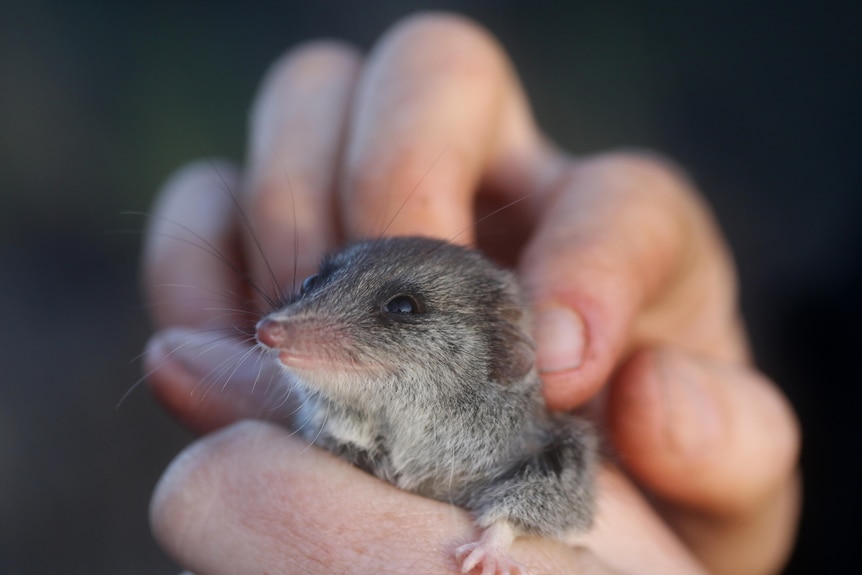
Kangaroo Island dunnarts are just one victim of the island’s feral cat population. (Supplied: Invasive Species Council )
About 2,800 cats have been removed from the Dudley Peninsula so far as part of the project, leaving around 150 behind.
“The last ones can be the hardest ones to get, because those tend to be the most trap shy, the most smart and wily of the cats,” Mr Gough said.
“Of those 150, they’re expecting a 95 per cent reduction in cat population this winter, but then it’s two more years of hard effort to get it down to zero, keep it at zero, and confirm it at zero.”
Cr Pengilly said feral cat numbers across the rest of the island were currently unknown.
Call for more funding
The federal government provided an additional $1.61 million to the project in December, but the Invasive Species Council said an additional $3.1 million from the federal government would ensure full eradication on the Dudley Peninsula.
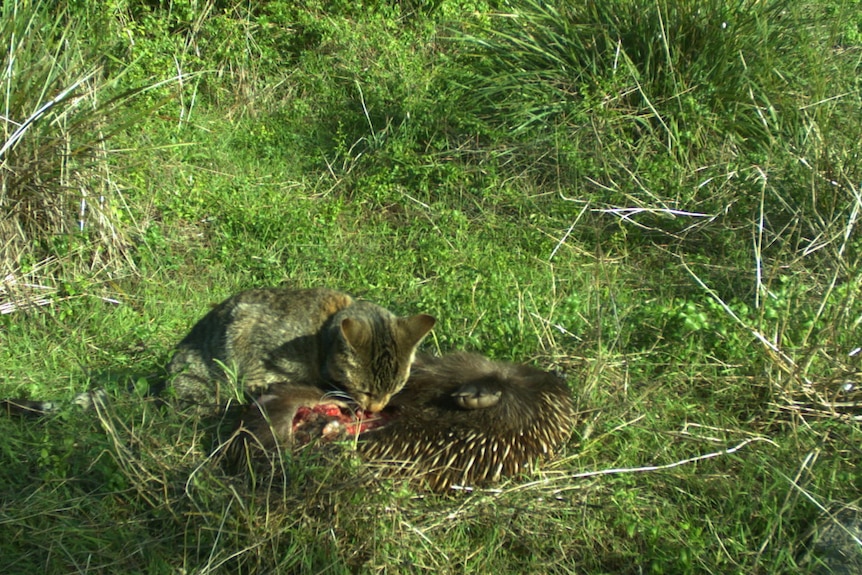
Feral cats target more than 50 native species on the island, including the Kangaroo Island echidna. (Supplied: Invasive Species Council )
“We often see that government’s putting in some of the money and then, budget cycles change, they don’t put the full money in and we don’t get the result,” Mr Gough said.
“You wouldn’t build half a bridge and then walk away, we can’t be doing that all the time with environmental projects.”
A federal government spokesperson said the $1.61 million funding commitment represented “a significant additional investment in this project on top of more than $3 million previously provided through our Saving Native Species and National Heritage Trust programs”.
The state government this month committed $800,000 in funding for the Dudley Peninsula project as part of its $19.2 million election promise.
South Australians will head to the polls on March 21 to vote for who will lead the state for the next four years.
Loading…