

Interruptions to global container shipping due to the conflict in the Middle East are impacting Western Australia’s $60 million carrot industry.
Last year, Australia exported more than 48,000 tonnes of carrots worth $40 million to the Middle East.
WA is the nation’s biggest carrot exporter with the bulk of the industry located just north of Perth.
Growers say more than 600 tonnes of carrots are usually processed weekly for export, but shipments had virtually stopped when the conflict broke out.
Now, with no market, they were preparing to plough crops back into the ground.
Vegetables WA CEO Peter Spackman said this was “understandable” but an “awful position to be in”.
“They’ve already sunk a lot of cost in regards to fertiliser and planting the plants and looking after them; only to plough them in is a disaster for those businesses,” he said.
“They don’t wish to add extra cost to their loss already, they can’t afford the labour to pick it and then do something with it if they haven’t got a market for it. Unfortunately, the option would be to plough it in and compost it.”
One farmer estimated they would have about 40 hectares worth of crop to compost, which Mr Spackman agreed would amount to a $2 million loss.
“These companies are having to make some very hard decisions due to the uncertainty … some of them may be considering not to plant moving forward. That will have consequences for staff,” he said.
Carrot exports to the Middle East were worth $40 million last year. (ABC Mildura Swan Hill, Kellie Hollingworth)
Domestic market not an option
Mr Spackman said he was not surprised at reports that one WA exporter had $2 million of carrots on the water when conflict broke out.
“There’s a large volume on the water at any given time; that figure doesn’t surprise me if that was the case,” he said.
“If they can’t get it to the market, and can’t meet their contracts, and it’s a loss where they have to dump it, it’s a significant amount of money to come out of a business.”
He said most shipments of carrots were not insured, so any losses would be borne directly by businesses.
“In the worst-case scenario … some businesses could fall aside, unfortunately,” he said.
“I know they’re trying to pull any lever they can to make sure it reaches the right destination.
“The carrots that are on the water are going to a market. That market needed that food, so if they don’t get it, they’re going to be short of food supply, so food security right around the world is a concern.”
He said the WA market was too small to absorb the extra Australian produce.
“There are only so many carrots that can be consumed on the domestic market; people aren’t going to eat four or five times more carrots,” he said.
Coupled with shipping difficulties, Mr Spackman said growers were also concerned about access to enough fuel to plant, irrigate and harvest their crops.
He said the government ensuring diesel supply that was directed to regional areas would be a “big help” and provide confidence and direction of fuel supply.
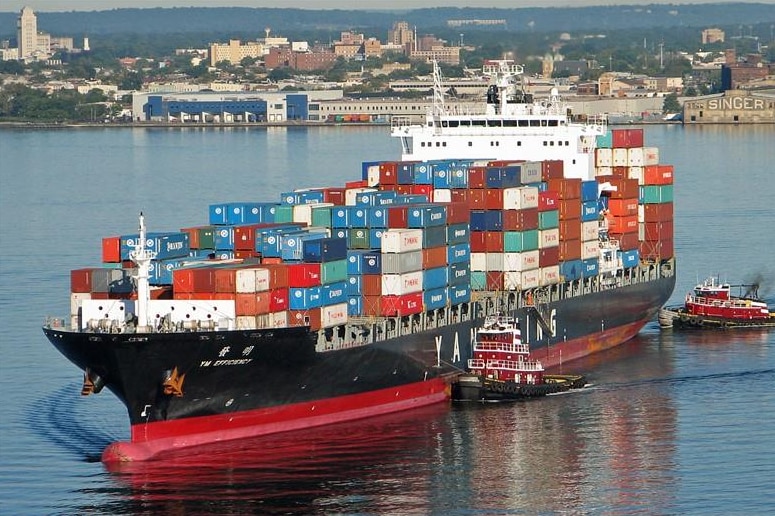
Container ship flows around the world have been disrupted, and all exporters have been warned they will feel the consequences. (Supplied: Joe Becker, MarineTraffic.com)
All freight prices will rise
Shipping Australia policy manager Jim Wilson said disruptions to global container shipping were widespread, and Australia was yet to feel the full impact.
“The international ocean shipping companies have halted vessels to and from [the Middle East] for obvious reasons, and the international ocean insurers have basically suspended cover,” he said.
“Container shipping is a network of networks, there is lots of trade around regions, and then big container vessels link the regions together.”
Mr Wilson said while most of Australia’s container trade was with Asia, inevitably, there would be freight rate increases that all exporters would be forced to pay.
“When you take a large chunk of vessels out of service, you’re reducing supply, and as any good economist will tell you, if you reduce supply and demand remains constant, price will increase,” he said.
“And there will be a range of surcharges and ancillary charges that the international ocean shipping companies will have introduced.”