
Chathura, a taxi driver in Sri Lanka, usually spends his days shuttling tourists between beach cities on their holidays.
But recently, he has been staying home.
Sri Lanka’s government has introduced weekly fuel quotas, limiting drivers to 15 litres for cars and 5 litres for motorbikes.
“It’s my birthday today, but I am staying home because clients are cancelling tours due to the fuel situation,” he told the ABC.
“The fuel quota is not enough even for two days.”
Iran war live updates: For all the latest news on the war in the Middle East, read our blog.
Sri Lanka is just one country across Asia that is scrambling to manage fuel supply as the US-Israel war with Iran disrupts supply chains from the Middle East.
As part of its retaliation, Iran has blocked the Strait of Hormuz, through which about 80 per cent of Asia’s oil and liquefied natural gas (LNG) passes.
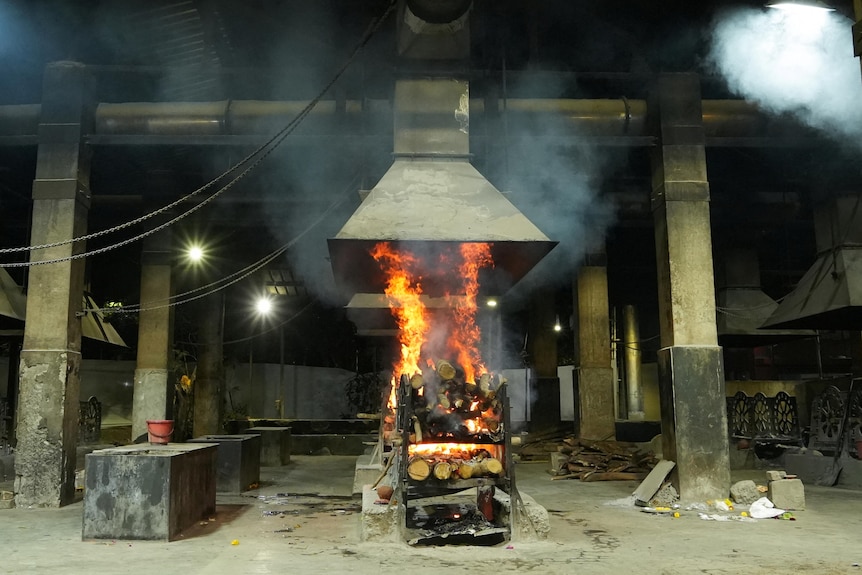
Some cremation services have been suspended in India due to fuel shortages. (Reuters: Hemanshi Kamani)
Cooking gas shortages
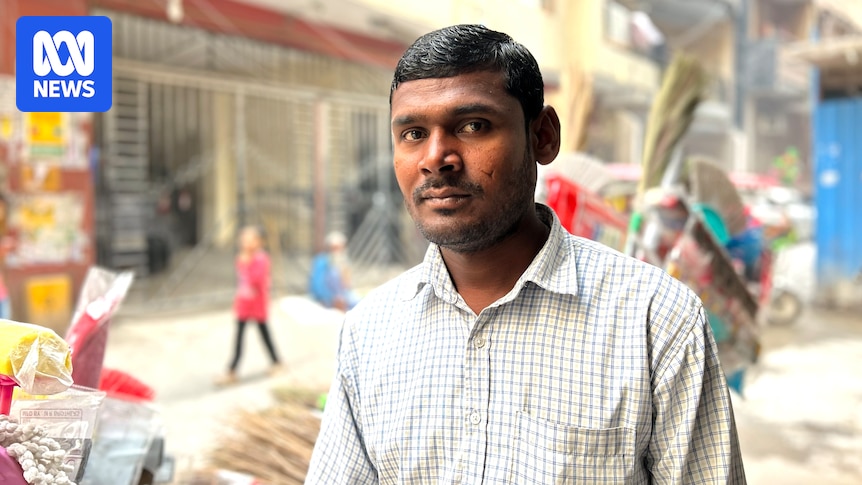
Ram Bahadur Shahni, a 35-year-old street vendor, has spent nearly two decades working in New Delhi, sending money home to support his family in the east of the country.
Now, even basic fuel has become difficult to secure.
“For the past week, I’ve been struggling to get a LPG cylinder,” he said.
“If I find one, the price is so high, 300-400 INR ($4-6) per kilogram. How can we afford that when we only earn 400-500 INR a day?”
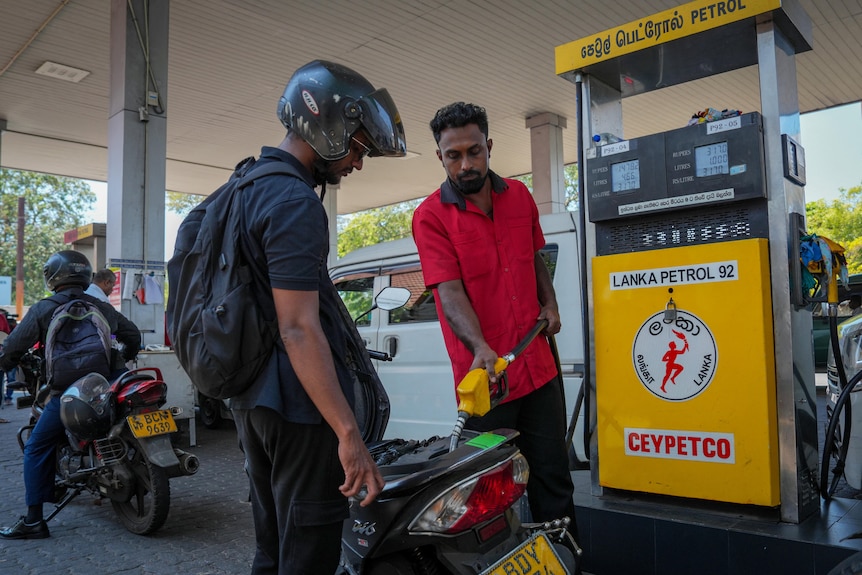
Sri Lanka has introduced fuel quotas due to depleting reserves. (Reuters: Thilina Kaluthotage)
With supplies scarce, he has resorted to cooking with firewood.
“If this continues, we may have to return to our village,” he said.
Zulfiqar Ali, who runs a tea stall in the city, said soaring gas prices could shut his business down entirely.
“I can’t afford another [gas cylinder], so I may have to close.”
Professor Shahriar Akter, a researcher from the University of Wollongong who also has family and friends in South Asia, said that part of the world was particularly affected by the disruptions to gas supplies.
“South Asian gas stations are being shut — many are already sold out,” he said.
“In a country like India, cremation is also reliant on these natural gases. Some of those crematory places are now being shut because there is no supply of these gases.”
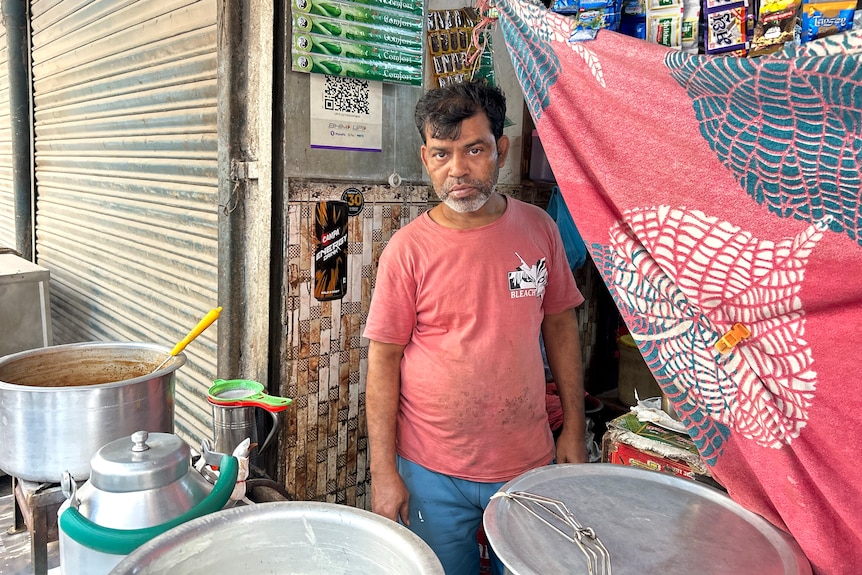
Zulfiqar Ali says he may have to leave his business in Delhi and return home due to rising energy costs. (ABC News: Bhat Burhan)
Four-day working week to save energy
While the Philippines and Vietnam have introduced a four-day working week, Thailand has told professionals to wear shirts instead of suits to save on air conditioning costs and to work from home.
Thailand is one of the most exposed countries, with about 50 per cent of its crude oil imported from the Middle East and 30 per cent of imported LNG passing through the Strait of Hormuz.
The government said it would freeze cooking gas prices until May and is looking to buy gas from Russia.
The Iran war has boosted Russia’s exports of oil and gas after the US lifted sanctions on Russia linked to its war in Ukraine.
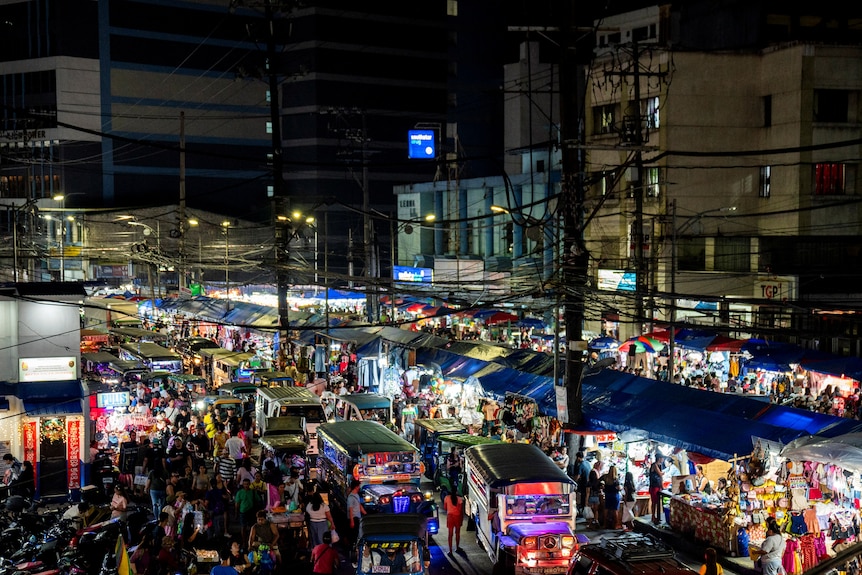
Countries including the Philippines are scrambling to secure crude shipments. (Reuters: Lisa Marie David)
Itsaret Poungthong, a fishery biologist in Thailand, said rising fuel prices had been the biggest impact in his daily life.
“Some businesses have adapted by reducing their energy consumption, such as dimming their lights, and shortening operating hours,” he said.
In Indonesia, a mother in East Java told Kompas she had been tightening her budget throughout Ramadan, hunting for cheaper food and drinks at low-cost markets.
“What I’m worried about is if the impact of the Iran conflict eventually reaches our kitchen,” Setiawati, who only gave her first name, said.
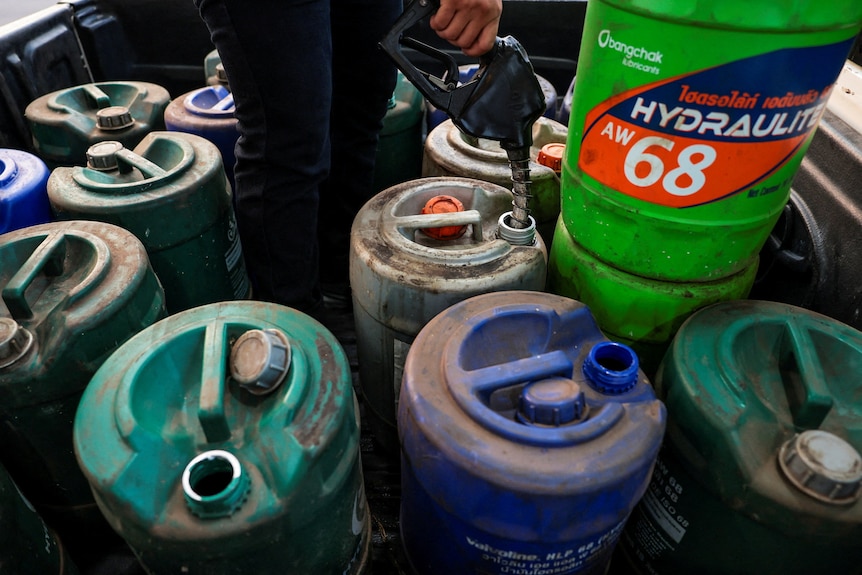
Thailand has discussed with Russia the possibility of purchasing LNG as fuel and energy prices skyrocket. (Reuters: Chalinee Thirasupa)
“Usually when oil prices go up, everything else follows.”
Economist Bhima Yudhistira from the Centre for Economic and Law Studies in Jakarta said households across the country were facing a budget squeeze as both energy and food costs rose.
“If fuel and LPG prices increase, many middle-class families could fall into poverty,” he warned.
“In the worst‑case scenario, Indonesia could slip into a technical recession in the second quarter of 2026.”
He said the government may need to revise its budget and divert funds from less urgent programs, such as the free meals initiative, towards energy subsidies and social protection instead.
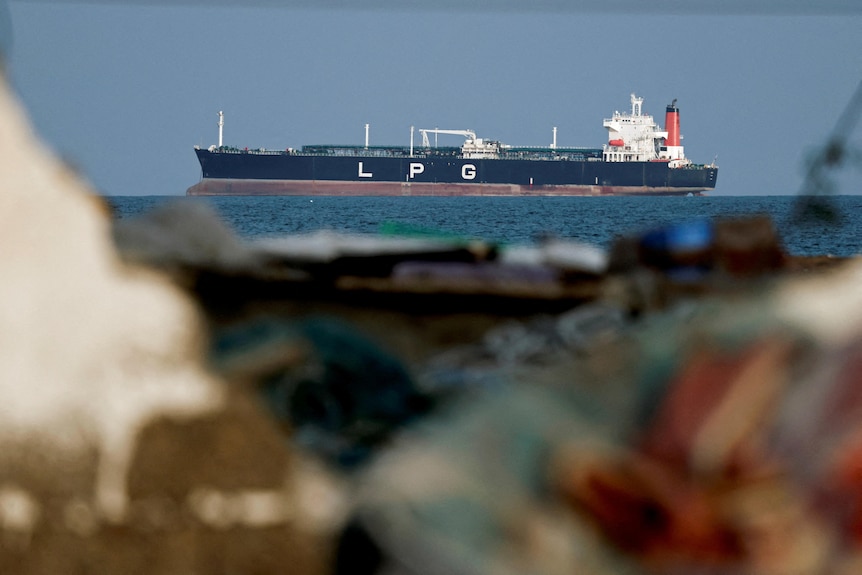
Thailand is increasing coal power generation to preserve its LNG supply. (Reuters: Benoit Tessier)
A global helium crisis
While oil prices dominate headlines, another less visible resource is also under pressure: helium.
Best known for filling birthday balloons, helium is used to cool the superconducting magnets inside MRI machines and plays a key role in semiconductor production and rocket fuel systems.
The Iran war has forced Qatar to close its major liquefied natural gas and helium plants, which normally supply about a third of the world’s helium.
Disruptions to Qatar’s natural gas processing has driven helium prices higher. (Reuters: Stringer)
That has raised concerns about a sudden global shortage.
The stakes are particularly high for Taiwan’s semiconductor sector, which sits at the centre of global technology supply chains.
“For Taiwan, it’s being felt in helium and bromine imports, which are becoming difficult to source,” said Carlos Pacheco, a market analyst at Aurora Insights.
“Helium is used for cooling and cleaning the chips, and bromine is used in the etching process to make the circuitry precise.”
This significantly impacts South Korea and Taiwan, which rely on helium for their semiconductors and chip making.
Eric May, a professor at the University of Western Australia and chief executive of the Future Energy Exports Cooperative Research Centre, said even if Qatar’s plants were running, getting helium out through the Strait of Hormuz was fraught with danger.
“There aren’t any helium pipelines,” Mr May said.
Purified helium must be shipped in containers, making maritime access through the Strait of Hormuz critical.
Unlike oil or gas, helium cannot easily be replaced or quickly produced.
Helium forms slowly over billions of years in the Earth’s crust through radioactive decay and accumulates in certain natural gas fields in small concentrations.

A shortage of helium could slow the production of semiconductors. (Reuters: Ann Wang)
South Korea’s parliament has flagged the possible disruption to chips because of the difficulty in sourcing helium.
AI data centres and industries, from smartphones to cars, are among those exposed.
Facilities already operating face the most immediate pressure.
“The incumbent players — the ones running the systems that power companies like the big tech firms — have to keep the lights on,” Mr Pacheco from Aurora Insights said.
“They’ll dedicate time, energy and money to maintaining operations.”
Meanwhile, he said projects still under development could be delayed if uncertainty persists.
“AI data centres — rapidly expanding across Asia — have different hardware and cooling requirements from traditional facilities, meaning supply disruptions could affect them in different ways.
“How do you navigate through a hurricane when you don’t know how big it is or how long it will last?
“Everyone is scrambling.”
Loading…