
A small Aussie community is living in fear that the incredible underground phenomenon they’ve documented in the bush could be destroyed.
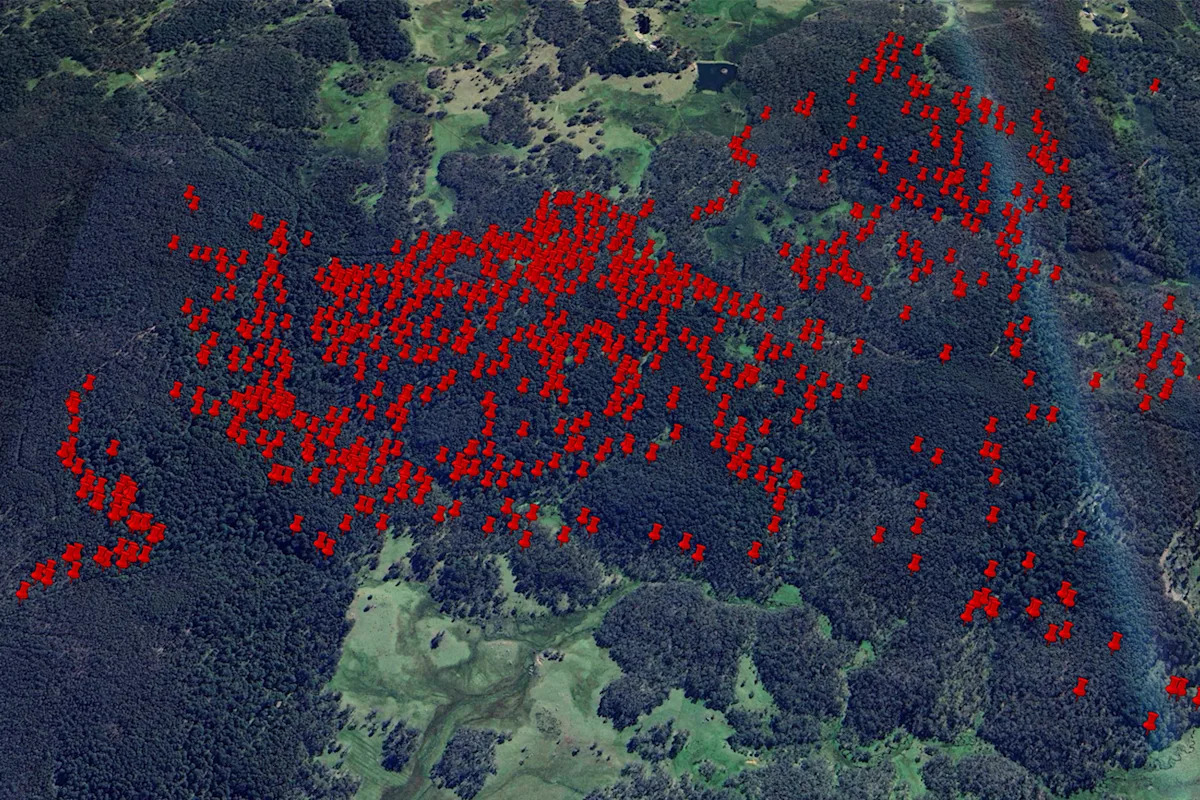
The Wombat Protection Society Australia (WPSA) has created a map showing GPS coordinates of more than 900 burrows at Glenbog State Forest on the NSW south coast.
But they are concerned that a plan by a NSW Government-owned timber company to bring in heavy machinery and cut down the trees growing above could bury the wombats that live below alive.
WPSA spokesperson Marie Wynan explained she lost trust in Forestry Corporation of NSW to safeguard the wombats after an operation 1km away in 2014 destroyed several burrows.
“I don’t think there are words to describe exactly what we felt, but we were devastated,” she told Yahoo News.
“When we walked into the forest, it was like a bomb had hit.
“There was logging debris stacked up high, it was absolute carnage.”
WPSA has started a Change.org petition calling for the logging to be scrapped where the majority of burrows have been located, forest compartments 2312A to 2315A.
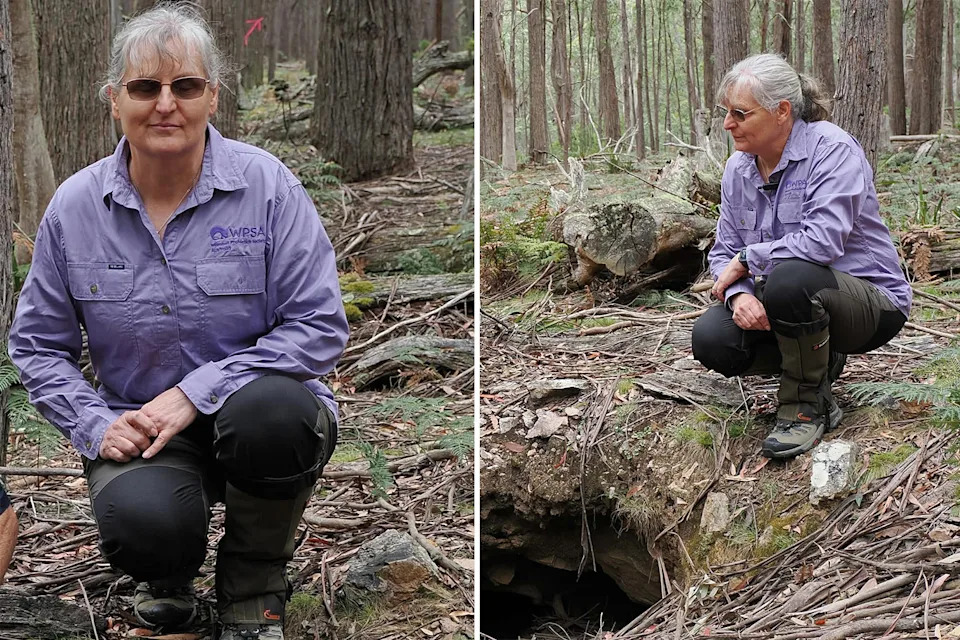
WPSA’s Marie Wynan says she has lost trust in Forestry Corporation of NSW to safeguard the wombats after an operation 1km away in 2014 destroyed several burrows. Source: Supplied
NSW government’s timber company responds
When contacted by Yahoo News, Forestry Corporation of NSW, which manages Glenbog State Forest, did not dispute that burrows were disturbed during its operations in 2014.
It’s understood the company advised contractors to avoid burrows when practical.
Despite more than 150 burrows being marked by Wynan and her colleagues, allegations were made that at least 11 entrances were damaged.
Forestry Corporation conducted ecology inspections after the harvest, which concluded there was a large healthy wombat population continuing to use the area, but this is disputed by WPSA.
Wynan believes that around 30 per cent of burrows were damaged, and that the surviving wombats left the area because their food sources had been destroyed.
“Survey markers and tape were removed, and we documented widespread destruction of burrows, many of which were crushed, backfilled, or blocked by logging debris,” she said.
“Wombats largely disappeared from those areas, and we recorded at least one dead wombat beneath logging debris.”
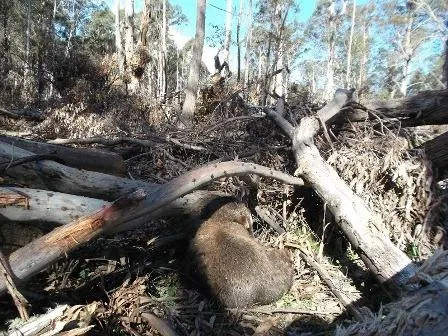
A wombat among felled logs after timber harvesting in 2014. Source: WPSA
Dispute over wombat burrow structure
In the surrounding areas, WPSA began to see signs of mange in previously healthy populations, a condition she believes was exacerbated by stress.
Forestry Corporation believes that bare-nosed wombats have multiple entrances to their networks, and if true, these animals would be able to dig themselves out if an entrance is destroyed.
But Wynan argues that burrow systems vary, depending on species and location.
“We have not found a single wombat burrow in Glenbog State Forest that has multiple entrances,” she said.
“It’s because of the soil type, the landscape.
“And they are bare-nosed wombats, not southern hairy-nosed wombats, which live more in a warren system – and they live in South Australia.”
‘We won’t give up’
Forestry Corporation has been in talks with Jarake Wildlife Sanctuary, a rescue and care group also run by Wynan.
While the works are in the planning stage, it said it would continue to “consider information” provided by local authorities.
Forestry Corporation directly provides over 600 jobs, and indirectly supports an estimated 20,000 workers, but there have been calls for it to transition to plantation harvesting, with critics noting its native hardwood operations operate at a loss.
It has faced more than 50 investigations since the 2019/2020 Black Summer bushfires, racking up fines, court costs, restorative justice payments, and enforceable undertakings of more than $3 million.
Most recently, it was ordered to pay a $450,000 penalty for illegal logging.
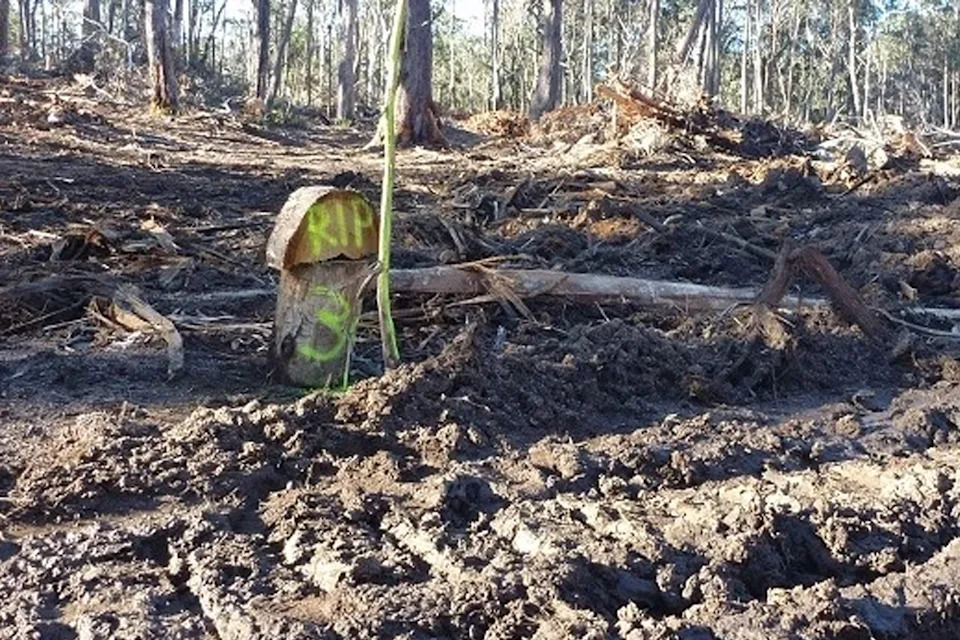
Marie Wynan helped mark burrows before timber harvesting in 2014, but she claims many were destroyed by heavy equipment. Source: WPSA
Originally from Sweden, Wynan was on the national cycling team and competed in the 1986 Tour de France, while her husband raced in Holland.
They’re determined to transfer the grit and determination they showed as professional sportspeople as they fight to protect the burrows.
“We’re pretty tough people, and we won’t give up,” she said.
She believes the only reason that wombat habitat is allowed to be cleared in Australia is that most people aren’t aware of it.
“If the majority of people knew what was really happening, it would be stopped.
“Most people are in the suburbs and cities, and they don’t know.
“Imagine if a dog was being buried alive, there would be an uproar about it.”
Do you have a story tip? Email: newsroomau@yahoonews.com.
You can also follow us on Facebook, Instagram, TikTok, Twitter and YouTube.