
The health partnerships aiming to make a difference in people’s lives
Over the next 12 months, the PREDICT toolkit (web, smart phone or paper-based) will be trialled with more 2,500 patients, aged 65 years and older, admitted to surgical and medical trial wards at hospitals in NSW, the ACT and Queensland.
Partner hospitals include Tweed Valley Hospital, Lismore Base Hospital, Canberra Hospital, North Canberra Hospital and University of Canberra Hospital.
“Delirium can be very serious and stressful for the carers, family and health care workers as well as the person who acquires it,” said Professor Christina Aggar of Southern Cross University.
“It is a stress-response while a person is in hospital, usually caused by a number of underlying acute, short-term illnesses and medical complications, for example infection, pain, surgery or changes in the environment. It is often mistaken for dementia because both conditions have similar symptoms, such as confusion, agitation and delusions. However, unlike dementia, delirium comes on very quickly and is potentially reversible.”
Professor Aggar said carers played an important role alongside clinical staff in preventing and recognising the onset of delirium.
“Carers can detect subtle changes in the health and behaviour of a patient that health professionals may miss, for example a nurse who has never met the person before might not realise the patient doesn’t always behave in such an erratic way,” said Professor Aggar.
Northern NSW Local Health District Director Nursing and Midwifery Katharine Duffy said it was exciting to see this project proceed to clinical trial.
“Northern NSW is home to a significant aging population, with one in four people in the region expected to be aged 70 years or older by 2041,” Ms Duffy said.
“And we know 50 per cent of patients aged over 65 years are at risk of delirium while hospitalised, so the importance of this project cannot be overstated.
“We are excited to have been involved in this innovative research project since it was successfully piloted in our hospitals in 2023-24. Delirium is a serious condition and anything we can do to better manage it will lead to improved outcomes not only for our patients and their families and carers but also for our staff.”
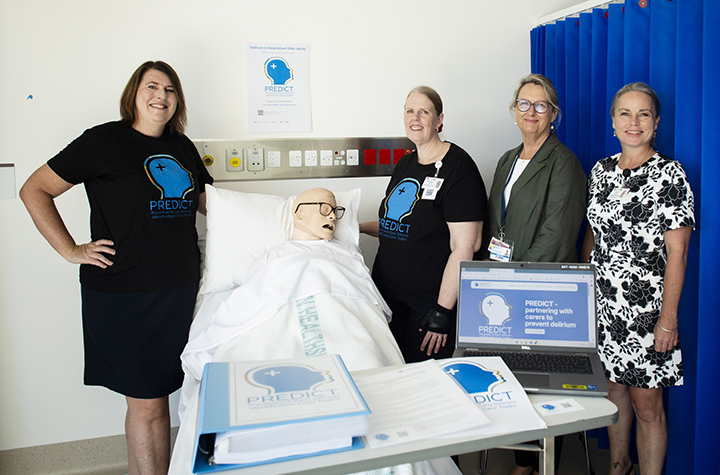
The NSW partnership (l to r): Dr Carla Sunner, Project Manager for the PREDICT delirium clinical trial at Southern Cross University; Belinda Lincoln, Clinical Nurse Consultant PREDICT at the Northern NSW Local Health District (NNSWLHD); Professor Christina Aggar, Chief Investigator for the PREDICT delirium clinical trial at Southern Cross University; and Karen Bowen, Nurse Manager Clinical Practice Nursing and Midwifery Services, NNSWLHD.
Canberra Health Services spokesperson, Ms Kellie Lang, Executive Director Nursing and Midwifery, says delirium is one of the most distressing experiences a patient and their family can face in hospital.
“Delirium can be hard to identify early. Working in partnership with carers through the PREDICT model will help us recognise changes and intervene quickly,” she said.
“Canberra Health Services is pleased to be working alongside Southern Cross University and the University of Canberra to introduce this model of care into our trial wards. It is the result of the long-term sustained effort to make a difference in cognitive care in hospital.
“This trial reflects our commitment to safe, person-centred care and to supporting families and carers as essential partners in a patient’s recovery,” said Ms Lang.
Professor Kasia Bail from the Centre of Ageing Research and Translation at the University of Canberra has spent the last decade researching delirium and advocating for more awareness of the condition.
“This trial, developed in conjunction with Southern Cross University, has been a longstanding team effort between CHS and UC to improve care of people with cognitive impairment in all settings, and particularly in hospitals,” said Professor Bail.
“Anybody can get delirium, however, it’s most common in older adults in hospital. Delirium is likely to last longer in older people and have more consequences, like other complications and long hospital stays. That’s why this program is so important, so we can recognise and reduce the impact of delirium on people most at risk.
“Hospitals can be a bit like a long-haul flight: confined in a restricted space with strangers and limited choices, and this situation, combined with complex illness and medications, can affect brain function. PREDICT will help people stay oriented or identify changes early for safer landings.
“Our UC research team always says ‘cognitive care is everybody’s business’. This program is the next intervention in our suite of cognitive care changes we need to improve health workforce interventions and health services,” Professor Bail added.
Ethics Approval
The PREDICT clinical trial has ethics approval: 2025 MNH 1173312.
Keep up to date