
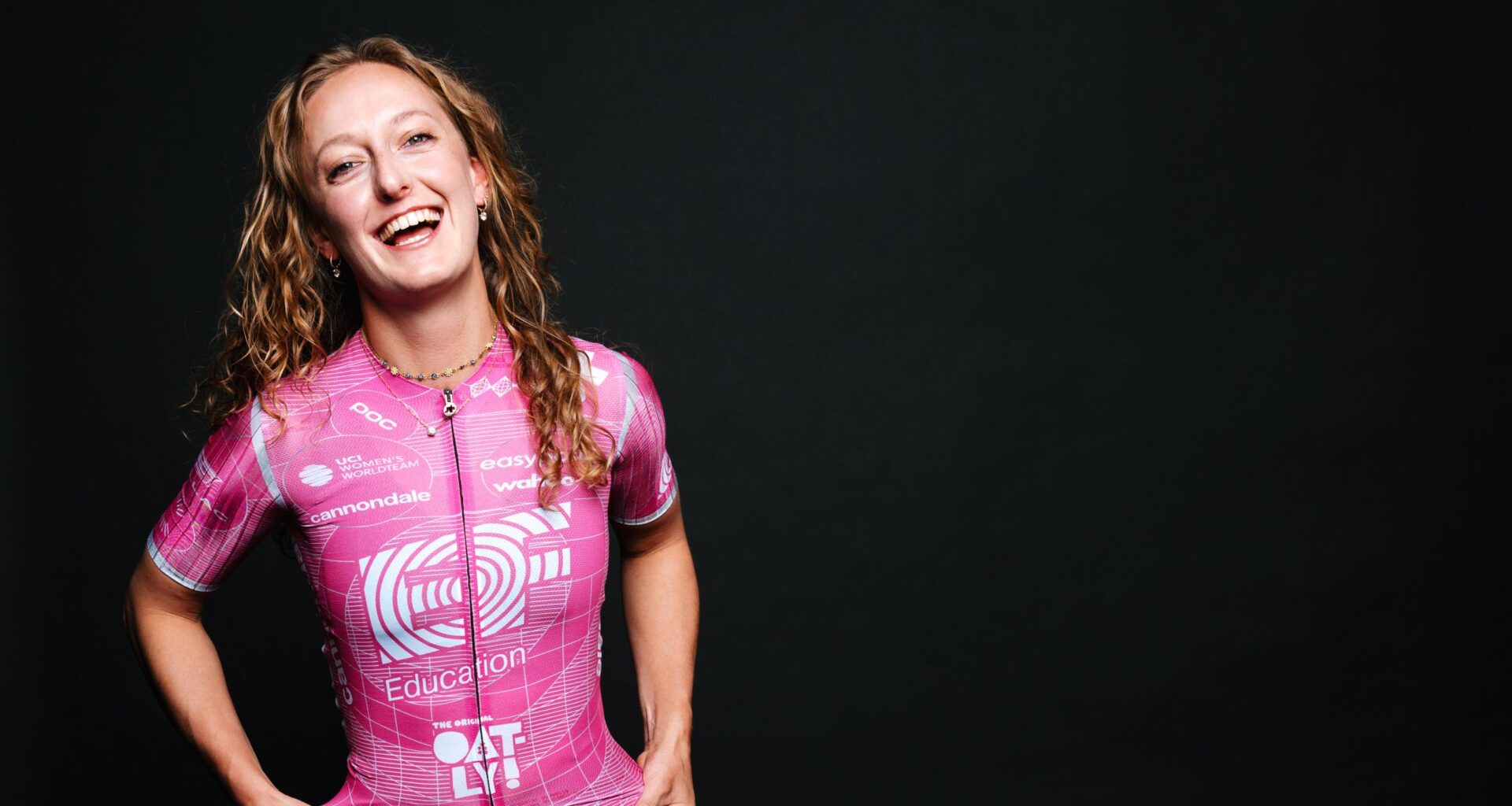
Cyclist: Tell us about your route into cycling.
Cédrine Kerbaol: I did a lot of different sports when I was a kid. I started with surfing, rock climbing, running, and martial arts like judo and a Breton version of judo called gouren. I was always doing two years of each sport and then getting bored of it.
When I started cycling it was different, because it was so tough. Technically I had a lot to learn, the physical aspects – it’s a lot to process.
It was a really hard and tough sport, that’s why I really enjoyed it – it was more of a challenge, and it was a good moment in my life as well to start cycling, I was at college and needed to give my energy and my hunger somewhere. It was the perfect combo.
Brittany is an area with a great cycling history. How did that inspire you growing up?
I was lucky to be near the coast and quite far from the city; it’s something I really like. As a cyclist, when I started, the weather was very tough. Sometimes I think that’s a good challenge that forges your character and makes you even stronger.
EF Education-Oatly seem to be a great fit for your personality. Can you tell us a bit about your first year with the team?
EF are a really open-minded team, I would say. You go there and they want you to become the best version of yourself, and not to change in any way. And that is what I was looking for, because I felt like in other experiences that people were trying to format you in a way, to make you become like everyone else, and actually that is something I don’t like, because I like to do stuff in my own way. I know that others will probably do it in a different way, and I’m super-happy about that, because this is what makes diversity, and what makes our sport so interesting.
For sure it’s a good fit. There’s cultural and personality diversity, that is what makes the group very strong as a unit, because there is a lot of value in that we really know everyone is different, and we accept everyone as they are.
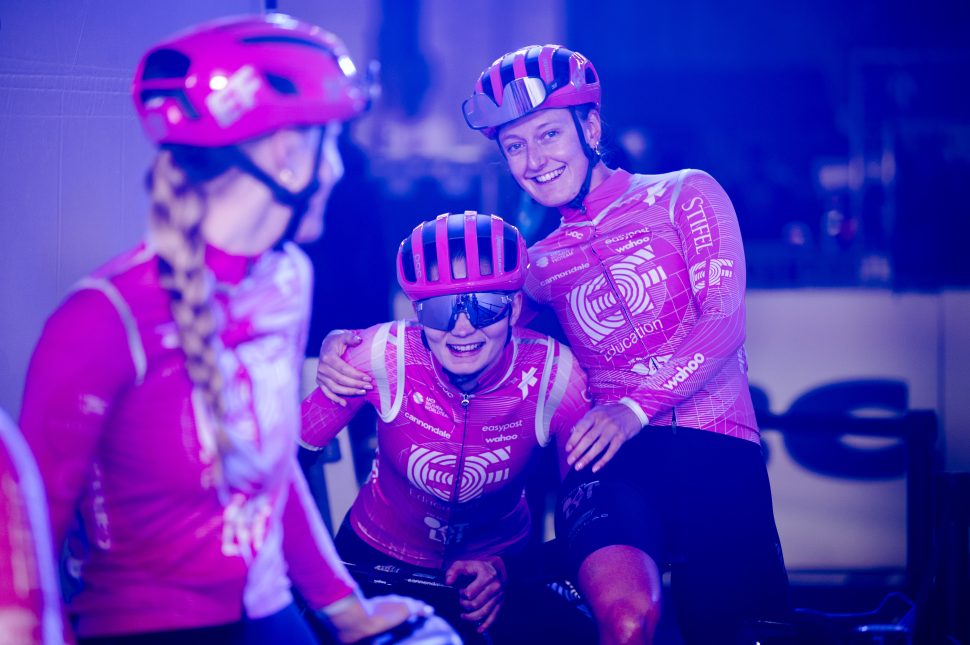 Anouk Flesch via EF Education-Oatly
Women’s cycling in France is thriving at the moment. Do you feel that when you’re at home?
When I go to an event, or I meet people at my club, then I feel it. But the rest of the time I live a bit disconnected from that. I have my social life, I have my friends. This is what I want.
I think it’s difficult for me to see it, because my progression was at the same time as women’s cycling progressing, I feel like everything happening around me is just normal, but actually it’s not the case – it was not like that few years ago. So I feel lucky.
When you were in Brittany last summer for the Tour, the support on the roads was immense. Did that feel different to when you were starting out?
People are watching women’s cycling more now, I think they find our way of racing more interesting to watch than men’s cycling sometimes. I’m very happy if it’s making people happy. And for us, it’s really cool to have the support on the road as well.
I think most important is that we give a good example to the new generation. As that is something that my generation didn’t get. So this is important, to inspire a new generation of women, so that they know they can do it as well – that they can dream, and they can live from cycling and sport in general.
You’ve become known for your demon descending skills. How did you discover it was a tool that could give you an edge over the rest of the bunch?
I think it was during the Tour two years ago, before that I didn’t realise it was an advantage.
Everyone saw it on the TV, and there was just so much media around it, people started to speak about it, but I didn’t think to myself before ‘oh, yeah, I’m a good descender’. I think it was already a skill, but when people spoke about it it became a big thing.
Was it then you realised it was something you could use?
I realised it the day I won a stage doing it, but for sure I think it scared people in the bunch, so it’s good and it’s bad at the same time, because now I know it’s more difficult to use it whenever I want.
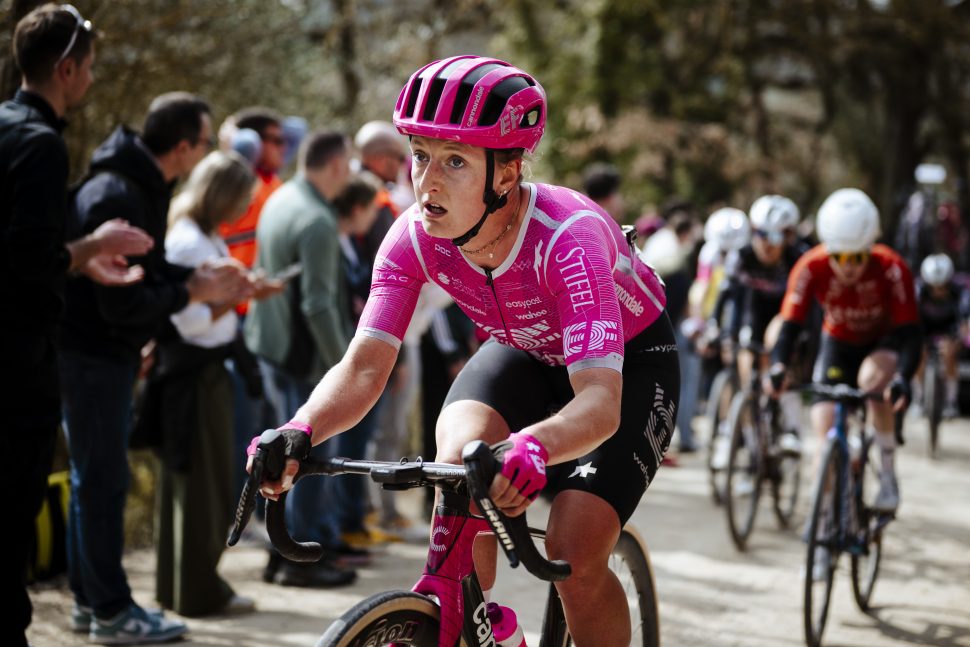 Anouk Flesch via EF Education-Oatly
How do you become so brave at such high speeds?
I always love taking risks, high sensations, I’m like that usually in life in general. I think it’s worth sometimes just going, not thinking about it for a long time, and just going for it. That’s the same with everything.
You once described stage racing as a bit like the Hunger Games. What makes you suited to survive in that kind of scenario?
I think the physiological aspect; I have this aptitude to recover from one day to another. And mentally, I feel like day-by-day, the confidence is growing in a stage race, even if the first days are not crazy-good, I always know that it’s going to be better. For some people it’s very challenging, the mental and physical aspect. I feel that, for me, they are the most fun races on the calendar: Vuelta, Tour, Giro. I’m so excited for it every year, and I know that even if I kind of fucked up on the first day, I can still get back in the game.
You’ve been improving year on year. What’s your outlook on the season ahead?
I think a big improvement has been done this winter on the physical aspect, but also with strategy and I think the human side like how to evaluate with my teammates. I’m really frustrated at the moment though, because I’ve raced twice this season and I haven’t achieved what I wanted to at all.
I know the time is going to come, but I don’t know when, and I’m a very impatient person. I know this is a strategy for my trainer as well, to peak in the summer normally, but right now I just want it – I’m ready to win.
In terms of health, you’ve been outspoken on the dangers of period loss and extreme lightness in the women’s peloton, have you noticed an improvement over the past year or so, since a number of women have spoken out on these topics?
I’ve seen some teams opening their eyes about it and trying to help some girls as much as possible with that by making them not race in order to recover. I don’t know if it’s linked with that, but I think it’s good.
For sure, people are speaking about it in a much more open way, it’s much less taboo. There is great improvement in the communication about the problems themselves. For the moment, there is no improvement, because it takes time to recover from REDs and you need a lot of support. So I think the direct impact on the women’s sport is going to be a bit later on, but it’s a good step.
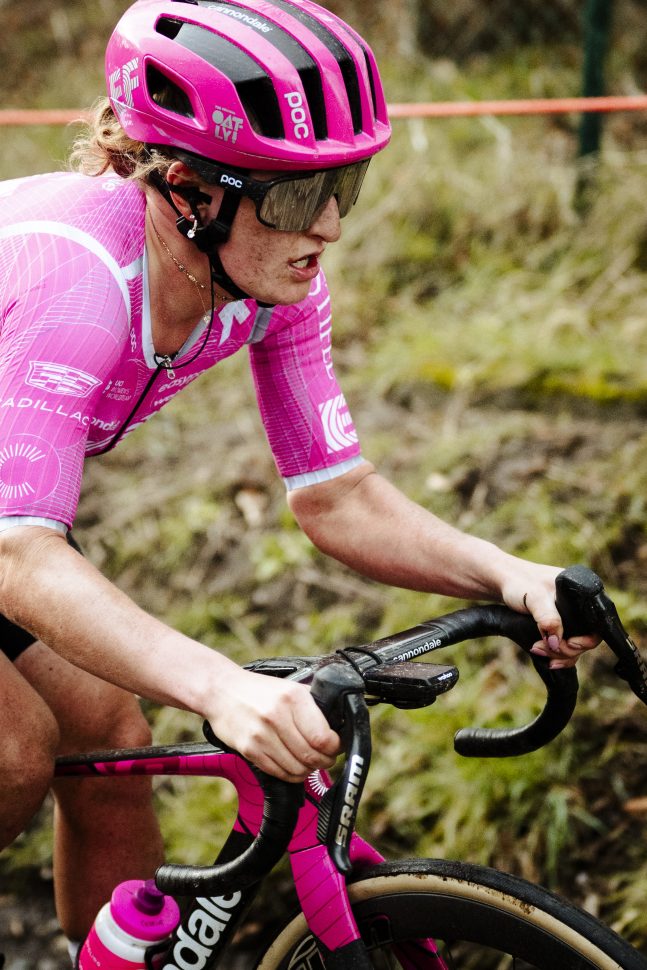 Anouk Flesch via EF Education-Oatly
What would you say is the best moment of your career so far?
There are really a lot of good moments. I can’t say there’s one that was my favourite. I have this philosophy, to always want more. And I’m just thinking the best moment hasn’t happened yet.
All the titles we got with the French team in mixed relays were incredible because you really share it with five other people. It’s so great because everyone is so happy, and you’re so happy. I’m super-happy that discipline exists, and I hope it can be at the Olympics in 2028.
Also for sure the stage win at the Tour was good. The white jersey was a super cool thing too, and Liège-Bastogne–Liège last year. It’s not about the race you enjoy or anything, it’s more about the way I raced, and the fun I got from it, and that is how I want to race more – and how I normally race. I feel like sometimes I lost that trying to do it in a certain way, but I really want to go back to racing on instinct more.
What kind of rider would you like to be remembered as when you move on from the sport?
Actually, I don’t care whether people remember me or not, it’s just the impact I make. I want to have a good impact on the sport in general, and on women’s cycling and the kind of issues we have now, to make sure the next generation don’t have them.
Do you think you’ll continue working in sport in that area after you’ve hung up the bike?
No, I want to have a farm, have some animals, make some cheese. This is my post-cycling plan.
I don’t think I will stay in cycling, to be honest, after my career, because there is so much stuff I like to do in life, and for me life is not just about cycling.
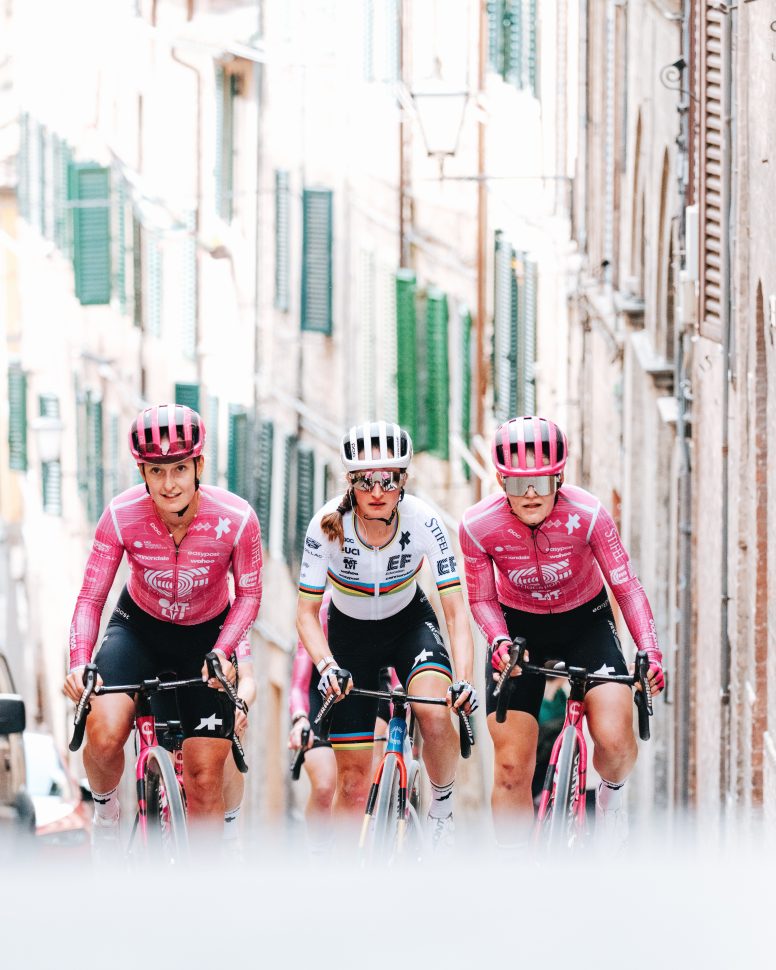 Gruber Images via EF Education-Oatly
How do you fill your time off the bike?
I love to be outside, to be in the mountains, to travel a lot. This winter, for example, I went to Brazil, alone, for a trip, and I moved from one place to another. I love to meet new people, learn new cultures, and learn how humans on the other side of the world are dealing with life, how they’re having fun, and that made me understand a lot about humans generally, and people other than myself.
Otherwise, I love to be with my friends, to go on spontaneous trips, and to do a lot of different things like painting and singing. There’s too much stuff I like to do.
What do you paint?
A bit of landscape. I love to do animals as well, and portraits. I’ve done a bit of abstract, though I’m doing it a bit less now. I was doing it more as a teenager, twice a week for four years I was taking lessons with my dad.
What animals will you have on your farm?
I would say goats and sheep. I really like the Basque Country. It’s an idea I’ve actually had since I was five years old. It’s going to be hard to get it out of my head.