

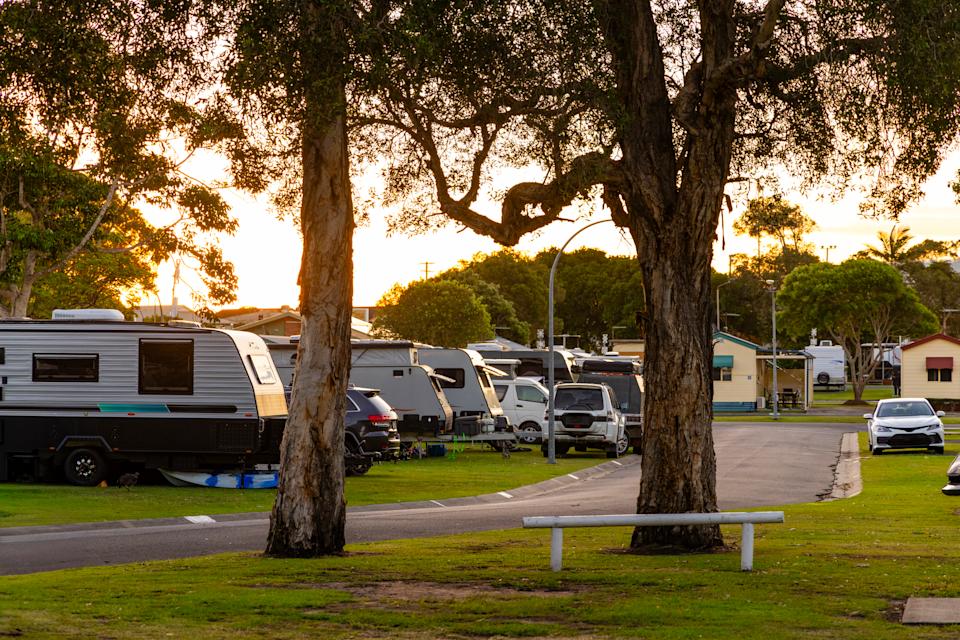
 A new approach by the Australian Tax Office means caravan owners can claim back money if they join the sharing economy. (Source: Getty) · Getty Images
There are nearly a million registered caravans in Australia. But many of them spend a majority of the year sitting idle.
Even travellers who currently want to be on the road with their caravan are having second thoughts at the moment. With the sudden surge in the price of petrol, some grey nomads say they are staying put or minimising lengthy travel journeys to save on fuel costs.
But for caravan owners not using their vehicle, there are ways to “earn a return” as well as recently awarded tax advantages to think of, Camplify CEO Justin Hales told Yahoo Finance.
RELATED
The founder of the caravan-sharing platform is working to expand the ASX-listed business and launch a number of depots around the eastern seaboard to facilitate owners being able to lend their caravans to families keen to explore the country without actually having to do the handover.
As a kid, his family used to pay his uncle to borrow his caravan for family holidays.
“The more I investigated, the more I found out that there was lots of these vehicles that just sit there for probably 48 weeks a year, and that there was a better way for owners to be able to turn that into something that was giving them a return,” Hales said.
“And the more we investigated, the more we found out there really was a desire from people like me to be able to have access to one.”
Since launching the peer-to-peer service a decade ago, he has since successfully campaigned the Australian Tax Office (ATO) to secure a landmark ruling in 2018 allowing caravan and motorhome owners to claim tax deductions as part of a new approach to the sharing economy from tax authorities.
It marked the first time that owners using such platforms could claim tax deductions on things like maintenance expenses, without having to register the activity as a business.
“It effectively means that you can treat the vehicle the same way as you could a rental property,” Hales told Yahoo Finance.
“So as it’s available on the platform, then you can claim pro rata expenses of that vehicle. So if it’s available for 50 weeks, then you can claim 90 per cent or more of your costs on that vehicle against your tax.
“So that could be finance, insurance, accessories that you buy for it, depreciation, you name it. So it really is quite a significant tax advantage for RV owners.”
Story continues
 Camplify CEO Justin Hales is expanding the business to roll out depots to take care of the hand-over from owner to renter. (Source: Justin Hales/Instagram/Getty)
Obviously you must also declare the income you make from renting out the vehicle on the sharing platform, with most caravan owners advertising their vehicle on the site for about $200 a day.
On its website about peer-to-peer caravan and RV sharing deductions, the ATO reminds owners they need to keep detailed records and all deductions claimed must directly relate to the sharing of the vehicle.
As international travel becomes more fraught due to conflict in the Middle East and a scarcity of jet fuel pushing up airfare prices, Hales believes more Aussie families will entertain the idea of hiring a motorhome.
“I think a lot of Australians in the next 12 months will be affected by the goings on in the Middle East,” Hales said. “Obviously we provide a very safe, easy, domestic holiday.”
However soaring petrol prices are hitting RV travellers as well, with caravan groups on social media showing it’s beginning to bite for many.
“Debating whether to keep touring SA or go back to WA due to fuel issues,” one person wrote recently.
The Camplify CEO is hoping some owners who don’t want to travel at the moment will offer up their vehicles to make a bit of extra cash.
The company’s share price soared during the Covid pandemic as international borders closed and people turned to domestic travel, but has since crashed more than 90 per cent.
The potential tax implications of joining the sharing economy aren’t the only financial implications that many caravan owners need to keep in mind.
For any retirees that are hitting the road full time, they need to understand how that could impact any benefits they receive such as the Age Pension.
If you’re travelling for more than a year, in the eyes of the government, the caravan is considered your principal home.
“This means the caravan becomes an exempt asset, and you may be able to claim Rent Assistance for your site fees,” Services Australia General Manager Hank Jongen recently wrote for Yahoo Finance.
But it cuts both ways as it means your actual house becomes an assessable asset under pension and other entitlement rules.
“Even though you might have purchased your home for a pretty penny before the year 2000 – the value of your home will have increased, and it will be assessed at its current value today,” he explained.
“If your payment rate has been impacted or your payment cancelled altogether, you’ll need to update your details or reapply once you return home.”
Get the latest Yahoo Finance news – follow us on Facebook, LinkedIn and Instagram.