
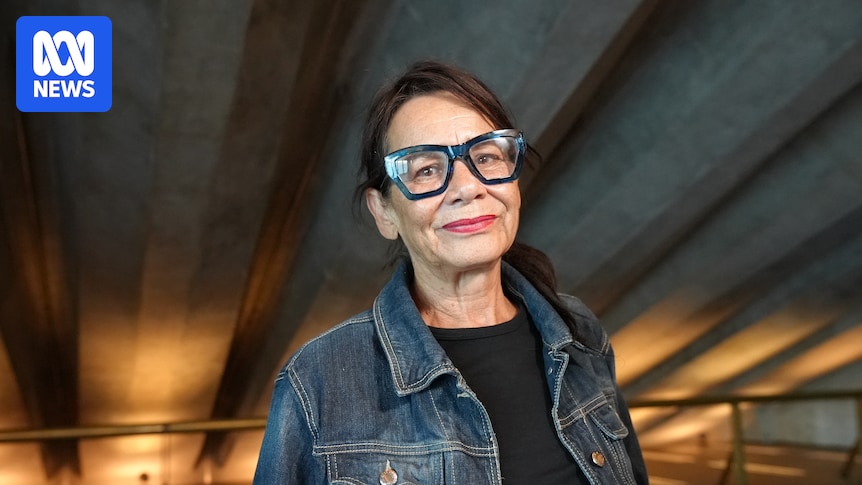
A guiding force in Australia’s arts scene and the woman who coined the term “Welcome to Country”, Aunty Rhoda Roberts AO has died at the age of 66.
WARNING: Aboriginal and Torres Strait Islander viewers are warned that this story includes images of an Indigenous person who has died. The ABC has been given permission to include her name and image.
The Widjabul Wieybal woman of the Bundjalung Nation dedicated much of her life to creating spaces for First Nations creatives to be front and centre in some of Australia’s biggest festivals and events.
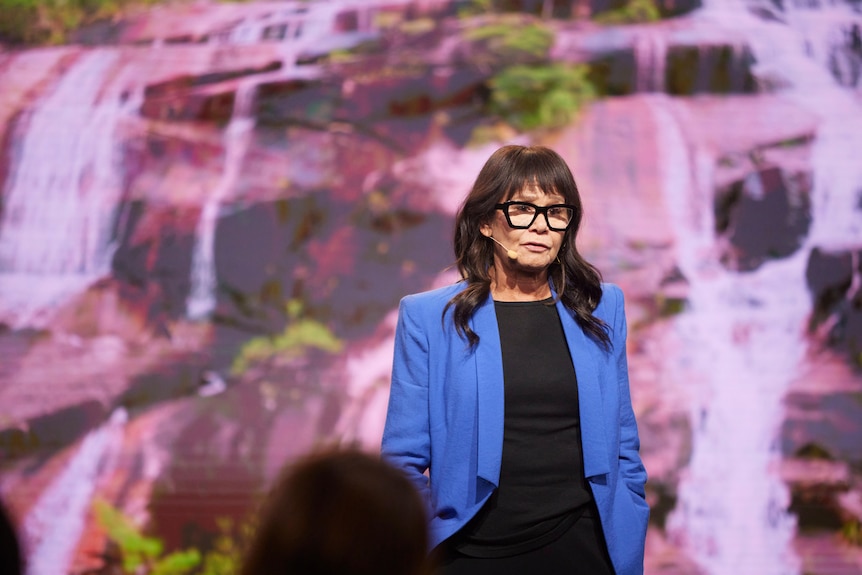
As Elder-in-residence at SBS, Rhoda Roberts delivered orations each year. (Supplied: NITV)
Roberts accomplished many firsts, including as the first Aboriginal host on mainstream television, the inaugural head of Indigenous programming at the Sydney Opera House and SBS’s first Elder-in-residence.
Born with innate talent to nurture people, her career ranged from nursing, creative director, acting, festival director, producer and cultural adviser.
At the end of 2025, she was diagnosed with cancer.
Growing up on Country
Raised in Lismore in the Northern Rivers region of NSW on Bundjalung Country, Rhoda was born a twin in the big Roberts family.
Culture remained central to her life; her great-grandfather was the “last fully initiated man of the Bundjalung”. Her family defied government policies of the time to maintain its cultural knowledge, including dance and language.
Loading Instagram content
Born to an Aboriginal father and a non-Indigenous mother, Roberts said her parents married at a time when they needed to get permission from the Protection Board.
“My mother had the view that it didn’t matter what colour a child was, it was all about their kinship and where they fitted and if you gave them the tools of life then life could be hunky dory.”
Roberts’s father Frank Roberts junior was a pastor and an activist, and she recalled her mother, Muriel, as artistic and an avid reader.
In a 1997 interview with Margaret Throsby, Roberts revealed the racism she and her family were subjected to in the Lismore community.
“We had colour bars in coffee shops … you could go in and buy it, but you couldn’t sit at the restaurant.
“The swimming pool was a good example, you could go and swim at the school carnival, but you certainly couldn’t go on weekends.”
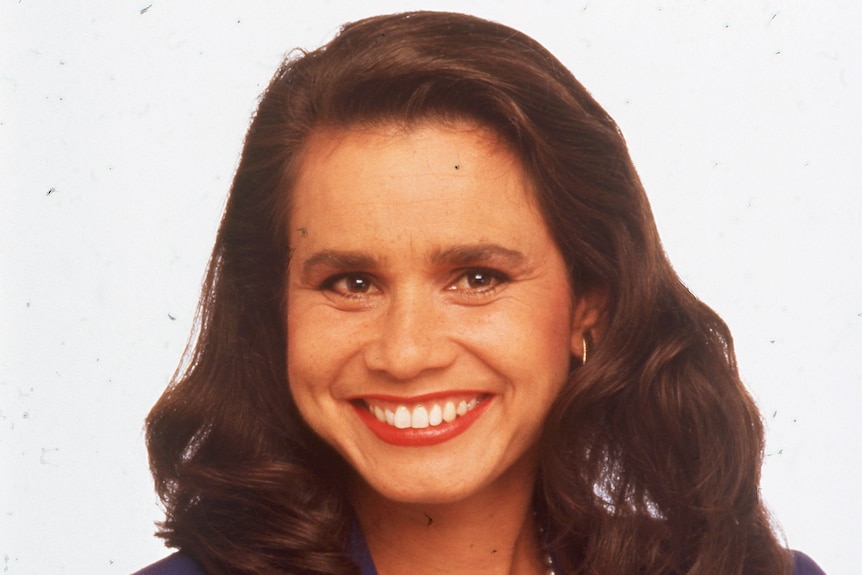
Rhoda Roberts was a presenter of SBS’s Vox Populi current affairs program. (Supplied)
Despite the segregation and discrimination, her parents taught her to “defy” the naysayers.
Roberts said a comment her father made after seeing her reaction to a racist joke by another child stuck with her into adulthood.
“He said, ‘The black isn’t going to go away, you can do anything you want in the world.’
“From that day I thought, ‘Oh yeah, I will fight it.”
From nursing to the stage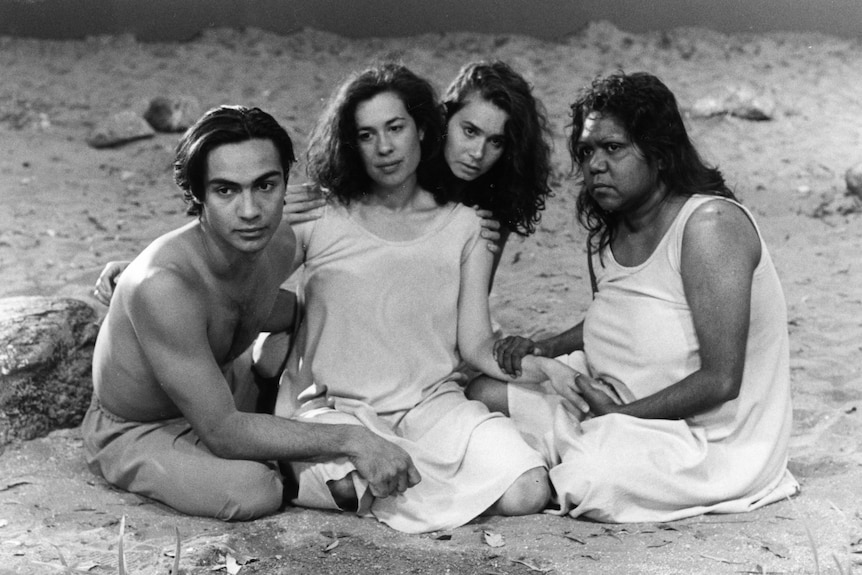
Rhoda Roberts (back of group) was an actress on stage and on TV. (ABC)
Roberts dreamed of being a writer and journalist, but that path would take a detour.
“I just wanted to play the violin, become a journalist and write books. That was my dream, but of course that wasn’t possible in Lismore in the 70s,” she told ABC’s Conversations.
Instead, she was persuaded to take up nursing. She acquired the necessary caring skills young, having been a hospital volunteer, also known as “candy striper”.
“In those days they didn’t take Aboriginals into the three-year general nurses’ training. They would only take you in to be a nurses aid, and I didn’t want to be a nurses aid,” she said of Lismore hospital.
Her mother convinced a matron in Sydney, who had initially refused to take Roberts on, that she had another offer.
“I had to prove to those people that I could become a general nurse,” Roberts said.
After nursing in London she returned to Australia and decided to give acting a go at Brian Syron’s acting studio, and toured the nation in theatre productions.
Seeing the need for better Indigenous representation in the arts, she co-founded a theatre company called the Aboriginal National Theatre Trust.
Throughout it all her father’s advice to give back to the community stayed with her, and she volunteered at Radio Redfern.
“He always said to my sister and I, ‘The reason you are here, my Bundjalung princesses, is because you are of service to your people,'” she told Mamamia.
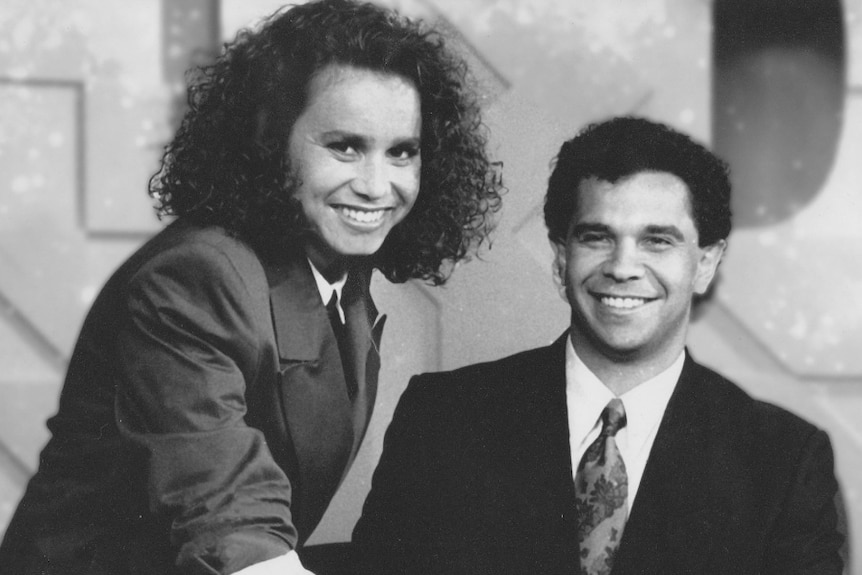
Rhoda Roberts was the first Indigenous presenter on mainstream television. (Supplied)
Roberts became the first Aboriginal host on mainstream television on SBS’s First in Line with Michael Johnson, and later the first Indigenous presenter on a prime-time current affairs program, Vox Populi.
She hosted Deadly Sounds for 21 years, and wrote, produced and edited documentaries including SBS’s In the Gutter? No Way in 1991.
On the ABC she presented the radio show Awaye! and hosted television programs A Sense of Place and A World of Difference.
Aboriginal culture on the world stage
Roberts’s role in the Sydney Olympics would be pivotal in the trajectory of her career.
In 1997 she became the director of the Festival of the Dreaming in the lead-up to the Olympic Games.
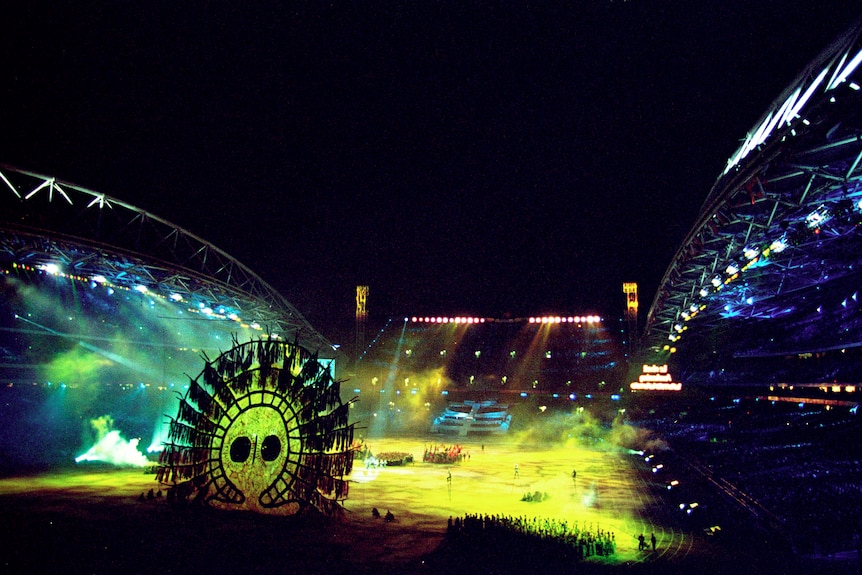
Rhoda Roberts was behind the artistic direction of the Awakening segment at the Sydney Olympics. (AAP: Dean Lewins)
She was also creative director of the Indigenous component of the Games’s opening ceremony called the Awakening.
Despite facing some backlash at the time, she was determined to put “artists up front where they belong”.
“The festival gave us the opportunity to invite non-Indigenous Australians into a very rare insight of Indigenous culture through music, theatre, dance, literature, film and the visual arts in a way that had never ever been seen before,” she told the ABC’s Speaking Out.
“No-one had seen Aboriginal Australia and they saw it in all its diversity, with our brothers and sisters from the Torres Strait. They saw the diversity of who we were and who we are, but they saw the excellence of our dance and our story.”
As artistic director of the Festival of the Dreaming, she saw an opportunity to show how First Nations people “host” people coming into their lands.
The idea was inspired by another of Roberts’s uncles who had offered to “sing that Country” during Nimbin’s Aquarius festival in 1973.
“To me that was the first ‘Welcome’. And he set a precedent that we should be welcoming people onto our Country,” she said.
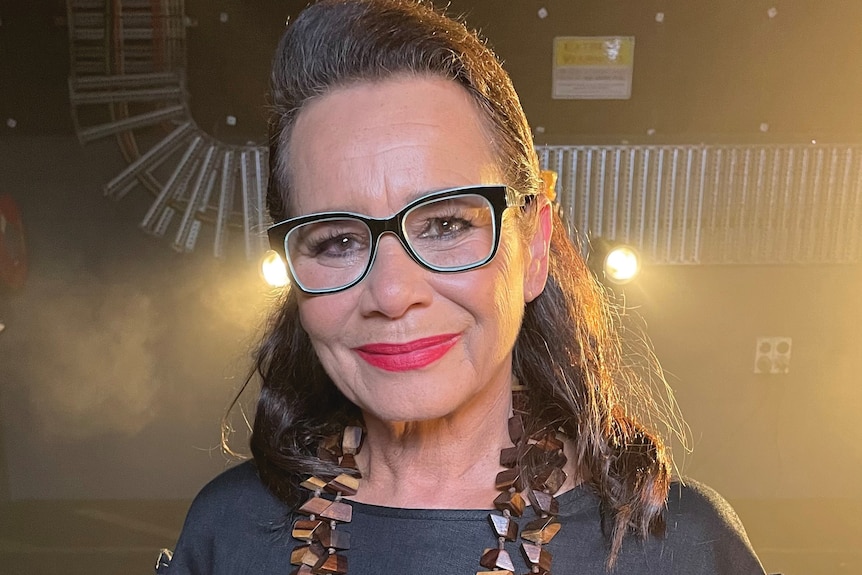
Rhoda Roberts was a mentor to many. (Supplied: NITV)
While it was a protocol that had been observed for generations, formalising the practice in the arts scene and coining the term “Welcome to Country” was revolutionary.
“Everyone kept trying to correct it, ‘Welcome to the Country’ or ‘our Country’, and I said, ‘It’s not ours. We live with it.’ So that’s how it became Welcome to Country,” she told the ABC’s Indigenous Affairs Team in late 2025.
“It makes people feel special. It’s a bit like, if I’m going turn up at your house, I’m going to bring a good bottle of shiraz and a bunch of flowers. It’s good manners.”
The ceremony has transformed into Calling Country — heard every New Year’s Eve on Sydney Harbour, and for which Roberts was artistic director.
Changing the way people celebrated Indigenous talent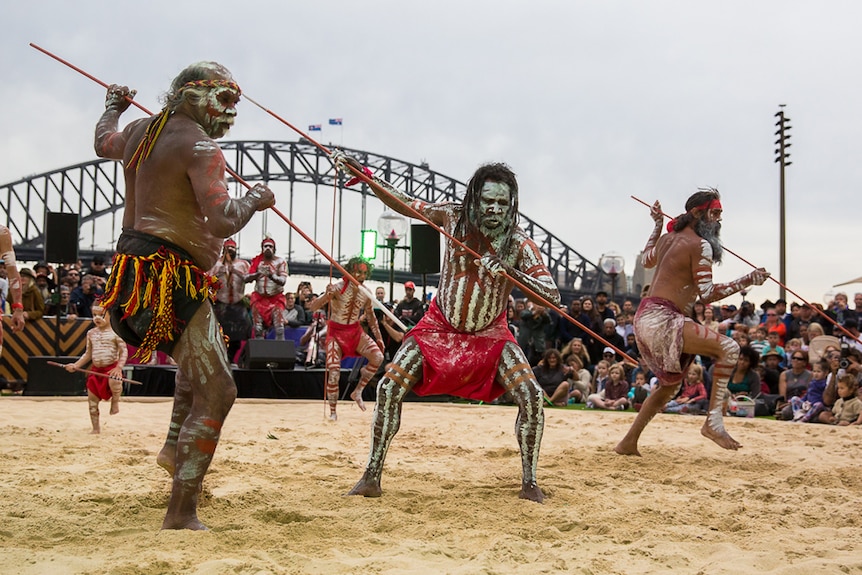
Koomurri dancers at a Dance Rites contest at the Sydney Opera House. (Supplied: Joseph Mayers)
In 2012 the Sydney Opera House created a role dedicated to her talent.
As the first head of Indigenous programming, she saw the establishment of First Nations events such as the Dance Rites competition, hosted the podcast Deadly Voices from the House, and oversaw the illumination of Aboriginal artwork on the iconic sails, Badu Gili.
“I have to remind people … that it is the first performing arts centre in this country — and indeed the world — that had a dedicated First Nations head of programming,” she said.
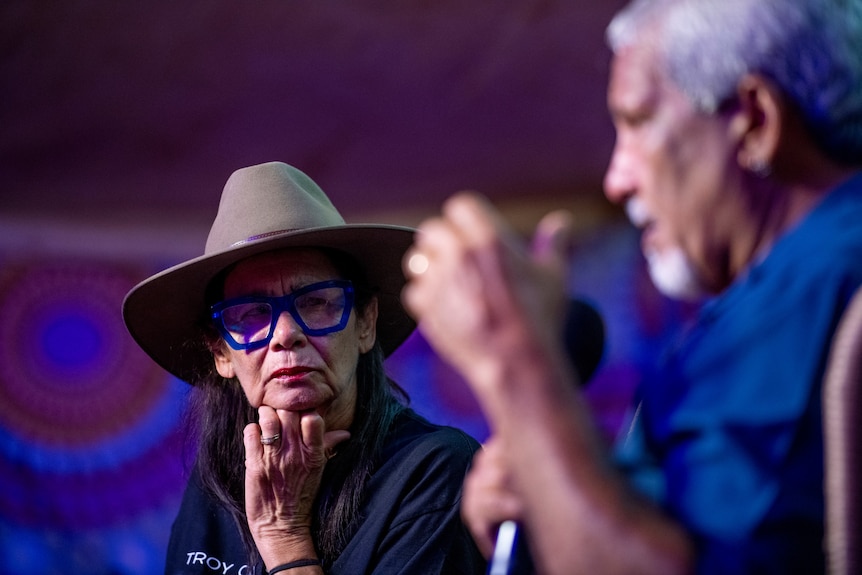
Rhoda Roberts on stage at the Parrtjima Festival in Mparntwe Alice Springs. (Supplied: Parrtjima)
Her cultural and artistic advice has guided festivals across Australia including Vivid Sydney, Sydney’s News Year’s Eve celebrations, Parrtjima in Mparntwe Alice Springs, Shine on Gimuy in Cairns, as well as Boomerang at the Bluesfest in NSW.
“I have people across the country, our senior boss men and women, who culturally trust me with their stories, they trust me with their art,” she said.
“That’s pretty huge and I get to work with that every day.”
Family heartbreak
Just before her 21st birthday, her twin, Lois, was in a car accident that resulted in brain damage.
Although Roberts never thought of becoming a mother, in 1994 she took on the caring responsibilities for Lois’s daughter Emily.
At that time, she was married to the late actor Bill Hunter.
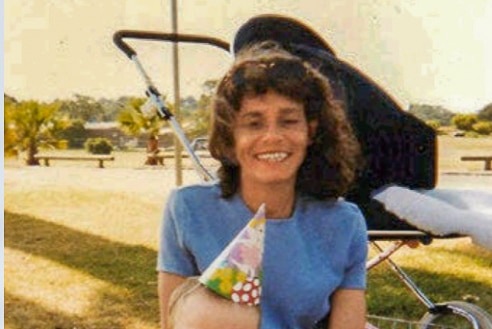
Lois Roberts went missing in 1998. (Supplied: Rhonda Roberts)
While Roberts was leading the Festival of the Dreaming at 38 years old, Lois went missing.
She said her concerns were dismissed by police at the time, and she recalled being told that her sister had gone “walkabout”.
Six months later Lois was found by a bushwalker in the Whian Whian State Forest. She had been kidnapped and murdered.
The story of Roberts’s devastation was told in the documentary A Sister’s Love, directed by Ivan Sen.
Roberts spoke of the heartbreak her family went through with the tragic loss of her twin sister in 1998 and the lack of justice that followed. She described her period of grieving as “losing a part of herself”.
Roberts told Conversations with Richard Fidler that she felt a sense of survivor’s guilt.
“I am so lucky and fortunate that I have wonderful children, I have wonderful family, I come from the oldest living culture.
“I have all that connection and then I’m able to keep myself on an even keel, I guess, because I can throw everything back into the passion I have for the arts and the work I do.”
Later life
Roberts was a playwright and, despite being diagnosed with a rare type of ovarian cancer, continued to be a presence on stage.
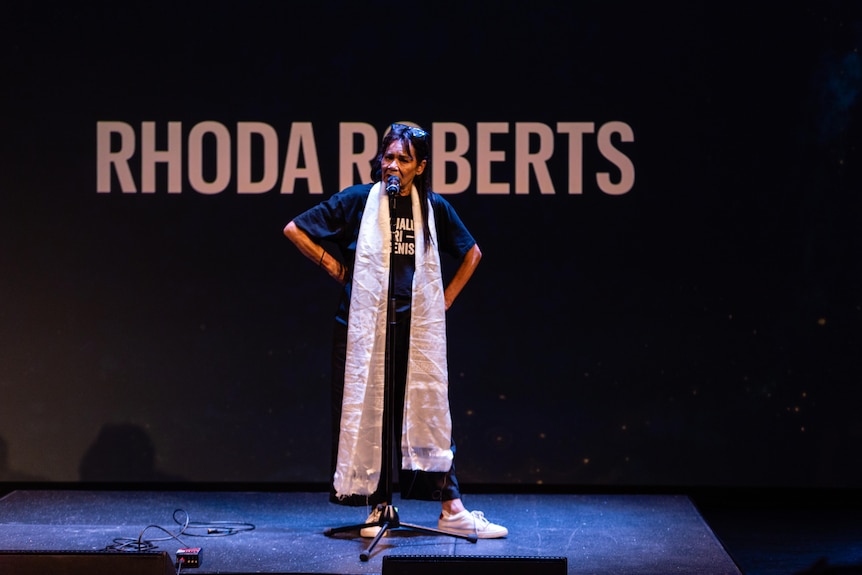
Rhoda Roberts at a Sydney Opera House event in 2025. (Supplied: NITV)
She was determined that “our ‘Rocky’ story” — that of her cousin Frank Roberts, the first Aboriginal man to represent Australia at the Olympics — would take its rightful place in the history books.
She penned her one-woman play My Cousin Frank about how the young man from Cubawee came to compete as a boxer in the 1964 Tokyo Games.
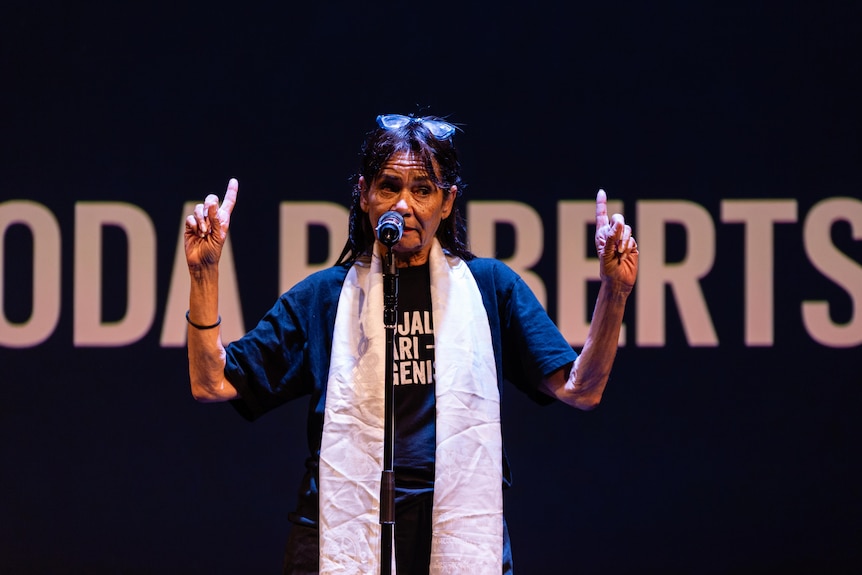
Rhoda Roberts performs her one-woman show My Cousin Frank in 2025. (Supplied: NITV)
In December, her supporters fundraised and organised a private surprise event at the Sydney Opera House to celebrate her life and contribution to the arts.
An Elder-in-Residence at SBS, she returned to the public broadcaster that gave her the big break in journalism.
Giving back to her community, she was also the cultural lead for the Koori Mail based in Lismore — an Aboriginal-owned newspaper that was her father’s dream.
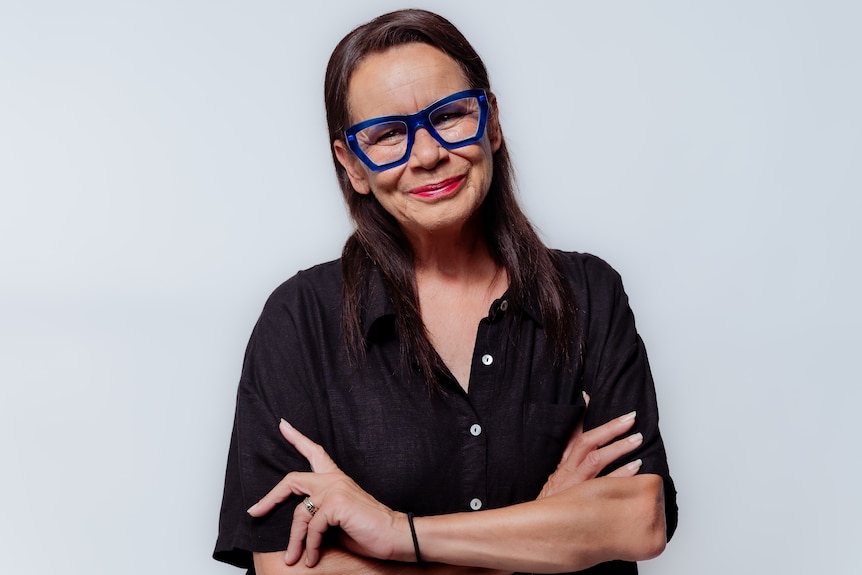
Rhoda Roberts was taught from a young age to give back to the community. (Supplied: NITV)
Her advice has shaped many boards, and she is a multi-award winner for her contributions to the arts. These include the Helpmann Awards’ Sue Nattrass Award, a Deadly Award for Broadcasting, and an Order of Australia in 2016.
A true trailblazer, her influence on how First Nations creatives are recognised and celebrated will have a long legacy.
Roberts is survived by her partner Stephen and her children, Jack, Sarah and Emily.