
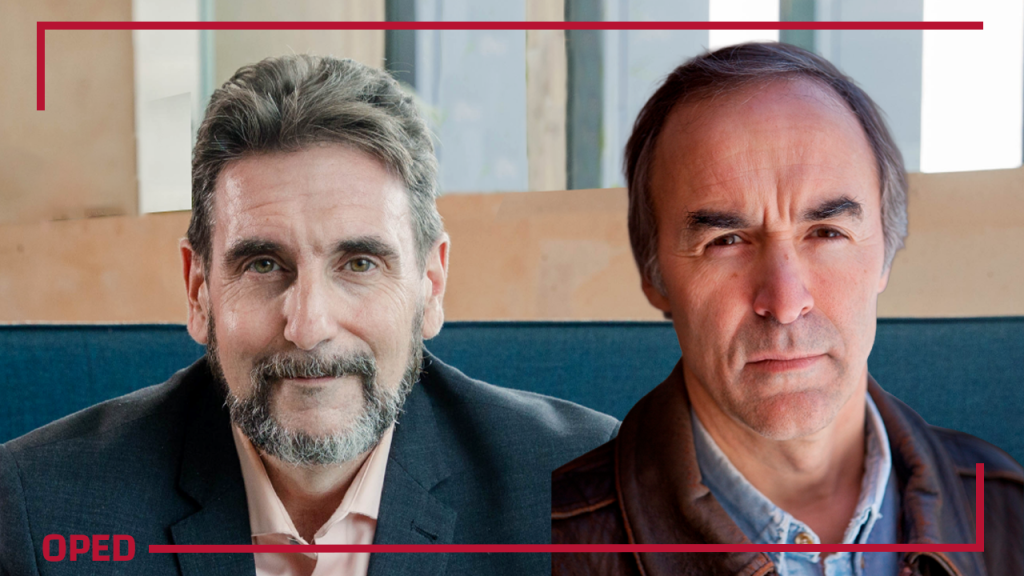
Today’s guest columnists are professors John Cairney and Rick Burton.
Sport leagues have long believed they controlled all relevant branding.
In fact, the NBA’s recent decision to cancel the Atlanta Hawks planned “Magic City Night” suggests, institutionally at least, that leagues still think they call the shots.
But the episode also reveals something deeper in modern sports: Even as leagues retain formal authority over team promotions, cultural reality increasingly lives outside their control.
To revisit, the Hawks had planned a themed event on March 16 tied to Magic City, a well-known Atlanta adult entertainment venue long connected to the city’s hip-hop culture. For many, Magic City wasn’t simply a nightclub but a longstanding nightlife legend.
That’s why the Hawks’ promotion would have featured themed food, merchandise and entertainment tied to the club, including a halftime performance by recording artist T.I.
But before the event even happened, the NBA stepped in and halted the promotion. Concerns had emerged about the optics of a professional sports franchise celebrating a strip club. The league moved quickly to cancel the official branding associated with the event.
From a league governance perspective, the decision makes sense. In marketing terms, professional sports leagues function as collective brands serving multiple demographics simultaneously. That means individual teams operate in a shared reputational ecosystem where the actions of one club can impact all 30 in the league.
But the deeper lesson from the episode isn’t about the NBA’s ability to intervene. It’s about the limits of that decision.
For much of the 20th century, leagues maintained tight control over brand image, because media channels were limited and communication was centralized. Teams and leagues dictated public narratives through official broadcasts, mainstream press relations and league rules.
That world is crumbling.
Today, the cultural meaning of sport is produced across a decentralized network of athletes, influencers, entertainers, fans and digital platforms. In many cases, the most influential narratives about sport don’t originate from the league offices at all.
Magic City itself illustrates this shift. The nightclub’s reputation developed through informal athlete associations, hip-hop references and social media storytelling. At various points, Hawks players openly acknowledged Magic City’s place in Atlanta’s entertainment culture.
In other words, the connection between pro hoops and Magic City was already widely understood. The Hawks’ promotion didn’t create the cultural relationship. It simply attempted to formalize and leverage it. That distinction matters.
Leagues can prevent teams from publicly embracing certain cultural associations. What they can’t do is erase the underlying culture itself. This dynamic creates a paradox.
The Magic City affair highlights the inherent tension.
On one level, the NBA’s intervention reinforced traditional governance. The league held the authority to determine which team promotions aligned with league standards and holistic brand positioning largely because the league is responsible for maintaining brand standards for sponsors, broadcasters and global audiences. Managing reputational risk is a complicated (and constant) obligation.
Yet the cultural energy that drives fan engagement increasingly emerges from spaces beyond institutional control. Athletes today communicate directly with fans through a variety of digital platforms, often cultivating personal brands where their cultural influence extends well beyond the formal marketing strategies of their teams or leagues.
In that environment, league efforts to tightly manage an athlete (leveraging their name, image and likeness) often feels out of step with the realities of modern sports culture.
There was also another dynamic quietly at play—one that speaks to the changing profile of sports ownership itself. Jami Gertz, part of the Atlanta Hawks ownership group alongside her husband Tony Ressler, has publicly embraced the cultural significance of Magic City. Gertz, an actress known for films such as Twister and The Lost Boys, previously produced a documentary on the club and even wore Magic City apparel at the game after the NBA canceled the promotion.
That moment is revealing. Modern ownership groups are no longer homogeneous collections of traditional business figures. They now include private equity leaders, global investors, technology entrepreneurs and figures from entertainment and media. With that diversification comes a broader range of cultural perspectives—and, at times, a greater willingness to push against conventional league boundaries.
In that sense, the Magic City episode is not simply about league control versus team autonomy. It is also about how evolving ownership identities are reshaping what teams are willing to represent—and how far leagues are prepared to let them go.
Much of the above raises a deliciously provocative question: How much control have leagues lost in this new era? Leagues used to control everything. Today, those limits are seemingly stretched thinner.
Yes, the NBA could cancel the event itself. What it couldn’t cancel was the cultural conversation surrounding a symbiotic relationship.
There’s one more layer to this issue as well: The growing importance of local authenticity in sports branding. Pro teams increasingly seek to differentiate themselves by embracing the cultural identity of their cities (as seen via the multiple game uniforms teams now utilize). Why? Because their fans influence local traditions, music, food cultures and social networks.
The canceled Hawks’ promotion attempted to connect the franchise more deeply with that local cultural identity. The NBA’s response reflected a different set of priorities—those associated with maintaining a global brand acceptable to a wide range of stakeholders.
Neither perspective is inherently wrong. But the tension between them is looming as sports organizations navigate the competing demands of authenticity and corporate image.
What, then, should various sport leaders take from the stripping of the Magic City promotion?
First, leaders must recognize cultural meaning in sport is increasingly shaped outside the formal structures of leagues. Administrators may still control official promotions, but they need to pay attention to these informal networks (cultural associations surrounding sport) before making brand decisions.
Second, leaders should treat authenticity as something to carefully manage rather than simply embracing or avoiding it. Connecting teams to the distinctive identities of their cities can strengthen fan engagement and deepen local relevance. But, as always, those connections must be evaluated through the lens of a global brand ecosystem.
This requires what one might call anticipatory governance. Before formalizing cultural partnerships, leaders should ask one question: How will this decision get interpreted by stakeholders who don’t share the same local cultural context?
Third, administrators must recognize many cultural associations existed long before they attempted to institutionalize them. The Hawks and Magic City had long been intertwined. What’s interesting is noting how the team tried bringing an adult venue (one some stakeholders felt objectified women) into the organization’s formal brand structure.
Presumably, team leaders gauged whether the intended partnership strengthened the brand or created unnecessary reputational risk.
Finally, sport leaders must become more comfortable navigating ambiguity. Increasingly decentralized global cultural environments mean team execs will rarely find clear answers to brand boundary questions.
Organizations such as the NBA will continue to intervene when reputational risks become too great. But for most teams and leagues, the real challenge sits on various laps earlier in the process. The goal is no longer complete control of the brand. It’s knowing when to lean into culture—and when to cover up and protect yourself against undue risk.
John Cairney is head of the University of Queensland’s School of Human Movement and Nutrition Sciences. He also serves as deputy executive director for the Office of 2032 Games Engagement and directs Queensland’s Centre for Olympic and Paralympic Studies. Rick Burton is an honorary professor at UQ, Syracuse University’s David B. Falk Emeritus Professor of Sport Management and former Commissioner of Australia’s National Basketball League (NBL).