
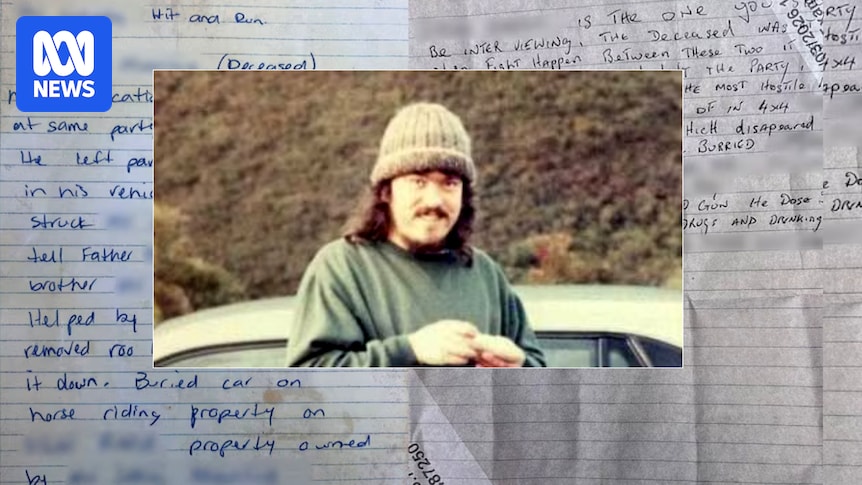
The blurred and grainy photograph shows a smiling young man, looking up from beneath his woollen beanie, his dark curly hair reaching just past his shoulders.
Taken long before the advent of digital cameras or mobile phones, it’s clearly an image from another era and the young man pictured would be in late middle age by now.
Except he didn’t live that long.
Mark Gregory was 28 when he died, his body found by the side of a road in Albany, a coastal town in WA’s Great Southern.
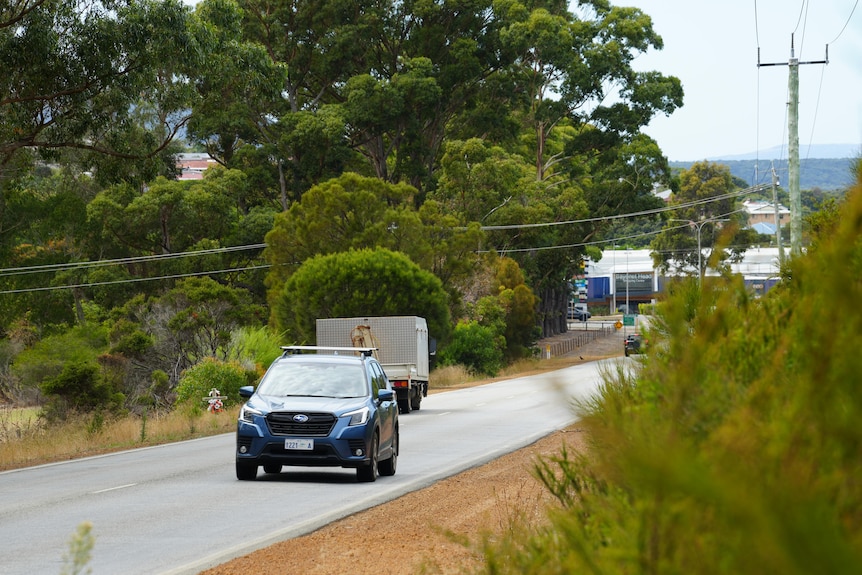
Mercer Road is on the outskirts of Albany. (ABC Great Southern: Andrew Chounding)
The father of two had been hit by a car and left to die — and 35 years later, exactly what happened remains a mystery.
Despite multiple police investigations, including cold case reviews and appeals for information, no-one has ever been charged in connection with his death.
But a series of previously unreleased letters made public by police this week has brought fresh hope that his killer could finally be brought to justice.
The party
Albany in 1991 was more of a sleepy backwater than the thriving regional centre it is today.
With a population of fewer than 25,000 — today that figure exceeds 40,000 — it was the sort of place where everyone seemed to know everyone, where generations of families grew up in the same streets.
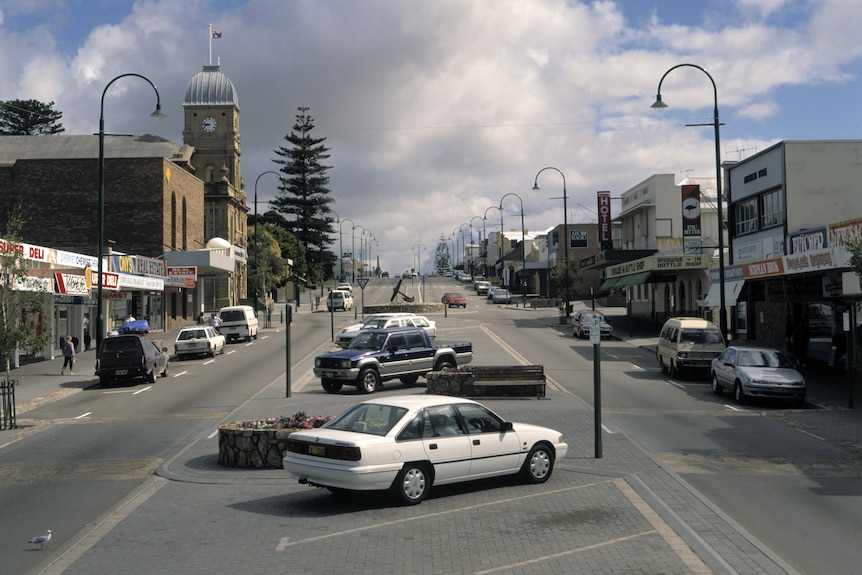
Albany in the early 1990s was a smaller, less sophisticated place than it is today. (Supplied: State Library of WA/Richard Woldendorp)
Mr Gregory had been at a birthday party the night he died, and it was a “large gathering” of family and friends, according to Major Crash Detective Senior Sergeant Hugh Le Tessier.
The party was on the outskirts of town, in semi-rural suburb Walmsley, where homes stand on large blocks, surrounded by paddocks and outcrops of eucalypts and marri trees.
The festivities continued long into the night and, at some point in the early hours of the morning, Mr Gregory decided to walk home.
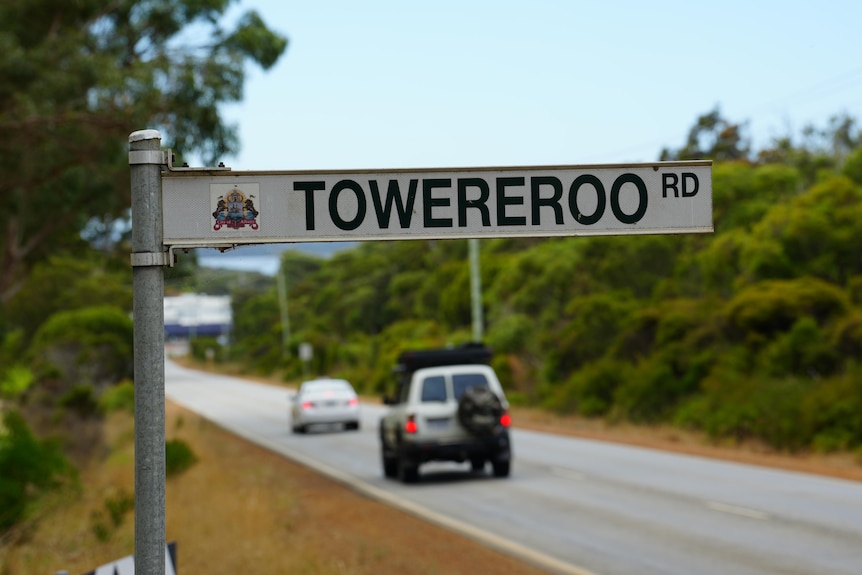
Mark Gregory died on a stretch of Mercer Road between Towereroo Road and Lower King Road. (ABC Great Southern: Andrew Chounding)
He never made it.
Police believe he was struck by a vehicle between 4am and 4:50am as he walked east along Mercer Road.
The driver fled the scene, leaving the 28-year-old to die on the side of the road.
Someone knows something
Police interviewed those at the party that night, people who knew Mr Gregory and anyone they thought might have important information — up to 300 people over the years, according to Senior Sergeant Le Tessier.
But no-one in the close-knit community was able to provide the crucial details police were seeking.
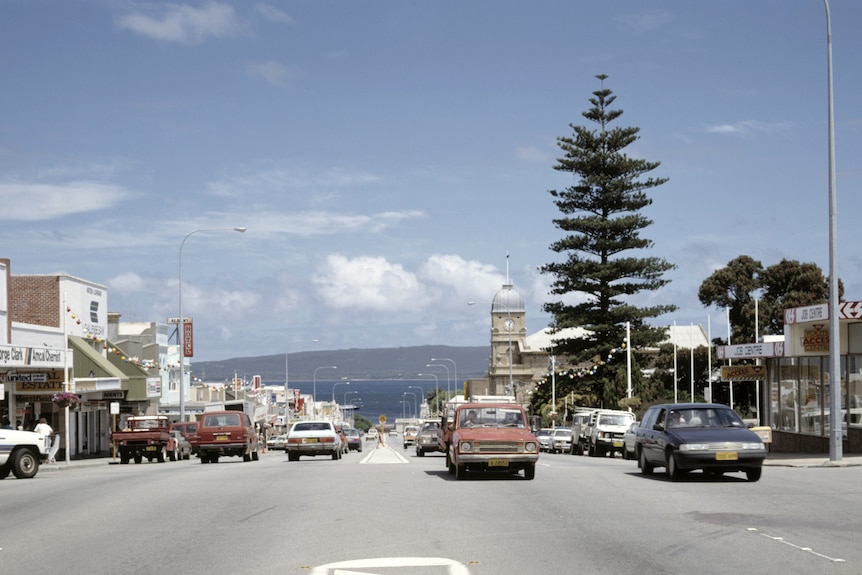
In 1991, Albany’s population was less than 25,000. (Supplied: State Library of WA/Richard Woldendorp)
Police, however, continued to hold fast to the belief that someone must know what had happened.
In 2013, they got the first inkling that might be true.
In that year, police received the first of three anonymous letters, all apparently written by different people, providing tantalising information about Mr Gregory’s alleged killer.
Three years later, another letter appeared, then in 2018, another.
The mysterious missives were delivered to different locations — one was sent to police, one to a business owned by Mr Gregory’s son, who was a small child when his father died, and one was pinned to a cross marking the spot where the 28-year-old died on Mercer Road.
The existence of the letters was finally revealed by police this week, more than a decade after the first of them was sent, and detectives now believe they could hold the key to solving the 35-year-old mystery.
Finger pointing
Partially redacted by police before they were released, the letters appear to identify people their authors believe were responsible for Mr Gregory’s death.
Two are handwritten on lined paper, in different handwriting, while the other is typed, but none are signed.
One of the handwritten notes is headed “bar talk story told around town” and refers to a person whose name is obscured who “had altercation with Mr Gregory at same party” and apparently then hit him with his vehicle.
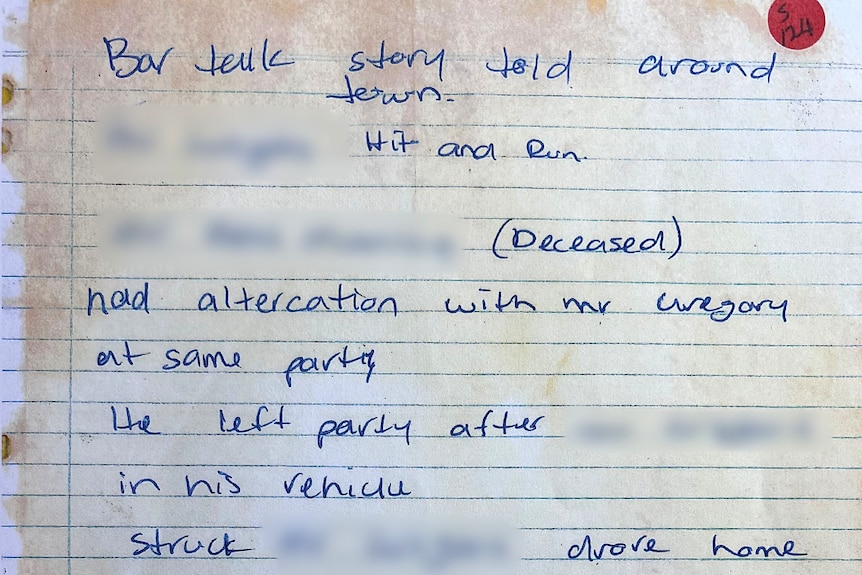
This handwritten letter sent by an anonymous person made a series of claims about the vehicle that struck Mark Gregory. (Supplied: WA Police)
That person, according to the letter writer, drove home and told his father and brother what had happened, and received help removing the car’s roo bar.
“Aluminium, melted it down,” the letter states, before going on to sensationally claim the car had subsequently been buried “on horse riding property … owned by [name obscured]”.
A warning
The second handwritten note, in black pen in a mix of capital and lower case letters and using creative spelling, also refers to a fight Mr Gregory allegedly became involved in at the party, which was “broken up”.
‘[Name redacted] is the one you should be interviewing,” the letter begins, before going on to make a series of claims worthy of a crime novelist.
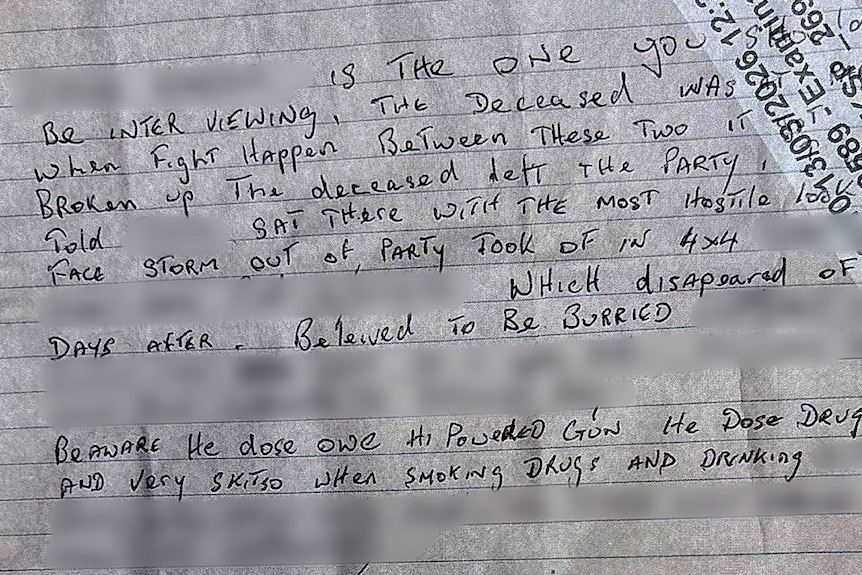
This anonymous, handwritten letter claimed Mark Gregory had been involved in a fight at the party. (Supplied: WA Police)
After Mr Gregory left the party, the other man involved in the fight “sat there with the most hostile look of face” before proceeding to “storm out of party took of [sic] in 4×4”.
That vehicle, the letter writer said, “disappeared [sic] off days after. Believed to be BURRIED [sic]”.
There was a warning for police too.
“Be aware”, the writer notes, he owns a “hi powered gun”, “dose [sic] drugs and (is) very skitso when smoking drugs and drinking”.
‘His stinking habits’
The author of the typed letter, received by Mr Gregory’s son, strikes a courteous, slightly formal tone, apologising for writing before explaining that “I am rather ill and do not have much time left.”
“The person who ran your Father down in 1991 is a person by the name of [redacted],” the writer says.
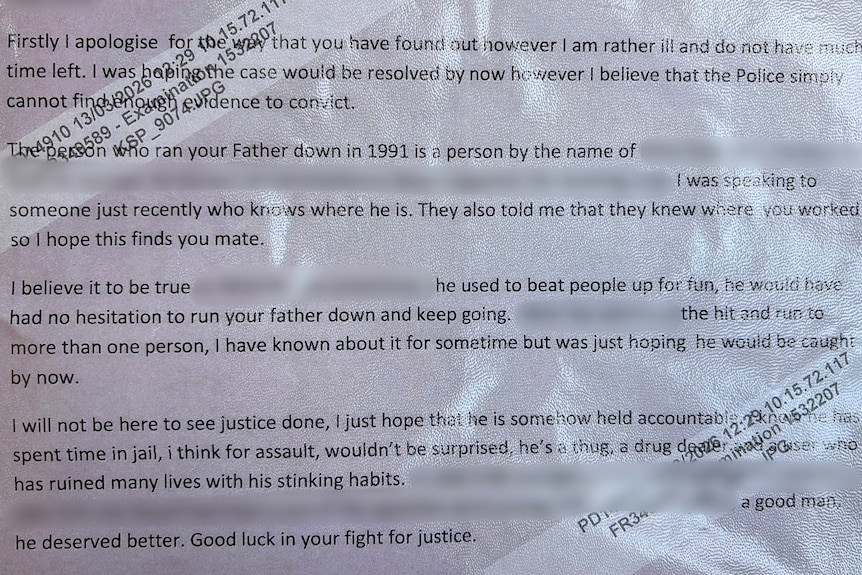
The typed letter sent to Mark Gregory’s son purported to identify his father’s killer. (Supplied: WA Police)
This man “used to beat people up for fun, he would have had no hesitation to run your father down and keep going”.
“I know he had spent time in jail, I think for assault, wouldn’t be surprised, he’s a thug, a drug dealer and a user who has ruined many lives with his stinking habits.”
With large parts of sentences redacted, it’s difficult to get a full understanding of the writer’s claims, but the letter ends by describing Mr Gregory as a “good man” who “deserved better”.
“Good luck in your fight for justice,” it ends.
Appeal to conscience
It’s not known why police have kept the letters secret all these years.
But Senior Sergeant Le Tessier believes they could be critical to finally uncovering what happened on that stretch of Mercer Road in the early hours of the morning 35 years ago.

Hugh Le Tessier says the letters could prove critical to the investigation into Mark Gregory’s death. (ABC Great Southern: Andrew Chounding)
The information in the letters, he said, was corroborated by other information police had received via Crime Stoppers at different times.
“Some people have carried this on their conscience for that amount of time, and to actually make the effort to write a letter and provide it to the police indicates that they are keen to see the matter resolved,” he said.
So is Mr Gregory’s family.
The developments revealed this week have already led to people coming forward, and police are continuing their appeal for information.
“Even after 35 years, new information could make a significant difference to this investigation,” Senior Sergeant Le Tessier said.