
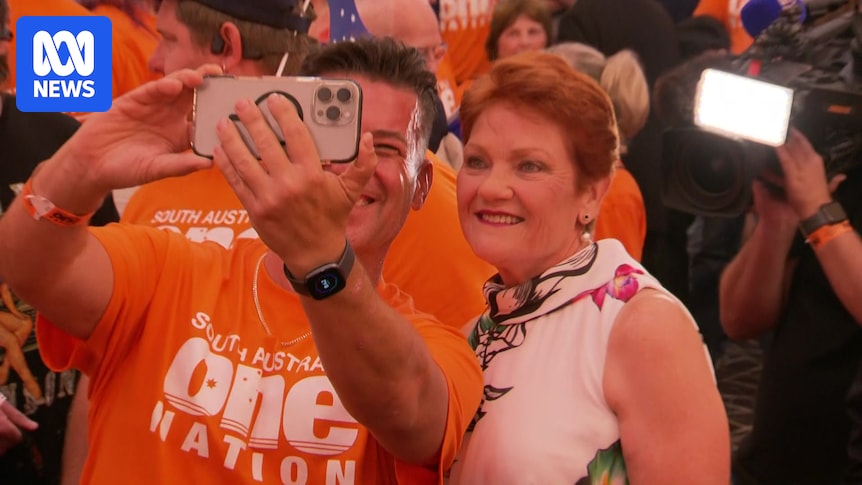
If it can happen in South Australia, it can happen anywhere.
That’s the takeaway from One Nation’s performance at this state election.
How many seats the right-wing party holds in South Australia’s lower house will take days to determine, but its primary vote is above 20 per cent and, as of Saturday night, higher than the Liberal Party’s.
In other words, the polling was no joke.
What makes the result more remarkable is there was always a degree of scepticism from analysts over whether One Nation could perform in South Australia.
Compared to the party’s Queensland heartland, South Australia’s population is far more centralised in its capital city. It does not have as many seats in the regions where One Nation’s support is higher.
And this state had seen failed orange waves before.
Former senator Nick Xenophon was polling as preferred premier ahead of the 2018 state election before the major parties targeted his centrist SA-Best party, which promptly fizzled without a single lower house seat.
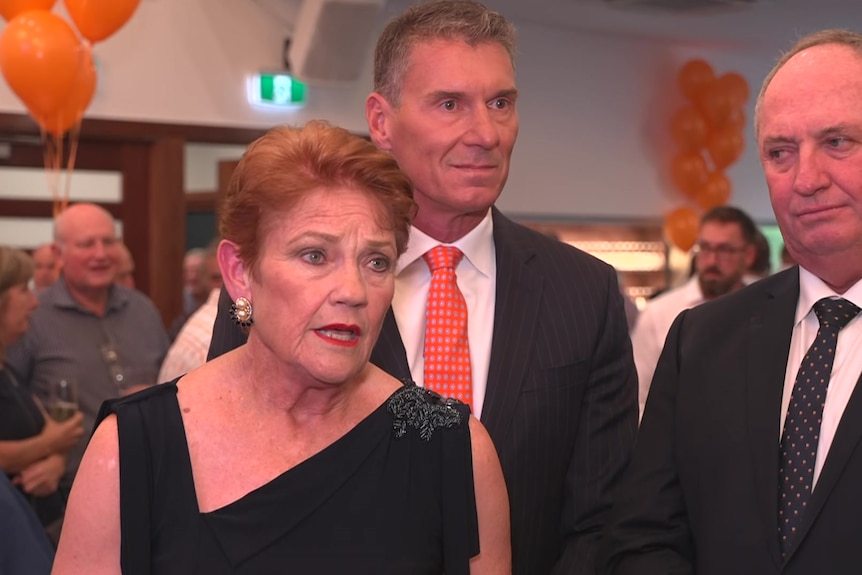
Pauline Hanson, the party’s lead SA candidate Cory Bernardi and federal MP Barnaby Joyce in Adelaide last month. (ABC News)
The same questions were being asked of One Nation: would their candidates stand up to scrutiny? And what would happen when the major parties targeted them?
The last week of the campaign featured an onslaught of One Nation attacks lobbed by Premier Peter Malinauskas and Liberal Leader Ashton Hurn.
But it did little to dissuade thousands of South Australians from turning away from the major parties.
And One Nation’s rapidly professionalised campaign infrastructure appeared to hold up for most of the election, excluding the ABC’s revelation on Friday that its candidate for Adelaide, Aoi Baxter, had a warrant for his arrest in the UK.
A huge Liberal Party problem
While there’s still plenty of counting to go, it is clear One Nation’s election performance is a much more acute problem for the Liberals than Labor.
From a ‘mountain to climb’ to over a cliff, SA Liberals face total wipeout
The seats One Nation are most likely to win — Narungga, on SA’s Yorke Peninsula, and Hammond, around Murray Bridge — were among some of the safest on the Liberal pendulum when they won government in 2018.
The same goes for the South East seat of MacKillop, a regional electorate where One Nation looks strong on early numbers.
One Nation’s strength will also cost the Liberal Party dearly in the Upper House, potentially relegating them to just two elected MLCs this year.
It has also seen the party post some dismal results in metropolitan Adelaide: In Port Adelaide, the Liberal vote is hovering around six per cent, as it is in the northern suburbs seats of Ramsay and Taylor.
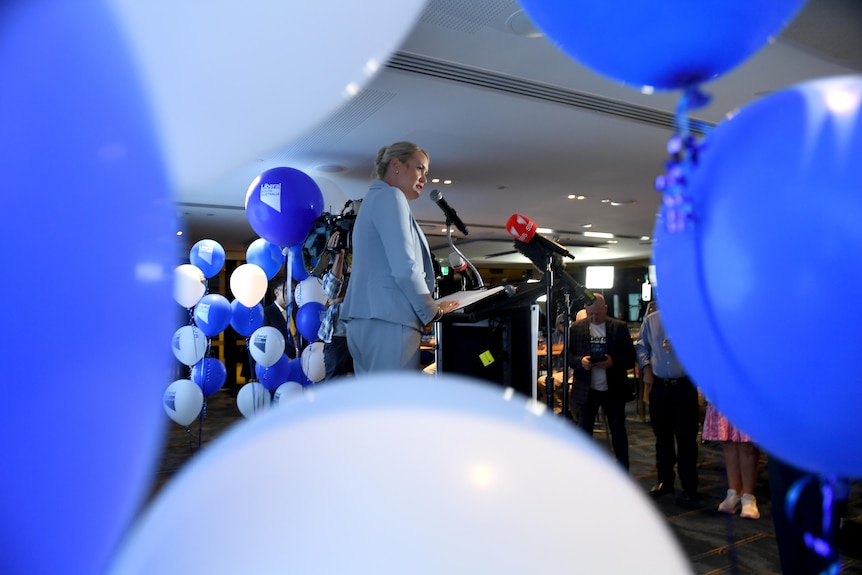
Ashton Hurn delivers concession speech on election night. (ABC News: Tricia Watkinson)
Michael Horner, founder of polling firm Fox and Hedgehog and an ex-staffer to former Liberal leader Peter Dutton, said the results will be ringing alarm bells for the federal Liberal Party.
“Whether it is against the Liberals in regional areas or against Labor in working-class areas, One Nation has been able to push both major parties to exceptionally close election results and sometimes appears to be indeed winning seats,” he said.
“I think there would be a lot of nervous people in Liberal Party circles at the moment.
“They can see that the results aren’t just news articles publishing projected opinion poll results, these are real results cast by real voters.”
One of those real voters was pensioner Trevor Wilson.
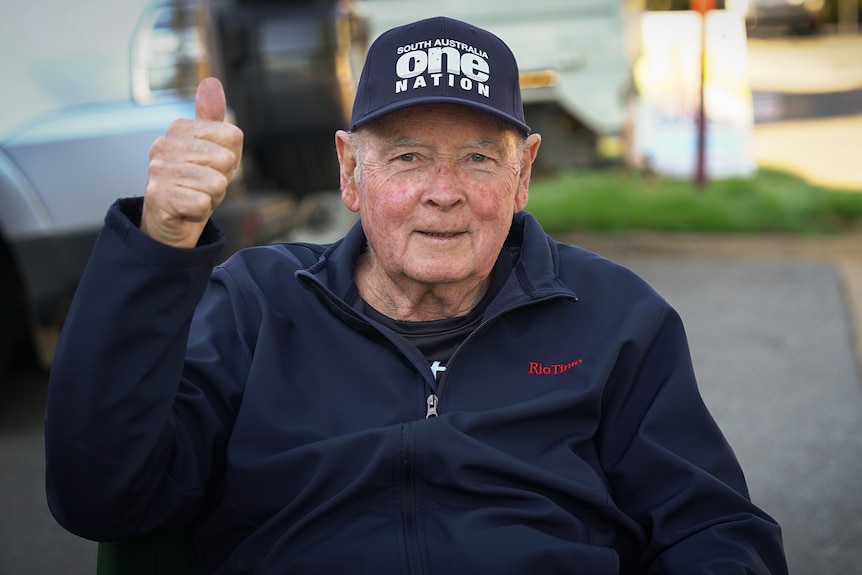
Pensioner Trevor Wilson voted for One Nation at this election as a form of “protest”. (ABC News: Briana Fiore)
On Saturday, he cast his vote in Liberal leader Ashton Hurn’s Barossa Valley electorate of Schubert, where One Nation has recorded a 15 per cent lift in its primary vote.
Mr Wilson has previously voted for Labor and the Liberals but wanted to support One Nation at this election as a form of “protest”.
He even volunteered to hand out pamphlets for One Nation.
“I usually vote for Labor but over they’ve got worse and worse because they make promises they never keep,” he said, pointing to Labor’s failure to fix ambulance and growing state debt.
“It’s like they believe … as long as they throw us a bone, we’ll pick it up and run with it.”
He said he was “frustrated” by what was happening in South Australia, and wanted enough “One Nation, Liberals and Greens” voted in to have a healthy opposition to hold Labor accountable.
What about Labor?
RedBridge Group pollster and former Labor strategist Kos Samaras said One Nation was “replacing the Liberal Party in the regions”.
But he added that One Nation was also taking over as the Labor Party’s main opponent in safe outer suburban seats.
One example is the working-class northern suburbs seat of Elizabeth, once the site of Holden car manufacturing and traditionally safe Labor territory, where One Nation is now in a two-candidate preferred contest.
How are the results tracking in your SA electorate?
Counting on Saturday night appeared to show Labor’s primary down 15 per cent with One Nation outpolling the Liberals by more than 25 points.
The changing dynamics in the outer suburbs will have implications for Victoria’s state election this year, Mr Samaras said.
“It will be similar. We will see some element of One Nation eating into the Labor base and completely cannibalising the Liberal base,” he said.
“A combination of those two can change the dynamic, particularly in a state like Victoria.”
SA Liberal sources have been telling reporters over the last week that Labor also underestimated One Nation’s strength.
The SA Labor campaign machine has now won six of the last seven elections — they are not known for making big tactical errors.
But almost all of Labor’s negative campaign material this election — flyers, advertising and corflutes — was directed at the Liberals.
It was not until the last week of the campaign that Premier Peter Malinauskas ramped up attacks on One Nation’s campaign.
“We made a decision to make sure that the Liberal Party wasn’t going to form government,” one Labor source said.
“That meant a singular focus on them.”
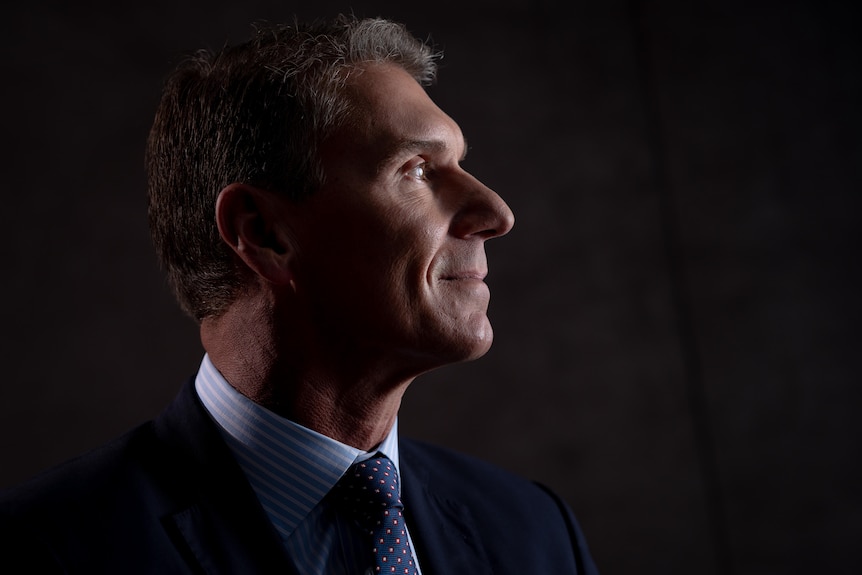
South Australian One Nation candidate Cory Bernardi. (ABC News: Che Chorley)
Should Labor have directed its focus there earlier?
It would be hard to find fault in the campaign of a party that’s just recorded its best-ever election result.
And Labor insiders believe Mr Malinauskas’s appeal in the outer suburbs — buoyed through his attraction of major sporting events like AFL Gather Round, MotoGP and the V8 Supercars — protects the party from One Nation in the long-term.
But not every Labor leader is as popular as the SA Premier. Victorian Premier Jacinta Allan and Prime Minister Anthony Albanese’s approval ratings are much lower.
And Mr Samaras believes the federal Labor Party, which has a primary vote lower than their South Australian counterparts, will need to rethink its campaign strategy at the federal election.
“They will need to do that in the outer suburbs of whether it’s Melbourne or Sydney, regional parts of the country which they still hold some real estate like Hunter, Paterson [in New South Wales],” he said.
If the major parties were not alive to the realignment occurring in Australian politics, they certainly are now.
South Australia is only the beginning.