
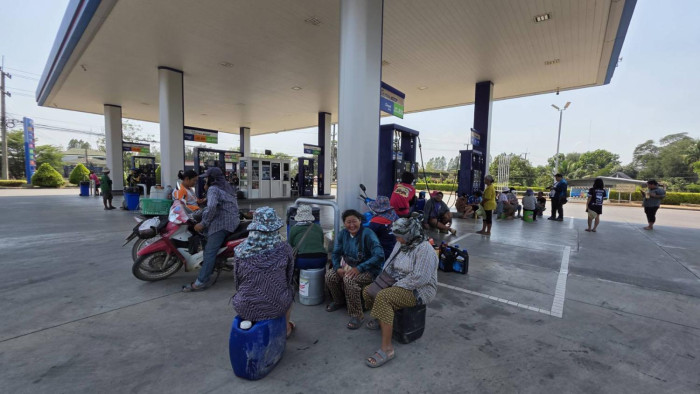
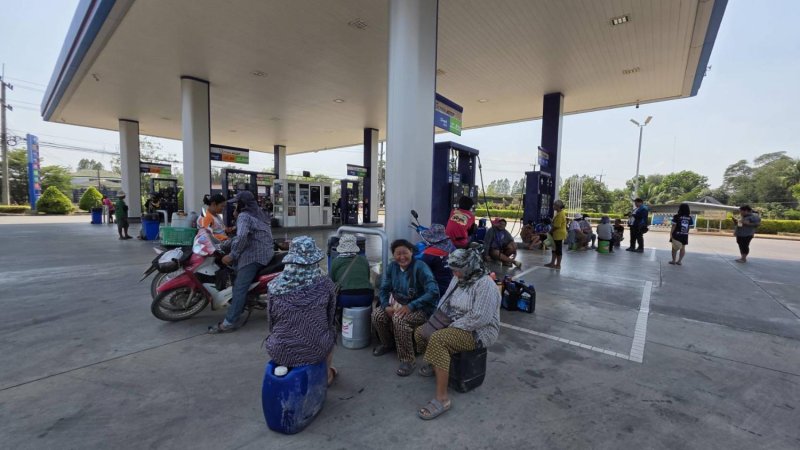
Farmers and rice harvester operators wait in line at Phitsanulok fuel stations for up to 4-5 hours a day, while diesel purchases are capped at 500 baht per visit.
The Bank of Thailand is warning the war in the Middle East could weigh on Thailand’s economy across multiple fronts, potentially dragging GDP growth below its 2% forecast for this year.
The conflict has heightened downside risks, with impacts expected through several channels, including energy prices, financial market volatility, and broader economic activity, said Chayawadee Chai-anant, assistant governor for corporate relations at the central bank.
Although the impact has yet to be reflected in economic data, given the typical lag in economic transmission, the conflict has already driven a surge in oil prices, raising production and transport costs across many sectors.
Under a baseline scenario, the regulator assumes the conflict will subside in the first half of the year. However, its economic repercussions are likely to extend into the second half, particularly due to damage to energy infrastructure, which would prolong the recovery process, she said.
In this scenario, average oil prices could climb to around US$100 per barrel, while shipping disruptions may persist well into the latter half of the year.
“The impact on Thai GDP is unavoidable and represents a downside risk to the previous forecast of 2%,” Ms Chayawadee said, adding the bank is scheduled to review its economic outlook and growth projections in April, taking all relevant factors into account.
In a best-case scenario, the conflict ends within the first half of the year, with shipping through key straits gradually normalising towards the late first half or early second half. Under such conditions, average oil prices would hover around $80 per barrel for the year.
On financial markets, she noted the baht has become more volatile against the US dollar, with fluctuations reaching around 9% year-to-date, higher than in previous periods.
The central bank’s foreign exchange policy remains focused on curbing excessive volatility, ensuring orderly market functioning, and preventing shocks from spilling over into the real economy.
Rising energy costs are expected to intensify cost pressures. The regulator is monitoring the extent to which businesses pass these higher costs on to consumers, with the overall impact depending on the duration of the conflict.
“From the business sector’s perspective, most operators remain reluctant to raise prices under current conditions and are attempting to absorb higher costs for now. However, if the situation persists, cost pass-through may become unavoidable,” said Ms Chayawadee.
Regarding monetary policy, she said if inflation is driven by cost-push factors or supply-side shocks such as higher energy prices, raising interest rates may not effectively address the issue.
However, if inflationary pressures begin to feed into consumption and expectations, monetary policy could play a more significant role. The central bank will continue to monitor developments to assess whether the impact proves temporary or prolonged, said Ms Chayawadee.