
A UNIQUE Grampians Health program that helps treat and prevent delirium among older hospitalised adults is increasingly getting noticed nationally and beyond.
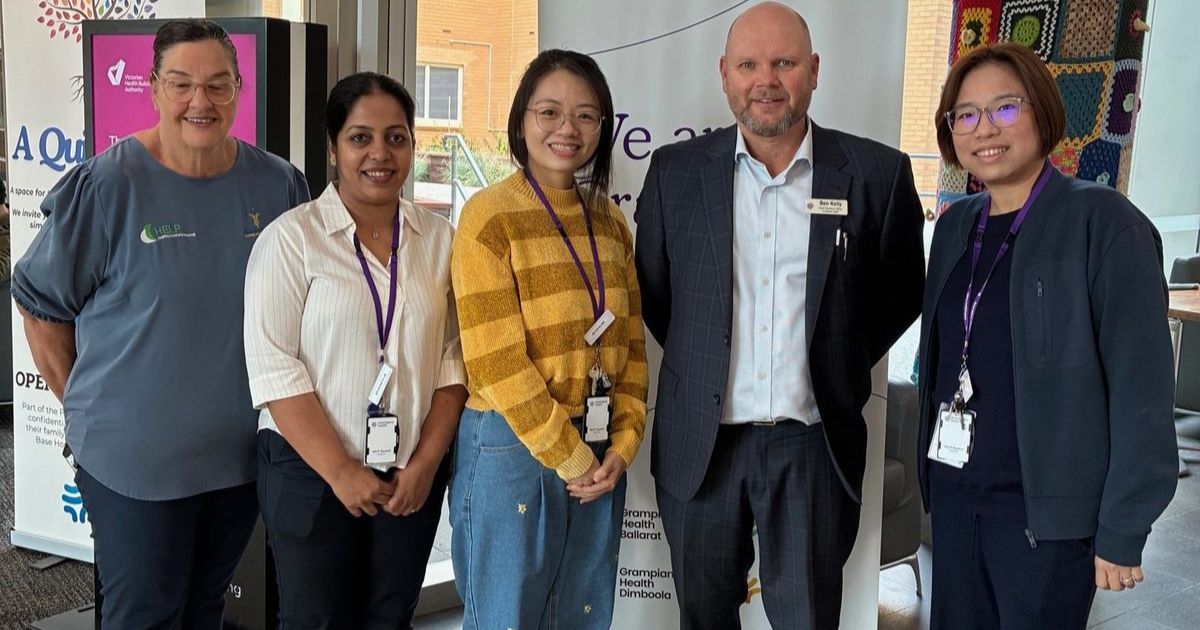
The Hospital Elder Life Program (HELP) is now gaining traction internationally with a team of clinicians from Singapore’s National University Hospital this month starting a three-week observational placement at the Ballarat Base Hospital to learn more.
Their arrival aligned with World Delirium Awareness Day, a global initiative held annually in March to highlight the importance of recognising and managing delirium.
Common causes of delirium include infection, pain, medication and even dehydration with nearly 66 per cent of delirium cases going undiagnosed worldwide although the condition is preventable in a third of all cases, according to figures from American Geriatric Society CoCare Delirium facts and Australian Commission on Safety and Quality in healthcare.
Grampian’s Health’s Hospital Elder Life Program integrates clinical and non-clinical interventions designed to prevent delirium or reduce its severity in older hospitalised patients, an approach originally developed at Yale University in 2000 by Professor Sharon Inouye.
The globally renowned HELP program was first implemented at Grampians Health in January 2021 and it has since become the first fully operational and officially recognised HELP program in Australia.It’s grown to include 24 volunteers who have provided more than 11,000 hours of engagement to over 6000 patients at the Ballarat Base Hospital with Grampians Health becoming a training hub for other health services including Barwon Health and Eastern Health.
International interest in Grampians Health’s model has now brought nurse clinicians Ramya John Peters, Tan Pei Qi and Yeo Sock Wan from NUH, a major academic tertiary hospital in Singapore, to Ballarat.
The clinicians were directed by the American Geriatric Society CoCare team in the US to learn from Australia’s only recognised HELP centre.
Program manager of HELP at Grampians Health, Robbin Moulds, said the international collaboration reflects the growing recognition of the program’s success.
“We are incredibly proud of what HELP has achieved for older patients in our region. To now be in a position where international clinicians are coming to Ballarat to learn from our model is both humbling and exciting,” Ms Moulds said.
“The HELP program shows how human connection and evidence-based care can improve outcomes for older people in hospital.”
Data from the longest running HELP ward at Grampians Health showed patients enrolled in the program experienced a reduction of approximately 3.5 days in their hospital stay.
Research from Federation University shows patients on wards supported by HELP were three times less likely to develop delirium than those on the wards without the program.