

Between phones, watches and other smart devices, we’re never far from reach for our family, friends and partners.
There are also apps and location services that can show where we are at any given moment.
Experts say couples may see location sharing as a sign of trust or closeness.
But if your partner asked you to share your location, would you say yes? And when does it begin to cross a line from caring into tech-based coercive control?
Why do people share their location?
According to clinical psychologist and director of the Brisbane Centre for Attachment and Relationships, Dr Clare Rosoman, location sharing in intimate relationships can be motivated by a sense of safety.
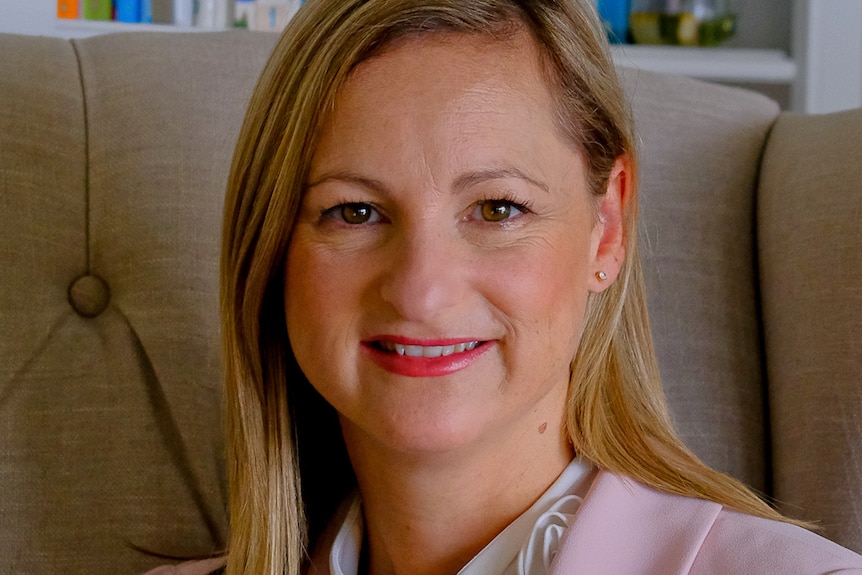
Dr Clare Rosoman says location sharing shouldn’t feel forced. (Supplied)
“It’s [often] about knowing where the other person is to reduce anxiety,” she told ABC Radio National.
“But it has to be done through mutual agreement, it has to enhance a feeling of safety and connection between partners.
“[But] if that’s the only way you feel safe and connected, then that’s a problem, because that creates an insecure coping strategy in the relationship.”
How common is location sharing?
More than one in 10 adults believe it’s reasonable to track a partner using a location-sharing app, according to eSafety Commissioner, Julie Inman Grant.
“There are many legitimate reasons why people might choose to share their location with a partner,” she says.
She says while many people do it “consensually and with reasonable boundaries”, what concerns her is “the expectation that a partner should be able to monitor someone’s movements in microscopic detail whenever they want”.

Julie Inman Grant recommends setting strong boundaries early on in a relationship. (Four Corners: Keana Naughton)
María Atiénzar Prieto has been studying young people’s perceptions of digital coercive control as a PhD candidate at Griffith University’s School of Health Sciences and Social Work in Queensland.
She says location sharing in intimate relationships is “quite prevalent”, and the technology is generally becoming “very normalised”.
“We know that people are using [location sharing] apps for a variety of purposes, from practical convenience to personal safety,” she says.
“Young women, but not young men, primarily engaged with this technology for safety purposes.”
When does location sharing cross a line?
Dr Rosoman says it all comes down to “the purpose behind it”.
“It [shouldn’t] feel forced, and people can openly turn it on and off,” she says.

María Atiénzar Prieto’s research found that participants were introduced to location-sharing apps from a young age by their parents. (ABC News: Nickoles Coleman)
“The worry is when there’s an expectation in the relationship.”
This might look like a person “submitting” to location sharing to keep the peace or prevent conflict.
Ms Atiénzar Prieto says if you stop sharing your location and your partner reacts negatively, that can be a red flag.
“Another sign might be that if they start questioning you [about] why you go to certain places, or why you took a different route going home,” she says.
“[This] might suggest a level of control that isn’t reflective of caring behaviours.”Family and domestic violence support services:
Ms Inman Grant says abuse begins to arise when sharing locations “stops being voluntary and becomes something that’s expected or demanded”.
“Location sharing becomes dangerous when it becomes part of a broader pattern of pressure, manipulation or control,” she says.
She says support is available through 1800RESPECT or speaking with a domestic and family violence service for advice.
How to protect yourself from location tracking
Ms Atiénzar Prieto says one of the biggest risks of location sharing in intimate relationships is the amount of data you are giving the other person and the apps.
How Amanda’s ex used technology to abuse
“It’s not just about where you are at a given moment, but also about what this information reveals about your everyday life,” she says.
“So, from your routines, the places you visit, to the people you spend time with, this location data can paint a very detailed picture of what you do every day.”
She recommends regularly reviewing your privacy settings and who has access to your location.
“Apps don’t want us to disengage, and they don’t want us to stop sharing our data,” she says.
“But the first step is knowing exactly where in the app you can change the settings to stop sharing your location.
“And second, make it a habit to regularly review who has access and ask yourself if you are still comfortable with that.”
Ms Inman Grant says when it comes to protecting yourself from technology-facilitated coercive control, it’s important to set strong boundaries.
“Particularly at the beginning of a relationship when you’re still getting to know someone,” she says.
“If you do decide to share personal digital information, such as location data, it can help to have a clear conversation about why you’re doing it, how it will be used, and when it will be turned off.”
She says it is also good to be aware that technology is so integrated into everyday life that tracking can be easily disguised.
“That’s why we encourage people to trust their instincts,” she says.
“If you feel that someone seems to know details about your movements or conversations that you haven’t shared with them, take that feeling seriously.”