
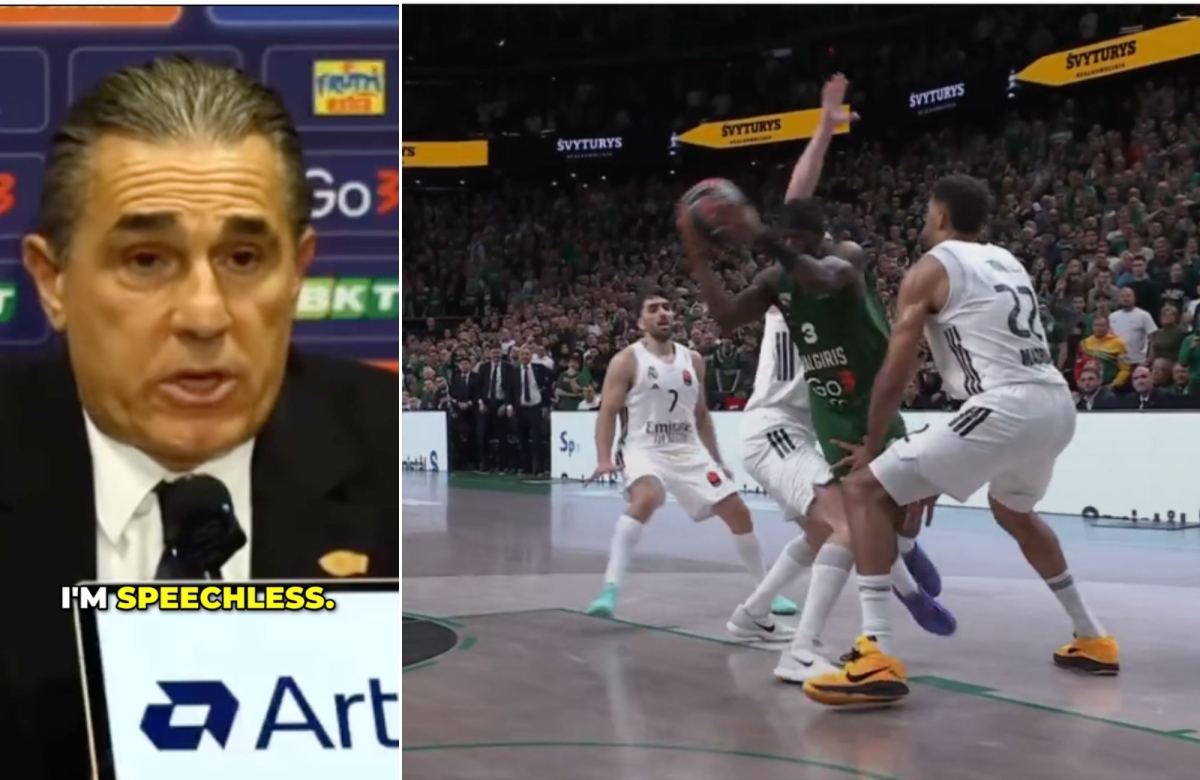
A controversial final call in Kaunas sparked strong emotions on the sidelines and carried into the press conference, as Real Madrid head coach Sergio Scariolo struggled to hide his frustration after the 87–85 loss to Zalgiris.
While keeping a measured tone, Scariolo pointed to the impact of Zalgirio Arena, suggesting the atmosphere adds pressure not only on the visiting team, but also on the referees.
But when asked about the decisive whistle on Mario Hezonja with 3.9 seconds left, which sent Sylvain Francisco to the line for the winning free throws, Scariolo had a different reaction.
“Don’t ask me about the last play, because I’m speechless. Absolutely speechless.”
In this week’s Give Me Control column, BasketNews referee consultant Todd Warnick breaks down Sergio Scariolo’s post-game comments, the foul call on Hezonja, and many other situations in this game as well.
BasketNews Note about Give Me Control
However, before we begin, we have an important message to our community.
Following a formal request from the EuroLeague, we are no longer permitted to use video footage as part of our officiating analysis.
The restriction has been imposed by the league, which communicated concerns regarding the tone and focus of our content. It was indicated that our analysis is viewed as overly critical of officiating and too heavily concentrated on negative aspects, potentially affecting the overall image of the competition.
In light of these instructions, our analysis will continue to use alternative visual material, such as screenshots of the relevant plays, to ensure that key situations are properly illustrated and explained.
We would like to emphasize that our core objective remains unchanged. Our work is dedicated to providing detailed and professional insight into officiating decisions, helping to clarify complex and often controversial moments that arise during game, whether they are publicly questioned by coaches and players or discussed across media platforms.
As our previous analysis has shown, our evaluations are balanced. There have been cases in which we supported criticism of officiating, as well as situations in which we confirmed the accuracy of referees’ decisions.
This analysis is conducted based on the expertise of Todd Warnick, a former top-level referee in European basketball and an experienced referee coach.
His professional background ensures that the evaluations presented are grounded in industry knowledge, aiming to provide constructive and balanced explanations of officiating decisions as a crucial part of the game.
Beyond assessing individual decisions in EuroLeague and FIBA competitions, our analysis has also aimed to provide a broader perspective on the development of the officiating ecosystem across Europe. This includes identifying structural and educational aspects that could be improved in order to elevate refereeing standards, with the objective of matching the level of excellence displayed in top-tier basketball competitions both in Europe and in international play.
We believe that there remains an informational gap regarding officiating in top-level European competitions, including the EuroLeague. This gap is recognized not only by media members and fans, but also by the members within the league itself, including players and teams.
Beyond the absence of publicly available officiating reports similar to those published in the NBA, there is limited visibility into the broader work of officiating departments and decision-making throughout the season.
In this context, we consider it important to contribute by offering a more informed and professional perspective, helping to provide greater clarity around the officiating specifics for all involved in the game.
The insights provided by Todd Warnick should not be interpreted as definitive or unquestionable judgments.
Rather, they reflect the informed perspective of an experienced industry professional whose background and expertise add depth and context to the analysis, contributing meaningful value to the discussion of officiating.
Our commitment remains to contribute constructively to a better understanding of the officiating, with the expectation that the sport we love and value continues to grow, improve, and maintain the highest possible standards.
Hezonja Foul on Francisco: Yes or No?
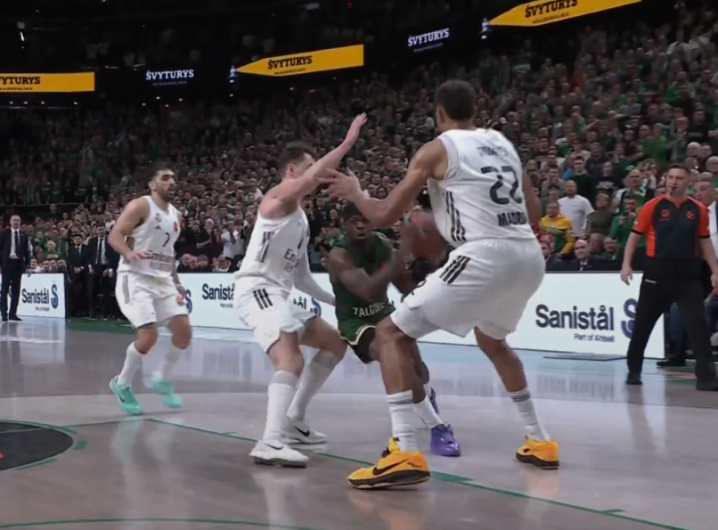
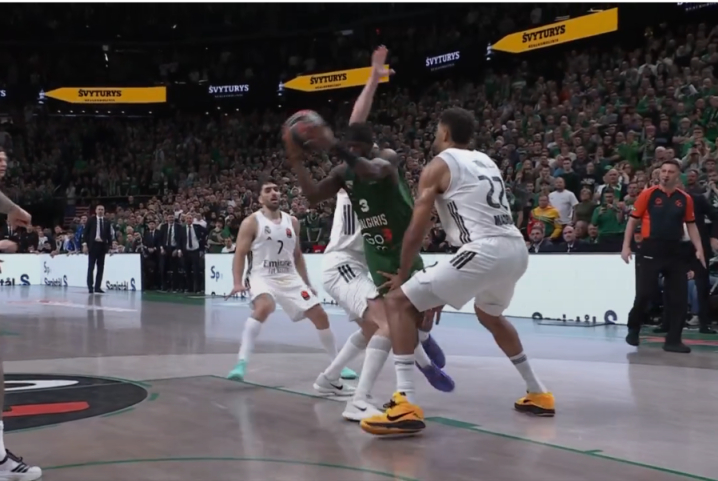
Let’s start from the end and the most crucial call of the game, the foul call on Mario Hezonja that sent Sylvain Francisco to the line for free throws that put Zalgiris up by two, 87-85, with 3.9 seconds left.
The Zalgiris guard drives to the basket and gets a narrow opening between Hezonja and Walter Tavares.
After Francisco goes airborne, Hezonja takes an extra step forward with his right leg, causing Francisco to tumble to the floor and triggering the foul call.
Clearly, Hezonja adjusted his position after Francisco jumped into the air, so the blocking foul can definitely be justified.
There will be naysayers who will also claim that Francisco had nowhere to go, and there is no evidence that he’s trying to do anything except collect a cheap foul.
From their point of view, the referees bailed Francisco out with the foul call.
But Francisco didn’t go to the floor by himself.
He got plenty of help from Hezonja’s illegal action. We can see, from photos, the Real Madrid player’s movement with his right leg.
 Referee Errors: “Pressure” or Something Else?
As to coach Scariolo’s comments about the “difficult” Zalgiris court putting “pressure” on the referees, does that really matter?
EuroLeague is placing on the court week after week – and especially in its more challenging games – referees of significant experience.
Most of the officials nominated for the EuroLeague have decades of experience and hundreds of pressure-packed games under their belts, including playoff and Final Four appearances.
For most of the top EuroLeague referees, Zalgiris Kaunas vs. Real Madrid should be no different from a multitude of other games they have officiated over the years.
“Pressure” is likely not playing any role in referee performance.
A Game of Two Halves
This was clearly a game of two halves.
After an energetic first half that ended 55-53 in Real’s favor, the game slowed down significantly in the second half.
Accordingly, there were more challenges for the referees in the first 20 minutes than in the last 20.
Screening Issues
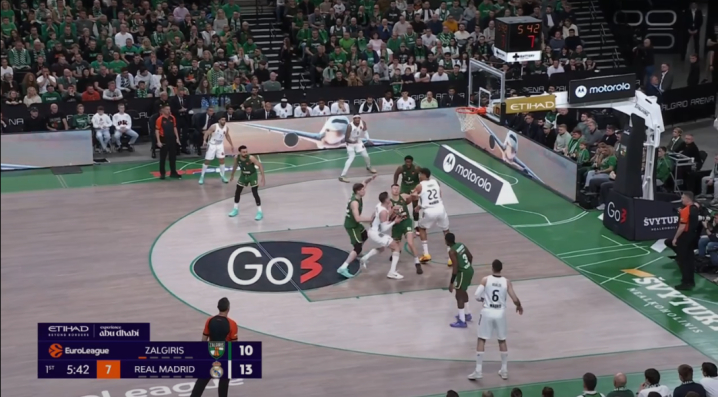
Things began to get “dicey” in the first quarter on a messy play at 5:41.
Arnas Butkevicius runs into Hezonja on a drive to the basket and ends up on the floor. No foul is called, the shot is missed, and then the ball goes out of bounds to Real Madrid.
Butkevicius didn’t collide with Hezonja or tumble to the ground by accident. He was shoved from behind by Tavares.
This was by no means the only screening issue in the game–a surprising fact given that EuroLeague referees tend to excel in this area.
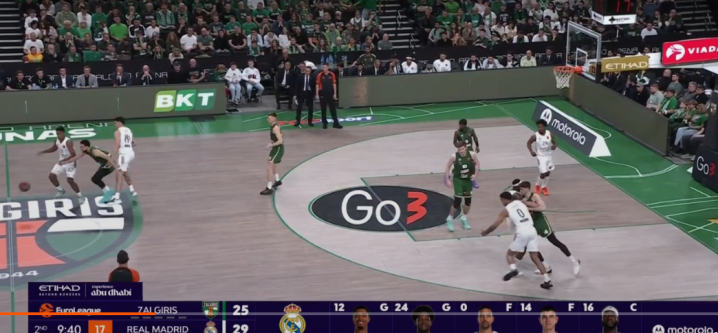
At the beginning of the 2nd quarter at 9:40, Dustin Sleva is called away from the ball for hitting Usman Garuba on a screen.
But on a moving player, the screener must allow at least one step of time and distance, which Garuba failed to do. This should have been an offensive foul.
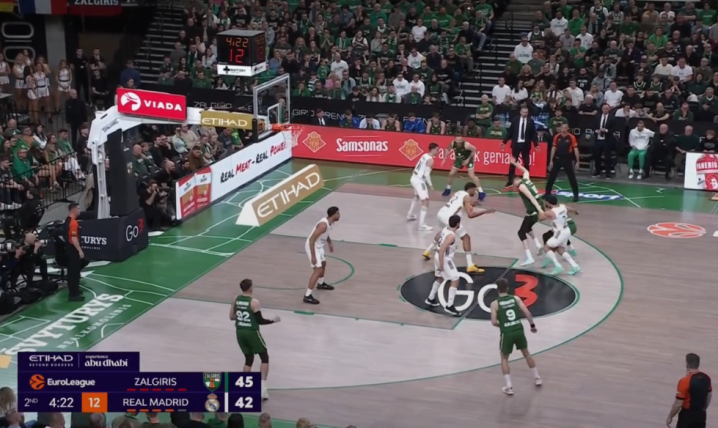
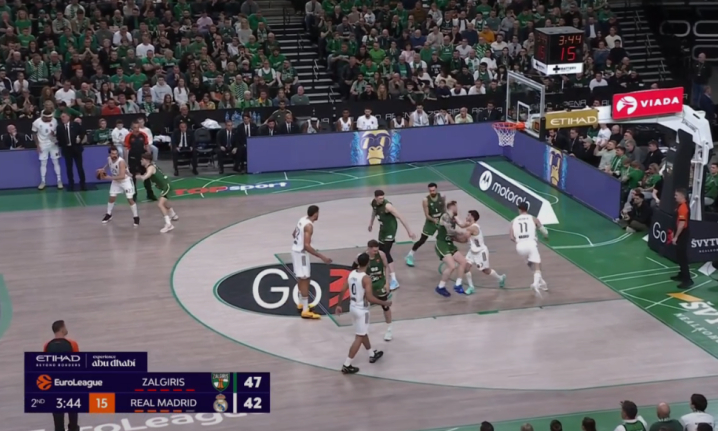
Later in the 2nd quarter at 4:22, after Facundo Campazzo holds Laurynas Birutis on a screen, the Real playmaker then sets an illegal backscreen on Ignas Brazdeikis at the 3:44 mark.
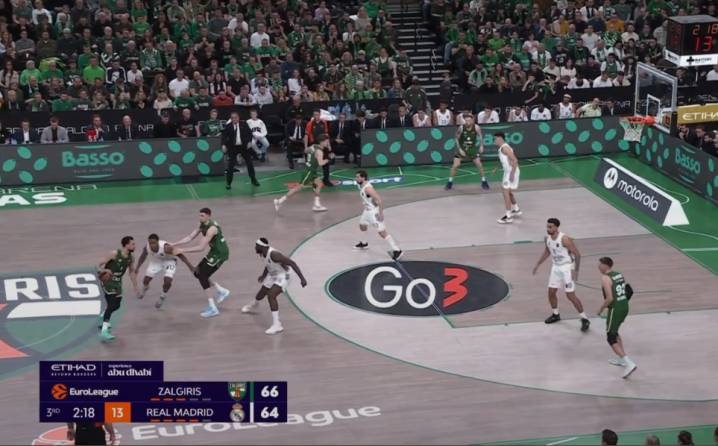
Birutis gets payback later in the game at 2:18 in the 3rd quarter with a 2-hand shove on Theo Maledon on the high pick-and-roll, which also isn’t called.
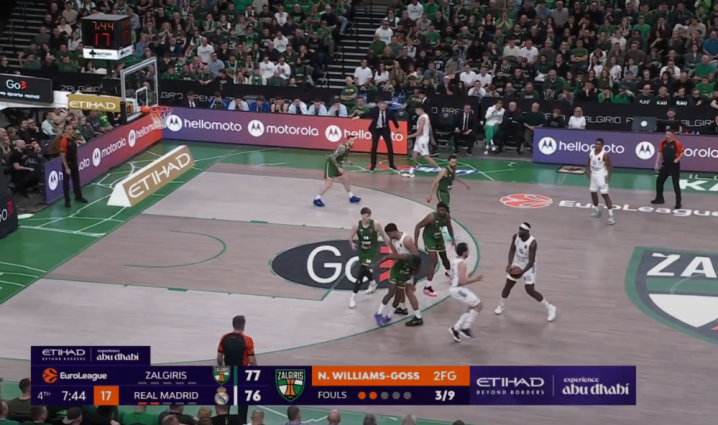
Later in the game, with 7:44 remaining, Lyles is late to set this screen and should be called for the offensive foul.
 Back to the First Half
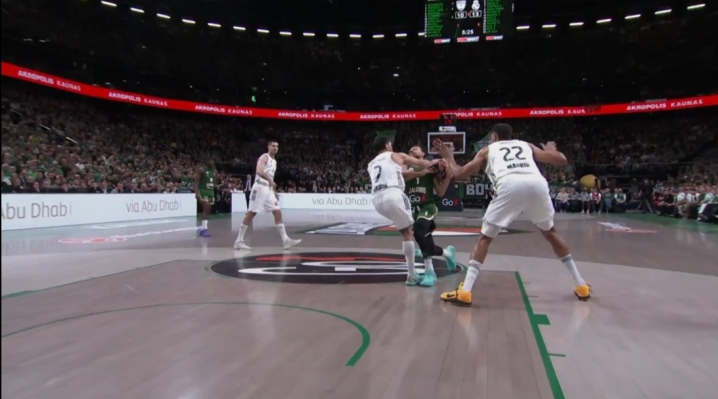
At 5:24 in the first quarter, Campazzo makes a clean play on the ball against Nigel Williams-Goss, yet is still called for a foul.
To almost compound the error, the referee initially ruled it a non-shooting foul before correctly awarding free throws following a discussion, though the foul itself was incorrect.
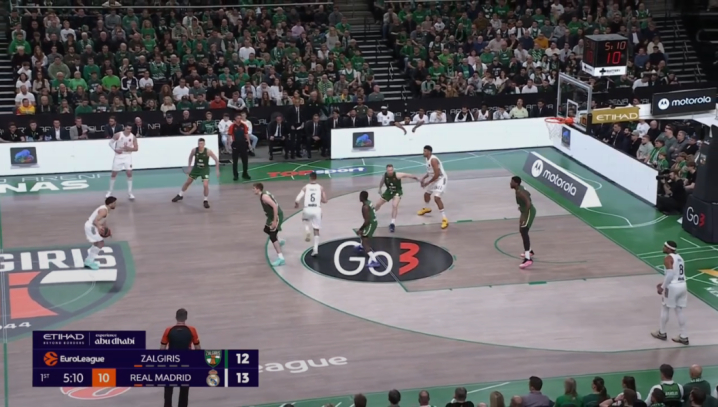
Just moments later, we get the first of two blatant 3-second violations by Tavares that were not called.
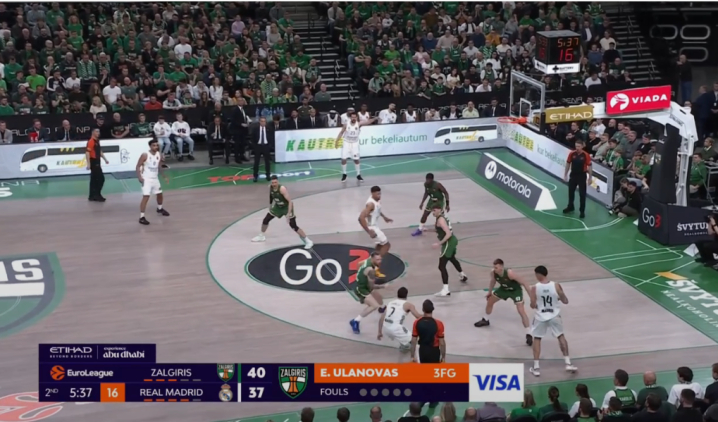
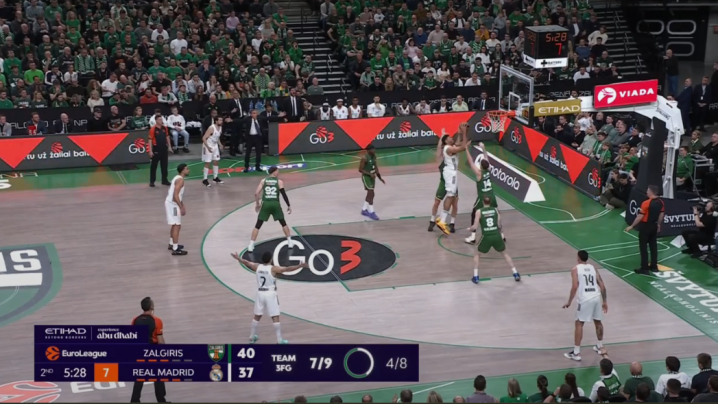
At 5:10, Tavares enters the restricted area and is still there 8 seconds later when Hezonja takes his shot at 5:03.
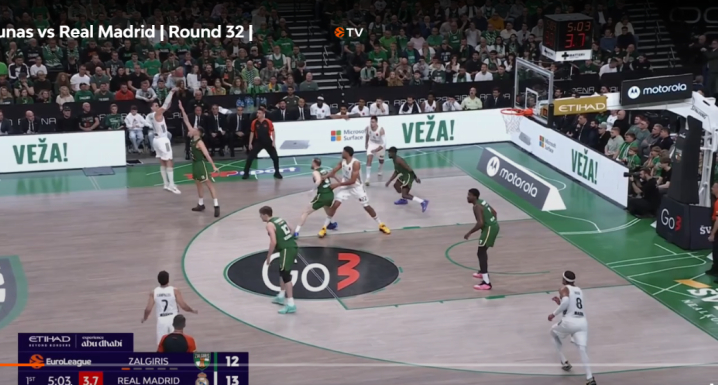
An even more severe example occurs in the middle of the 2nd quarter, when Tavares enters the restricted area at 5:37 and remains there until he is finally fouled 11 seconds later at 5:27.
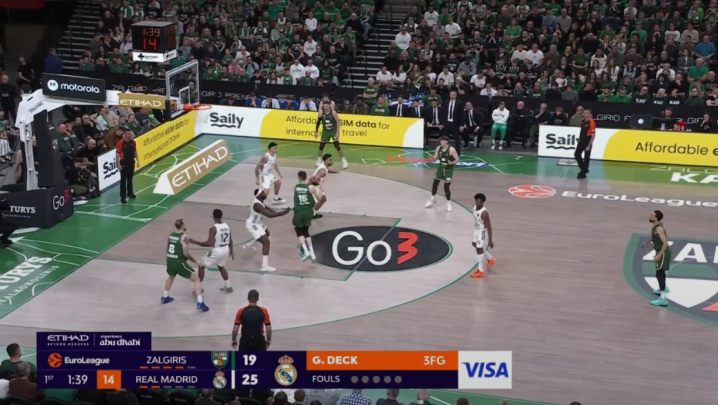
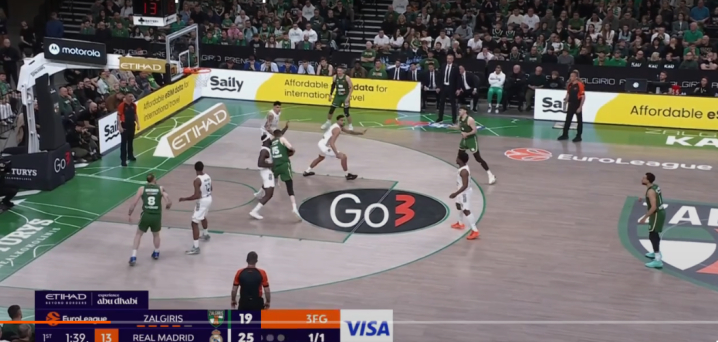
At 1:39 in the first quarter, Birutis receives the ball in the paint and is immediately bumped illegally by Garuba.
Toward the end of the 1st quarter, Real Madrid has two fouls to give.
As Williams-Goss starts to dribble in the backcourt, Feliz approaches him with five seconds remaining to intentionally foul.
Everyone is expecting the whistle–likely the referee included–but no one anticipated Williams-Goss delivering an uncalled elbow to Feliz’s head.
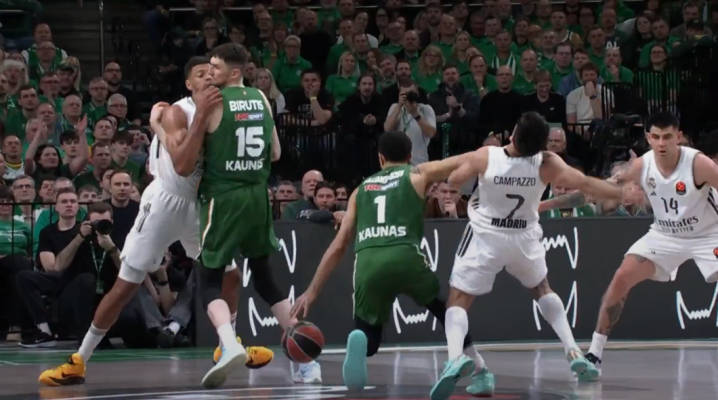
The “elephant in the room” is the elbow from Williams-Goss, rather than Feliz’s reach-in. This should have been an unsportsmanlike foul on the Zalgiris player.
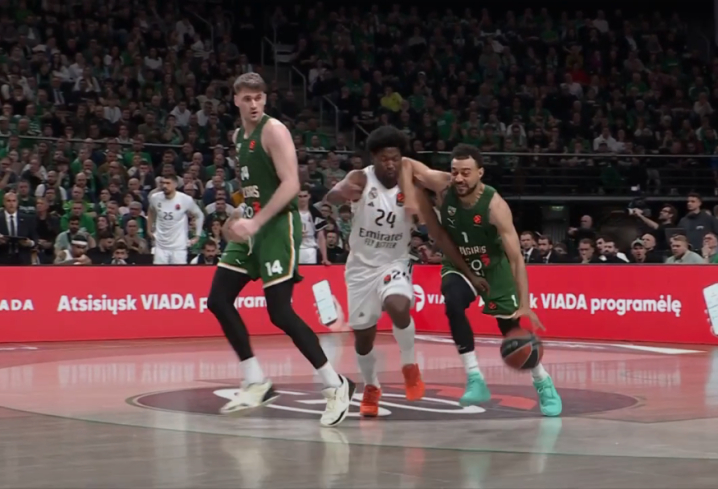
The Zalgiris guard also committed a second similar foul that was not called, clearing out Campazzo illegally at 4:48 in the 2nd quarter.
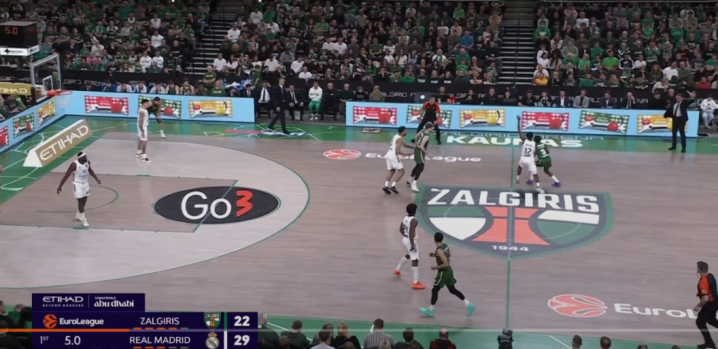
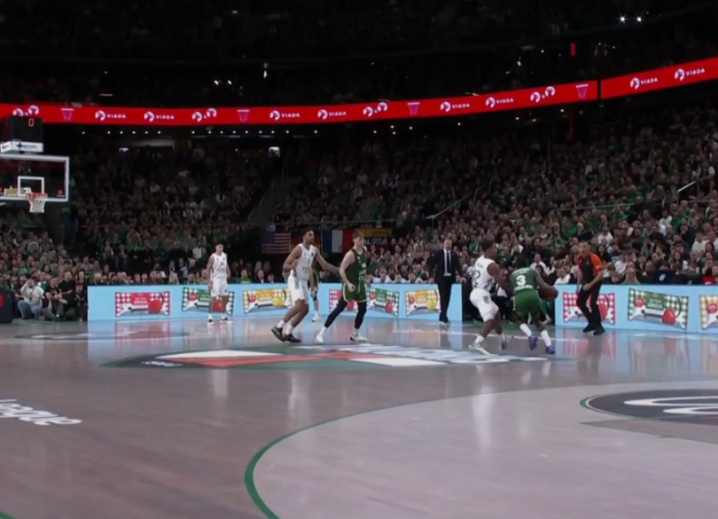
Near the end of the first quarter, Real still had a foul to give.
On the inbounds play with four seconds left in the quarter, Francisco receives the ball, is fouled by Maledon behind the half-court line, and then “manufactures” a shot from about 16 meters.
The EuroLeague Referee Department has decided that these are act of shooting fouls, although this interpretation is not explicitly stated in the public manual.
Francisco hits all three free throws.
 Some Other First Half Notes In the 1st quarter at 3:55, Birutis is correctly called for pushing Tavares during a rebound. But then at 3:18, Hezonja displaces Birutis from behind during a rebound – no call is made. Trey Lyles is called correctly for handchecking Ignas Brazdeikis in the 2nd quarter at 5:56. Consistency would have required similar calls against Alberto Abalde (Q1-8:28), Feliz (Q1-2:31), and Sleva (Q2-9:26) for the same infraction. 2nd quarter, 7:17: Real’s Gabriel Deck tries to wrest possession from Azuolas Tubelis and ultimately gains control, leading to a score, though by rule, this should have been ruled a jump ball. Second Half
The game slowed down considerably in the 2nd half, resulting in fewer officiating challenges, yet several noteworthy plays still occurred.
At 5:25 in the 3rd quarter, Zalgiris head coach Tomas Masiulis successfully challenged an act of violence, leading to an unsportsmanlike foul on Tavares for an elbow to Butkevicius’ face.
While the referees did a good job at the monitor, the foul on Tavares was determined after an act of shooting foul had already been called on Sleva.
Had the initial contact by Tavares been whistled, the Sleva foul would never have happened.
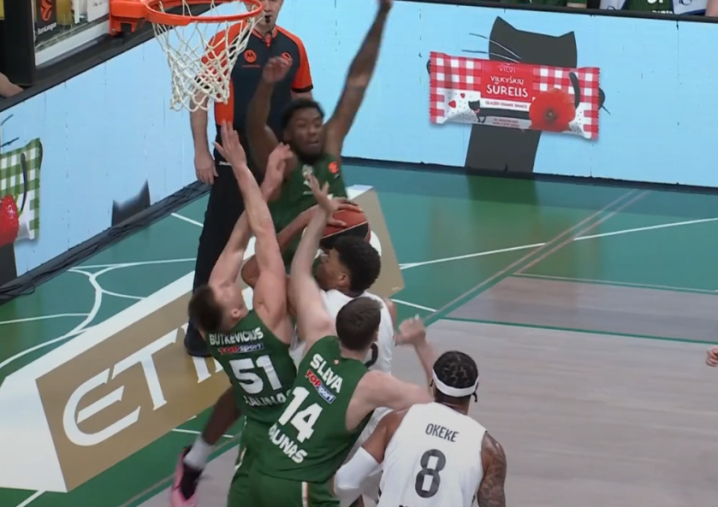
In the 3rd quarter at 1:49, Sergio Llull drove baseline and fired a pass to the opposite corner to Lyles, who hit a 3-point shot.
The subsequent replay showed Llull had stepped out of bounds before he passed the ball.
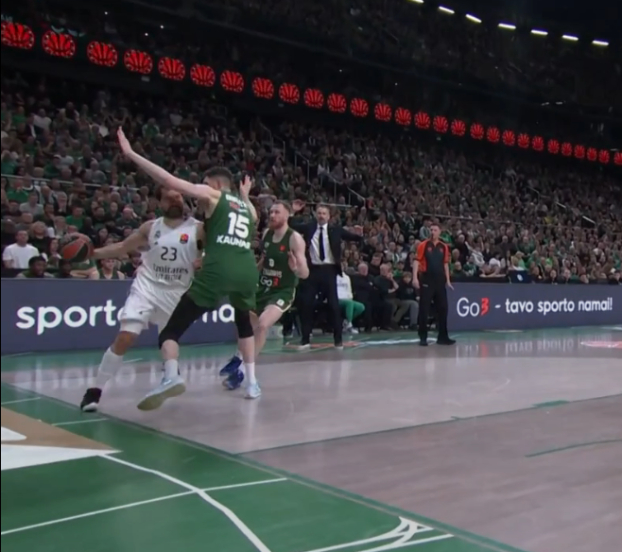
With 9 seconds left in the 3rd quarter, Brazdeikis beats Garuba and drives the paint for a layup.
He misses, but Garuba lays too much body on the shooter from behind, and a foul should have been called.
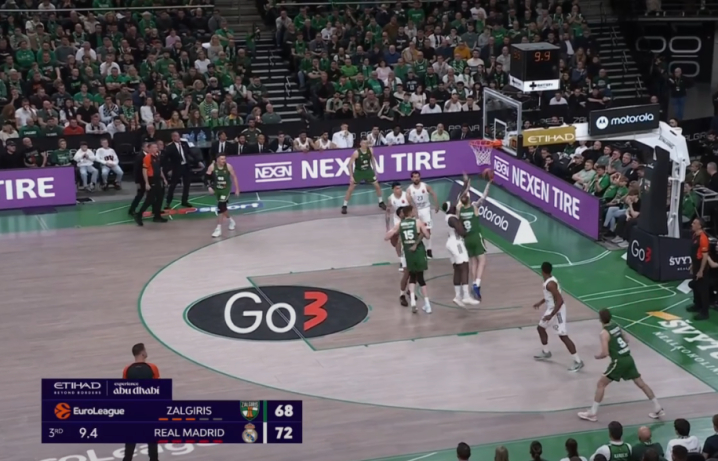
Moments later on transition, Llull shoves off Butkevicius to get an open look for a 3-point shot. He missed the shot, but should have been called for an offensive foul.
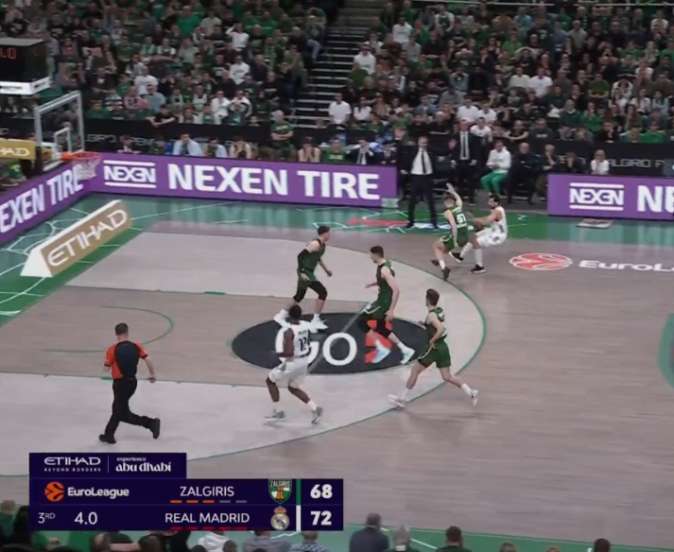
In the 4th quarter at 7:35, Llull was involved in another controversial play when he passed on a drive, collided with Sleva, and was whistled for an offensive foul.
Sleva was clearly still moving after Llull went airborne.
EuroLeague referees do not seem to handle these plays as well as their NBA counterparts, likely due to a difference in training and focus on the positioning of the defensive player (“refereeing the defense”).
It is also connected to discipline in mechanics (movement and positioning)–ideally, this play should be judged by the lead official under the basket rather than the outside official.
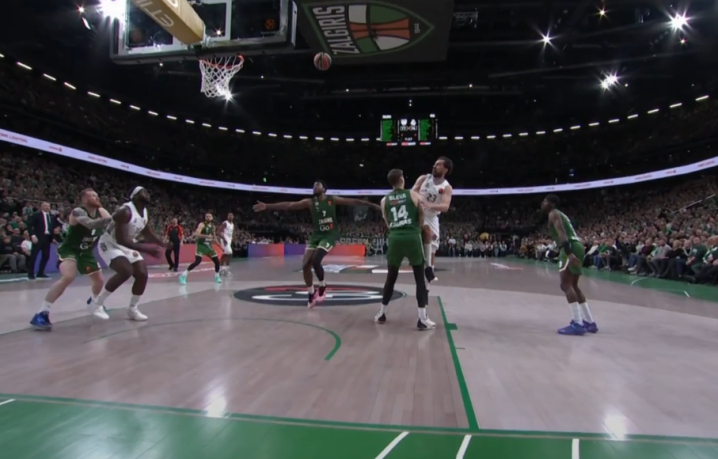
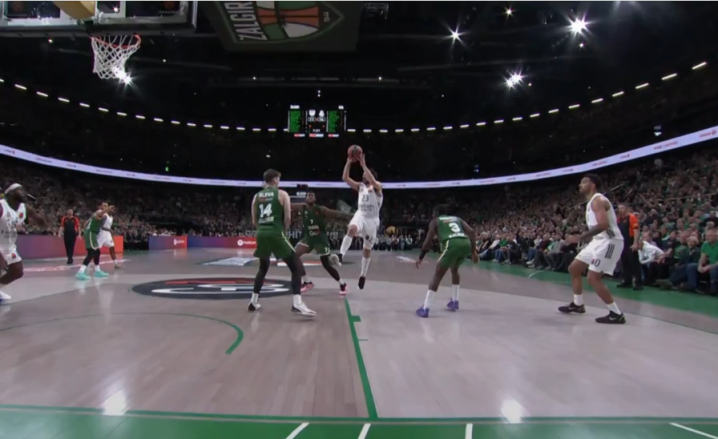
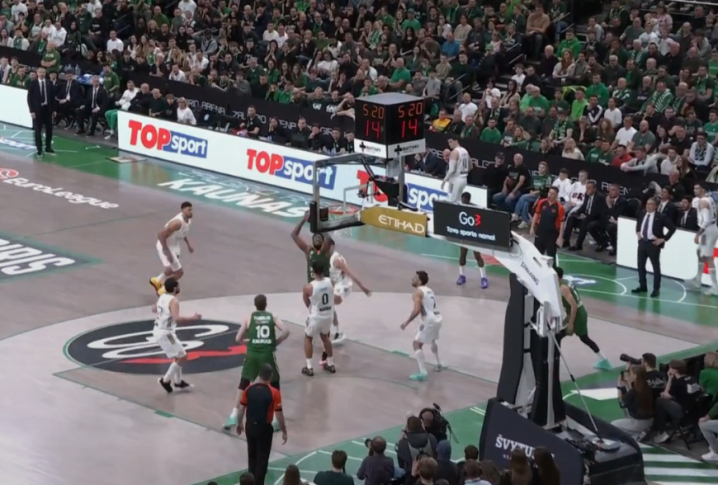
Another similar play comes up with 5:20 left in the game.
Moses Wright comes flying down the lane and crashes into Lyles, who has established a legal guarding position outside the semicircle.
He is correctly called for the offensive foul by the outside official.
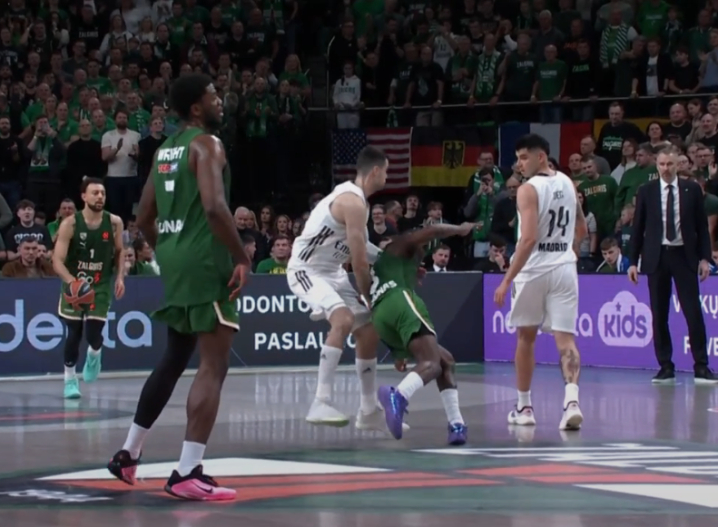
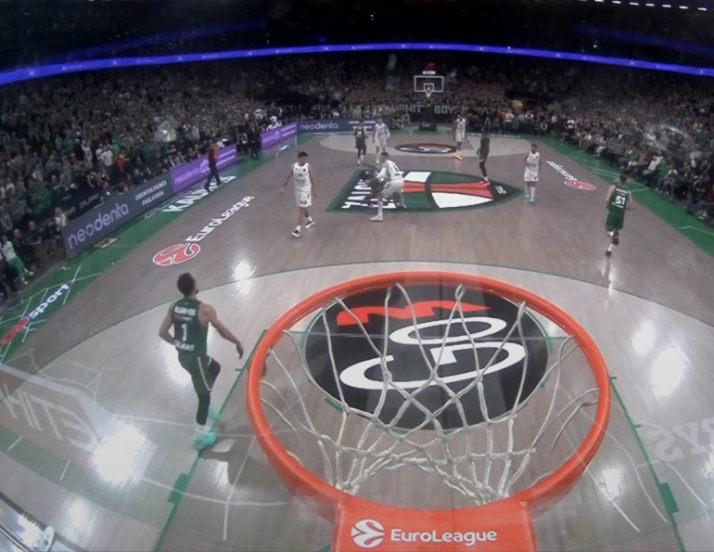
With 59 seconds left in the game, the referees correctly determined that Abalde’s contact with Francisco’s face was not an act of violence, though it was a foul that should have been called.
 Conclusion
Overall, the referees did a good job protecting shooters around the basket. There were some good moments of teamwork, and whatever errors there were seemed to go both ways, but the total number of incorrect decisions reached somewhere into the double figures.
Todd Warnick is a referee consultant for BasketNews. He refereed for many years at the top levels of Israeli and international basketball. After his retirement, he consulted, coached, mentored, and evaluated referees on behalf of the officiating departments of the Euroleague, FIBA, and Israel.
About author


Thank you for reading us! Help us even more.
If you like our content, please click here and add us as your preferred source. It helps us a lot, and we are committed to delivering you the very latest basketball news.