
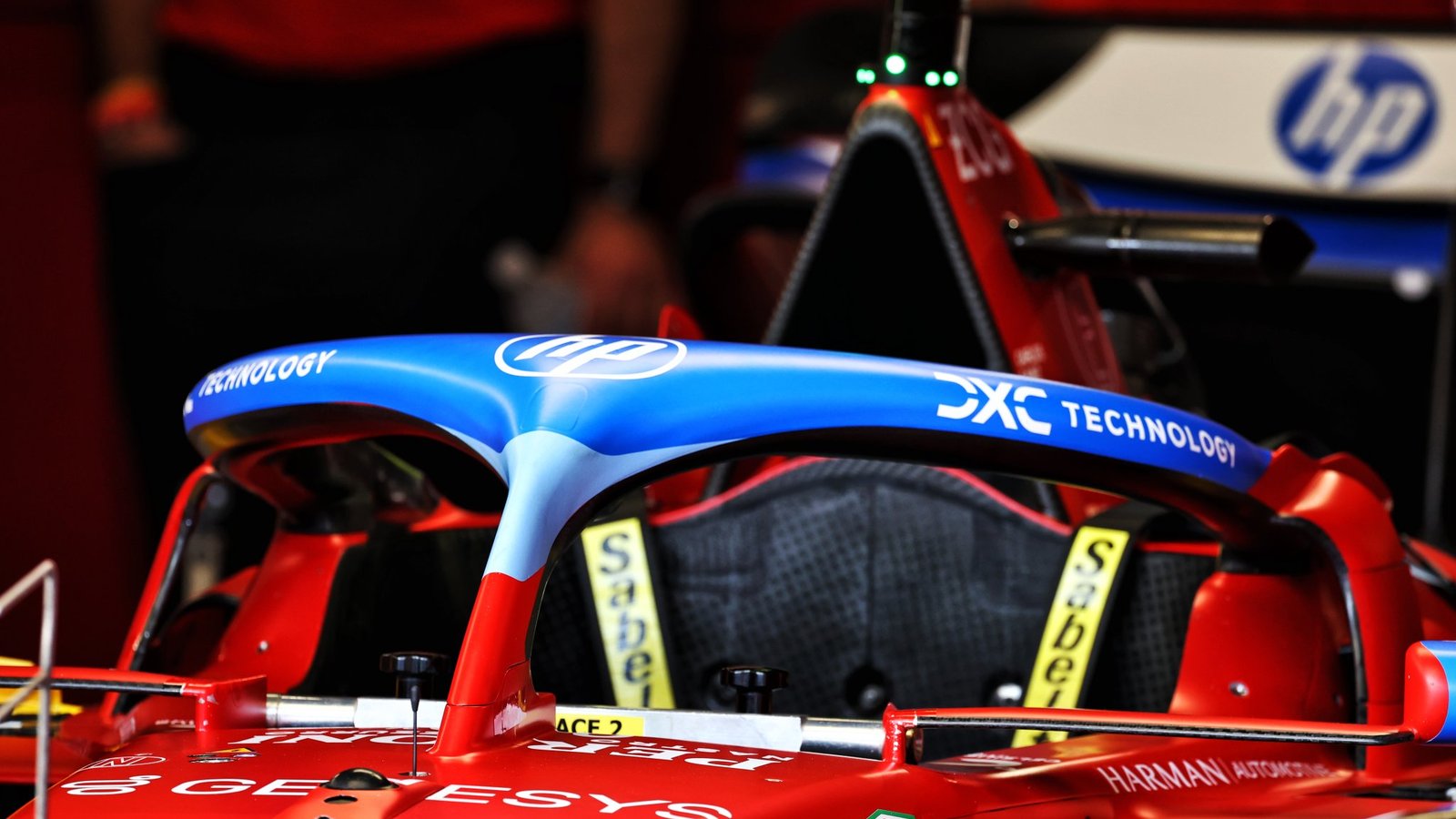
Formula 1 introduced the halo in 2018 to a mixed reaction, with the aesthetics leaving drivers and fans unimpressed. But eight years on, attitudes have changed considerably.
Safety in motorsport is a constantly moving goalpost, with the simple fact being that the job is never done. Right when you think racing is as safe as it could possibly be, another accident will occur, and the process begins all over again.
With the halo, jokes were immediately made that it looked like the rubber strapping from a flip-flop, and questions were raised as to how much protection it actually offered, given the gaping holes on either side of the central strut would still let debris enter the cockpit, or worse, get stuck there.
Fast forward to 2026, and the jokes are gone, with at least a handful of drivers escaping injury or, in some cases, far worse, thanks to the safety feature.
Leclerc escapes unharmed in airborne Alonso clash – Belgian GP 2018 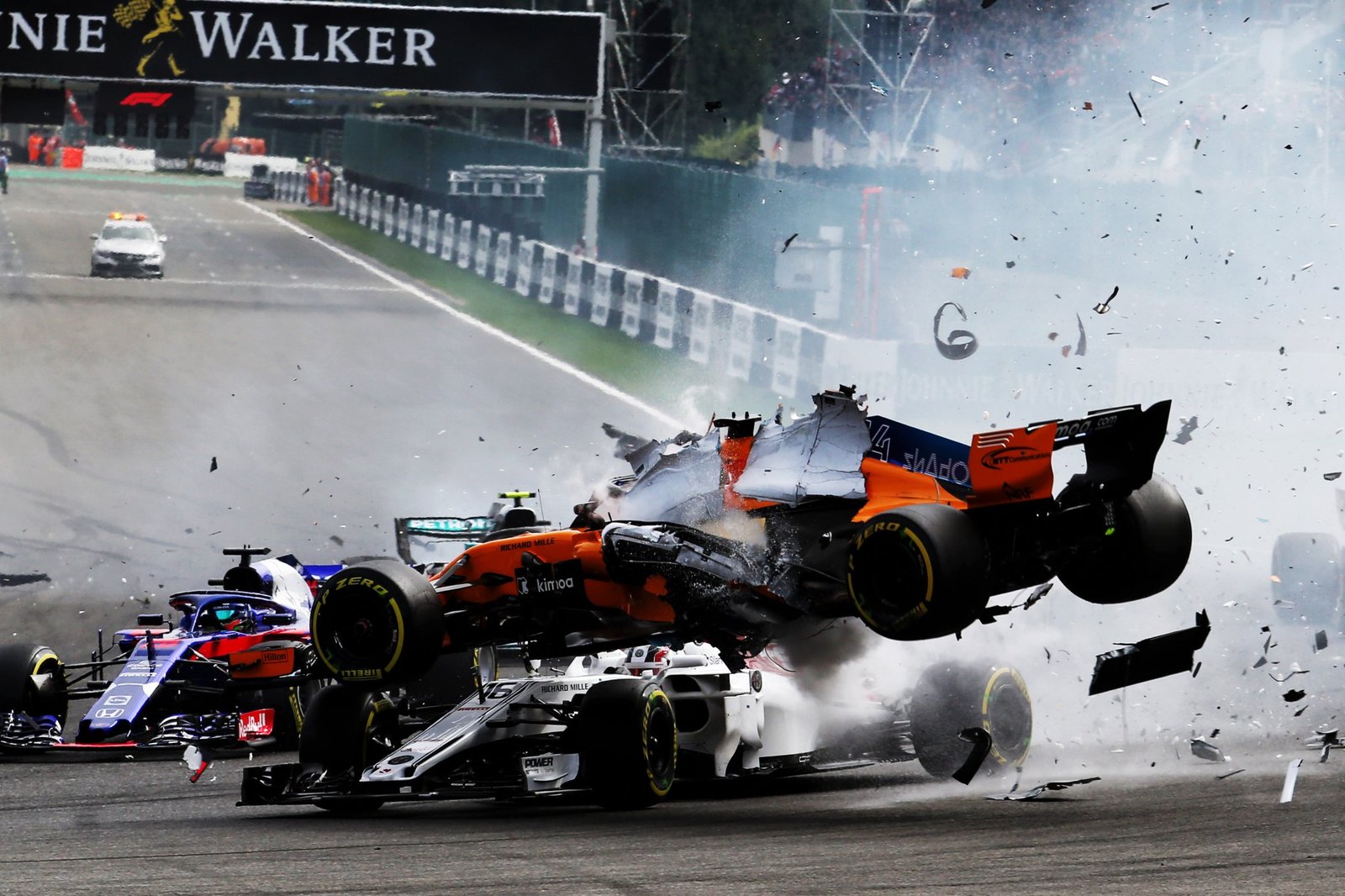
Alonso, Belgium, F1, Start, 2018
© XPB Images
Article continues below ADVERTISEMENT
Article continues below ADVERTISEMENT
In a dramatic start to the 2018 Belgian Grand Prix, Nico Hulkenberg locked both front tyres on his Renault and ploughed straight into the back of Fernando Alonso’s McLaren.
The impact sent the Spaniard spinning into the rear of Charles Leclerc Sauber, before taking off, with the front-right tyre smashing into the halo, on the way past. Without the device, it is likely the tyre would instead have made contact with Leclerc’s helmet. The chance of injury from such an incident is high.
This was the first instance of the halo arguably saving a life, and it was the moment that public opinion began to shift, with the visual unpleasantness deemed a worthwhile cost for the safety benefits.
Inverted Zhou’s Silverstone escape – British GP 2022 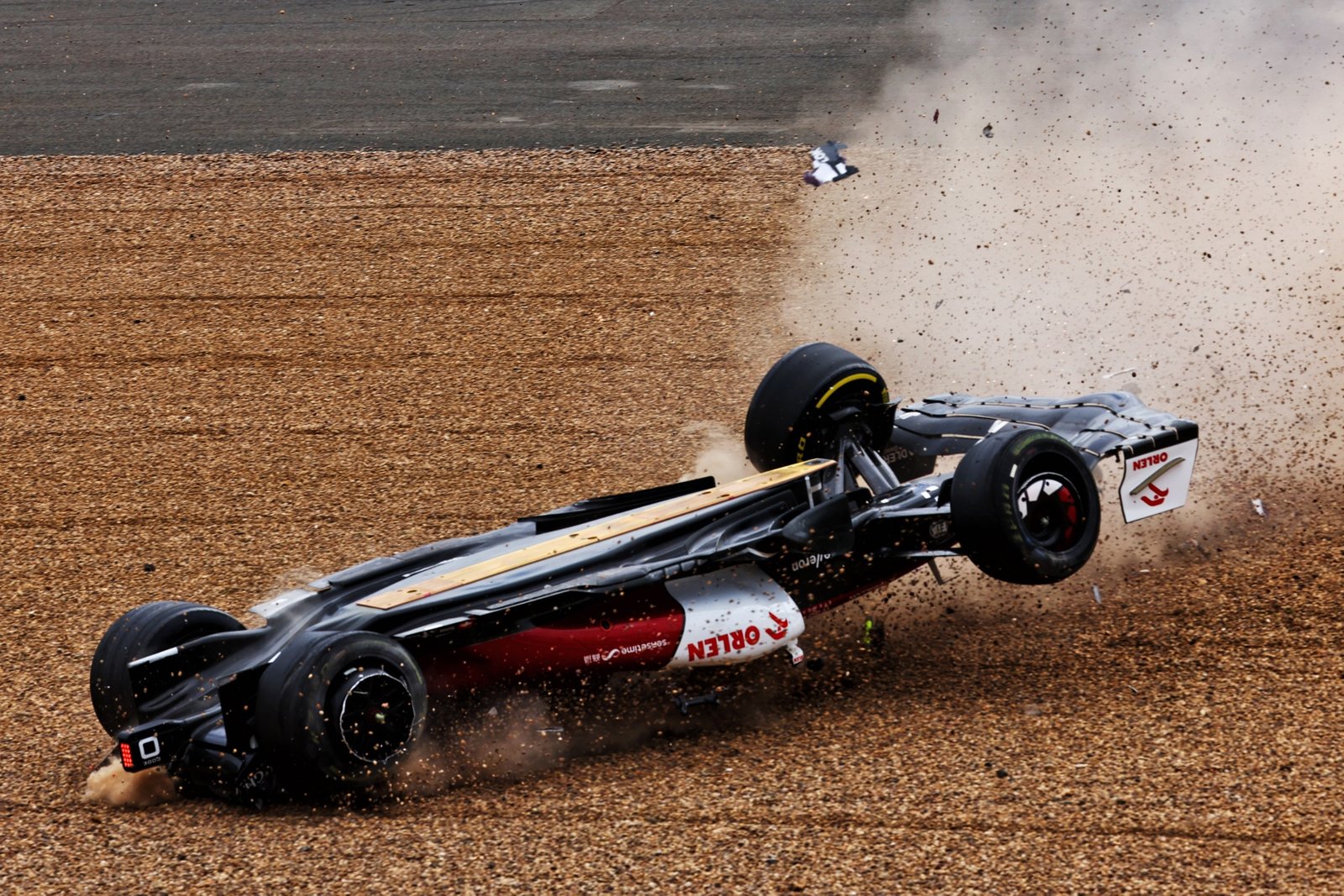
Guanyu Zhou (CHN) Alfa Romeo F1 Team C42 crashes at the start of the race. Formula 1 World…
Going upside down is one of the worst things that can happen to you in an open cockpit car. Although there was previously a requirement for a drivers helmet to fit below a predetermined line from the roll hoop to the front of the cockpit to protect from this eventuality, going upside down still put a driver in severe jeopardy.
Article continues below ADVERTISEMENT
Article continues below ADVERTISEMENT
The start of the 2022 British Grand Prix saw Zhou Guanyu suffer this fate, but it was made worse by the fact that the extreme impact made his roll hoop fail. Previously, this would have left Zhou’s helmet scraping at high speed along the floor.
But in this latest era, the halo came to the rescue, taking the weight of the car and keeping Zhou safe.
Safety aids F1 juniors 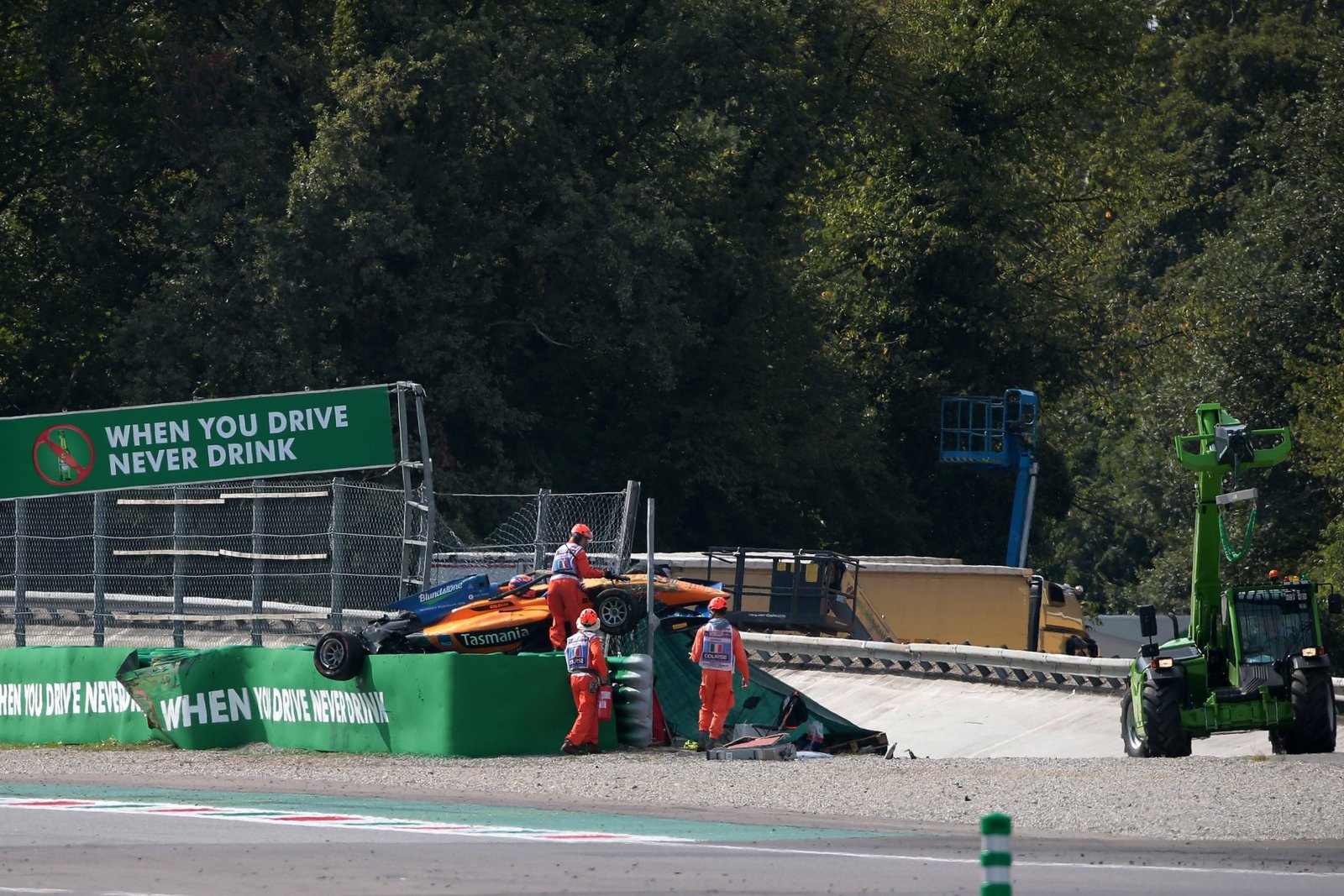
Peroni, F3, Italy, 2019
© XPB Images
The majority of modern single-seater categories now run with either the halo, or another safety device, such as the aeroscreen in IndyCar.
In 2019, F3 saw its first instance of a serious injury or worse being avoided, thanks to the halo, and again, the device was so innocuous that it wasn’t close to the main talking point.
Article continues below ADVERTISEMENT
Article continues below ADVERTISEMENT
Speeding through the final corner, Alexander Peroni launched dramatically into the air after striking a sausage kerb. Rolling several times in the air, his car landed nose down, with the cockpit striking the tyre barrier. Without the halo, once more, the driver would have take the full impact.
Another instance was the 2022 F2 race at Silverstone. Heading into Vale, Dennis Hauger was forced off the track, and off a sausage kerb, his car flew into the side of Roy Nissany. The contact was a direct strike on the halo.
Verstappen and Hamilton collide – Italian GP 2021 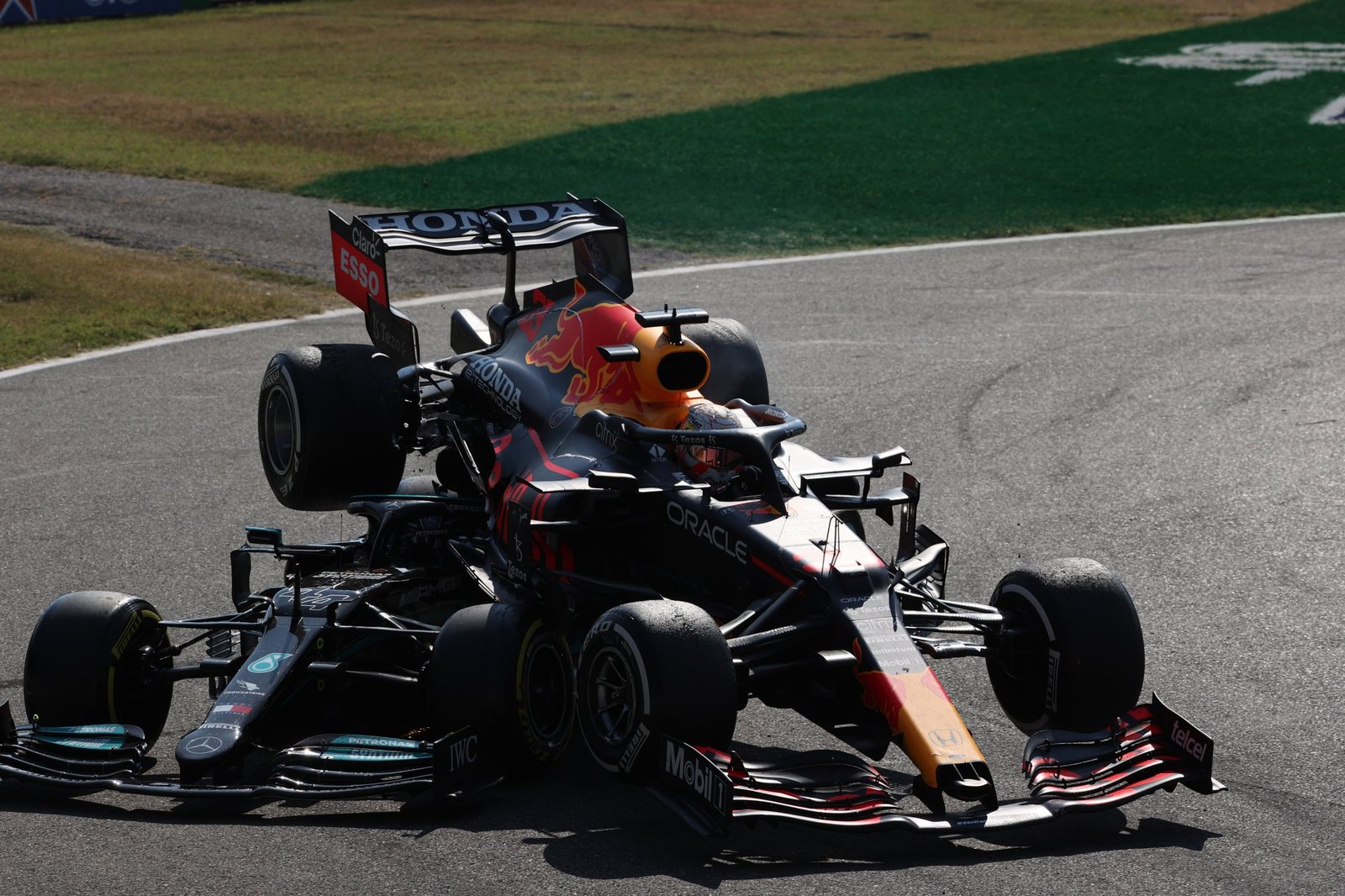
Verstappen, Hamilton, Red Bull, Mercedes, F1, 2021, Italy
© XPB Images
Lewis Hamilton and Max Verstappen engaged in a fierce battle in 2021, with the title-deciding race and many incidents along the way remaining divisive among the fanbase.
One such instance came at the Italian Grand Prix. With Hamilton exiting the pits, Verstappen was determined to get ahead of the Mercedes driver, and ran side-by-side through the first part of the turn 1-2 chicane. Hamilton left little room in the second phase of the corner, forcing Verstappen to either yield or bounce over the kerbs.
Article continues below ADVERTISEMENT
Article continues below ADVERTISEMENT
Choosing the second option, the pair made contact and Verstappen’s Red Bull bounced onto Hamilton’s roll hoop, with the rear of his car clattering onto the halo. Not only would a tyre have stuck Hamilton’s helmet without the device, but a whole car.
Grosjean’s life saved – Bahrain GP 2020 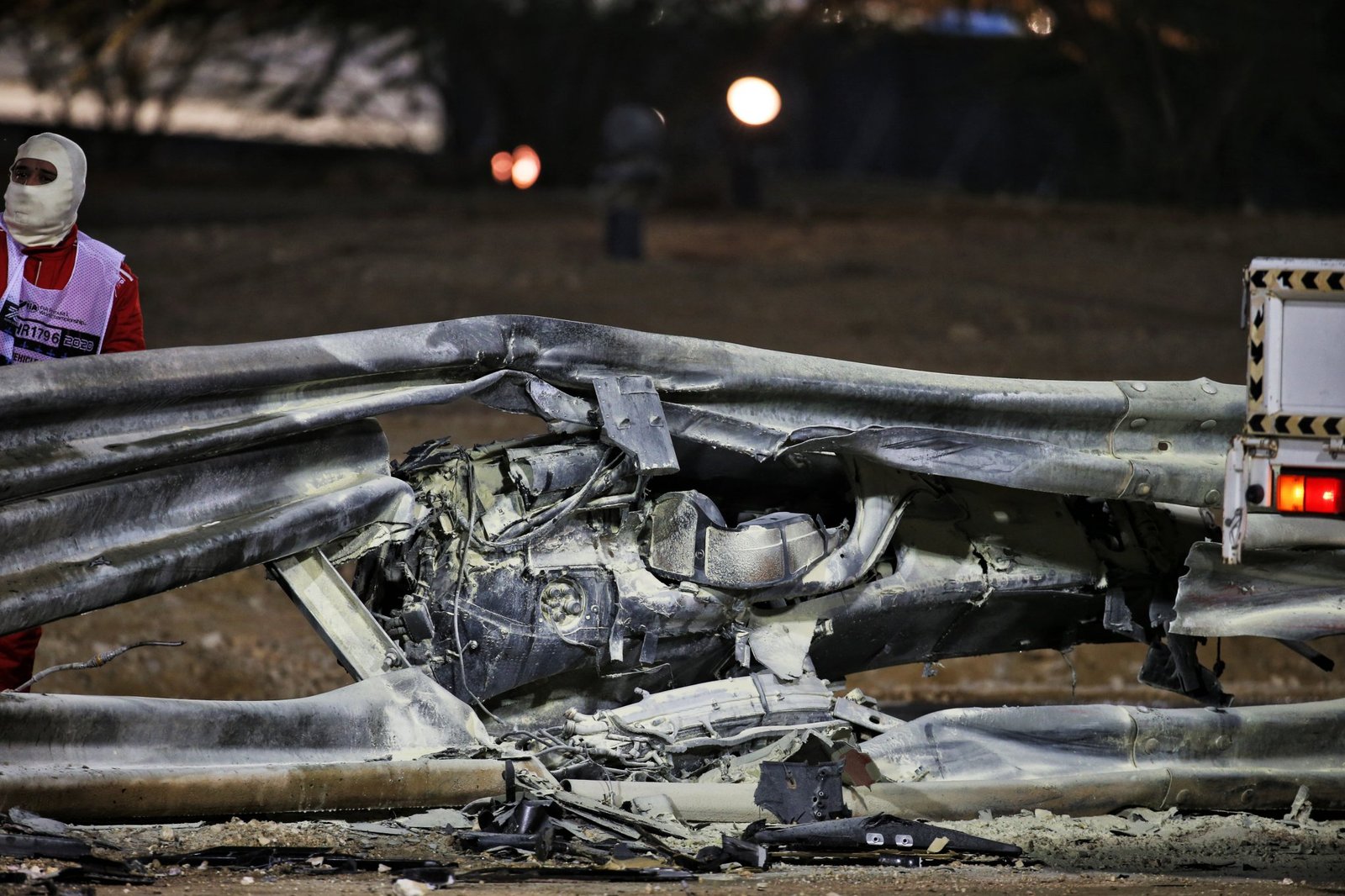
Grosjean, Haas, Bahrain, F1, 2020, Crash
© XPB Images
After the 2020 Bahrain Grand Prix, any remaining complaints about the look of the halo became invalid background noise to the debate.
At the start of the race, the Frenchman lost control of his Haas on the exit of Turn 3, and slammed not into, but through the barriers, with the survival cell firmly on the opposite side.
While the fire, the work of the track officials and the fact his car split in two all grabbed attention, it was somewhat lost in the commotion that the halo unquestionably saved his life, with the angled front section forcing the barrier apart. Without the device, all the force absorbed by the halo, would have struck Grosjean’s helmet. It does not warrant thinking about.
Article continues below ADVERTISEMENT
Article continues below ADVERTISEMENT
The halo may not be the prettiest addition to an F1 car in the history of the sport, but it certainly is one of the most important.
Subscribe to our F1 Newsletter