
Home
»
Latest Travel News
»
China Joins Turkey, Brazil, South Korea, Singapore, India, and Others in Depending on Russia to Stabilize Their Aviation, Hotel, and Travel Industry as the Middle East Crisis Hammers Global Tourism with Crude Oil Shortage and Energy Uncertainty: Everything You Need To Know
Published on
March 22, 2026
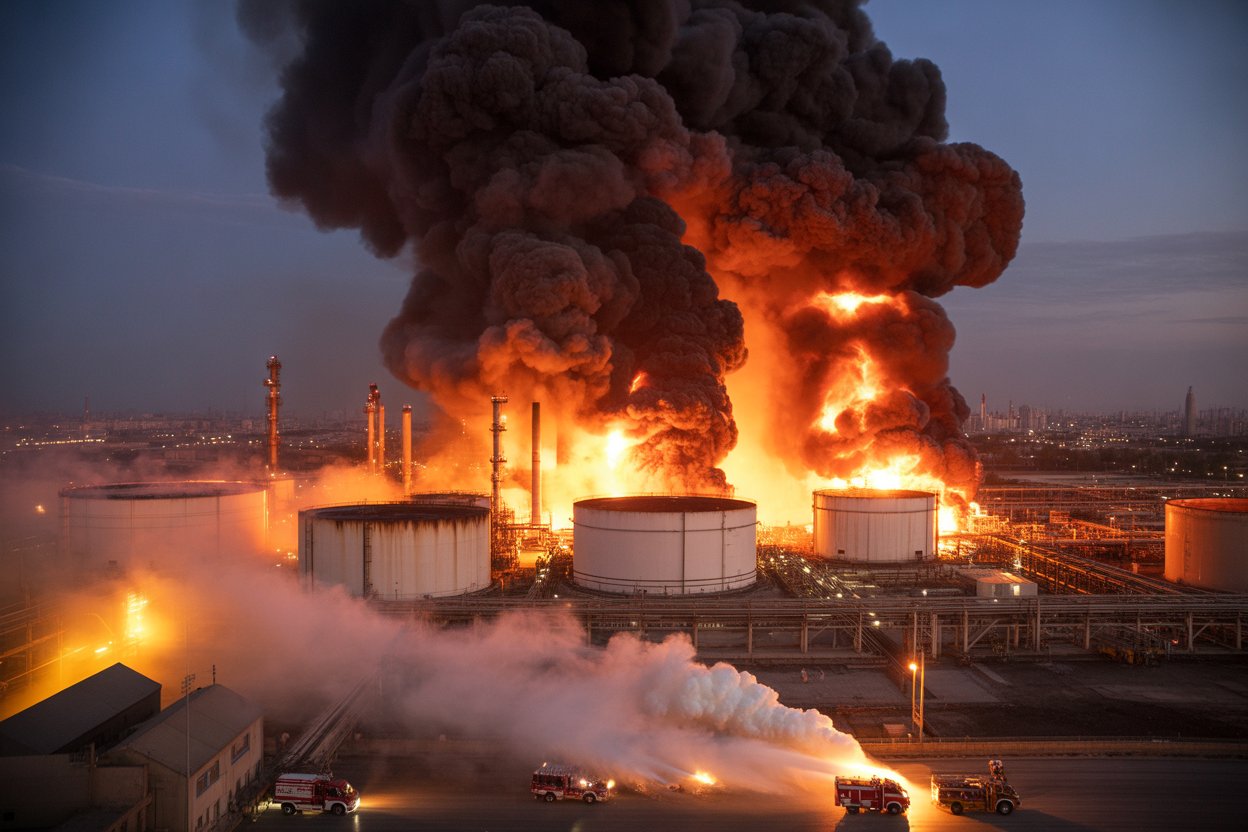
Image generated with Ai
As China joins Turkey, Brazil, South Korea, Singapore, India, and others in depending on Russia to stabilize their aviation, hotel, and travel industry, the ongoing Middle East crisis is hammering global tourism with crude oil shortage and energy uncertainty, forcing a rapid realignment of global energy flows. With the Strait of Hormuz disruption choking nearly 20% of global oil supply, countries heavily reliant on Middle Eastern crude are facing rising fuel costs, disrupted airline operations, and mounting pressure on hospitality and transport systems. In response, discounted Russian crude—often priced $9–$11 below Brent—has emerged as a critical alternative, enabling airlines to manage jet fuel expenses, hotels to control energy costs, and transport networks to sustain operations. From China’s large-scale imports to India’s surge in purchases and Singapore’s fuel hub dynamics, nations are pivoting strategically to maintain tourism stability. This shift highlights how energy security has become central to protecting global travel demand amid ongoing geopolitical disruption.
Middle East Crisis Disrupts Global Energy Flows and Forces Tourism Economies to Pivot
The unfolding Middle East crisis has triggered a systemic shock across global energy markets, with immediate consequences for aviation, tourism, and transport-dependent economies. Iran’s ballistic missile strike on Qatar’s Ras Laffan LNG complex and its threats to oil infrastructure in Saudi Arabia and the UAE escalated tensions, effectively choking the Strait of Hormuz—through which nearly 20% of global daily oil shipments typically pass. This disruption has severely impacted key importers, with India alone seeing its usual ~2.6 million barrels per day (bpd) supply route largely cut off. In response, Asian markets are rapidly pivoting, with over 3 million tonnes (614,500 bpd) of Russian fuel oil expected to flow into the region in March 2026—potentially a record high. Simultaneously, an estimated 130 million barrels of Russian crude remain at sea, strategically positioned for redirection to high-demand markets. This rapid reconfiguration underscores how geopolitical conflict is reshaping global energy trade, directly influencing fuel availability, airline operations, and the cost structures of tourism economies worldwide.
China’s Aviation, Hotels, and Transport Engine Lean Heavily on Discounted Russian Crude
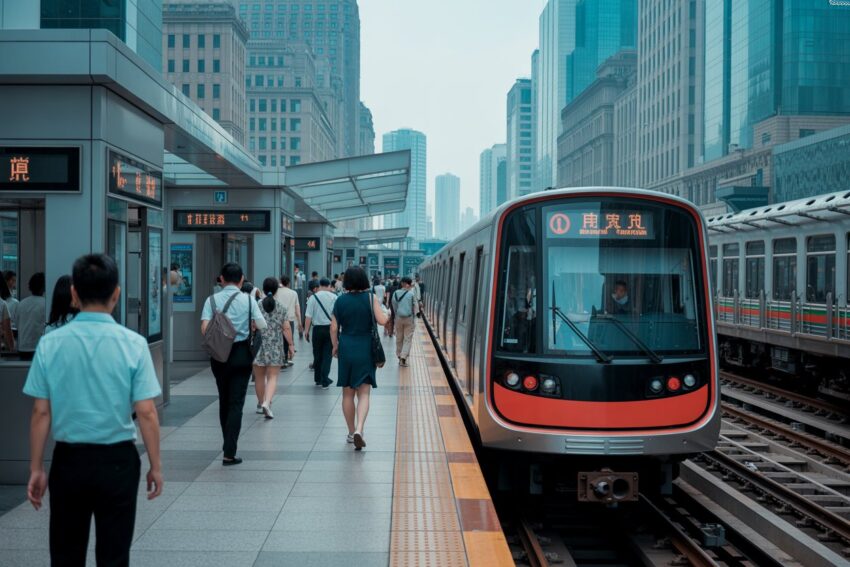
Image generated with Ai
China’s tourism ecosystem—spanning aviation, hospitality, and vast ground transport networks—is increasingly tied to discounted Russian crude flows as the Middle East crisis constrains traditional supply routes. With imports reaching ~2.07–2.08 million barrels per day (bpd) in February 2026, accounting for nearly 48% of Russia’s crude exports, Beijing has strategically pivoted to sustain mobility and economic continuity. The surge—up 40.9% year-on-year—has allowed Chinese airlines to stabilize jet fuel costs, preventing fare spikes across domestic and international routes. Simultaneously, hotel chains and tourism infrastructure benefit from moderated energy expenses, particularly in energy-intensive urban hubs like Shanghai and Beijing. Independent “teapot” refiners have aggressively replaced Iranian crude with Russian ESPO and Urals blends, ensuring uninterrupted fuel supply for logistics and passenger mobility. This energy security buffer is critical as China’s domestic tourism rebounds post-pandemic, with millions relying on affordable air and rail connectivity. In effect, Russian crude has become a stabilizing force, insulating China’s tourism economy from the volatility triggered by disruptions in the Strait of Hormuz.
MetricValueImport Volume~2.07–2.08 million bpdShare of Russian Exports~48%Growth+40.9% YoYKey DriversTeapot refiners shift, discounted ESPO & Urals
Turkey’s Tourism Lifeline Secured Through Russian Energy Flows

Image generated with Ai
Turkey’s tourism-driven economy—heavily reliant on aviation connectivity, hotel operations, and road transport—has deepened its dependence on Russian oil. Importing approximately 305,000 bpd of crude and 640,000 bpd of total oil products, Ankara has positioned itself as a critical energy hub amid global disruptions. Russian crude accounts for around 6% of exports, while Turkey has become the largest buyer of Russian oil products, including diesel essential for domestic travel networks. This steady inflow has enabled Turkish Airlines and regional carriers to maintain competitive pricing, supporting inbound tourism across Istanbul, Antalya, and coastal resorts. Hotels, particularly in high-demand tourist zones, benefit from stable fuel and electricity costs, shielding the sector from inflationary shocks. The 8.2% rise in imports in late 2025 underscores Turkey’s proactive strategy to secure energy supply as Middle Eastern volatility intensifies. Russian energy has effectively underpinned Turkey’s tourism resilience, ensuring continuity in both international arrivals and domestic mobility.
MetricValueImport Volume~305,000 bpd crudeTotal Oil~640,000 bpdShare~6%Key DriversDiesel demand, tourism hubs, aviation fuel stabilityBrazil’s Tourism and Transport Expansion Fueled by Russian Petroleum Products

Image generated with Ai
Brazil’s tourism and transport sectors are increasingly supported by Russian petroleum products, particularly clean fuels. Imports have surged to ~830,000 tonnes per month, a 135% increase since 2022, positioning Russia as Brazil’s top supplier of refined products. These fuels are critical for aviation, road transport, and hospitality infrastructure across major tourist destinations such as Rio de Janeiro and São Paulo. Unlike crude-dependent economies, Brazil’s reliance on refined products directly supports end-use consumption, enabling stable fuel availability for airlines and logistics networks. This has helped sustain tourism growth despite global energy disruptions. Russian supply provides a cost advantage, reducing pressure on ticket prices and travel expenses. As Middle Eastern volatility persists, Brazil’s diversified sourcing—anchored by Russian products—offers resilience for its expanding tourism economy.
MetricValueImport Volume~830,000 tonnes/monthShare~11% of Russian oil productsGrowth+135% since 2022Key DriversCPP demand, aviation fuel, logistics
South Korea’s Aviation, Hotels, and Transport System Faces Energy Shock as Russian Oil Re-enters the Equation
Image generated with Ai
South Korea’s aviation, hospitality, and ground transport ecosystem is now at a critical inflection point, as the Middle East crisis disrupts its primary energy lifeline and forces a strategic reconsideration of Russian crude. Before halting imports in December 2022, Russian oil accounted for 5.6% of South Korea’s total crude imports, with a peak of 8,129,000 barrels in April 2021, supporting aviation fuel supply, hotel energy consumption, and nationwide mobility. Today, the stakes are significantly higher. The country relies on the Strait of Hormuz for nearly 70% of its crude oil and around 50% of its naphtha imports, making its tourism and travel economy highly vulnerable to supply disruptions. Airlines face mounting jet fuel cost pressures, potentially impacting international connectivity through Incheon, one of Asia’s busiest hubs. Hotels and tourism infrastructure are similarly exposed to rising electricity and heating costs. In response, Seoul confirmed on March 19, 2026, that it is actively exploring the resumption of Russian crude and naphtha imports, alongside tapping 22.46 million barrels of emergency reserves. Russian supply—once politically sidelined—is now emerging as a pragmatic solution to stabilize aviation operations, sustain tourism flows, and prevent cost escalation across the travel economy. The shift underscores how energy security is once again dictating the trajectory of South Korea’s tourism resilience.
Advertisement
Advertisement
MetricValueRussian crude share (pre-ban)5.6%Peak import volume8,129,000 barrels (April 2021)Last importDecember 2022Hormuz dependence (crude)~70%Hormuz dependence (naphtha)~50%Emergency reserves22.46 million barrelsCurrent statusActive talks to resume importsRussian coal share30% (Aug 2025)Global import rank5th largest Russian fossil fuel importerSingapore and Southeast Asia’s Tourism Hub Powered by Russian Fuel Oil

Image generated with Ai
Singapore and the broader Southeast Asian region have emerged as major consumers of Russian fuel oil, critical for maritime and aviation sectors. Imports reached ~1.7–1.9 million tonnes per month in March 2026, marking a potential record. As a global aviation and shipping hub, Singapore relies on fuel oil for bunker supply, directly impacting cruise tourism, cargo movement, and airline operations. The surge in Russian supply has helped offset volatility in Middle Eastern routes, ensuring uninterrupted energy flows. The spike in high-sulfur fuel oil (HSFO) premiums—peaking at $76 per metric ton—reflects strong demand amid constrained supply. For tourism, this translates into stable airline operations and maritime connectivity, both essential for regional travel economies. Russian fuel has thus become integral to sustaining Southeast Asia’s position as a global tourism and logistics hub.
MetricValueImport Volume~1.7–1.9 million tonnes/monthTrendRecord highKey DriversBunker fuel demand, aviation hub status
India’s Tourism and Aviation Sector Rebounds on Russian Oil Lifeline

Image generated with Ai
India’s aviation, hotel, and transport sectors are undergoing a sharp recalibration, driven by a surge in Russian crude imports amid Middle East disruptions. With imports climbing to ~1.5–1.61 million bpd in March 2026, a 45–50% jump from February, New Delhi has leveraged discounted oil—$9–$11 per barrel below Brent—to stabilize travel costs across its vast tourism network. Accounting for roughly 38% of Russia’s crude exports, India’s strategic pivot has ensured uninterrupted aviation fuel supply for one of the world’s fastest-growing air travel markets. Airlines have avoided sharp fare hikes, while hotels and tourism operators benefit from stable diesel and electricity costs. The US sanctions waiver on March 6 further accelerated procurement, with over 30 million barrels secured in weeks. This shift is particularly critical as India typically imports ~2.6 million bpd via the Strait of Hormuz, now severely disrupted. Russian crude has effectively replaced Middle Eastern dependency, sustaining domestic travel, pilgrimage tourism, and intercity mobility. The result is a resilient tourism economy buffered against geopolitical shocks.
MetricValueImport Volume~1.5–1.61 million bpdShare of Russian Exports~38%Growth+45–50% MoMKey DriversUS waiver, Hormuz disruption, discounted crude
Key Geopolitical Drivers Reshaping Global Oil Flows and Tourism Economies in 2026
A convergence of geopolitical forces in 2026 is rapidly redrawing global oil trade routes, with direct implications for aviation, hospitality, and travel-dependent economies. The disruption of the Strait of Hormuz—triggered by US-Israeli strikes on Iran and Tehran’s retaliatory actions—has choked nearly 20% of global oil shipments, forcing major importers like India, China, and Southeast Asia to pivot aggressively toward Russian crude. This shift has been accelerated by a 30-day US sanctions waiver issued between March 6–12, 2026, enabling countries to procure Russian oil already at sea. Simultaneously, Russia’s reliance on a “shadow fleet”—accounting for roughly 69% of its crude exports—has allowed shipments to bypass Western restrictions, maintaining supply continuity. The economic incentive is clear: Urals crude priced $9–$11 below Brent offers a critical cost advantage for energy-intensive sectors such as aviation and tourism. Meanwhile, EU pressure is mounting on Hungary and Slovakia to phase out Russian imports by end-2027, though resistance persists. Adding to the fluidity, around 130 million barrels of Russian crude remain afloat globally, ready to be redirected to demand centres. Together, these drivers are restructuring energy dependencies and stabilising fuel supply for tourism economies navigating a volatile global landscape.
China joins Turkey, Brazil, South Korea, Singapore, India and others in depending on Russia to stabilize their aviation, hotel and travel industry as the Middle East crisis hammers global tourism with crude oil shortage and energy uncertainty, driving urgent fuel shifts
Conclusion
China joins Turkey, Brazil, South Korea, Singapore, India, and others in depending on Russia to stabilize their aviation, hotel, and travel industry as the Middle East crisis hammers global tourism with crude oil shortage and energy uncertainty, because the disruption of key oil routes has driven fuel prices higher, strained airline operations, increased hospitality costs, and forced nations to secure alternative energy supplies. This growing reliance on discounted Russian crude is helping countries manage rising aviation fuel expenses, sustain hotel operations, and keep transport networks functioning. As energy markets remain volatile, this strategic pivot highlights how securing affordable oil has become essential to protecting global tourism and economic stability.
