
Scuderia Ferrari team principal Fred Vasseur has identified the new Additional Development and Upgrade Opportunities (ADUO) system as a potentially decisive factor in closing the performance gap to Mercedes during the 2026 Formula 1 season. As the sport enters a new regulatory era, the French manager believes this mechanism could play a crucial role in reshaping the competitive order among power unit manufacturers.
Under the 2026 Formula 1 regulations, power units are homologated at the start of the season, significantly limiting in-season development. However, the FIA has introduced the ADUO system to prevent performance disparities from becoming too large, particularly given the complexity of the new hybrid engines and their increased reliance on electrical energy deployment.
How the ADUO system could impact Ferrari’s 2026 F1 campaign
The ADUO framework is designed to ensure a more balanced competition among the five engine manufacturers on the grid. Every six races, the FIA evaluates performance data from each power unit, considering not only lap time but also energy efficiency and deployment characteristics. If a manufacturer is found to be more than 2% behind the leading benchmark, it becomes eligible for one upgrade in both 2026 and 2027. Should the deficit exceed 4%, additional development allowances are granted, further increasing the opportunity to close the gap.
Initial data from qualifying sessions, including the Chinese Grand Prix, suggest that Ferrari’s power unit is not significantly behind Mercedes in terms of pure lap-time contribution. Estimates indicate that the deficit is within half a percent, highlighting that the performance gap may stem from a broader combination of factors rather than engine output alone.
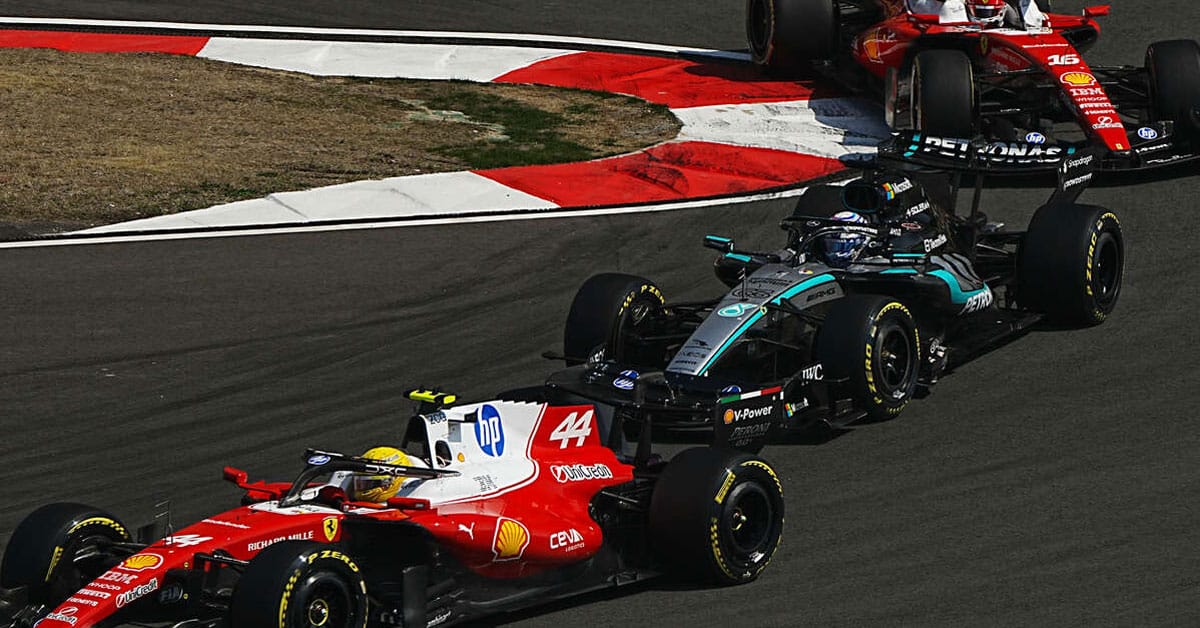
Ferrari has emerged as the closest challenger to Mercedes in the early stages of the 2026 season, with both Lewis Hamilton and Charles Leclerc consistently fighting near the front. However, Mercedes’ advantage, particularly in straight-line speed and energy management, has proven to be a critical differentiator in race conmercditions.
Fred Vasseur: performance gap not limited to engine alone
Fred Vasseur has downplayed the idea that a single technical element, such as internal combustion engine parameters, will define Ferrari’s ability to catch Mercedes. Instead, he has emphasized a more holistic approach to performance development, pointing out that multiple areas must be improved simultaneously.
According to the Ferrari team principal, the introduction of the ADUO system could provide a valuable opportunity to reduce the gap over time. However, he has made it clear that focusing solely on engine performance would be a strategic mistake. Fred Vasseur has indicated that energy management, chassis efficiency, and overall vehicle balance are equally important in determining competitiveness under the 2026 regulations.
From Ferrari’s perspective, the current deficit is most visible in straight-line performance, an area where Mercedes has consistently outperformed its rivals. Nevertheless, Fred Vasseur has noted that the team is making steady progress. Data comparisons from the opening rounds show a gradual reduction in the performance gap, with Ferrari improving from a significant deficit in Melbourne to a much closer margin during the Chinese Grand Prix weekend.
Lewis Hamilton and Charles Leclerc key to Ferrari’s development push
The role of Lewis Hamilton and Charles Leclerc remains central to Ferrari’s efforts to close the gap. Both drivers bring valuable feedback and experience, which are essential in refining the SF-26 package across different performance areas. Lewis Hamilton’s adaptation to the Ferrari environment and Charles Leclerc’s deep understanding of the team’s technical structure provide a strong foundation for development.
Fred Vasseur has stressed that Formula 1 success has always depended on optimizing every aspect of the car, from aerodynamics and tyre management to hybrid system efficiency. In his view, the current situation is no different, despite the increased complexity of the new regulations.
Rather than focusing on a single weakness, Ferrari is working across all performance areas, aiming to unlock incremental gains that, when combined, could bring them closer to Mercedes. The ADUO system may offer a regulatory pathway to accelerate this process, but ultimately, consistent development and execution will determine whether Ferrari can challenge for victories.
Can Ferrari close the gap to Mercedes in 2026?
As the 2026 Formula 1 season unfolds, the battle between Ferrari and Mercedes is shaping up to be one of the defining narratives of the championship. While Mercedes currently holds a clear advantage, particularly in energy deployment and straight-line efficiency, Ferrari’s steady progress and the potential impact of the ADUO system offer hope for a more competitive fight.
For Fred Vasseur, the message is clear: closing the gap to Mercedes will require a comprehensive approach, combining technical development, strategic execution, and the full potential of Lewis Hamilton and Charles Leclerc. If Ferrari can capitalize on regulatory opportunities and continue its upward trajectory, the gap may gradually narrow, setting the stage for a more intense title battle as the season progresses.
Mar 22, 2026Luca Marini
Let other Scuderia Fans know about us


