

Drivers of distress
Heavy workload and burnout emerged as the leading driver of distress, cited by 61% of workers in their top three stressors. Difficult or demanding clients followed at 50%, while inadequate pay and poor management support were each cited by 39% of respondents. One in five workers also pointed to a lack of mental health support at work as a contributing factor.
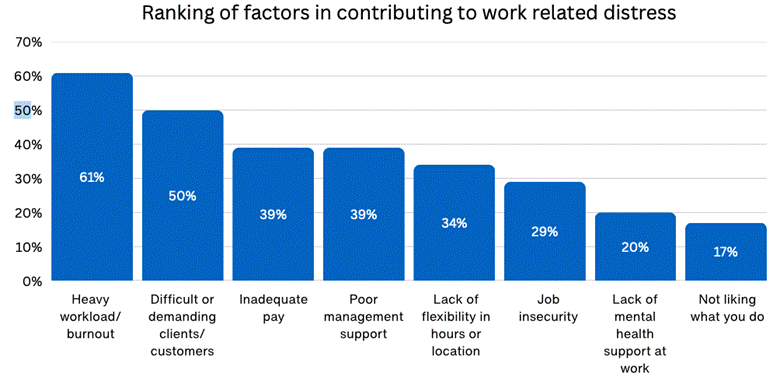
Source: Suicide Prevention in Australia
Medium-sized businesses more likely to report distressed workers
The report found that distress levels varied significantly depending on business size, with medium-sized enterprises – those employing between 20 and 249 workers – recording the highest rates of extreme distress at 30%. That figure compares with 19% in small businesses and 15% in large corporations employing 250–499 staff. The report attributed the gap to the structural position of medium businesses, which it described as too large to rely on the informal support of small teams yet lacking the budget and infrastructure of major corporations.
A gap between policy and practice also emerged as a central theme. While many workplaces maintained formal mental health policies, only 20% of workers said support was strongly encouraged and normalised, and just 15% said it was comprehensively embedded in workplace culture. By contrast, workers who reported no distress were more than twice as likely, at 34%, to say that support was strongly encouraged, suggesting that cultural attitude, rather than policy alone, is the more meaningful protective factor.