
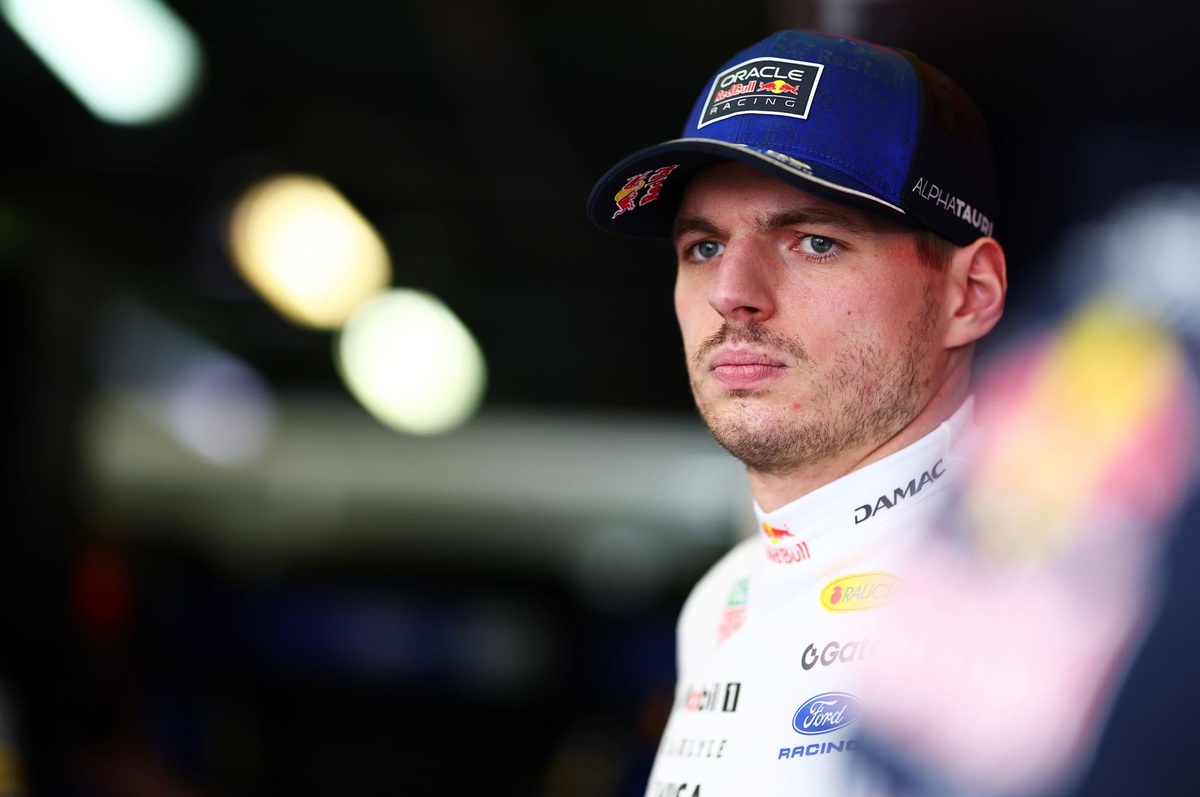
There was nothing shocking about what Max Verstappen said when he appeared in front of the media right after the Chinese Grand Prix. It’s well known the four-time world champion isn’t a fan of the new rules – and you’d have to forgive him for being slightly frustrated after he had to retire from the race due to an ERS cooling issue after 45 laps.
Yet, at least visibly, he wasn’t too bothered or particularly upset. Instead, when speaking about the kind of racing F1 2026 offers, he was composed, but still as blunt as you’d expect him to be.
“It’s terrible,” he countered when Autosport’s Stuart Codling offered him a point of view that looked “a little bit less artificial” in Shanghai than it did a week earlier in Melbourne. “If someone likes this, then you really don’t know what racing is about.”
Read Also:
He was then asked whether he feels F1 decision-makers are as “alarmed” as drivers are: “I think they understand where we are coming from as drivers,” he said. “I think I speak for most of the drivers. Some, of course, will say it’s great because they are winning races, which is fair enough. But if you just speak to most of the drivers, it’s not what we like. I don’t think it’s what the real F1 fans like.”
He made a remark that Kimi Antonelli and George Russell are not too upset about how things are in modern F1, as they are the ones winning – but still chose to speak on behalf of the “real fans” in a rather categorical manner.
“Maybe some fans like it, but they don’t understand racing,” he insisted.
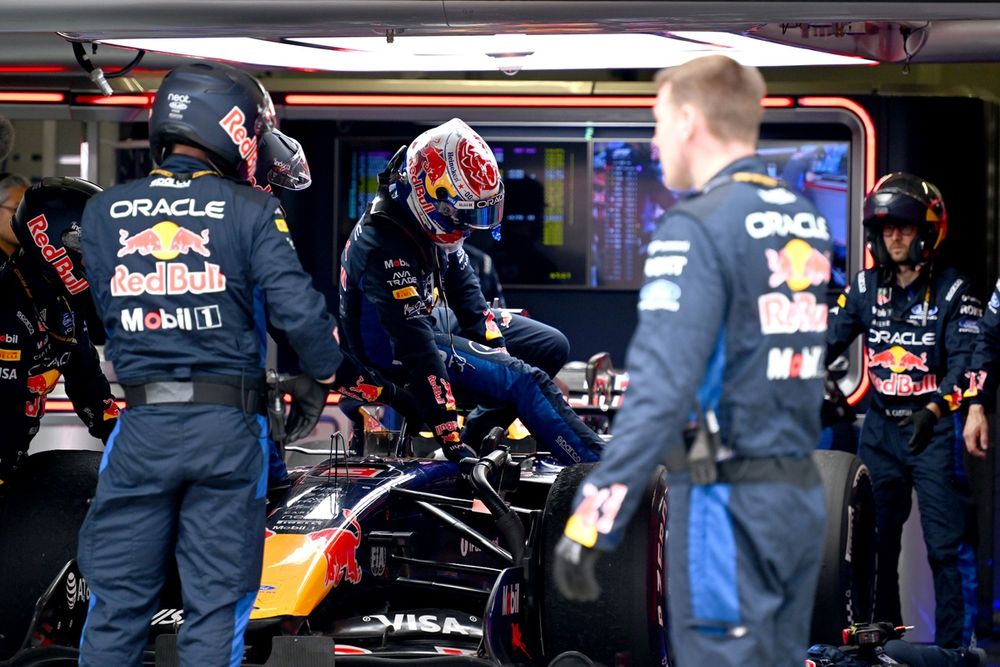
Max Verstappen, Red Bull Racing
Photo by: Mark Sutton / Formula 1 via Getty Images
Yet that still raises a question: Is he actually right in such a statement? And who, ultimately, defines what real “racing” is?
As someone who voiced his concerns about the future – now present – of the sport, Verstappen is probably the one who has earned the right to be critical. Not only because of his status as one of F1’s leading drivers, but also because he has always been consistent. It was Verstappen who spoke about the issues F1 is currently facing with its new formula years ago – and he isn’t changing his tone week in, week out, unlike some other drivers (hello, Lando, how are you today?).
Millions of casual viewers tune in to watch the World Cup, many of them not knowing what offside is
Max is someone who is always happy to speak his mind openly and honestly – and that post-race media briefing in Shanghai was no different. Unlike others, he isn’t shielded from the press by PR: during these encounters, it’s Verstappen who decides when to leave – and he always waits until all questions are asked, without needing an assistant to drag him away by the sleeve. That’s something – among dozens of other qualities – he deserves credit for.
If there’s one driver who has earned the right to deliver the shared drivers’ point of view on F1 2026, it’s Verstappen. And his voice should be heard.
But isn’t he missing – in his line of thinking, or at least in his wording – one vital aspect: why should someone who enjoys the racing in 2026 automatically be labelled as someone who doesn’t “understand racing”? And who should be the ultimate judge of the value of the product F1 produces?
Formula 1 isn’t only a sport, after all – it’s also a global entertainment business. That’s not a recent development – it has been the case for decades, as the world’s leading racing series competes in reach with events like the Olympics and the FIFA World Cup.
They all thrive on their audience, and they all – whether we like it or not – have to adapt to it.
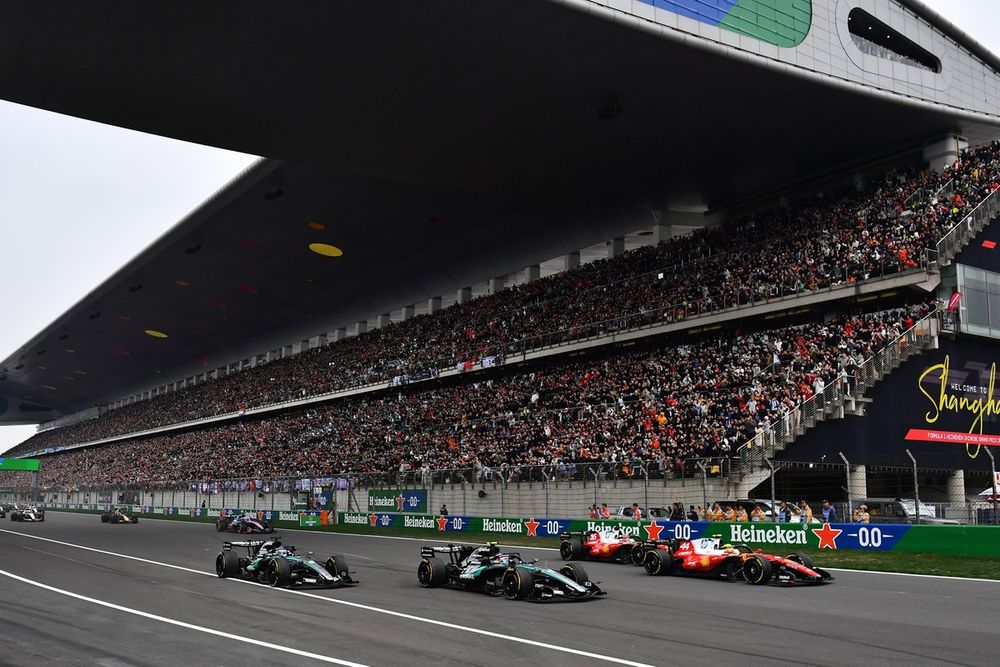
Charles Leclerc, Ferrari, Lewis Hamilton, Ferrari, George Russell, Mercedes, Andrea Kimi Antonelli, Mercedes
Photo by: James Sutton / Formula 1 / Formula Motorsport Ltd via Getty Images
In today’s world, the success of a sport is directly linked to its commercial appeal. And while the athletes – whether Olympians or footballers – are the main actors and attractions, they are still part of that ecosystem. They are not the clients.
No one would spend vast sums building stadiums and sporting venues, sometimes turning cities into construction sites for years, if it were only for a group of talented individuals to gather and determine who can jump further or drive faster than others. It happens because thousands buy tickets to witness it firsthand, and millions more tune in via TV, phones, tablets, and whatever else.
And they, the millions, are the clients – even if they have no idea how a battery in an F1 car delivers power to the wheels, or even how an internal combustion engine works. Millions of casual viewers tune in to watch the World Cup, many of them not knowing what offside is. It would be ridiculous for someone like Lionel Messi to tell them not to bother. To accuse the audience of “not understanding” is a rather strange position for professional sport.
Some of the overtakes (if not most) in Melbourne and China looked very different from what we’ve been used to in recent years. What has already been labelled as yo-yo racing is something entirely different – and yes, perhaps, also somewhat artificial. But who defines what overtakes should be? Must they always happen at the end of a straight, under braking? And if so, when did that become the definition of “real racing”? Tazio Nuvolari or Juan Manuel Fangio might have had very different views on that.
Motorsport, by its nature and complexity, has always evolved more than something like football. Yet the essence of racing has remained the same: it is about the combination of driver and machine, and the goal of completing a race distance faster than the others. The surrounding factors have changed – the rules, the technology, the format – but that core remains true today: the best car and driver combination wins.
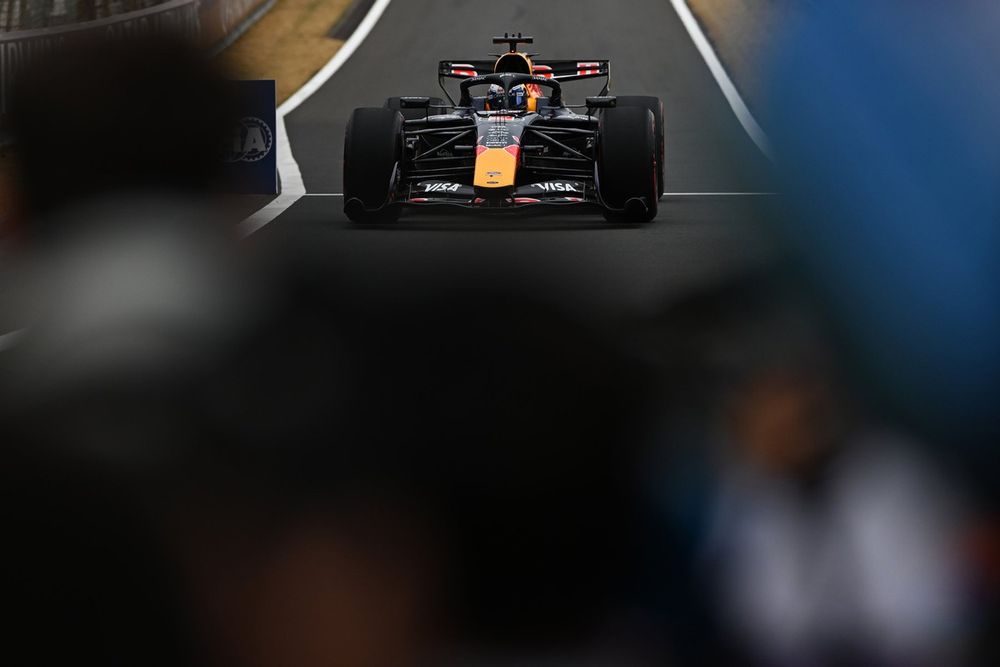
Max Verstappen, Red Bull Racing
Photo by: Guido De Bortoli / LAT Images via Getty Images
Ultimately, what drivers may want Formula 1 to be could turn out to be very different from what the audience actually embraces. A high-downforce, flat-out driving style with qualifying laps from start to finish may not produce as many overtaking opportunities as the flawed energy-management formula we have now.
Would that be “real racing”? And would it be worth watching?
It’s the second question that is arguably more important.
It is the appeal to a mass audience that makes Formula 1 what it is – with drivers themselves being beneficiaries of that commercial success, driven by the need to shape the product in a way that resonates with viewers. They wouldn’t be flying private around the world to race these cars if F1 were not such a successful global entertainment business.
What is clear, though, is that those watching should come first. And telling them they are “wrong” for enjoying it doesn’t quite feel right
Verstappen is not only a great driver – he is also one of the strongest ambassadors for the core values of racing within that entertainment environment. But making the audience feel wrong for enjoying the current product may only make it harder for the sport to find the right direction, as fans are inevitably influenced by the views of its biggest stars.
A true Verstappen fan might now even find themselves questioning why they enjoy something their idol so clearly dislikes.
The underlying question, then, is simple: what does Formula 1 exist for? For drivers to enjoy it, or for the audience – including those who may not “understand racing” in the same way drivers do?
There is probably an ideal version of Formula 1 – one that satisfies drivers while delivering great racing for fans. What we have now may not be that. But that only highlights how difficult it is to strike the right balance, if it is possible at all.
What is clear, though, is that those watching should come first. And telling them they are “wrong” for enjoying it doesn’t quite feel right.
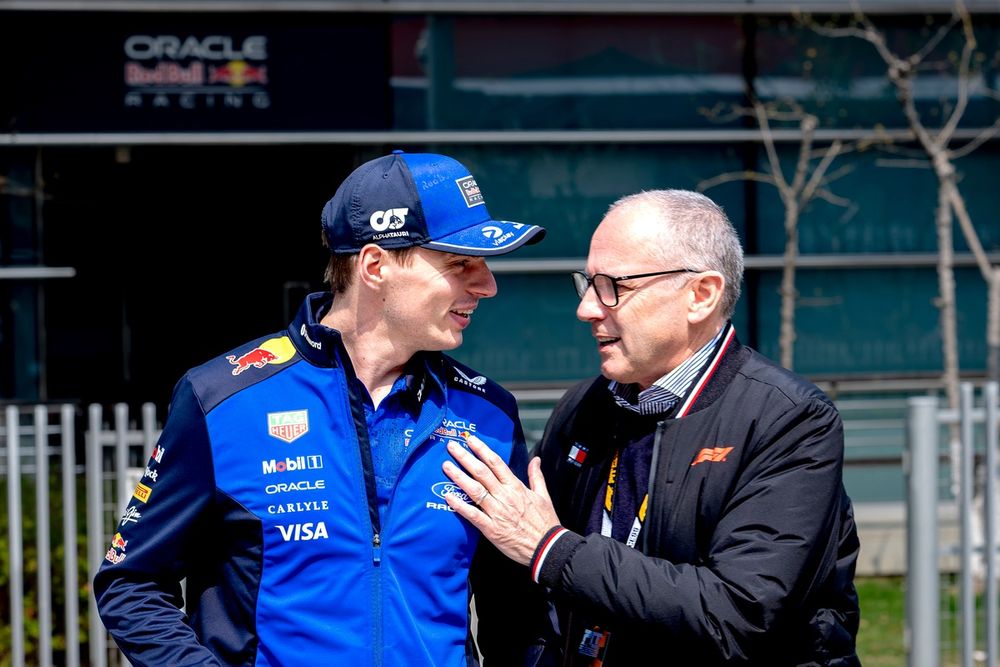
Max Verstappen, Red Bull Racing, Stefano Domenicali, CEO of the Formula One Group
Photo by: Marcel van Dorst / EYE4images / NurPhoto via Getty Images
We want to hear from you!
Let us know what you would like to see from us in the future.
– The Autosport.com Team