
The ACT Legislative Assembly has voted against a motion from the Canberra Liberals to introduce 50 cent public transport fares as the cost of fuel rises.
Members first debated the motion before agreeing to an amended version from ACT Transport Minister Chris Steel, calling for the government to consider offering free public transport for concession card holders.
It also calls on all party leaders and independent members to write to the prime minister in relation to reducing the fuel excise and requesting federal funding for free or low-cost public transport.
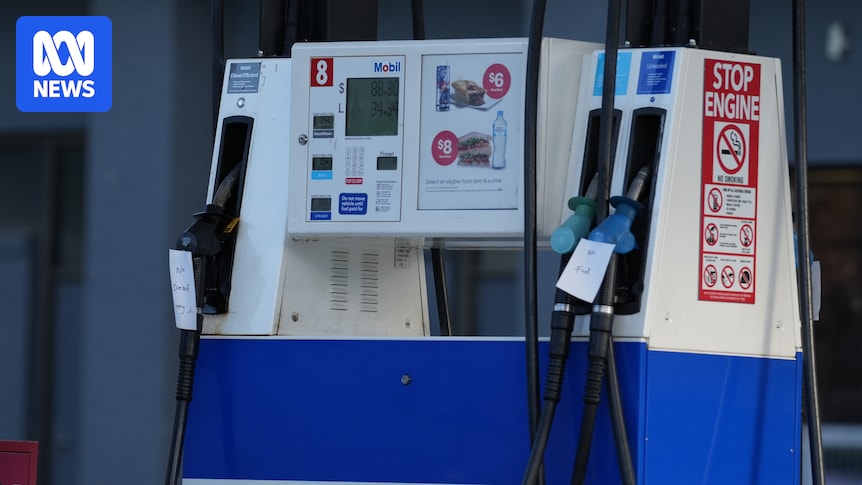
In addition to high prices, signs reading “no fuel” have been seen at some petrol stations around the city in recent days, as conflict in the Middle East continues to impact fuel exports.
Canberra Liberals leader Mark Parton said fuel was an unavoidable cost for many Australians, particularly those in outer-metropolitan and regional areas.

Canberra Liberals leader Mark Parton says the government should cushion the impact of fuel prices on consumers. (ABC News: Joel Wilson)
“Let’s start a public transport revolution here,” Mr Parton said.
“Which yes, will involve some cost, but will hopefully get us to a period where we have more regular users of the public transport system.
“The government has spent billions on public transport in the last decade and has barely moved the dial in regards per capita usage. This measure will not cost billions, it’ll cost less than $3 million between now and the end of the financial year.”
The assembly also voted against an amendment from the ACT Greens to make public transport free during the fuel crisis.
Focus on improving services, Steel says
As negotiations over the motion were underway earlier on Tuesday, Mr Steel said action had already been taken to ease the cost of public transport.
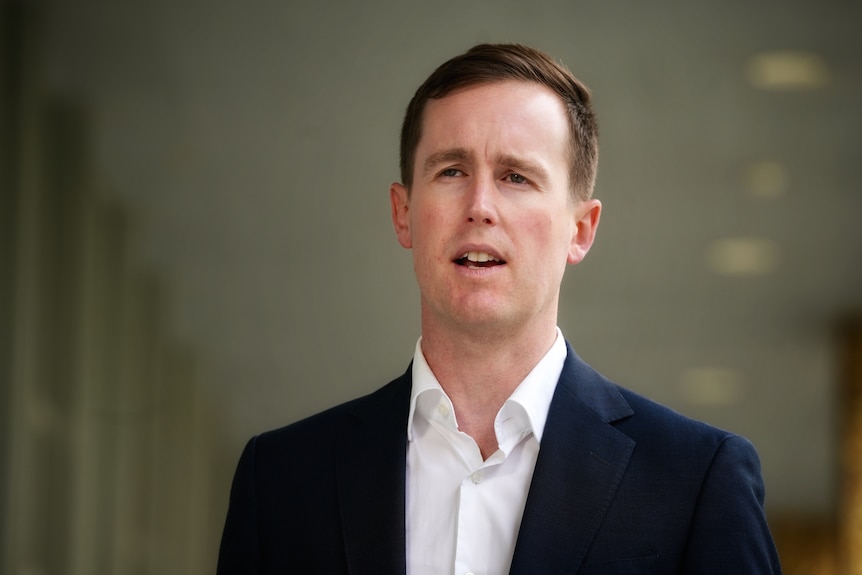
ACT Transport Minister Chris Steel says their focus is on improving bus services. (ABC News: Toby Hunt)
“The ACT government froze public transport fares for five years and so they remain really affordable as an option for Canberrans to avoid the increasing cost of fuel,” Mr Steel told reporters.
“We know that many Canberra households are facing pressure, with rising fuel prices.
“Our focus is on improving public transport services to make sure that the service remains usable for more Canberrans and we’ve brought reforms to the election to increase the frequency of services, which we know is a key driver for people getting on to public transport.”
The cost of diesel has risen to more than $3 in parts of the ACT and surrounds, while unleaded remains above $2.40 at a number of locations.
As the federal government grapples with the evolving crisis, Mr Steel said the ACT government was also looking at “what we need to do in our budget to minimise the impact”.
A ‘chance to change people’s behaviour’
While Labor minister Tara Cheyne described the idea to reduce fares to 50 cents as “fanciful”, Mr Parton said the situation was a “chance to change people’s behaviour”.
“We want to help people in the cost of living crisis, but let’s also finally get some people to just move over that threshold and say, ‘You know what? I haven’t been on the bus for 15 years, I’m going to try it’,” Mr Parton told ABC Radio Canberra.
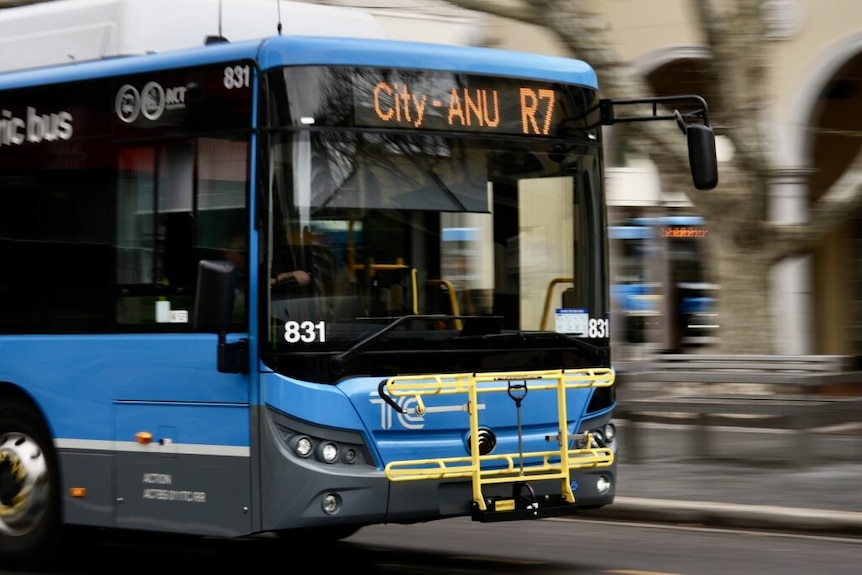
Canberrans are being encouraged to use public transport more often amid a surge in fuel prices. (ABC News: Callum Flinn)
The opposition had wanted the fare reduction to remain in place until the middle of the year.
But he said the public transport network’s capacity also needed to be balanced.
“If we had everyone jumping on board tomorrow, we would have completely full buses around the clock,” he said.
“But for those that want to use it, it’s there and it’s already very affordable, especially compared to filling up a tank for $170 that I did the other day, and things have gone up since.”
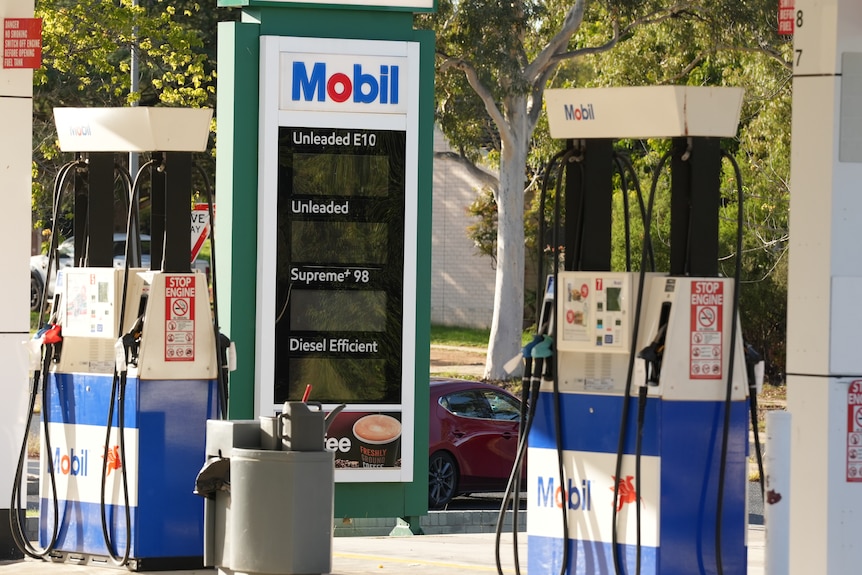
Some petrol stations have run out of petrol and diesel entirely. (ABC News: Stuart Carnegie)
Earlier on Tuesday, Mr Parton conceded it would cost the territory to reduce fares but it would be a “relatively small hole” in the budget.
“This is a genuine cost of living crisis which is exacerbated by this Middle East scenario,” he said.
“And I think it’s up to governments to cushion members of the public because it’s tough.”‘I welcome full buses’
ACT Greens MLA Andrew Braddock said greater public transport use would be beneficial in a variety of ways.
“I welcome full buses because it means less congestion on our roads, less emissions, and households saving thousands of dollars in transport costs.”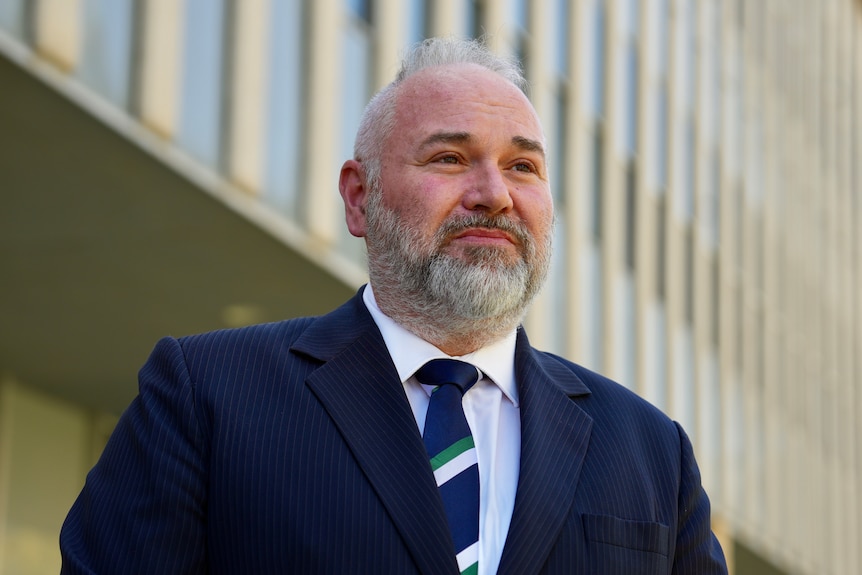
ACT Greens MLA Andrew Braddock says greater public transport use will prompt improvements to the network. (ABC News: Callum Flinn)
Mr Braddock said reducing fares would “take the pressure off demand for fuel”.
“It’s the billion-dollar gas companies who profit off this crisis and pay less tax than Australians pay for beer. That’s why my amendment calls on the federal government to impose a 25 per cent tax on gas exports.
“It’s time that Australia’s big gas corporations pay for better transport options and not everyday people struggling to put food on the table.”
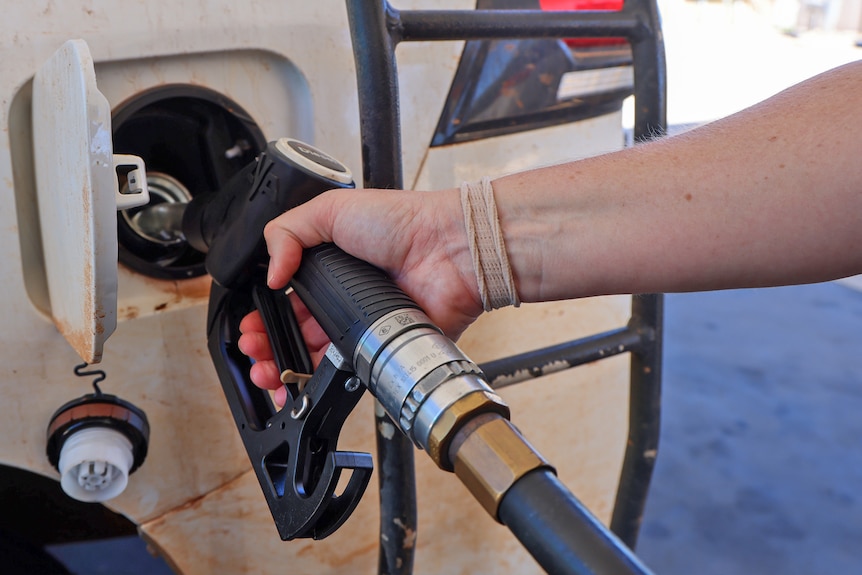
As petrol prices rise, Canberrans are being encouraged to use alternative transport options. (ABC News: Chris Lewis)
Working from home a ‘short-term pivot’
Greg Harford from the Canberra Business Chamber said fuel prices were already impacting behaviour around the city.
“We’ve definitely seen a bit of a drop-off in people coming into the city over the last few days,” he said.
“I think people are being pretty cautious around the cost of fuel, and that’s obviously not good for businesses that are relying on that foot traffic coming into the city or indeed the town centres.”
Mr Harford said while it was better for many people to come to the office to encourage team morale and support businesses, working from home was a “short-term pivot” during what were “unprecedented” times.
“A short-term pivot to working from home, I think, isn’t going to have a massive impact in the short term,” he said.
“But if this situation prolongs itself and becomes a long-term working from home position, then that is going to have real impacts on businesses here in the city, but also in the town centres.”
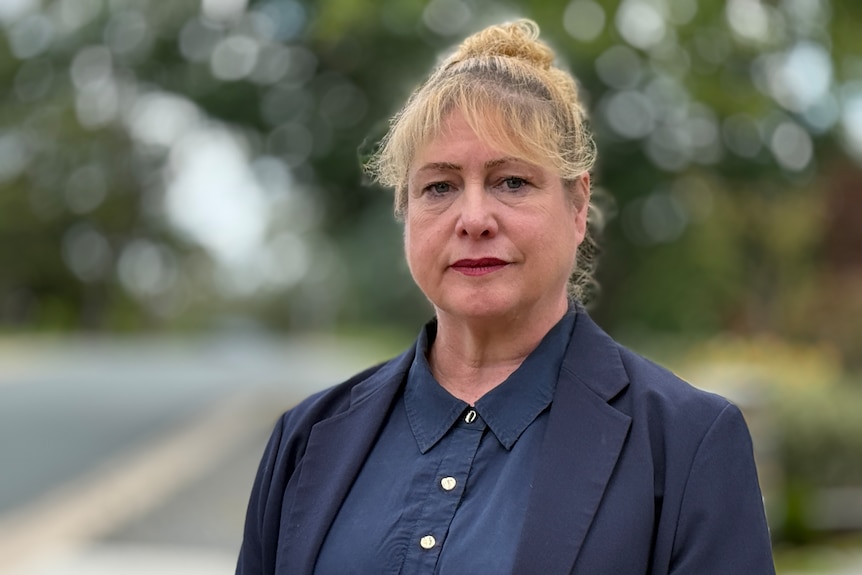
Beth Vincent-Pietsch, president of the Community and Public Sector Union, says workers should apply to work from home. (ABC News: Toby Hunt)
Community and Public Sector Union president Beth Vincent-Pietsch said her message to public sector workers was that they had secured “fantastic” working from home provisions in the enterprise agreement.
“They have nation-leading access to working from home and we’re saying that people should, if they want to and they’re in a position to do so, apply now for working from home so that they can have those savings,” she said.
“We’ve seen working from home become really normal, very much the norm for most workers, so it’s become a really standardised practice.”