
On stage, with a guitar in hand, Kesh Fernandez reconnects to a “missing part” of himself.
In Haven22 — alongside partner Jules Gabor — he’s found purpose in creating a space where young people can produce their art and tell their stories.
They’ve held queer proms, theatre performances, and youth gigs.
The organisation came about after seeing a lack of places to participate in Darwin’s music and arts scene.
It’s something he wishes he had when he most needed it.
When even owning a guitar was out of reach.
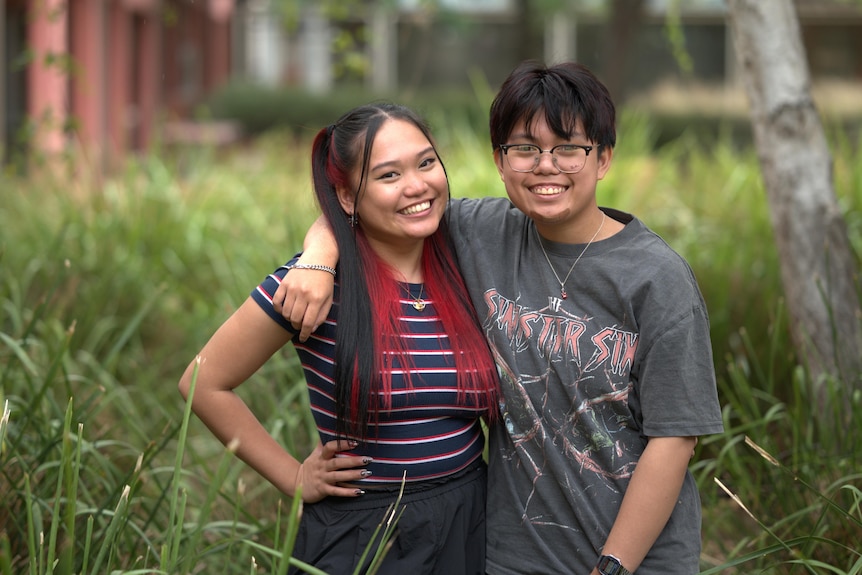
Jules and Kesh are creating an art project to empower young voices in Darwin. (ABC News)
Raiyn finds a similar joy inside the classroom.
Working as a teacher’s aide in a school-based apprenticeship, she wants kids to see they “deserve the world”.
In doing so, she hopes to be the adult she looked for at their age.
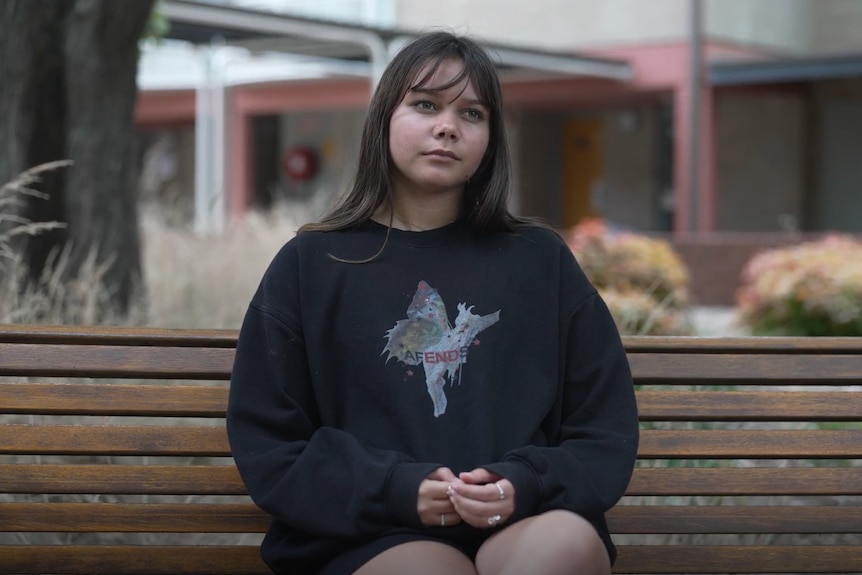
Raiyn lost her home after bushfires in 2019. (ABC News: Leah White)
The pair’s bright and determined personalities stand in stark contrast to the stereotypical portrait of homelessness.
But, in reality, home for them once meant spare bedrooms, couches, or motel rooms.
Family violence, a worsening housing crisis and poverty are all key contributors to a rising youth homelessness emergency.
People aged 12-24 make up almost one-quarter of the reported homeless population, with 43,226 people under 25 years of age seeking homelessness support in 2024-25.
Stories like those of Kesh and Raiyn suggest that the number is likely higher, with hidden homelessness remaining largely under-reported.
But their stories also lay bare the hopes of young people facing homelessness — an ambition to be more than a statistic.
Teenage life ‘stripped away’Support for young people and familiesThe Butterfly Foundation: National helpline 1800 ED HOPE (1800 33 4673), 8am-midnight (AEST/AEDT), 7 days a week ReachOut Australia: Confidential online peer support for young people and online resources for wellbeingHeadspace: Centres in each state and territory or check out eheadspace for online supportThe Kids Helpline: 24-hour support on 1800 55 1800Lifeline: 24-hour support for all Australians on 13 11 14
After fleeing an unsafe home, Kesh moved into four houses over six months.
It meant sleeping on strangers’ couches or paying what little rent he could afford with a casual job.
The teenager — who should have been enjoying his final moments of year 12 — was instead plunged into uncertainty.
“Where do I go from here? What’s next for me?” Kesh, now 20, remembers feeling.
“At the same time, I was figuring out how I was going to survive my exams, how I was going to take all the work that I’d done in my previous high school years so that I could get to a position where I could actually graduate.
“It was a really dark time for me.”
Kesh found himself growing up faster due to the financial and emotional strain. (ABC News: Leah White)
While his schoolmates planned trips to Bali, his own world became fixated on money.
Concerns beyond his age, such as affording food, were persistent.
“How can I make more money so that I can become more stable and I feel like I can rely on myself more?” Kesh says.
“Those were the questions that were going through my head.
“I feel like all the normal things that you do when you’re a teenager — that was stripped away from me.”
Even music — his one lifeline — became harder.
Young couple find shelter in a caravan after being left homeless
Saving up for a guitar became one of his biggest goals.
“I had to keep my possessions very minimal because I didn’t have the capacity to carry a lot,” he says.
“I couldn’t decorate my room in case they told me I had to leave the next day, or in the next hour or so.
“And more times than not, that happened.
“They would say ‘oh my family’s coming over, you can’t stay in this room anymore’ … or ‘the rent you’re paying isn’t enough’.
“Every day was a waking nightmare of ‘am I going to have to leave today?'”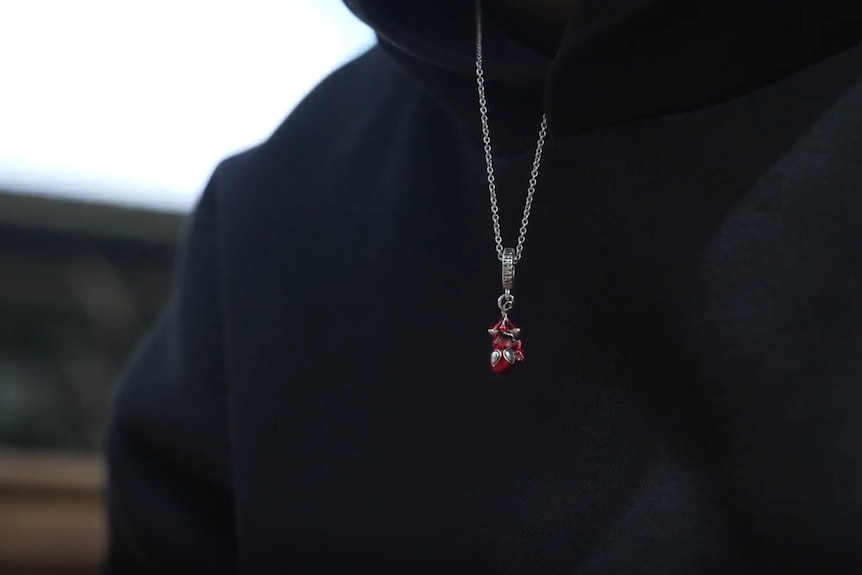
Kesh said he found comfort in counselling hotlines that helped him talk out his experience. (ABC News: Leah White)
‘Just me against the world’
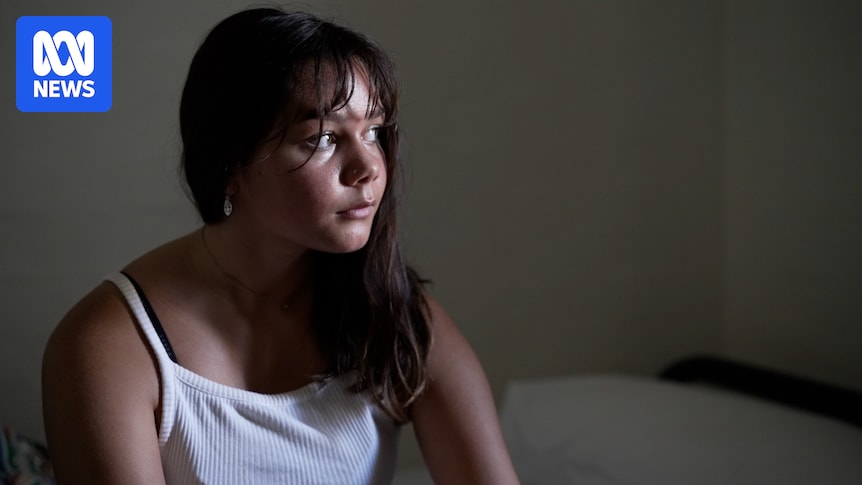
The Cobargo bushfires burnt down the home Raiyn was living in with her family.
That was six years ago.
Since then, she’s couch-surfed and house-hopped.
But what she remembers most is life in a motel.
The two small bedrooms, a cramped kitchen countertop, and her mother washing clothes in the sink.
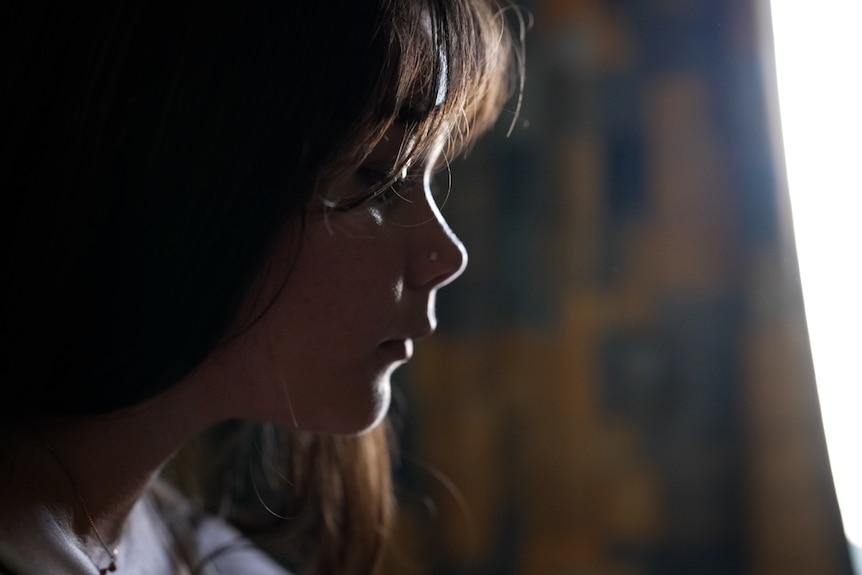
Raiyn tried to tell herself the experience would make her stronger. (ABC News: Leah White)
“It was really difficult because I couldn’t have proper dinners,” she says.
“My class would make food at school, and I would be able to take some home.
“That was my life.
“I woke up, and that was my reality every single day.”Every four days a young homeless person dies. Advocates want urgent reform
Part of her daily routine became looking at real estate online, even though she wasn’t old enough to create her own account on the sites she scanned.
The circumstances were enough to drive her to anger.
“I didn’t understand why I didn’t have the basic needs compared to everybody else,” she says.
“No-one could understand, it was just me against the world.
“That’s exactly how it felt.”
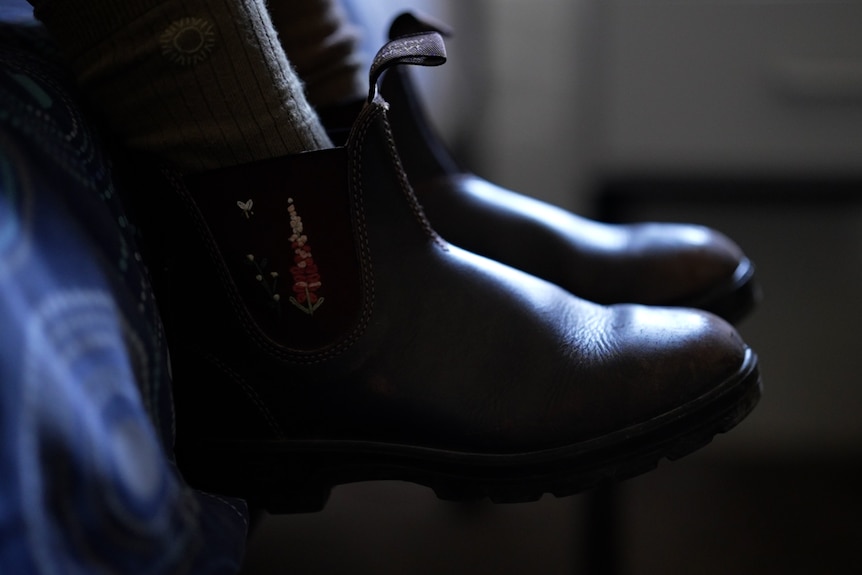
Raiyn says the experience often left her feeling jealous and angry at others. (ABC News: Leah White)
Art, education, and dreaming big
Kesh is trying to move on from his childhood, but the trauma of homelessness isn’t easily undone.
He says he has a place to stay now, but even that doesn’t feel secure.
“I feel like I’ll always be homeless,” he says.
“It was such a significant part of my teenage years that I’ll just carry that feeling along with me no matter where I go.”
One thing he thinks would have improved life during that period was community.
It’s why he started Haven22.
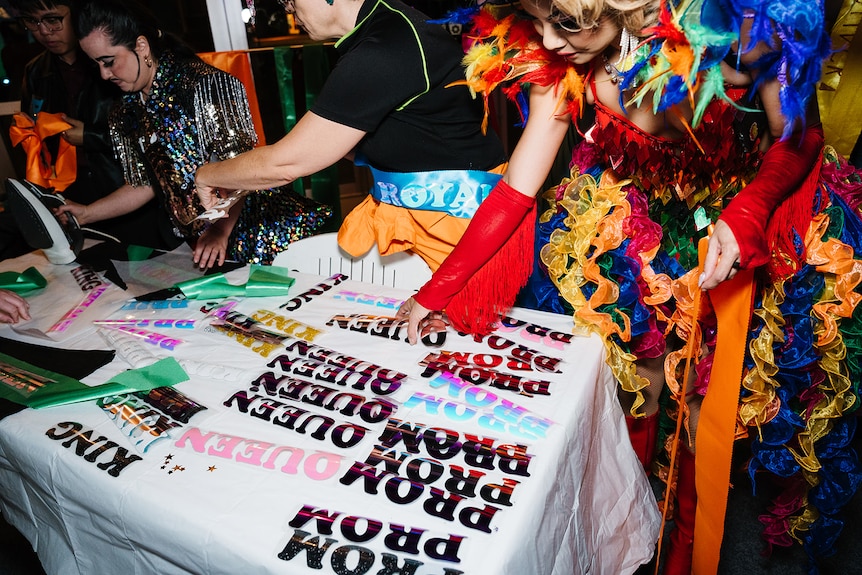
Haven22 held Darwin’s first Queer Youth Prom. (Supplied: Kesh Fernandez)
Since doing so, he’s been able to dream — something that had been put on hold for so long.
“It almost gave me back my home, in a way, because this was something that felt permanent,” he says of Haven22.
“I could rely on it.
“It would be there for as long as I would continue to work on it, and even after, with the impact that it leaves behind.
“Being able to pour myself into something after a period of time where I felt like I had nothing, that was what became everything.”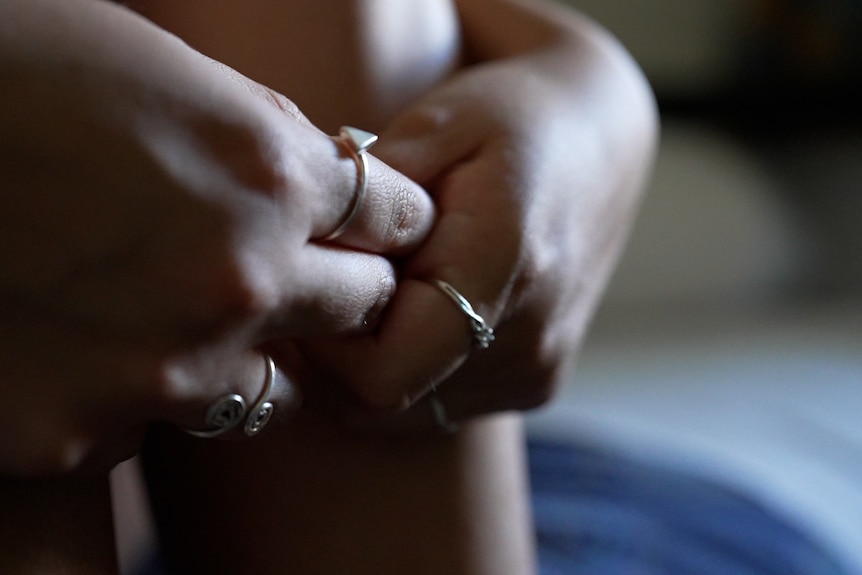
Raiyn says being homeless felt like a burden on her alone. (ABC News: Leah White)
It is hard for Raiyn to encapsulate how homelessness changed everything.
“It used to be just a word to me,” she says.
“You don’t know it unless you’ve lived it.
“It is something that people go their whole lives without experiencing.
“I’m only 17, and I’ve lived six years of it.”
But from here, her plan is clear — go to university and live abroad.
Homelessness won’t define her.
“I just want to go to uni, like every other teen, finish and travel, and have a family,” she says.
“I’m going to live my best life.
“I’m going to pursue everything I want to do.”
The ABC’s Heywire competition is open to all regional Australians aged between 16 and 22.
The annual competition provides a platform for the younger generation, in pockets of Australia that rarely see the spotlight, to “tell it like it is”.
If you are aged between 16 and 22 and would like to find out more about the ABC Heywire Competition, go to the ABC Heywire website.