
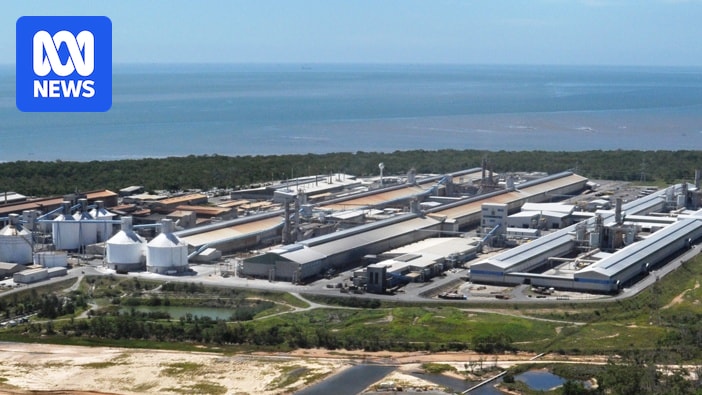
Rio Tinto, the federal and state governments, have struck a landmark partnership to secure the long-term future of one of Australia’s largest aluminium smelters.
Federal Industry Minister Tim Ayres and Queensland Natural Resources Minister Dale Last announced the deal in Gladstone, central Queensland, this morning.
As part of the $2 billion bailout, Rio Tinto will invest in energy and transmission assets at the Boyne aluminium smelter, which is expected to unlock $7.5 billion in investment in the state’s energy grid.
“This is the biggest industrial investment decision in Queensland’s history,” Mr Ayres said.
“This is a ‘future made in Australia’ decision that delivers 3,000 jobs [1,000 direct and 2,000 indirect] in Gladstone and central Queensland, secures investment in this facility, helps us build economic resilience, will push electricity prices down.”
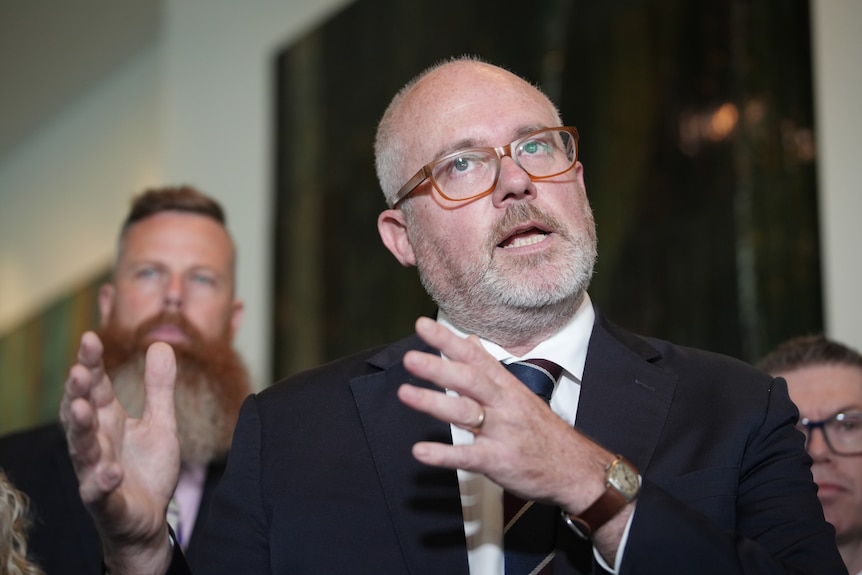
Tim Ayres announced the landmark deal in central Queensland this morning. (ABC News: Matt Roberts)
Under the deal, the state and federal governments will invest $1 billion each to help the struggling metal refinery — Australia’s second-largest aluminium smelter — transition to renewable energy over 10 years to 2040.
Rio Tinto chief executive Jérôme Pécresse said this would continue aluminium production beyond the completion of its current power contract in 2029, through to at least 2040.
“This transformative partnership with the Queensland and Australian governments will ensure Boyne Smelter remains internationally competitive, strengthens the Australian aluminium sector for the future and supports the transformation and decarbonisation of the Queensland energy system,” he said.
“As fossil fuels become increasingly expensive, this investment, combined with the power purchase agreements we have already signed, positions Boyne to be among the world’s first aluminium smelters underpinned by solar and wind power.”
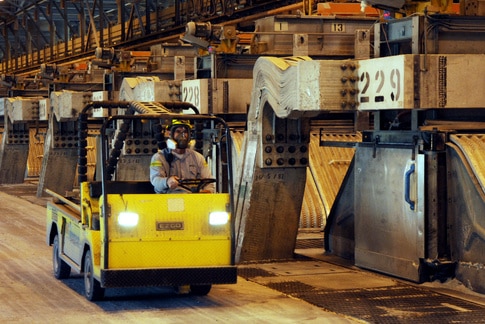
Rio Tinto is the majority owner of Australia’s second largest aluminium smelter at Boyne Island, near Gladstone in central Queensland. (Supplied: Boyne Smelters)
Mr Last said the multi-billion-dollar partnership supported the transition to long-term competitive power for the smelter and manufacturing jobs in central Queensland
“At a time when supply chain disruptions are being felt across the globe, this investment is needed now more than ever to safeguard Queensland’s sovereign manufacturing capabilities, and to build national resilience and international competitiveness,” he said.
“Only in Queensland can we mine, refine and smelt to produce one of the world’s most versatile and ubiquitous metals, being aluminium, and we must protect that capability.”
Gladstone Mayor Matt Burnett said it was a significant investment in local industry and provided job security for workers in the region.
“If we were to lose our aluminium industry, it would decimate our local economy,” he said.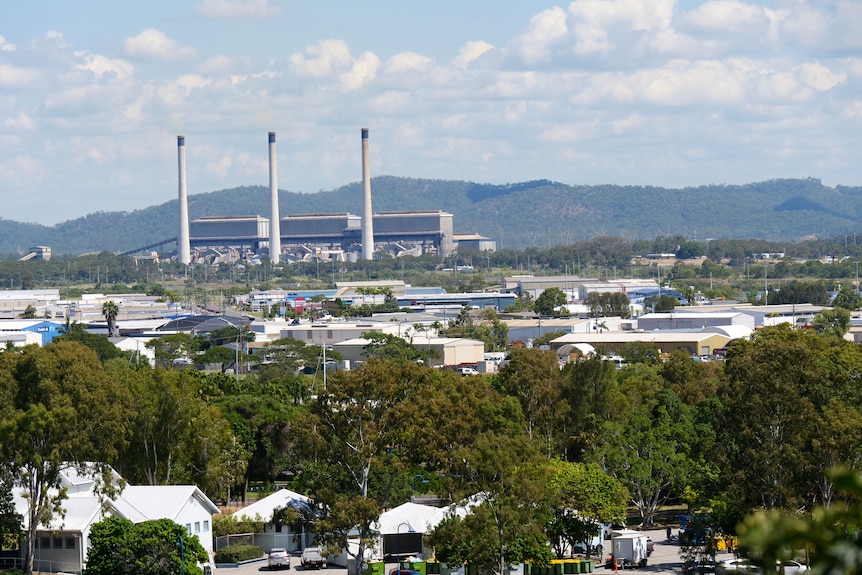
As well as the Boyne smelter, Gladstone has a power station, alumina refinery and major shipping port. (ABC Capricornia: Jasmine Hines)
“A 10-year plan means they’re not just throwing a sugar hit at it, they’re investing over many years to make sure we have long-term secure jobs.”
The Boyne smelter has been operating in Gladstone since 1982.
It refines raw alumina — produced from bauxite ore — into aluminium and then casts the molten metal into products, ready to ship.
Last year, the federal government also helped bail out Glencore’s copper smelter in Queensland, the Whyalla steelworks in South Australia and Nyrstar smelters in Hobart and Port Pirie.