
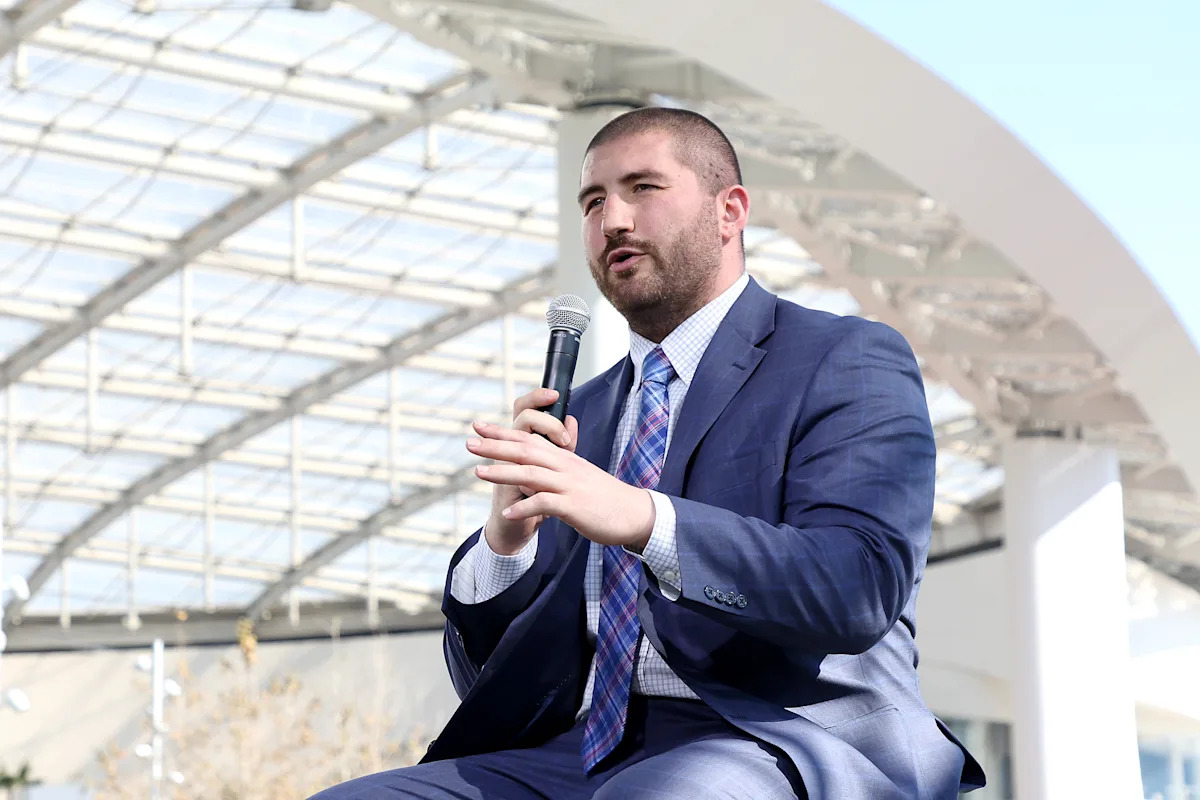
The NFL Players Association’s new executive director has begun to establish his identity in the role.
After a business-focused director followed by a labor and legal-focused director, J.C. Tretter reiterated in interviews Tuesday with The Athletic and “The Pat McAfee Show” that his experience as a player will define, shape and guide his approach to the executive director role.
Advertisement
That will influence when and whether the NFL expands to an 18-game regular season in the coming years; how the NFL navigates debate around grass and turf surfaces; and how the union advocates for players.
Draft your Yahoo Fantasy Baseball team for the 2026 MLB Season
Tretter shared some insight into how he views the conversation surrounding an 18th NFL game.
“I knew how it felt playing 16 games,” Tretter said Tuesday on “The Pat McAfee Show.”
“It’s not like I was rosy playing 16 and now the 17th [was] a question. It is very hard to get through the season. I think everybody that’s played the game understands the physical toll it takes.
Advertisement
“And our job is to make sure that we don’t set our guys up for more physical pain and anguish late in their careers and after they retire. So I think that’s always our job is to protect our players.”
The Green Bay Packers selected Tretter in the fourth round of the 2013 NFL Draft. After three seasons on the depth chart in Green Bay, Tretter went on to five seasons as the Cleveland Browns’ starting center.
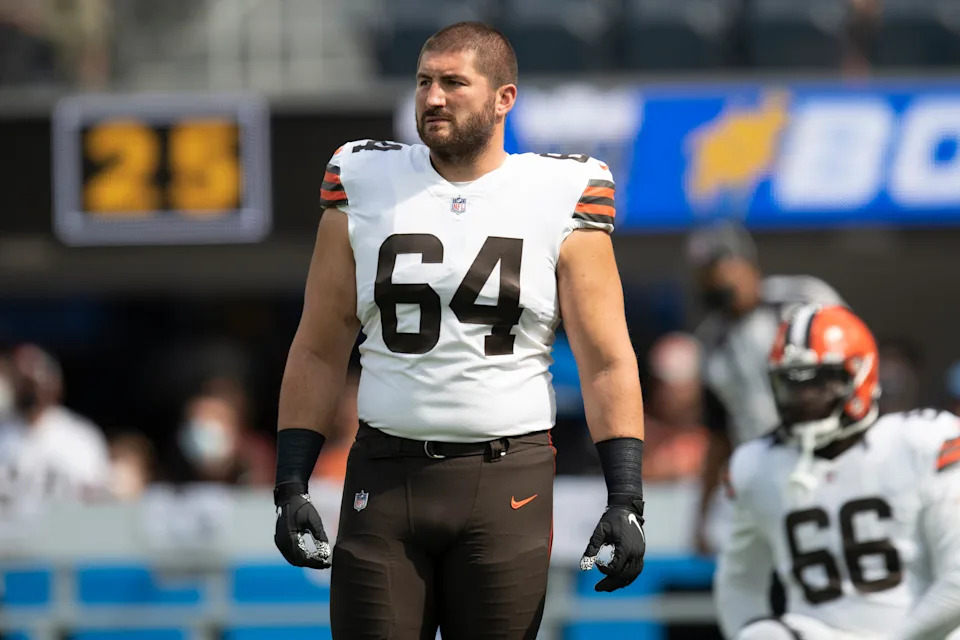
The majority of JC Tretter’s playing days were spent with Cleveland, where he played five of his eight NFL seasons. (AP Photo/Kyusung Gong, File)
(ASSOCIATED PRESS)
The combination of Tretter’s playing background, his nearly five years working for the union as player president and chief strategy officer, and his academic experience studying industrial and labor relations at Cornell helped him win an election that in the fall seemed he would not win.
Advertisement
Less than a year ago, Tretter resigned from his role as chief strategy officer after the executive director whose election he’d overseen resigned. Allegations including expensing strip club visits and burying details of a collusion grievance contributed to Lloyd Howell’s resignation after just two years on the job.
Investigations by two independent outside law firms found no evidence Tretter engaged in wrongdoing nor withheld information from players, union president Jalen Reeves-Maybin said Monday in an article published to the union site.
“In the end, I wouldn’t be in this job if what was said about me was true — [I] would be disqualified,” Tretter said. “So [I was] able to stand in front of those guys and talk about those issues, talk about the things that have happened and then move forward.”
Tretter also told players he was recommitted to fighting for them after saying in July that he had no interest in being, nor being considered for, the executive director role.
Advertisement
The NFL’s executive committee did not endorse Tretter as its favorite candidate in last week’s meeting of player representatives, a source with knowledge of the meetings confirmed to Yahoo Sports.
The 11 executive committee members each ranked the finalists publicly before the players voted. None of the three candidates got a majority (six of 11) of first-place votes, the source said. Tretter received the second-most first-place votes among candidates.
As player president, Tretter worked with union and league officials to negotiate COVID-19 protocols that kept the season intact as other sports leagues missed games. He also developed and executed the NFLPA’s “report card” surveys that gave players an anonymous outlet to evaluate their team facilities, staffs and more. The union executed its fourth round of surveys this past season, though for the first time the PA did not release the results publicly after the league won a grievance ruling barring the public dissemination of the information. ESPN nonetheless obtained the results and published them.
Advertisement
Tretter did not indicate the union would fight the grievance decision but said he would continue ensuring players receive information that he believes helps them make more informed decisions during free agency.
“We’re not allowed to release it publicly, that’s been decided,” Tretter said. “But we’re going to make sure our guys have that information.”
The NFL’s current collective bargaining agreement expires after the 2030 NFL season. But conversations will likely ramp up sooner, the league saying previously it would broach more formal negotiations surrounding an 18th regular-season game and regular-season international slate expansion once the union had installed its next permanent executive director.
When McAfee described money as the most important element of negotiations, Tretter countered: “It’s one of the things. I think health and safety matters, too, but I think money always matters as well.”
Advertisement
That balance could weigh into how the union fights the league surrounding grass vs. turf. With Tretter involved, the NFLPA’s 2023 survey found that 92% of players prefer to play on natural grass to turf. The NFL has countered with data from injuries on grass in recent years.
“The issue behind those numbers is that grass has actually ticked up in injuries, which means we have to make sure we’re having good surfaces,” Tretter said. “We need top-tier grass services and making sure we have performance to keep guys healthy and safe and be able to perform out there.”
The Pittsburgh Steelers said they would upgrade their field surface this spring after players graded their Acrisure Stadium field an “F-,” per the survey results released by ESPN. Pittsburgh weather, as well as the Steelers sharing the field with the University of Pittsburgh football team, have contributed to the regularly uneven and patchy grassy surface.
Expect Tretter to continue to remind current and former players alike that he understands “what they’ve gone through” and knows “what the body feels like after you step away.” Making decisions through that lens, and with varied tactics, will shape the next stretch of league-union relations.
Advertisement
His first official day in the role will be next week on April 1.
“You can’t just be like, ‘I’m going to be a hard-ass all the time and make everything difficult’ because I think you lose a lot of low-hanging fruit when everything’s difficult,” Tretter said. “Instead, I think working collaboratively as far as you can, and then eventually you have to make a decision of what’s best for your players. If things start coming up that are bad for your players … you have to elevate it to more of a fight and then you see where things shake out from there.
“You want to go as far as you can without going nuclear, but you have to be willing to and capable of going nuclear.”