
The winners of this year’s Australian Urban Design Awards have been revealed, showcasing exemplar urban design projects, leaders and initiatives from across the country.
Established in 1996, the awards aim to platform intelligent and innovative urban design contributions that improve the performance of Australian cities for communities.
In 2026, twelve winners have been named, including nine projects selected from 27 shortlisted entries, and three individuals. In total, this year’s awards program attracted over 80 entrants across its four categories: Built Outcomes, Research and Advocacy, Strategic Design and Policy, and Urban Design Champions.
Chair of the Steering Committee for the Australian Urban Design Awards Katheine Sundermann commented that the results of this year’s awards contrasted somewhat with recent years, which had been marked by planning reform, housing supply and major transport projects.
“This year’s winners reflect a gentler approach to urban transformation: projects rooted in Indigenous and community leadership, ecological landscapes, and the creation of places for people to gather,” she said. “These projects reinforce a simple idea: urban transformation works best when it involves diverse people, responds to the specifics of place, and improves places over time.”
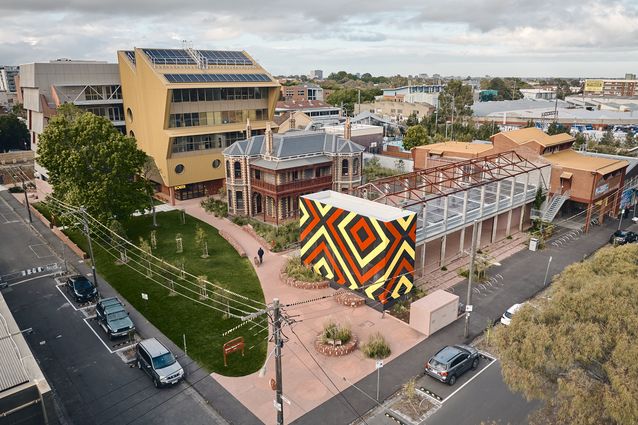
One of three joint winners in the Built Outcomes category, Balam Balam Place in Brunswick by Kennedy Nolan, Open Work and Finding Infinity was praised by the jury as a socially inclusive civic precinct developed with a sensitive approach to the renewal of existing heritage fabric, whose “deliberate sense of incompleteness is a significant strength.”
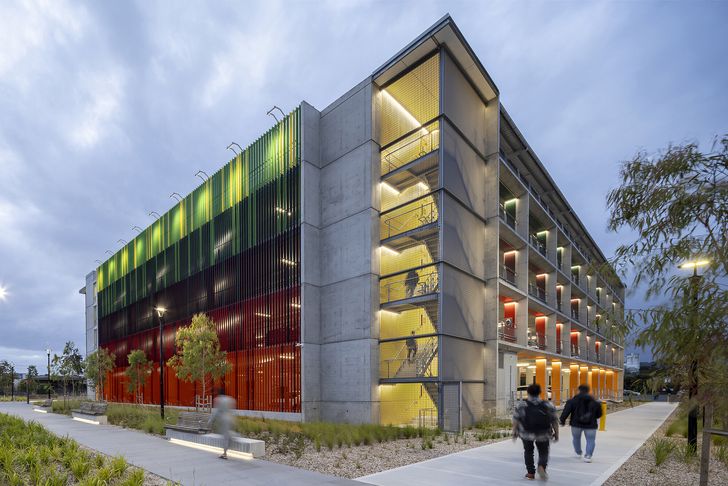
For the jury, the Campbelltown Station Commuter Carpark by Hill Thalis Architecture and Urban Projects, also a winner in this category, reconceived a purely utilitarian building type as an enduring civic infrastructure animated by colour and planting; in their words, “not simply an infrastructure for cars, but a resilient, civic-minded and genuinely optimistic car ‘park’.”
The third winner in this category, St Kilda Pier Redevelopment by Jackson Clements Burrows Architects, Site Office Landscape Architecture and AW Maritime, was described by the jury as “a major piece of civic engineering … that is both resilient and whimsical”, responding to several decades of master planning with ” a vital component of enhanced public realm and consolidated coastal infrastructure.”
The 2026 jury comprised Matt Pullinger, director of Matthew Pullinger Architect; Bill Tsakalos, city architect and director of transformational design at Blacktown City Council; Leigh Woolley, director of Leigh Woolley Architect; and Emily Wong, editor of Landscape Architecture Australia in the Built Outcomes category. The jury for the Research and Advocacy, and Strategic Design and Policy categories included Anna Chauvel of Design and Place, Placemaking NSW, Cameron Caldwell, Member for Fadden, Liberal National Party of Queensland, Ben Driver, senior lecturer in urban development and design at UNSW, and Bridget Smyth, city architect and executive manager of city design and public art at the City of Sydney. Judging the Urban Design Champions category was Elizabeth Watson-Brown, Member for Ryan, Australian Greens; Tina Perinotto, managing editor of The Fifth Estate; Danièle Hromek, director and design lead of Djinjama; Ian Woodcock, senior lecturer in urbanism at the School of Architecture, Design and Planning, the University of Sydney; and Jennie Officer, director of Officer Woods Architects.
The full list of winners are:
Built Outcomes
Balam Balam Place – Kennedy Nolan, Open Work and Finding Infinity
Campbelltown Station Commuter Carpark – Hill Thalis Architecture and Urban Projects
St Kilda Pier Redevelopment – Jackson Clements Burrows Architects, Site Office Landscape Architecture and AW Maritime
View gallery
Research and Advocacy
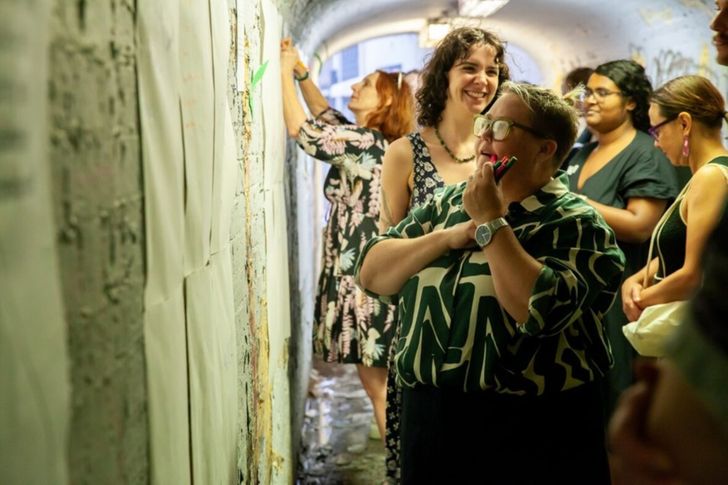
Safer Cities program – Transport for NSW
The Grassening – “The Grassening” Team
ULI Australia, and Department of Transport and Planning (Victoria) Net Zero Imperative: Technical Assistance Panel (TAP) – Street Trees as Essential Infrastructure – The Urban Land Institute (ULI) Australia, and the Department of Transport and Planning (Victoria)
View gallery
Strategic Design and Policy
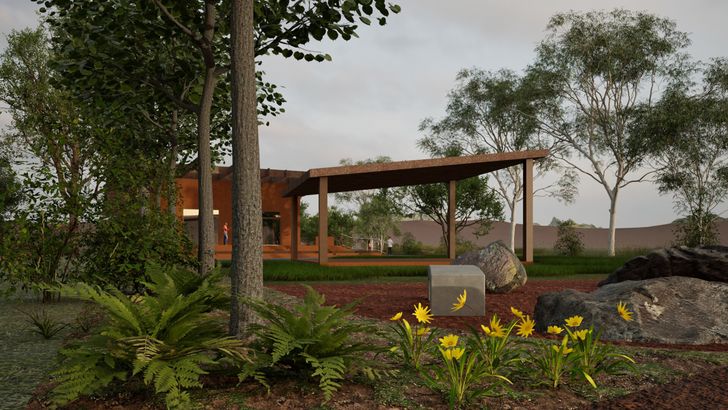
Doomadgee Future Planning Project – Doomadgee Aboriginal Shire Council, Circ Design and Meridian Urban
From Policy to Place: Vincent’s Co-Funded Framework for Town Centre Transformation – City of Vincent and the local businesses of Vincent
NSW Housing Pattern Book – Government Architect NSW with the NSW DPHI Strategic Planning and Policy Team
View gallery
Urban Design Champions
Michael Rayner
Rob McGauran
Shelley Penn AM
The Australian Urban Design Awards are co-convened by the Australian Institute of Architects, the Australian Institute of Landscape Architects and the Planning Institute of Australia, and supported by principal partner Bondor Metecno and supporting partner Dulux.