
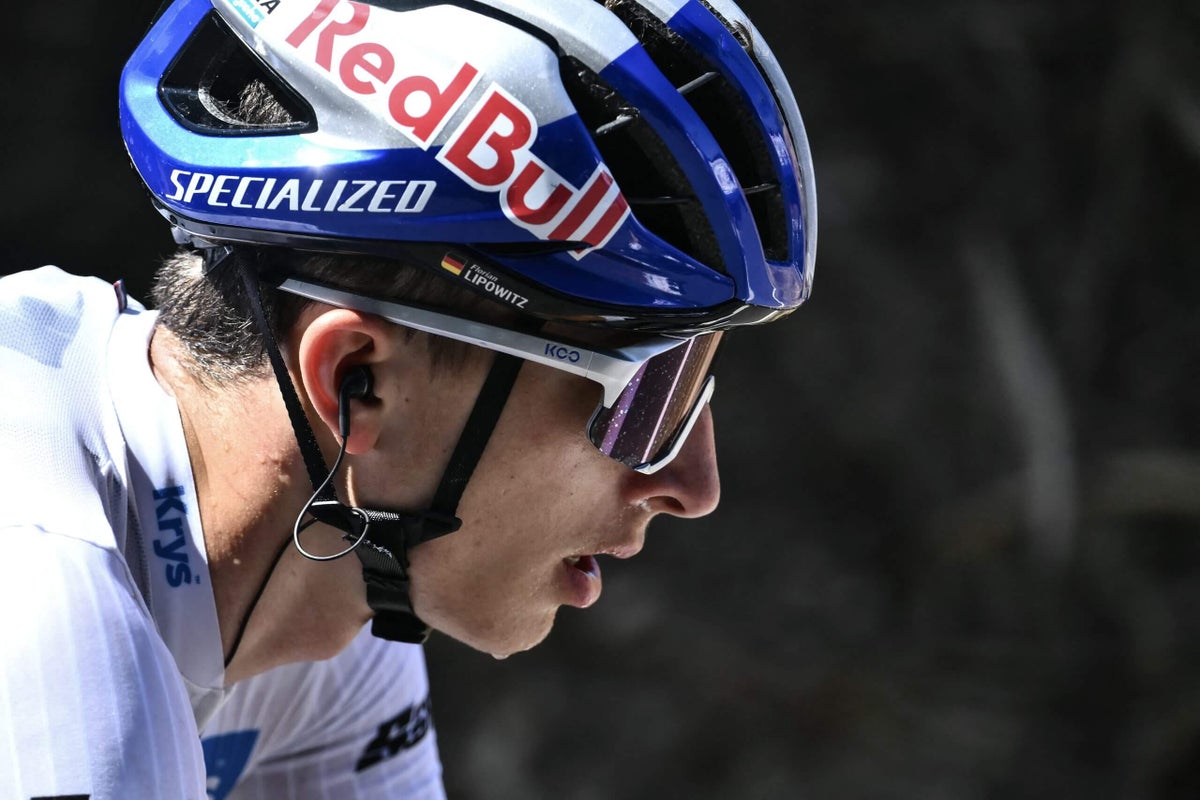
Florian Lipowitz will never forget crossing the finish line at the end of his debut Tour de France last July. That third place was a result beyond his wildest dreams for somebody who was still playing catch-up on two wheels.
Seven years ago, the German was competing in biathlon, the winter sport that combines cross-country skiing with rifle shooting at targets.
“I never thought about being a pro cyclist,” Lipowitz tells The Athletic. “A few years ago, I was watching Tadej Pogačar on TV and thought I would never be able to be at that level. A few days riding with him and (Jonas) Vingegaard, knowing I’m able to hold their wheels, was already motivating and impressive for me.”
Standing on the podium with that decorated duo in Paris was a logical breakthrough for one of the most consistent stage racers in the WorldTour last year.
With second place at Paris-Nice, fourth at Itzulia Basque Country, and third at the Critérium du Dauphiné before that Tour performance, nobody had more fifth-and-above finishes in top-tier stage races than the Red Bull-Bora-Hansgrohe rider.
What was behind Lipowitz’s clear step-up last season?
“It’s always hard to say the reason to make this two or three per cent,” he says. “Last year, I had a pretty good winter and preparation for the races. Having eight, nine weeks of good training without interruption is already a big benefit, and I was at altitude quite a few times.”
As Lipowitz races at a star-studded edition of the Volta a Catalunya this week (March 23-29), it has been impossible for this “quiet guy” to avoid the mental strains of success. While a star rider can follow a prescribed training schedule to get the best out of themselves on the bike, there is no manual for how to handle the rapid rise in acclaim, publicity and attention. That has to be lived to be learned.
“For me, it was definitely hard, especially after the Tour,” Lipowitz says. “Maybe that’s also why, (in) the races after, I was also struggling health-wise, and I got sick quite often.
“I think I was often on the limit with all the stress and outside attention. I was just finished. Now I would say I should have enjoyed that time more, but after the Tour, the expectations were high. I had so much media.”
While more accustomed to those demands now, Lipowitz adds that he’d never had to do such rounds with reporters before or after races; even press conferences were something new for him. “For me, it’s always hard to be in the spotlight,” he says.
Lipowitz only completed one race last season after the Tour de France, the Deutschland Tour, as illness scuppered plans to target the autumn’s Italian one-day races. Mentally, he was motivated to go again, but his body just said no.
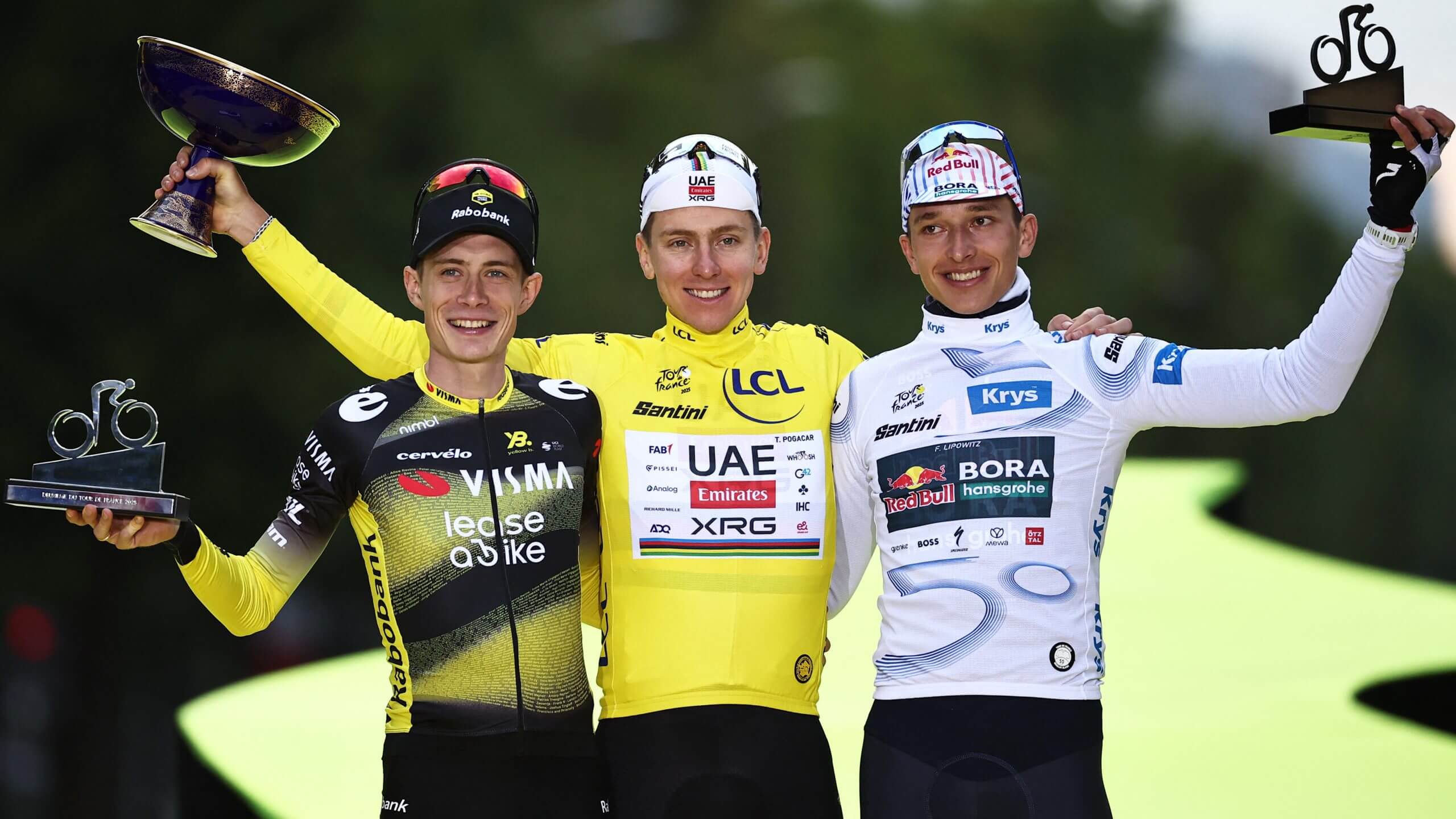
Lipowitz stands on the 2025 Tour de France podium in Paris (Anne-Christine Poujoulat/AFP via Getty Images)
His off-season therefore started earlier than planned, taking eight weeks off the bike in October and November following an operation on his nose intended to prevent recurring infections.
Lipowitz also spent a week and a half cross-country skiing over Christmas and New Year near his home in the Austrian town of Seefeld, enjoying the peace and nature.
Time was when many pro cyclists were contractually forbidden from going skiing, for fear of injury. His employers can trust that Lipowitz is no hack, though.
Growing up in the southern German town of Laichingen, 35 miles from Stuttgart, he started biathlon when he was eight years old. Dreaming of competing in the Winter Olympics, Lipowitz’s heroes were the likes of six-time biathlon Olympic gold medalist Martin Fourcade, Ole Einar Bjørndalen and Magdalena Neuner.
He and brother Philipp, 16 months his senior, went to a ski-focused boarding school in Austria to seek out the best training conditions. Florian won top German domestic events, and Philipp became junior biathlon world champion.
What is more difficult, then — a Tour de France mountain stage with 5,000 meters of climbing or shooting at a distant target with your heart pounding at 180 beats per minute?
“I think cycling is the harder sport. Also, if you have a bad day and a 200-kilometre stage, you have to suffer five hours,” Lipowitz says. “In biathlon, it’s 25 minutes full and you’re done. The races are more like a TT (time trial). Also in (cycling) stage races, day after day, you have to be super-focused.”
His winter-sports dreams were ultimately put on ice by injury: a knee infection as a 15-year-old, which meant he could not train for six months, and ACL (anterior cruciate ligament) damage two years later.
On both occasions, cycling was his savior. It was easier on the knee joint, and he rode regularly, following the path of his father Marc, winning a couple of Gran Fondo races against talented amateurs.
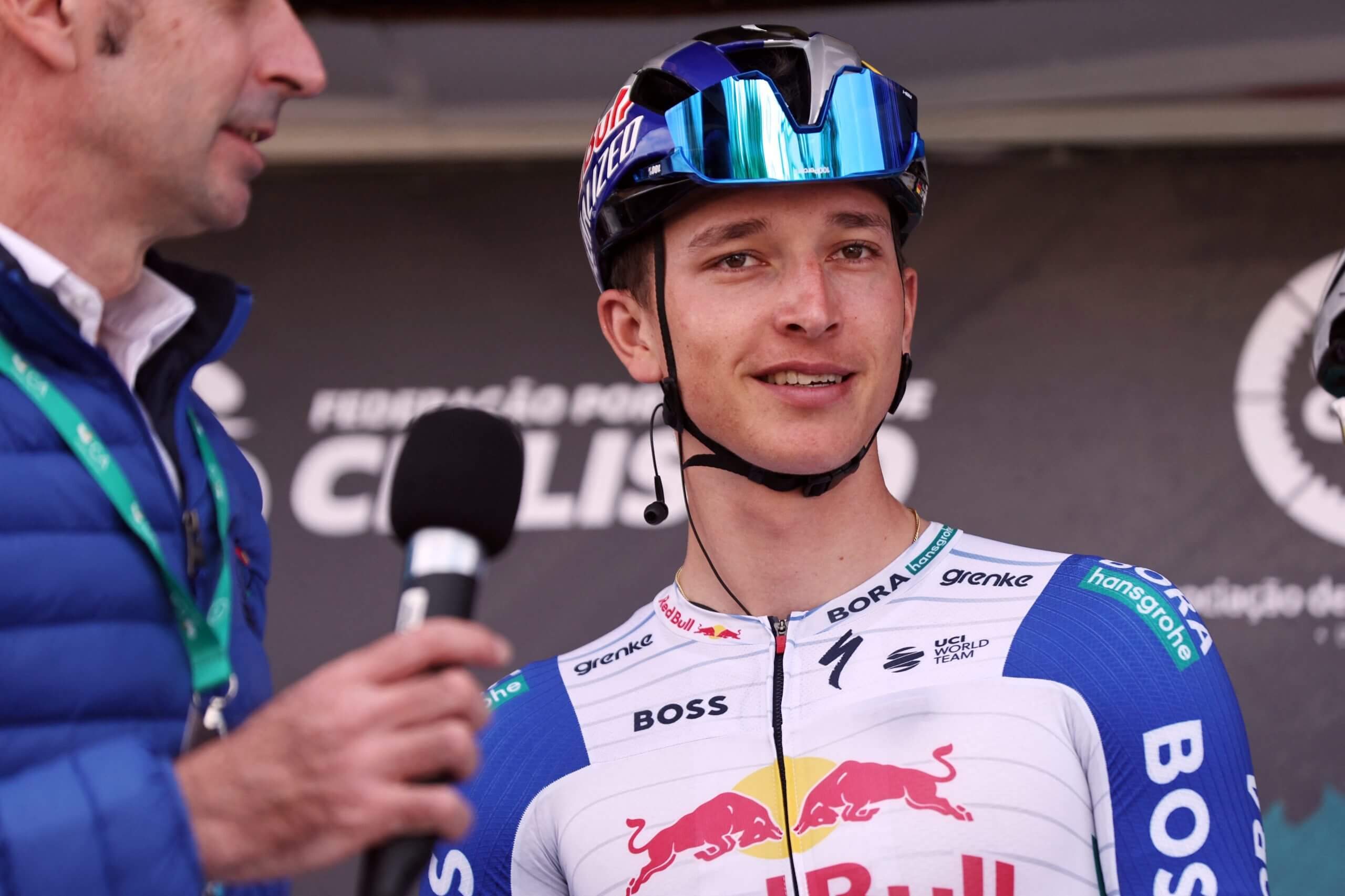
Lipowitz races at the prestigious Volta a Catalunya this week (João Matos / AFP via Getty Images)
In 2020, he made the leap of faith to this new sport, joining Austria’s Tirol KTM, a UCI Continental team on the sport’s lowest tier.
After crashing twice in his first pro race, the Trofej Umag, in March that year, the knock-on effects of coronavirus truncated his racing calendar. “For sure, there was a point I regretted making that decision,” Lipowitz says. “But my parents said, ‘Just try to do the two years you signed for and see what will happen’.”
His 2021 Tour of the Alps performance (18th), racing for the first time with WorldTour teams, gave Lipowitz motivation to pursue his dream and he signed for Bora-Hansgrohe at the end of the following season. Earlier testing with team coach Dan Lorang had shed light on his promising physiological capacities.
After winning the Czech Tour in 2023, Lipowitz went on to finish third at the Tour de Romandie and seventh in the Vuelta the next year. He has since made improvements in leaps and bounds, going all the way to excelling at the biggest race in the sport, but there is still room for more.
“On long, steady climbs, I’m already super-good,” he says. “But climbs which are not so consistent, where you have to go on and off, I have to improve. Also, super-short kickers: that’s also where I struggled a lot in the Tour last year in the first week. There were quite some stages with short climbs, and they just killed me.”
It also speaks volumes that Lipowitz’s overarching memory of the 2025 Tour is one of bloody-minded suffering which showed some tactical inexperience: stage 18 between Vif and the Col de la Loze.
After a long chase to regain the lead group down the penultimate climb, the Col de la Madeleine, he went on the attack. However, he was caught and then passed on the long final climb by the favorites, losing 1:40 to Oscar Onley and almost relinquishing third place overall to his British rival.
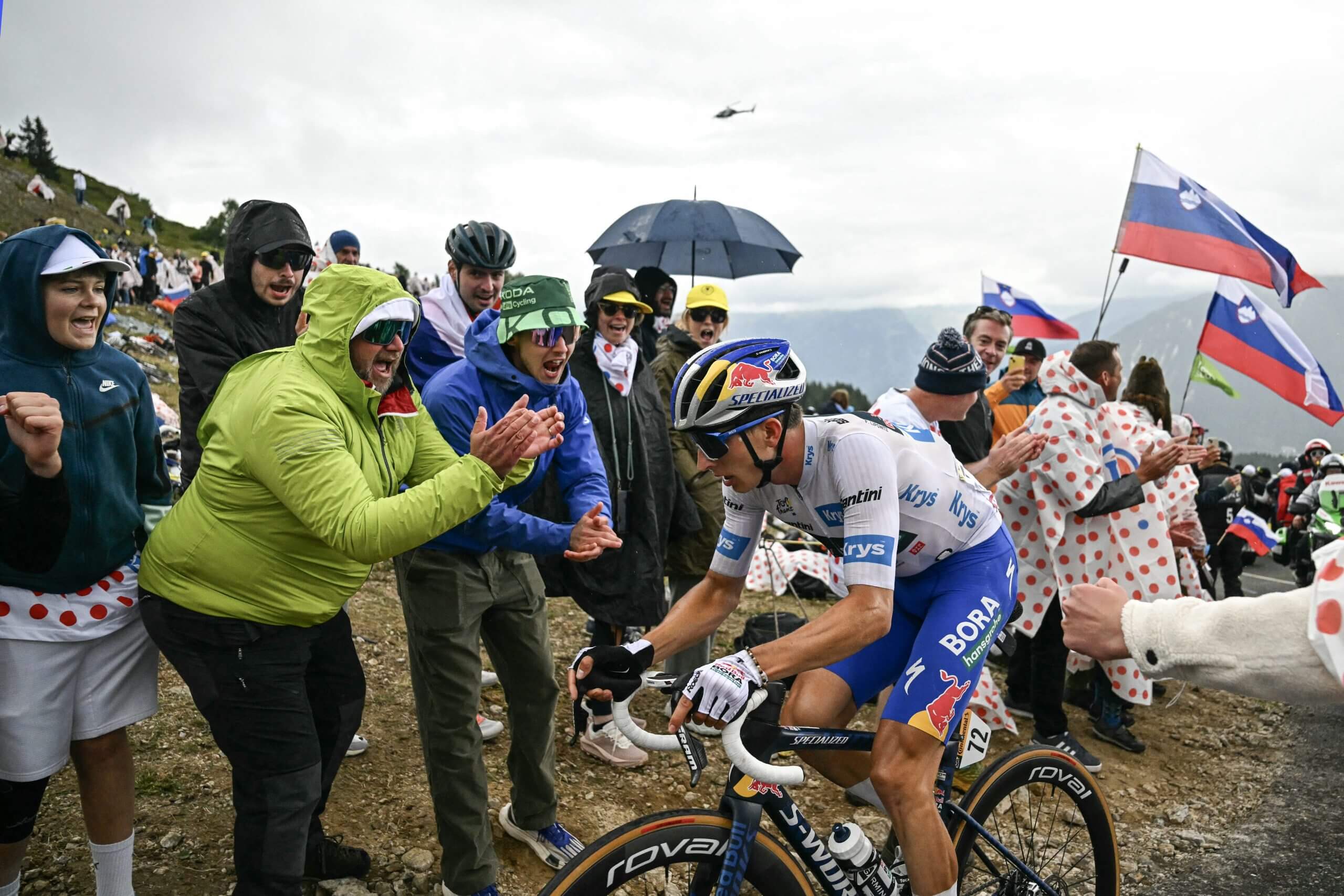
Defending third place at the 2025 Tour de France taught Lipowitz a lot (Loic Venance/AFP via Getty Images)
“It’s not a positive highlight, but I will never forget it. It’s even more in my head than the good days I had,” Lipowitz says.
While his boldness led to lost time, it was an expression of his personality. “I don’t like to just sit in the wheels, not being a real part of the race,” he says. “I think it’s also my style to make some action, even if it’s sometimes a bit stupid. I learned I was still believing in myself for the next day, that I’m able to finish the Tour on the podium after not the best day, to know I’m able to recover.”
It was curious to see Primož Roglič, his co-leader at the start of the race, attacking on both stage 18 and stage 19, chasing a victory in vain. Did Lipowitz want the Slovenian to help defend his third place?
“I was fine with what we did. I mean, I’m also not that guy who will tell… he won the Vuelta four times, the Giro and was super-close to winning the Tour. So, he is someone who deserves to go for a stage,” Lipowitz says.
Over the winter, Lipowitz went on the podcast of a compatriot who has been on that rostrum, done that, got the yellow jersey — and lived through the mania: Jan Ullrich, winner of the Tour de France in 1997 and one of the reasons that Florian’s father got into the sport, along with so many other Germans in the mid-1990s. “Jan was just saying that I should stay as I am and enjoy the sport,” Lipowitz says.
There were already early signs of Lipo-mania when he competed at the Deutschland Tour last summer, with huge crowds showing vociferous support for him.
“After the Tour, I felt like a lot of guys were watching cycling and got on the bike, also in my hometown. I think you could really see the euphoria to start cycling again,” Lipowitz says. “That’s another reason why I am pro. I want to inspire other people. It’s not only about results: we live from the fans, and to give something back to my country is really nice.”
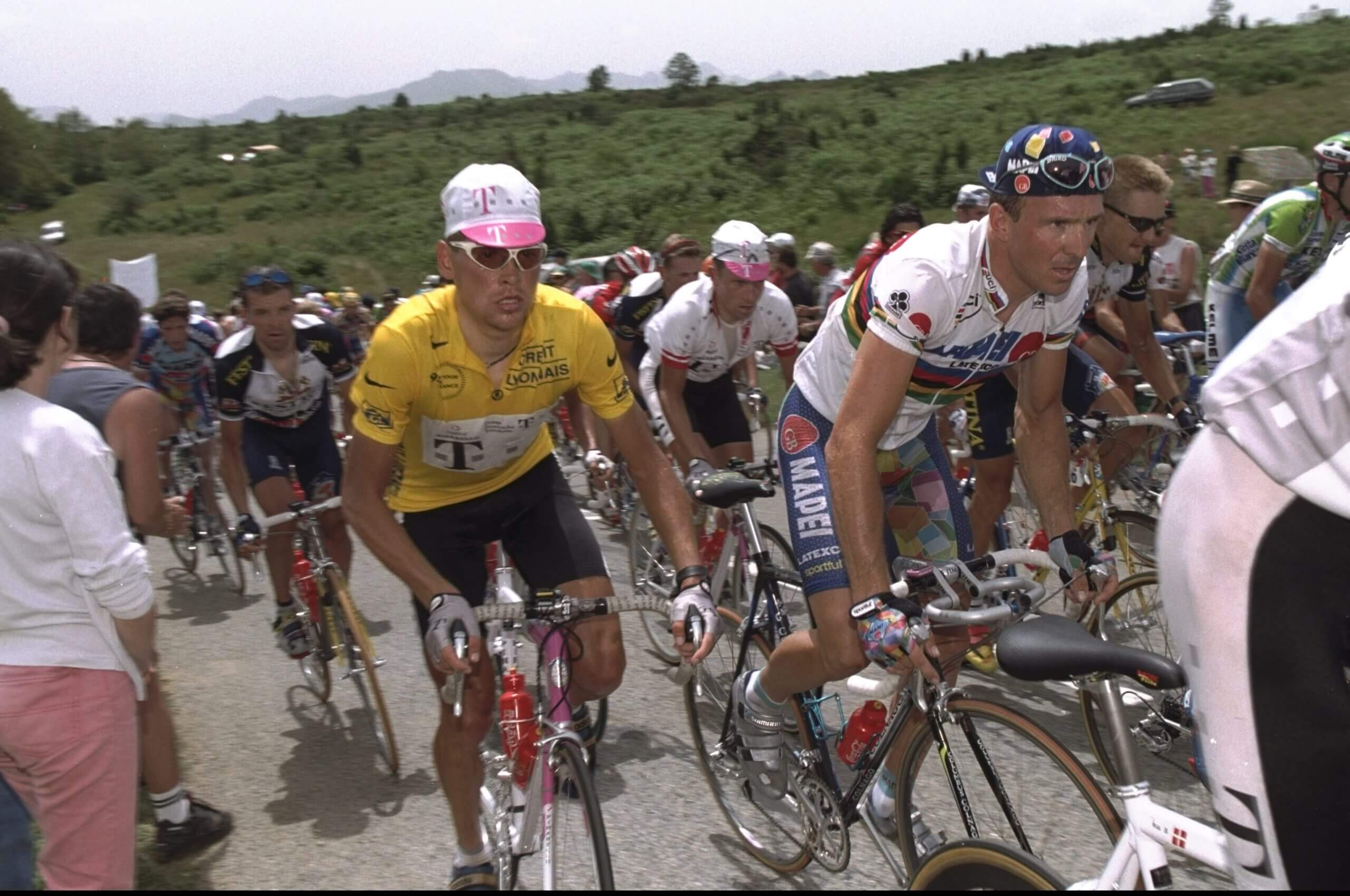
Jan Ullrich in 1997 remains the only German rider to win the Tour de France (Mike Powell /Allsport)
So what’s next for Lipowitz in 2026? “The last three years, I made a super-big step. This year, I would say everyone has big expectations,” he says. “You also can’t improve every year; there are also one or two years where you maybe do one step back. So I will just try and perform like last year. To do that, you already have to make a step.”
To achieve another top-three finish in the 2026 Tour, Lipowitz may have to assert his leadership role in a team that is now even more star-studded after the arrival of Remco Evenepoel.
Lipowitz believes that the Belgian’s presence can help him.
“There are a lot of things I can improve in and learn from him. Also, when it was official he was joining us, the media last year always tried to compare us. I did a pretty good season last year but I think it’s still far off (Evenepoel’s level): he’s world champion, Olympic champion, he won the Vuelta.
“It’s also a good combination: he’s a different type of rider, so I think for the next Tour, if we do everything right, we can really profit from each other and make an even stronger team.”
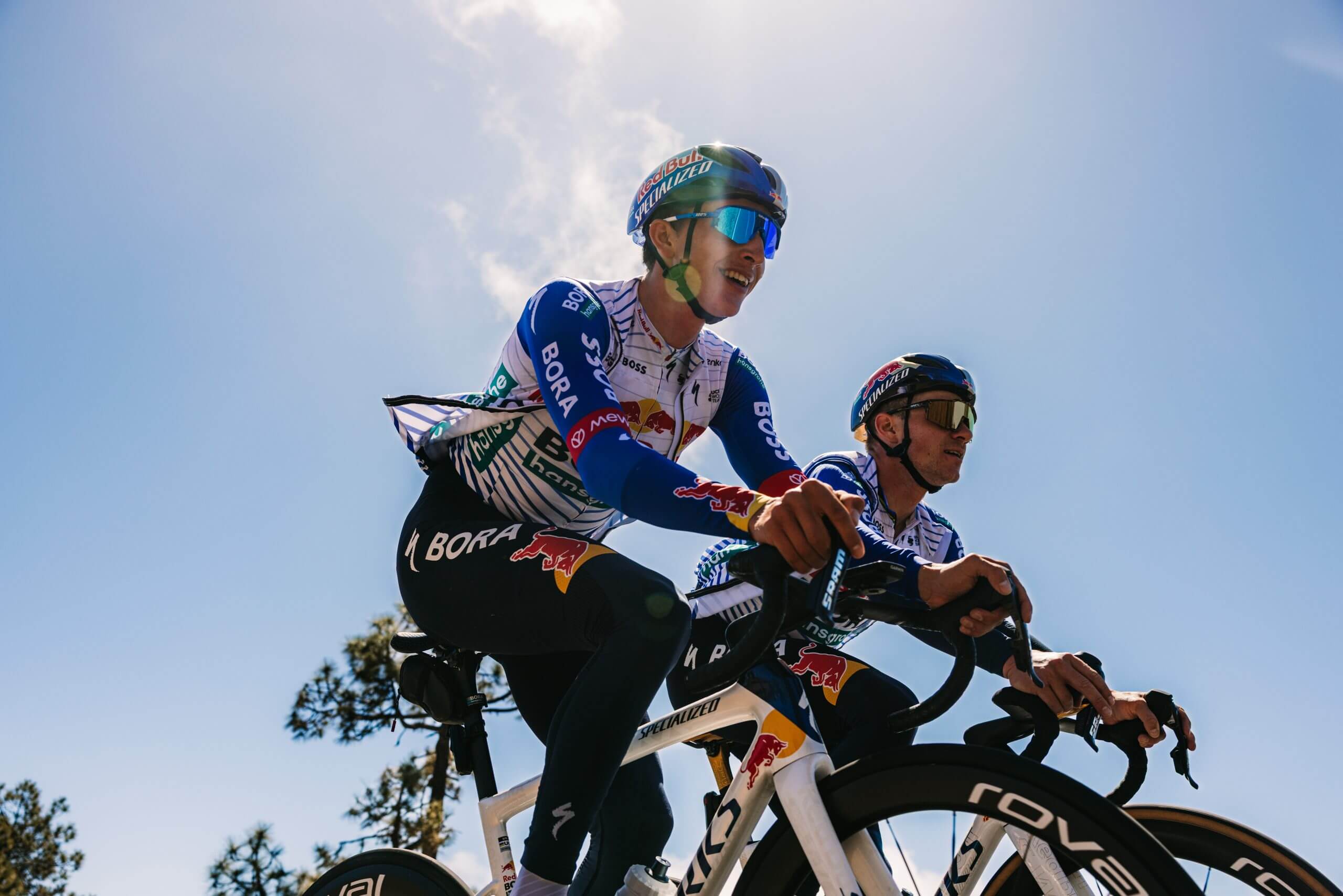
Lipowitz training with Remco Evenepoel earlier this year (Maximilian Fries/Red Bull-Bora-Hansgrohe)
The pair had not trained much together until an altitude camp in Spain’s Sierra Nevada mountains in late February and early March. Bromance in progress, perhaps?
With Evenepoel, Roglič, Jai Hindley, Daniel Martínez and Giulio Pellizzari, there is no shortage of firepower on the Red Bull team. “If we play our cards in the right way, we can really make a difference in the Tour,” Lipowitz says.
However, Lipowitz is under no illusions that their work will be cut out to challenge defending champion Pogačar, a man who has not lost a stage race since the 2023 Tour.
“It will be hard. I don’t even want to think about how to beat him. The goal for sure will be to aim for a podium again,” Lipowitz says, adding moments later, “If it’s me or Remco (who gets there), I don’t care. As long as we are riding as a team and one guy is on the podium, I think we can be super-proud.”