
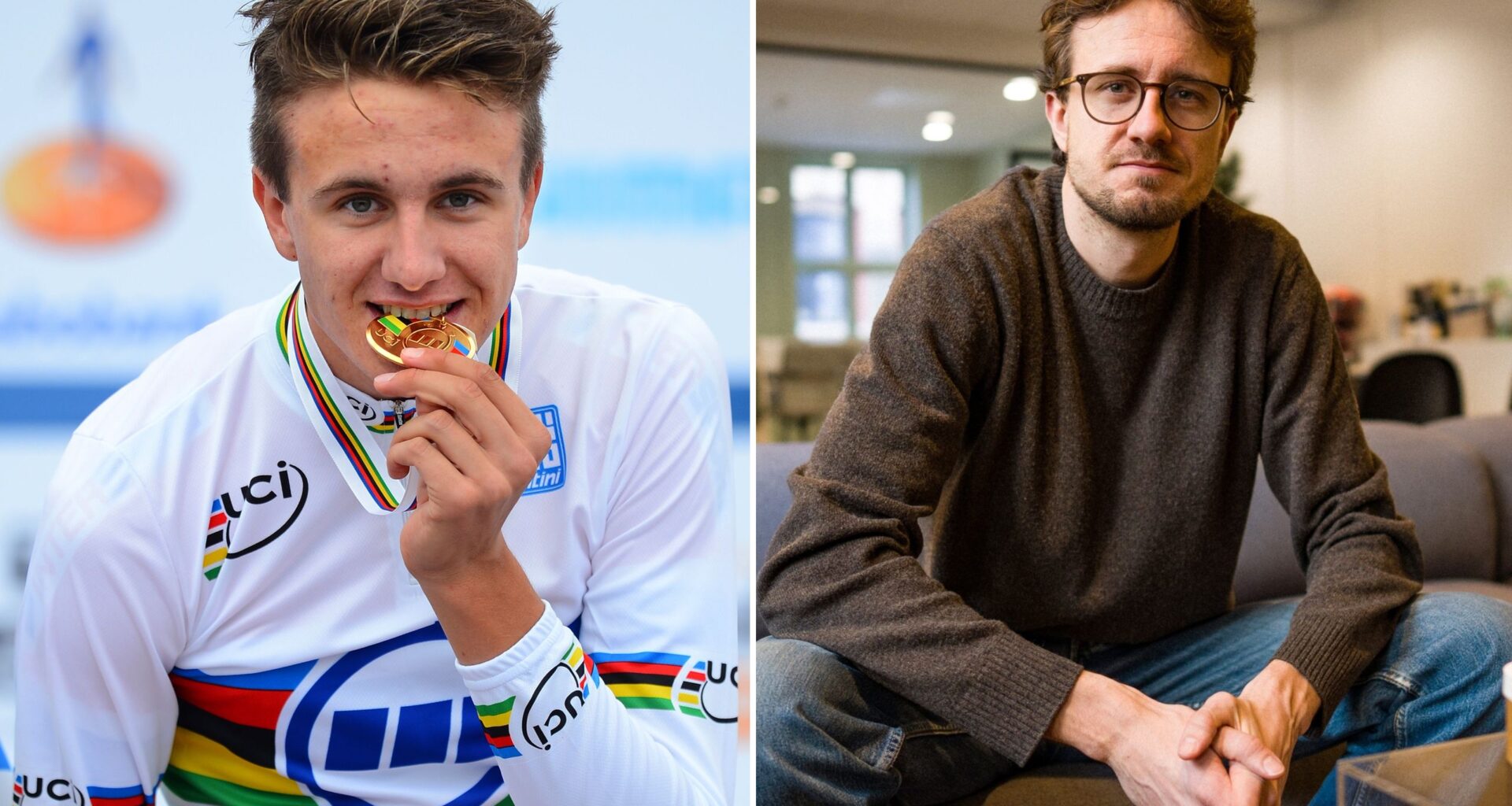
When Oskar Svendsen’s friends dragged him to a science lab on his stag do last spring, they were amused to find the perfect set dressing for their escapade: his name was literally on the wall. The Oslo lab’s poster – a list of all the highest VO2 max scores ever recorded – laid it bare. At the top was Svendsen, beside the year 2012, with a number that still hasn’t been surpassed: 97.5ml/kg/min. “The guy who does the tests said, ‘Seriously, is that him?’” Svendsen laughs, recounting the story. Not only was it him, he was back for a retest – punishment for the stag.
For the past 14 years since that record-breaking test, Svendsen has been a mythic character in elite sport. His tale is well-told, but little understood: the teenage cyclist who redefined the limits of human physiology, and then, two years later, vanished altogether.
Article continues below
You may like
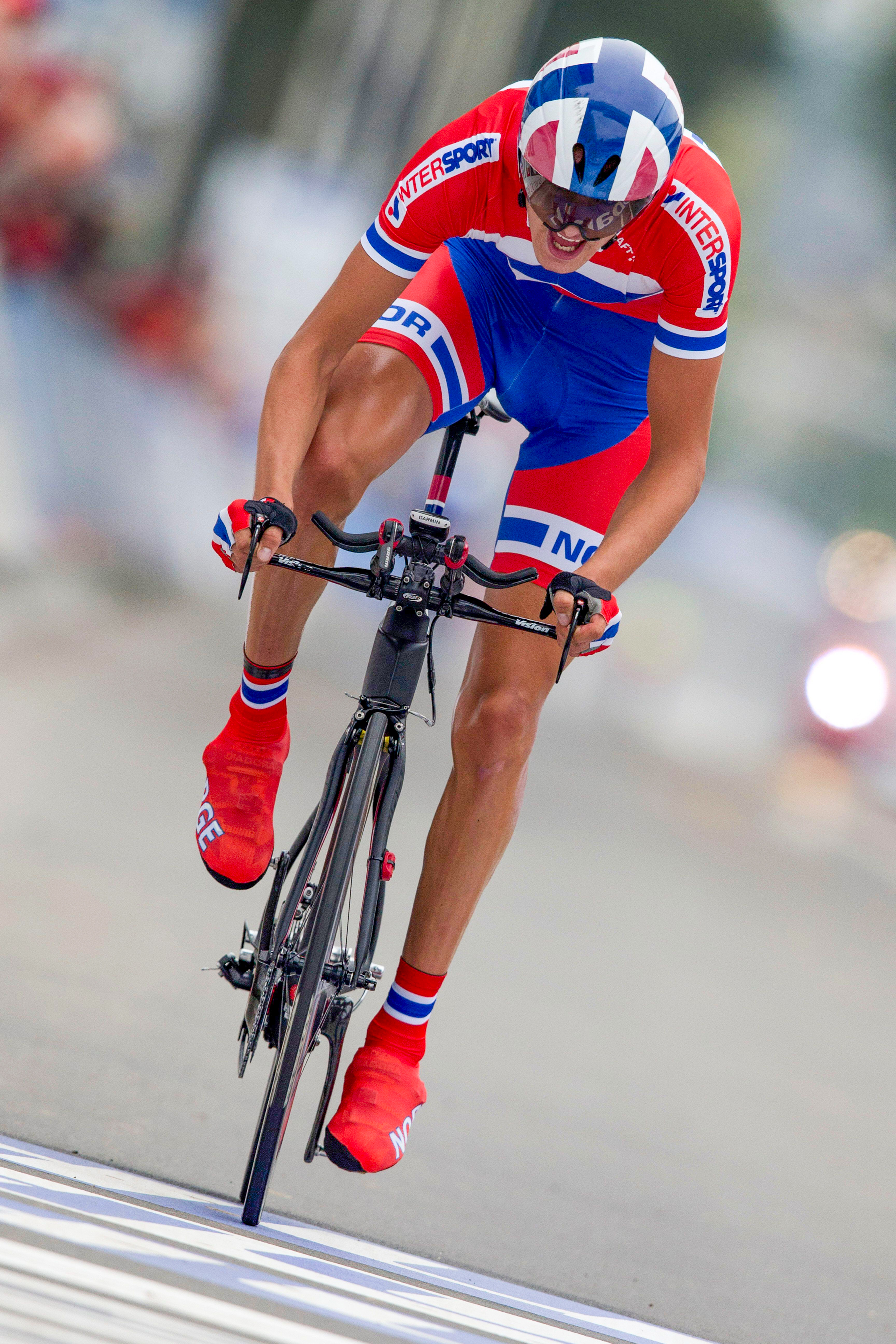
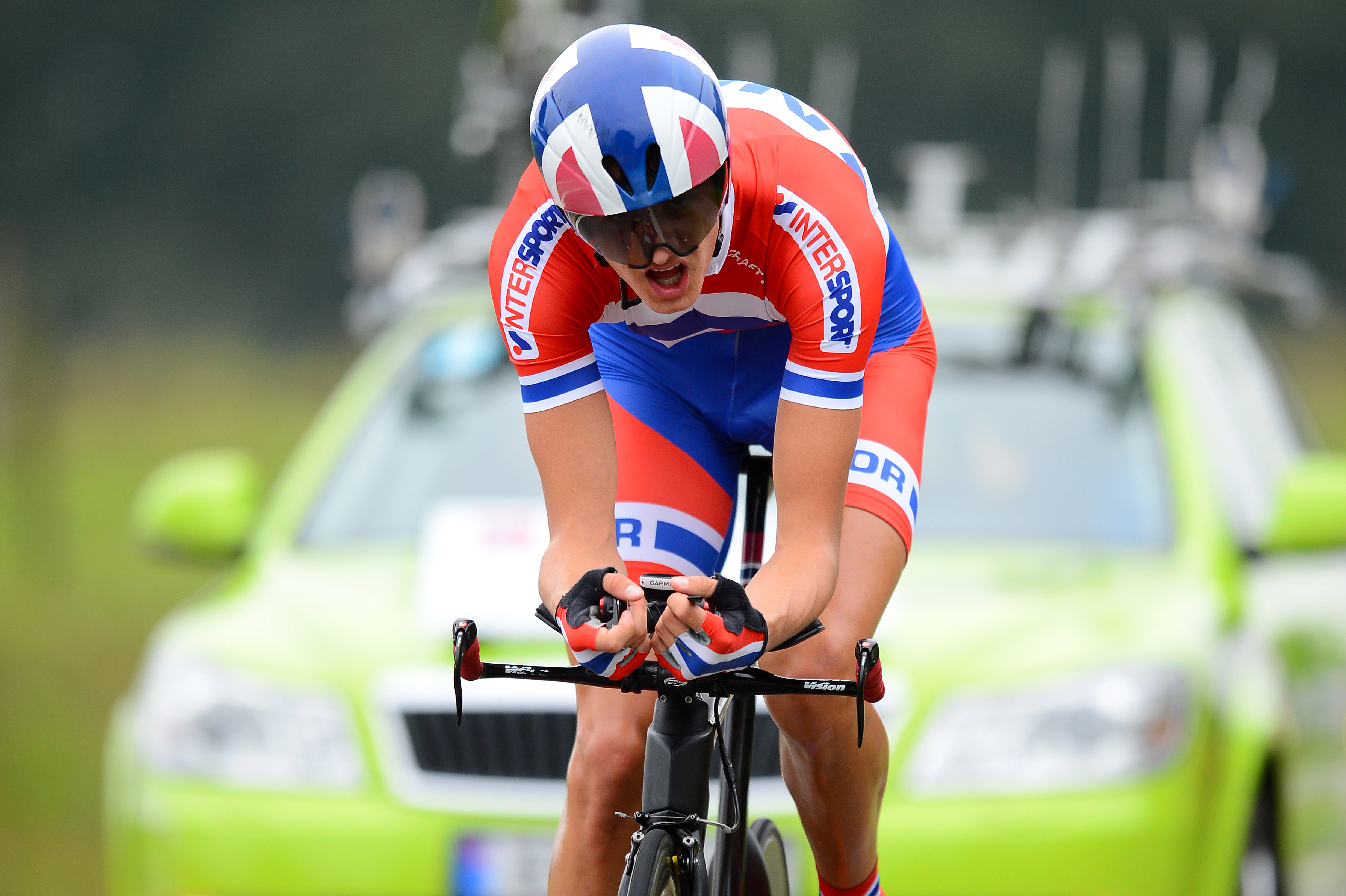
Svendsen won the junior world time trial title in 2012 by seven seconds.
(Image credit: Alamy)
Cycling has seen no trace of Svendsen for more than a decade. So when his friends confirmed the identity of their stag – it really was him – the lab technician’s eyes widened in disbelief. Everyone except Svendsen held their breath as he, hooked up the apparatus, began his all-out effort. But the result killed the drama dead. “It was a big disappointment,” Svendsen laughs. There was no heroic repeat: his new VO2 max was “embarrassingly low” – so low, in fact, that he refuses to tell me the number. It was a fun stag-do caper, nonetheless.
Svendsen, speaking to me by video call, is sitting in a small office in Oslo. No longer a whip-thin pro cyclist, he’s a well-built 31-year-old in a navy Carhartt shirt and dark, round glasses, his hair neatly parted down the middle. Behind him, a whiteboard spans the wall, covered in red-inked technical drawings: product designs for Auk, a Norwegian startup that makes LED-powered indoor herb gardens. Svendsen is the company’s head of supply chain. I found him on LinkedIn. His colleagues know about his cycling career, he says – “it’s sort of a fun fact” – but he doesn’t do many interviews about it anymore. Still, he remembers that record-breaking day in 2012 as if it were yesterday.
Rapid rise
Svendsen was 18 at the time. A former alpine skier, he had only begun cycling three years before, but adapted “extraordinarily” to the bike. “I was part of a not necessarily VO2-focused training group, but we were super-focused on developing physical capacity,” he says. “We were prioritising high-intensity exercises, instead of long-distance training or getting the hours in the bank.”
This training pushed his FTP (functional threshold power) to over 400 watts – around six watts per kilo, the level of a WorldTour pro. In VO2 max testing, he was closing in on the 90 mark. Then, in late August 2012, he returned a score that shocked the testers in his hometown of Lillehammer. “They fell silent because they thought there was something wrong with the test equipment,” he says. The screen read 97.5 – a new world record. How did Svendsen react? “I didn’t care too much,” he says. “I thought, ‘OK, that’s crazy. Another good test.’ But I didn’t understand the magnitude of it.”
For the teenager, what mattered most was turning his physical talent into results. But doubts had already set in about a future in cycling. “I was telling myself before the last year of my junior career, ‘Either I take the next step, go to a Continental team to become a pro, or quit.’ I kept it super binary,” he says.
His first real chance came a few weeks later, when he made his debut at the UCI World Championships. The course for the junior time trial – a lumpy 27km route into the Dutch town of Valkenburg – suited him, and he won the rainbow jersey by seven seconds, ahead of Slovenia’s Matej Mohorič. “The decision was taken [for me],” he says. “I was actually a bit stressed about winning [the world title], because I was like, ‘Shit, now I have to do it another two years.’”
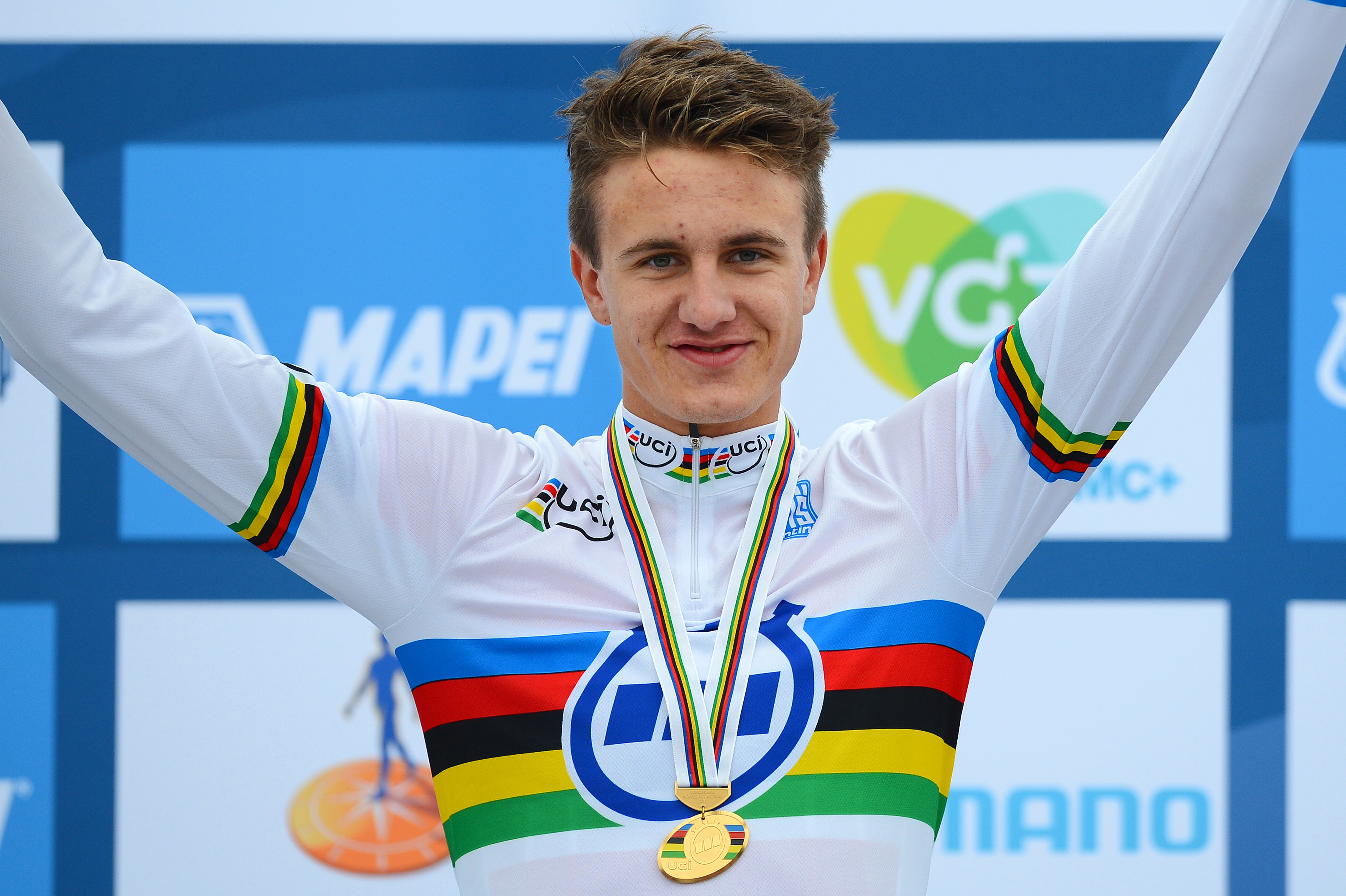
The world champion at 18 years old.
(Image credit: Getty Images)
Svendsen signed for Team Joker, Norway’s top Continental team. “It was the natural next step to become a pro,” he says, but the first months of 2013 were patchy. “I sucked in those Continental races that we did in central Europe.” Of his first six events, Svendsen failed to finish four. His doubts resurfaced, but were pushed aside by a breakthrough August: three stage top 10s, and a top-five overall finish at the Tour de l’Avenir, the calendar’s biggest under-23 race.
What to read next
As he opened his second season, in 2014, Svendsen set his racing ambitions “higher and higher”. “Then it came to the Giro della Valle d’Aosta, and I just remember I couldn’t take the heat. I had one good stage, but nothing more,” he says. On the brink of giving up, he gave himself an ultimatum for his Tour de l’Avenir return: if he got a good result, he’d commit to cycling. If not, he’d leave the sport.
Svendsen began the race with an underwhelming 118th place in the prologue, and quickly faced a battle to break back into the general classification. “Then it came to the Queen stage, and I went down because of someone losing their bottle,” he remembers. “That was it. I realised I couldn’t catch up with the front group, and it was over.” He rolled in 71st overall on the final day, and has not pinned on a number since.
No regrets
In the months after the race, many people tried to convince Svendsen to change his mind. But he knew that to be a pro cyclist “you have to go 100% into it, full gas, and [give it] everything you have”. It was a lifestyle that just didn’t appeal to him strongly enough – he didn’t want to spend 1,000 hours a year in the saddle or surrender his social life. “The question was: what are my 20s worth? My opinion was that I couldn’t [continue as a cyclist], because those years were limited. There was no price on those years.”
I ask Svendsen if he has any regrets about quitting the sport. He pauses, thinks for a moment, then shakes his head. “It’s almost 12 years since I quit,” he says. “At the time, I didn’t regret it – and I still don’t.” He remembers a meeting with a mental coach at Team Joker. “He always told me to look 10 years ahead: ‘Where are you in 10 years? What does your life look like?’ And I always said, ‘I’ll probably work in some company’.” The coach then asked: if he stayed in cycling for two more years, would that future look any different? Or would it just be two years less in that job? Svendsen always thought of it as the latter.
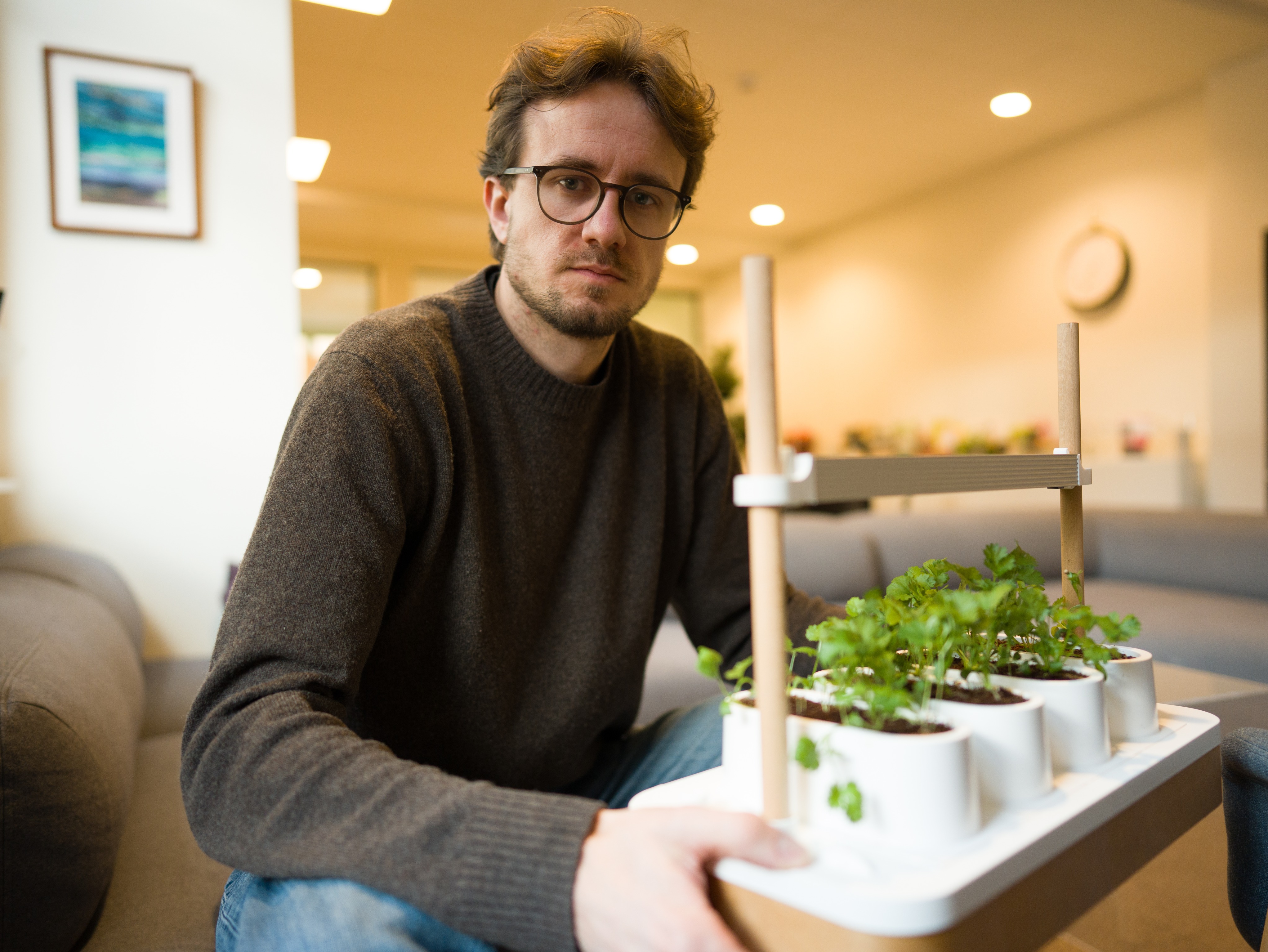
Svendsen is the head of supply chain for indoor herb garden company Auk.
(Image credit: Christoffer Jellum)
Today, Svendsen lives in Oslo with his wife and their two-year-old daughter. His rainbow jersey from 2012 is in a frame in the attic – “my wife doesn’t allow me to have it in the living room,” he laughs. He still keeps active, mountain biking, running and skiing – the day before our call, he was out on the slopes in -15°C – and he still follows pro cycling. Many of his old training friends and coaches are now at Uno-X, the Norwegian WorldTour team. Had the team held its top-tier status 12 years ago, it might have been “the perfect match” for him – but it’s a what-if he doesn’t linger on.
In his first year post-cycling, Svendsen enrolled for a master’s degree in engineering and ICT at NTNU, the Norwegian University of Science and Technology. He liked the idea of building companies, and studying, he reasoned, would give him the “best toolbox” for a career doing so. He finished his degree, joined Auk after he graduated, and has now been at the startup for four-and-a-half years. “I came in at a good time,” Svendsen says, clearly enthusiastic about his work. “We were five or six employees, and we started in a small office in Oslo, trying to make the [indoor herb garden] product and get it out to the customers. Now, we’re soon to be 25 people, and we’ve gone from €1m in revenue to €25m, selling more than 170,000 units worldwide.”
His job sits proudly at the top of his LinkedIn profile. At the bottom, distilled into four throwaway sentences, lies the cycling past he left behind: “Professional athlete – road cycling. Jan 2013–Dec 2014. Junior World Champion Time Trial. VO2 max record holder.”
Why VO2 max matters – but isn’t everything
(Image credit: Getty Images)
VO2 max is a person’s maximum rate of oxygen uptake during intense exercise, measured in ml/kg/min. It is determined by a combination of factors including heart size and stroke volume, lung capacity, haemoglobin levels, and mitochondrial density – in short, how efficiently the body can deliver and use oxygen.
Elite endurance athletes typically have a VO2 max value in the mid-70s to the high-80s, with only a few outliers exceeding 90. Cardiovascular capacity declines with age, so while a lab-tested 60ml/kg/min is a good score for an amateur cyclist in his 30s, 50ml/kg/min would be equally impressive by the time he reaches his 60s. (The estimates provided by smartwatches and fitness apps, by contrast, are derived from heart-rate algorithms and should be treated as rough approximations rather than true measurements.)
“A few years after I quit cycling, I quickly realised that my [97.5ml/kg/min] VO2 max was a greater achievement than winning the World Championships,” Oskar Svendsen jokes. “It’s something that’s still very relatable for a lot of people.” Though Svendsen was a strong cyclist, his story shows a high VO2 max does not guarantee results. Race craft, bunch skills, and mentality are equally as important, he says. “Talent is more about grit and the ability to perform over time. The physical [aspect] is a bonus.”
Still, is he surprised nobody has beaten his record? “Yes, I am,” Svendsen says. “You have [Christian] Blummenfelt, the Norwegian [triathlete, a former Olympic champion]. I think he did almost the same numbers, but he’s much heavier, so if he matched the weight, he probably would have outperformed it.” (In January, Blummenfelt shared an image on Instagram suggesting he had recorded a 101.1ml/kg/min; however, the score is yet to be verified as accurate.)
This feature first appeared in Cycling Weekly magazine on 26 February 2026. Subscribe now and never miss an issue.