
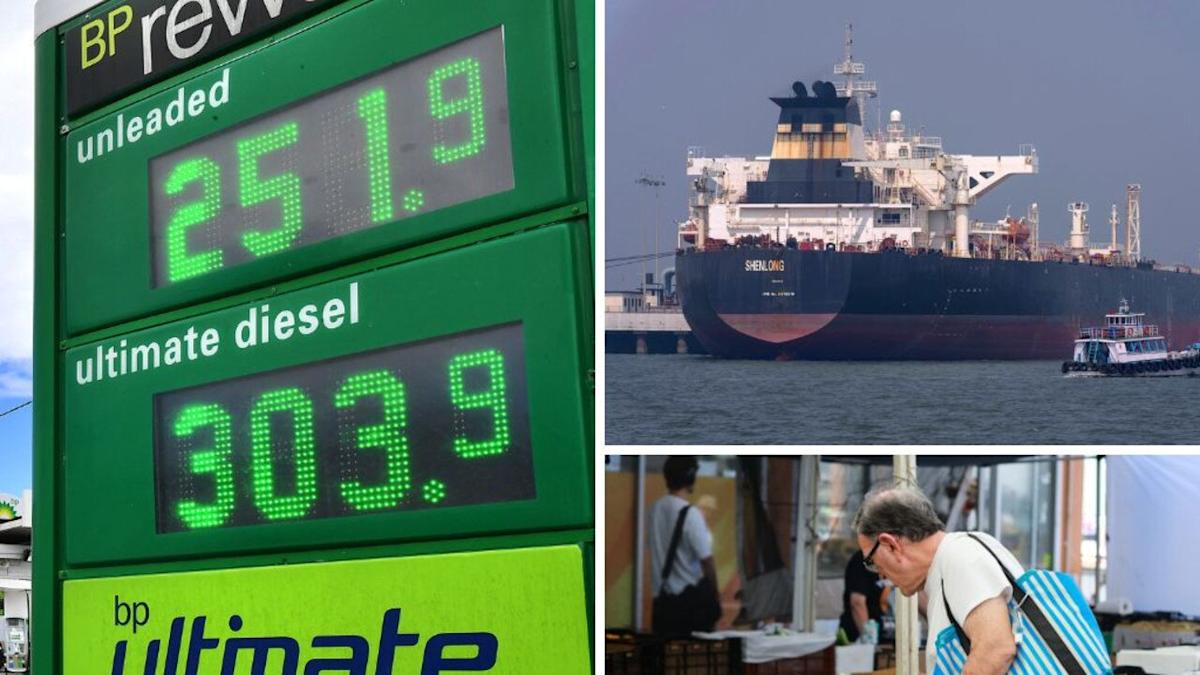
 Rising petrol prices may be the first warning sign of a much wider supply crisis heading for Australian households.
As petrol prices continue to climb across Australia, another less visible crisis is taking shape.
The escalating conflict in the Middle East is disrupting global supply chains, threatening to hit supermarkets, pharmacies, and the wider economy harder than many realise.
With the strategic Strait of Hormuz effectively blockaded, experts warn the fallout will reach far beyond the cost of fuel.
 Rising fuel costs are expected to push up the price of groceries, transport and everyday essentials across Australia. Picture: NewsWire / Gaye Gerard
Supermarket shock
Farmers are already feeling the squeeze.
Fertiliser costs have doubled, diesel shortages threaten key planting and harvesting windows, and consumers could face steep price rises for everyday staples for at least the next year.
Michael Hampson, chief executive of dairy farmer cooperative Norco, offered a stark assessment of the looming food security threat.
“If it isn’t resolved promptly, as in the next week or two, the fallout for this event is going to make Covid look like a tea party,” Mr Hampson told The Guardian.
“We won’t be worried about running out of toilet paper, we’ll be worried about not having food.”
Milk shortages may not be immediate, but Mr Hampson said consumers should expect price hikes of 30 to 50 cents a litre.
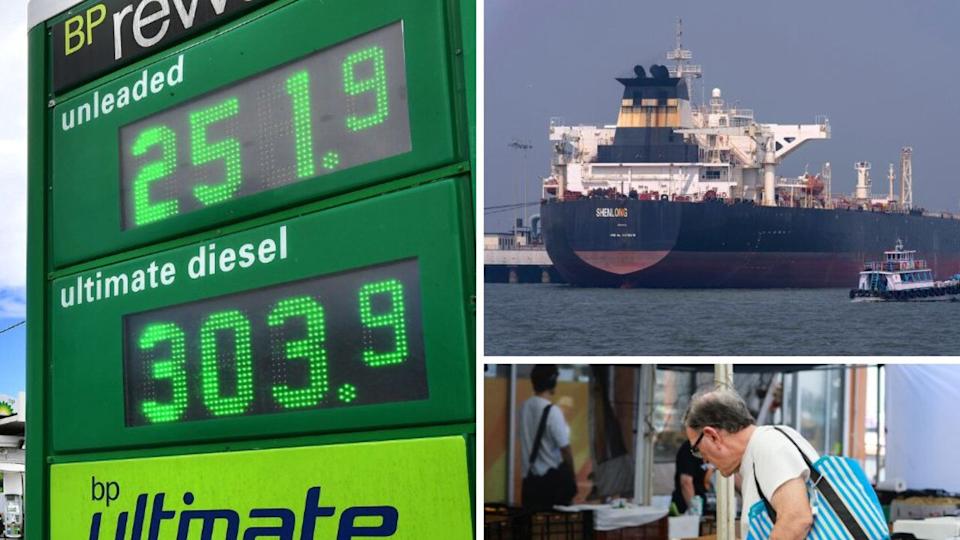
The Strait of Hormuz, a key global shipping route, is currently effectively blockaded, impacting fuel and freight worldwide. AP Photo/Rafiq Maqbool
Even packaging is under pressure. Milk bottles are made from fossil fuel resins, meaning supply chain interruptions could leave farmers with milk but nowhere to put it.
“Then it doesn’t matter how much it costs, because we won’t have anything to put the milk in,” Mr Hampson said.
The fresh produce and grain sectors face similar threats. Transport costs from packing sheds to supermarkets have already doubled.
Michael Crisera from Fruit Growers Victoria told The Guardian: “Unfortunately, our costs are going to go up with every box – we need to be able to pass that on.”
Meanwhile, Australian Standard White wheat prices have surged to a 20-month high of $259 per metric tonne as anxious farmers hoard diesel to keep their seeding machinery running.
Small businesses facing soaring energy and borrowing costs are increasingly passing expenses on to customers. Picture: NewsWire / Gaye Gerard
Vital medicines at risk
Australia’s health system is also feeling the impact. Shipping corridors are disrupted, forcing pharmaceutical companies to switch from sea freight to costly airfreight.
The nation imports about 90 per cent of its medicines, with nearly 400 drugs currently in short supply, including 37 deemed critical.
Petroleum-derived inputs, essential for manufacturing common medicines like paracetamol and ibuprofen, are also under pressure.
Despite the mounting risks, Dr Michael Wright, president of the Royal Australian College of General Practitioners (RACGP), urged calm.
“If we do have a shortage, people shouldn’t panic because in most situations there will be an alternative,” he told nine.com.au.
Dr Wright added that the crisis highlights Australia’s overreliance on imports.
“One thing we probably could do more of is we could produce more medications locally, and that would be a way to get around some of our dependencies,” he said.
Nearly 400 drugs are currently in short supply across Australia, including 37 critical medicines. Picture: Newswire / Gaye Gerard
Inflation surges
The economic fallout is expected to be significant. Treasurer Jim Chalmers warned the financial impact could rival both the Global Financial Crisis and the COVID-19 pandemic, calling it a “defining influence” on the May budget.
Annual inflation, recently eased to 3.7 per cent, is expected to spike.
Westpac modelling suggests headline inflation could peak at 5.5 per cent by mid-2026 if the disruption lasts three months.
The Reserve Bank has already responded with a 0.25 per cent interest rate hike.
Small and medium enterprises are caught in the crossfire. With government energy rebates ending, businesses face soaring operational costs, elevated borrowing rates, and rising wages.
Oil prices could hit US$120 per barrel, with recovery to pre-conflict levels taking up to three years. Picture: NewsWire / John Gass
Fuel crisis
All of these knock-on crises are rooted in a sharp energy shock that is strangling global shipping.
Petrol prices are climbing towards $3–4 per litre, but long-term modelling paints a bleaker picture; oil could hit US$120 a barrel and take three years to return to pre-war levels.
Even if motorists adapt to the pain at the bowser, the broader costs of expensive fuel across farming, manufacturing, and transport mean Australians could continue paying for this conflict at the supermarket and pharmacy for years.