
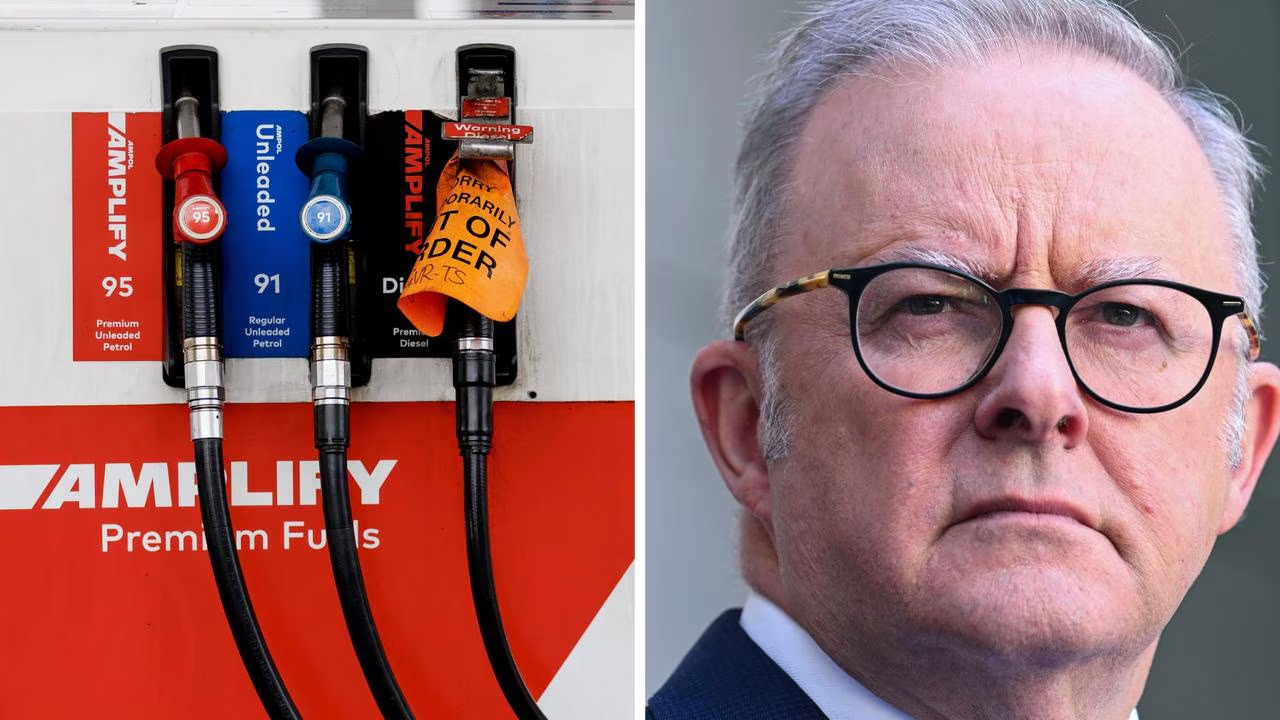
Aussies are feeling the burn from the Middle East conflict as soaring petrol prices spark a growing mental health crisis.
A staggering three in four Aussies are now under “major” financial stress as global tensions and “petrol anxiety” push household budgets to breaking point, according to a Savvy survey of 1077 people.
It laid bare the brutal reality for families, with 37 per cent of the country admitting they are in a state of financial distress.
It comes as fuel prices reach record highs, with diesel now sitting at around 4 dollars a litre in some parts of the country.
MORE: ‘Driving blind’: Aus truckies’ risky fuel move
“The biggest loser out of the current fuel crisis, without a doubt, is the Australian people”, Savvy Managing Director Bill Tsouvalas said.
“Countless families will be placed under undue financial pressure in a situation that is entirely avoidable.
“Cutting the fuel excise will give Australians some much-needed relief and allow them to put their money towards more important expenses like groceries and other household bills.
“Against the backdrop of the steep rise in fuel prices, we’ve seen green car loan enquiries, such as those for EVs and hybrids, more than double.”
Filling up a popular Toyota RAV4 with a 55-litre tank now costs about $44 more following an 80-cent per litre spike. As a result, a full tank of E10 fuel can cost roughly $137.
According to the survey, a staggering 37 per cent of Aussies are now in “major” financial distress, while a further 39 per cent admit they are under moderate pressure to make ends meet.

Drive Against Depression co-founder Sarah Davis said it was evident rising fuel prices are harming mental health.
“We definitely see that in our community,” Sarah said.
“Driving for a lot of people is their way of connecting to something that they love, something that makes them happy.
MORE: How would it work? What would we pay? Albo’s EV tax explained
“It’s often something that keeps them connected to another person. So we see people come out for a drive with a partner or with their family. It’s their time to be together.
“So yeah, we definitely see that driving is a way of people connecting with their outlet and what makes them happy.”
Meanwhile, supply issues are emerging in Australia.
The government on Wednesday confirmed around 600 service stations across the country have run out of at least one type of fuel.
As a result, nearly half of Aussies (44 per cent) said they would consider buying a more fuel-efficient or electric vehicle amid heightened global tensions and petrol anxiety.
Separate research suggests the crisis is also fuelling anxiety nationwide.
A survey by the research agency Nature found that 97 per cent of 1,000 Australians are concerned about fuel supplies in the country, including one-in-three admitting they are ‘extremely concerned.
MORE: Aus targets US utes that ‘kill a lot of people’
Jimeoin Muecke, a psychologist for counselling service Talked, said there has been a significant increase in people asking for support with anxiety triggered by the fuel crisis.
“Iit’s how we get around, at the end of the day, it’s so crucial for getting to work and seeing friends and things like that,” Jimeoin said.
MORE: EV ‘bloodbath’ hits two Aus brands in a week
“Then, when you consider that stress and anxiety tend to accumulate, things that cause stress and anxiety will start to combine, it’s been putting a lot of people over the edge for sure.”
Muecke recommended pwople who usually relax through driving consider turning to video games, or tune in to watch motorsport with friends on video calls.
Globally, some countries have begun taking drastic steps in response to oil uncertainty, including introducing four-day work weeks and limiting how much fuel drivers can purchase.
Australia has not implemented similar measures, but the Albanese government has convened multiple emergency national cabinet meetings to respond to the growing crisis.
Energy Minister Chris Bowen said there are “several options available to government to ease fuel pressures,” including voluntary work-from-home arrangements and carpooling incentives. However, these mandatory measures are not yet necessary.