
The significant vote for the right-wing populist party, One Nation, at the recent South Australian election, which returned the Labor Malinauskas Government with an increased majority, is raising alarm bells, reports Jason Staines.
Jason Staines writes:
One Nation’s strong showing at the South Australian election — securing about 22 percent of the primary vote and overtaking the Liberal Party’s primary vote — highlights a significant shift in the state’s political landscape.
The result, described by analysts as a political “earthquake”, reflects a broader fragmentation of the traditional two-party system and has prompted concern among public health experts about what it may signal for health equity, evidence-based policy, and the wellbeing of communities most likely to experience racism and discrimination.
Associate Professor Toby Freeman, Director of Research at Stretton Health Equity at Adelaide University, said the result would be “disheartening” for those working to improve health outcomes.
“Many of us who pursue health equity may be disheartened to see the high primary vote for One Nation in the recent South Australian election, and worry what it means for other jurisdictions,” he told Croakey.
“We know that we need to build political will for more equitable policy, and a growing national discourse that actively undermines equity as a goal through racism and discrimination is a threat to building the necessary political will.”
Policies?
Those concerns are sharpened by a closer look at One Nation’s policy platform, which suggests a relatively narrow approach to health that is focused primarily on service pressures within the existing system, rather than the broader drivers of health identified by public health experts.
The party’s health policy is framed around what it describes as a system “blowing out to crisis proportions”, pointing to ambulance ramping, staff shortages, long emergency department waiting times and limited access to services in regional communities. Its proposed solutions are largely centred on increasing capacity, particularly by addressing what it sees as bottlenecks in hospital flow.
A key focus is freeing up emergency department beds by expanding capacity in adjacent parts of the system. One Nation argues that beds are being occupied by “non-emergency patients for long periods of time because there is nowhere else for these patients to go”, including mental health, aged care and disability patients. Its response is to provide more beds and facilities for these groups, including potentially repurposing existing hospital infrastructure.
Regional health access is another priority, with a strong emphasis on decentralisation. One Nation proposes returning decision-making and budget control to regional health authorities and country hospital boards, alongside expanding telehealth and, where feasible, restoring or upgrading regional facilities to provide services such as cancer care, rehabilitation and palliative care.
Workforce shortages are addressed primarily through incentives to attract and retain practitioners, including financial supports and changes to accreditation processes for overseas-trained professionals. The party also proposes removing “any remaining bureaucratic sanctions against employees for refusing COVID-19 vaccinations” as part of efforts to restore staffing levels.
While the policy includes a commitment to “more preventative health care in regional, rural and remote South Australia to reduce incidences of lifestyle-related chronic conditions”, prevention is otherwise a relatively minor component of the platform.
There is little detail on population-level public health measures or on the social and commercial determinants of health.
Similarly, there is no substantive discussion of First Nations peoples’ health, despite the centrality of these issues in the broader election debate. Nor does the party’s health policy engage with climate-related health risks or wider structural factors such as housing, food security or racism.
These gaps are also reflected in other areas of the party’s platform with health implications.
Its energy policy includes opposition to net zero targets, and supports expanded coal and nuclear generation, while its education policy includes a commitment to remove what it describes as “ideological or politically-biased material, such as trans/gender ideology or Indigenous activism”.
Australian Health Promotion Association SA/NT Branch Co-President Talia Blythman said the party’s approach did not adequately reflect the role of prevention in improving health outcomes.
“It was disappointing that the One Nation party did not take up the SA Public Health Consortium’s invitation to speak at our SA State Election Virtual Forum held in February this year,” she told Croakey.
“This was an opportunity to share more about their positions relating to preventive health. Reflecting on their health policy position on their website, I would have liked to see a much stronger focus on primary prevention to support the health and wellbeing of South Australians,” she said.
“This is not just about hospitals and GPs. Primary prevention is vital to reduce pressures on our health system. Strong evidence demonstrates the cost-effectiveness of investing in prevention in relation to both health and economic impacts.”
First Nations health
Concerns about the election result are particularly acute in relation to First Nations peoples’ health, where Croakey’s pre-election coverage highlighted longstanding structural challenges and warnings about the political climate.
Ahead of the vote, Aboriginal Health Council of South Australia (ACHSA) CEO Tanya McGregor warned that racism and “extreme views” were “on the rise”, raising concerns about the impact on Aboriginal peoples’ health and wellbeing and on engagement with services.
ACHSA’s election priorities focused heavily on the social determinants of health, including housing, food and water security, and access to care in regional and remote communities. For many Aboriginal people, accessing healthcare can involve long and costly travel, with current patient transport arrangements requiring upfront payments that many cannot afford.
Housing conditions were also identified as a critical issue, with calls for investment to ensure basic infrastructure such as running water, sanitation and climate-appropriate housing. Food insecurity remains a major concern, particularly in remote areas where the cost of fresh food is high and access is limited.
At the same time, ACHSA highlighted the ongoing impact of structural racism within the health system, citing evidence of “very high” levels of institutional racism across all South Australian Local Health Networks. It has called for an anti-racism action plan for SA Health, along with greater transparency and accountability in how complaints are handled.
Both One Nation and the Liberal Party have opposed South Australia’s Voice to Parliament, which was established to ensure Aboriginal and Torres Strait Islander people have a direct say in laws and policies affecting them.
For health advocates, the risk is that a political environment marked by division and distrust may further undermine efforts to improve outcomes through partnership, culturally safe care and community-led solutions.
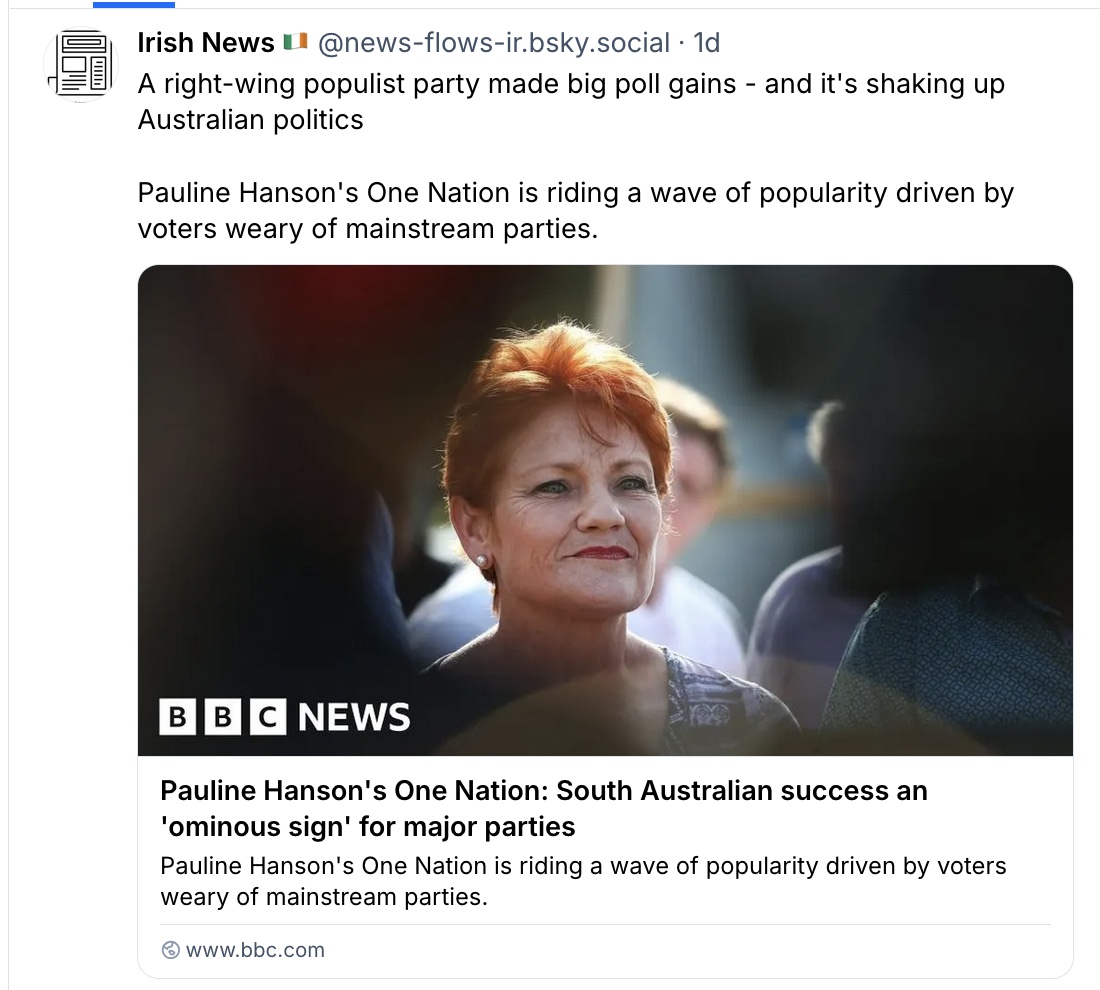 https://www.bbc.com/news/articles/cx2j4q60wlgo
Since its inception, One Nation has been best known for its anti-immigration policies, the BBC reported this week. In Pauline Hanson’s first speech to Parliament in 1996, she said Australia was “in danger of being swamped by Asians”, a speech which also took aim at Aboriginal and Torres Strait Islander people and set the tone for her approach to politics, said the broadcaster.
Rising division
South Australian Rainbow Advocacy Alliance CEO Varo Lee told Croakey the result reflected both rising division and the pressures facing vulnerable communities.
“The election results and conduct throughout the campaign come as no surprise,” they said, pointing to concerns long raised by LGBTIQA+ communities, First Nations communities, people of colour and migrant communities that “division and hate is on the rise” and taking a toll on mental health and wellbeing.
At the same time, Lee said the result also reflected the material pressures facing many South Australians, including cost of living, housing affordability and access to healthcare. LGBTIQA+ people were “no more immune to this than anyone else”, with some forced to choose between paying rent, buying groceries or seeing a doctor.
They said that for many in these communities, the election was “about survival”, with economic pressures compounded by experiences of prejudice and discrimination.
While One Nation may appeal to some voters on issues such as cost of living and housing, Lee said rhetoric targeting people on the basis of race, sexuality and gender was a “harmful and dangerous distraction” from the lack of viable policy solutions at the state level.
Lee also warned that a “long and ongoing history of systemic discrimination” had eroded trust in institutions and willingness to engage with services among many LGBTIQA+ South Australians.
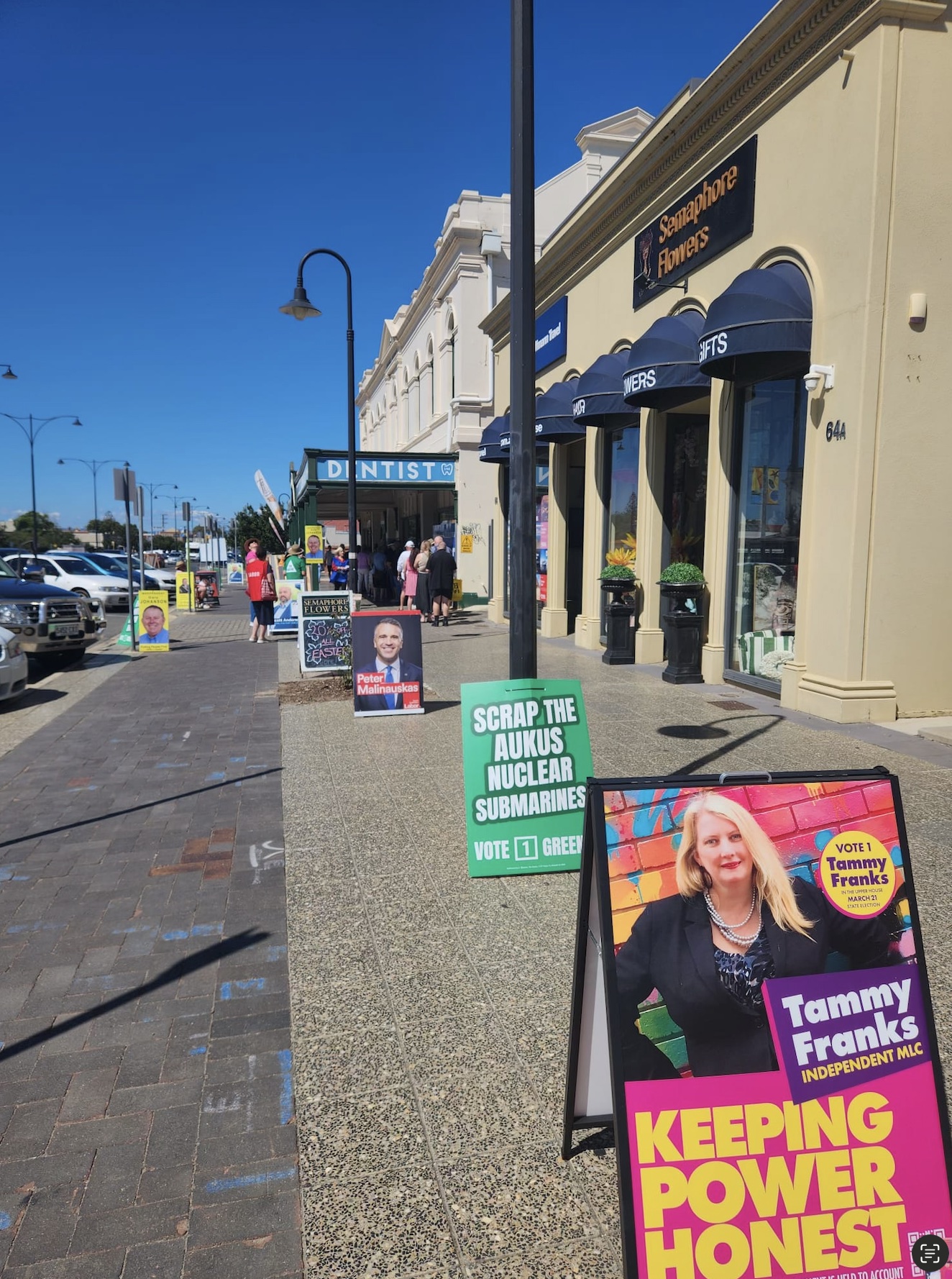 Election signs in South Australia. Photo by Lea McInerney
Calls to action
Across Croakey’s pre-election coverage, public health experts and organisations were largely aligned on a central message: South Australia needs to shift from a hospital-focused system to one that addresses the broader conditions that shape health.
A consistent call has been to increase investment in prevention. South Australia currently spends just 2.24 per cent of its total health expenditure on public health, well short of the five per cent target set by the National Preventive Health Strategy.
While the Labor Government has established Preventive Health SA, Professor Fran Baum said the agency has “a tiny budget and isn’t able to really re-orientate the health system towards being a health promotion and disease prevention one when so much is spent on hospital services”.
Blythman said increasing investment in prevention should remain a priority regardless of the political environment.
“In our recent 2026 State Election Platform we highlighted the need for a comprehensive plan to double the current investment in our state. This would then align with the National Preventive Health Strategy 2021–2030 target to increase investment by 5 per cent by 2030. I would encourage all political parties to reflect on this strong evidence and push for this investment for health and wellbeing in our state and country,” she said.
This imbalance is reflected more broadly across the system. Health policy experts have urged the State Government to focus less on building new hospitals and more on community health and prevention, alongside a stronger whole-of-government approach.
As SA Council of Social Service CEO Dr Catherine Earl said ahead of the election, “Health equity won’t be achieved in emergency departments and hospitals alone — it will also be achieved in classrooms, on public transport, and with the community.”
Public health leaders have also warned of worker shortages, particularly in environmental health and local government roles, which are limiting the state’s ability to prevent illness and respond to emerging threats. Blythman said maintaining a strong public health workforce would be critical to improving outcomes.
“Maintaining a strong health promotion and public health workforce is vital to improving health and wellbeing in our state,” she said. “We have the State Public Health Plan and the Preventive Health SA Strategic Plan both in development. Having a clear whole-of-government Health Promotion and Public Health Workforce Strategy will be important to support the effective implementation of these plans.”
For SARAA’s Lee, the need is to back rhetoric with action, which was something lacking during the election campaign.
“LGBTIQA+ South Australians want leaders who will do more than denounce homophobia and transphobia when it’s politically convenient or turn up at pride once a year – that’s the bare minimum.
“We want leaders who will back up their words with serious meaningful action on the challenges we’re facing. We didn’t see that from either of the major parties when it came to LGBTIQA+ priorities this election, with few to no meaningful commitments made by Labor or Liberal,” they said.
Wider implications
Climate change is an urgent and ongoing public health challenge, underscored by the algal bloom crisis. Experts have called for long-term investment in research into its health impacts and a broader recognition of environmental threats as core health issues.
The returned Labor Government has a new Minister for Health and Wellbeing in Blair Boyer, formerly the Minister for Education, Training and Skills. It has been presented with a well-established agenda for reform for health (as outlined in Croakey’s pre-election coverage). The question now is whether they will act on it.
One Nation’s result in South Australia sits within a broader shift in Australian politics, where support for major parties has been declining and voters are increasingly willing to back minor parties.
While such shifts have been building over decades, the scale of the One Nation vote in this election — and the collapse of the Liberal Party’s primary vote — marks a significant moment. The Guardian reports that the next test will be the 9 May Farrer by-election, followed by the Victorian and NSW elections.
For the health sector, the implications are less about parliamentary arithmetic and more about what this shift signals.
A political environment that is increasingly shaped by populism, dissatisfaction and fragmentation may make it harder to build consensus around prevention, equity and evidence-based policy — even as the need for action on these issues becomes more urgent.
See Croakey’s archive of articles on #SouthAustraliaVotes2026