
When Sanna Sartawy’s mother was diagnosed with dementia, she and her siblings were shocked.
Even though Mrs Sartawy came from a large Lebanese Australian family with five sisters and two brothers, they still struggled.
“We didn’t know what to do with it,” she said.
“We had no knowledge of dementia or what is dementia.”
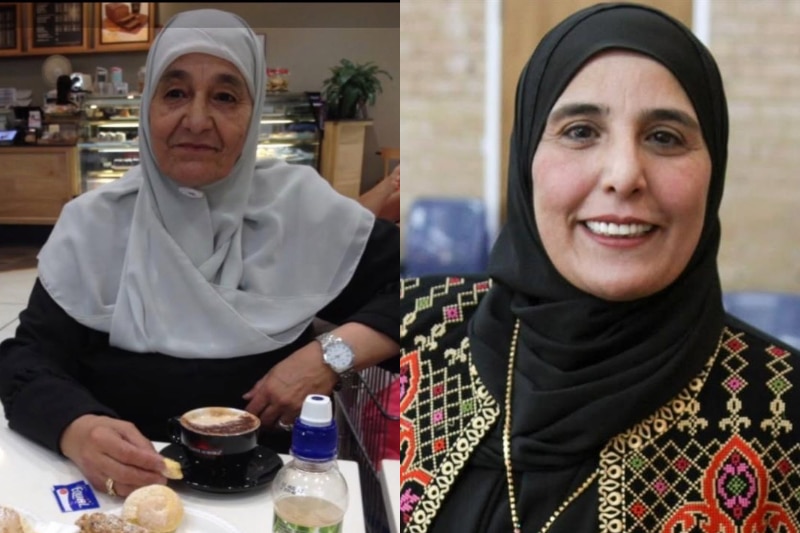
Sanna Sartawy, right, thought her mother’s forgetfulness was part of normal aging.
(Supplied: Sanna Sartawy)
Mrs Sartawy said the family initially misinterpreted Samiha Elmerhebe’s behaviours as ordinary signs of aging.
“She kept on repeating herself and forgetting things,” the 57-year-old from Sydney said.
Their lack of understanding of dementia was compounded by stigma around the disease within the community.
Mrs Sartawy recalled the time she took her mother to a large community festival and Mrs Elmerhebe did not recognise family and friends who came to greet them.
“She reacted violently,” Mrs Sartawy said.
Mrs Sartawy felt she had to hide her mother from the public to avoid comments like “Samiha has gone crazy now” or “she’s got that crazy disease”.
Her mother passed away at the age of 83 in 2024 — 12 years after she was diagnosed with dementia.
‘Why are we using such a strange term?’
Mr He grew up with his grandma and shared a very close bond with her. (Supplied: He Zihan)
Dementia is the leading cause of death in Australia, overtaking heart disease in 2024, according to the Australian Bureau of Statistics.
An estimated 446,500 Australians are living with dementia in 2026 and around 28 per cent were born in non-English speaking countries, Dementia Australia said.
Nearly 1.1 million people could have dementia by 2065 without significant public health interventions, according to the Australian Institute of Health and Welfare.
Experts say missing the signs of dementia and the stigma around the disease in some communities can lead to a delayed diagnosis.
In Chinese, the term for dementia literally means “old-age idiocy and dullness disease”.

A more neutral Chinese term for dementia was adopted by Dementia Australia. (Supplied: He Zihan)
He Zihan, a 28-year-old PhD candidate in Translation Studies, and Multicultural Health Communication at the University of Sydney, has been pushing for a change to the term after being inspired by his personal experience.
When he was 12, Mr He’s grandma was involved in a car accident that led to severe cognitive decline.
He said her family wanted to take her to the hospital to get tested for dementia.
“But she was very resistant, because she didn’t think she was ‘idiotic’ or ‘dull’ at all,” he said.
“She just felt she was a bit forgetful.”
‘I watched my husband change’: Dementia diagnoses being missed, study finds
In the end, treatment was delayed, and her condition deteriorated. She passed away two years after that car accident.
“That’s when it really hit me — my grandma wasn’t ‘idiotic’ or ‘dull’. So why are we using such a strange term to describe this disease?” Mr He said.
“Many elderly people will check their heart, blood pressure and blood sugar without hesitation, but if you say you want to check for dementia, they resist.
“This long-standing stigma in the Chinese context causes delays in care.”
After consulting dozens of Chinese-speaking dementia experts in the Asia-Pacific region, Mr He and his colleagues encouraged Dementia Australia to adopt a term already used in Hong Kong.
In August, Dementia Australia took up a more neutral and accurate Chinese term for dementia — “cognitive impairment syndrome”.
‘Not a natural part of aging’
Kaele Stokes, from Dementia Australia, said stigma and misinformation around dementia were “incredibly strong”.
And the topic can be even more taboo in multicultural communities, she said.
“It [dementia] is actually a series of diseases of the brain that affect someone’s ability to function,” she said.
“But lots of people don’t understand that it is a disease process, not a natural part of aging.”
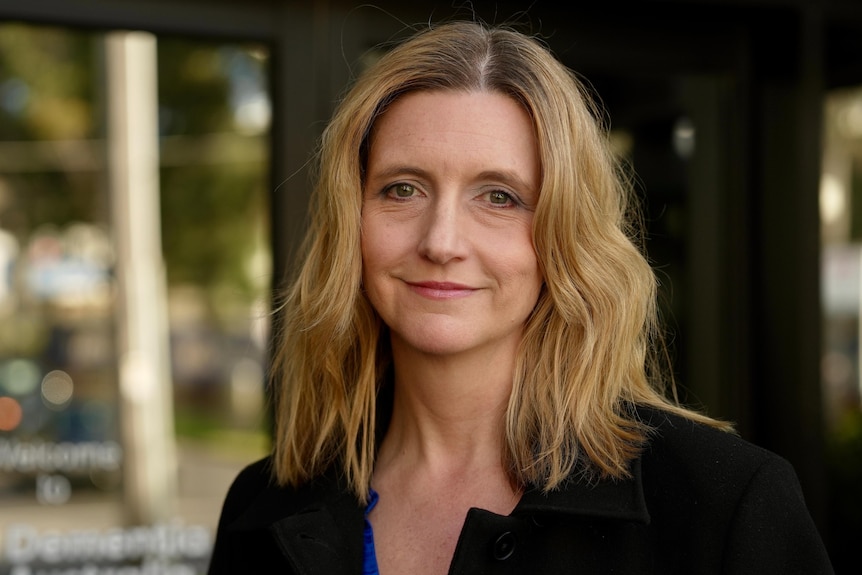
Kaele Stokes says it is important to break down taboos when talking about dementia. (ABC News: Scott Jewell)
Dr Stokes said there was a lot of fear around dementia so people did not want to talk about it until “they absolutely have to”.
“That all feeds into this idea that, dementia is a taboo subject and that we can’t talk about it and that it’s shameful in some way.”
Concerns aged care reforms do not tackle service gaps
Dr Stokes said adopting the new Chinese term reflected Dementia Australia’s commitment to ensuring the organisation’s services are culturally informed, respectful and responsive to communities.
The organisation hopes the term becomes recognised by Chinese speakers around the world.
“It’s not just a change of name from A to B,” Mr He said.
“It helps reduce or even eliminate stigma and forms a new understanding of the disease.
“It’s not a normal part of aging, nor is it shameful, or a mental illness. It’s a brain condition that needs to be addressed.”
‘Now I’ve got a dementia plan’
Lin Meifang and her husband Zhao Chongguang, both in their 80s, moved from mainland China to Sydney, where they have lived for 20 years.
After years of worsening symptoms, Mr Zhao was diagnosed with dementia in early 2025.
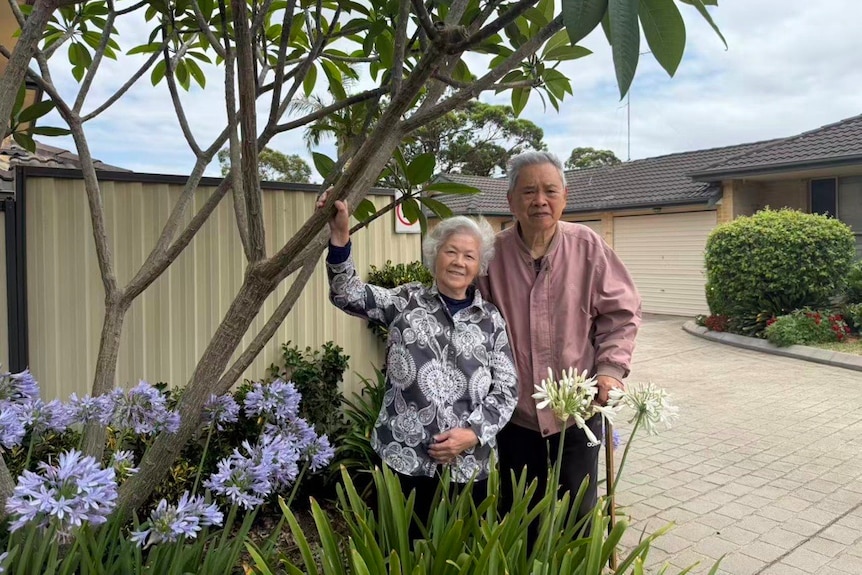
Lin Meifang (left) is the primary carer for her husband Zhao Chongguang. (Supplied: Lin Meifang)
“At first, I noticed his severe memory decline,” Mrs Lin said.
“What day is it today? What day of the week? He would ask, and then forget again, over and over.”
Mrs Lin said she felt scared and her husband’s diagnosis was delayed partly because of the “old-age idiocy and dullness” stigma within the Chinese community.
Mrs Lin is her husband’s primary carer, and they receive some in-home care help through a government subsidised program.

Early detection of dementia allows people living with the condition to better plan for their life. (AAP: Glenn Hunt)
Serge Geara, a neurologist of Lebanese background, said cultural stigma and shame often led to delayed care and diagnosis for people with dementia.
“We are now in a time where there is going to be an explosion of increased treatments,” Dr Geara said.
“So picking up patients early with dementia and treating them can potentially decrease their deterioration at present and potentially improve them in the future when medications become better.”
Dr Stokes emphasised that early detection and diagnosis were crucial for not only people living with dementia, but also their families.
Some patients wait five years for diagnosis of ‘Australia’s biggest killer’
“It means that there are conversations that can occur around how to plan for the future, where the person living with dementia can make decisions about what’s important to them, and what they want as their condition progresses.”
This advice resonated with Mrs Sartawy.
“They can have the choice of who they want to care for them, and where they want to live,” she said.
Her mother’s condition was dismissed as simply “getting old”, so she lost the opportunity to make her own decisions, said Mrs Sarawy.
No-one had warned her that a time would come when she could no longer do so.
“Now I’ve got a dementia plan in for my kids. Make sure you take me to the beach. Make sure you take me and give me a massage every week.
“So now I know if I do get dementia, my kids know what to do.”