
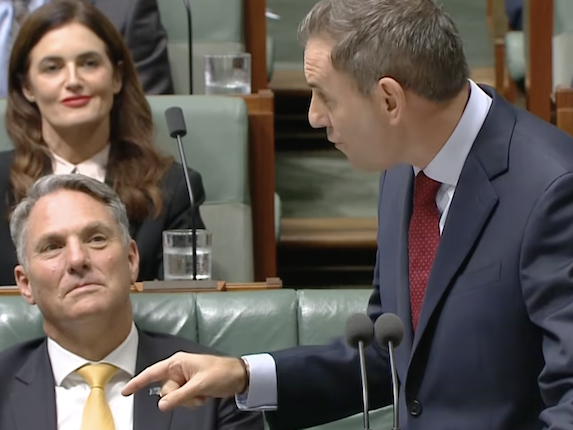
Australia’s debate around tax reform challenges a system that has driven inequality and locked a generation out of housing, writes Carl Rhodes.
AS RECENTLY AS as six months ago, reform of Australia’s capital gains tax discount seemed politically unthinkable. As the May budget approaches, it has become not only plausible, but increasingly likely.
This may prove to be a pivotal moment in Australian politics, not simply because of the tax change itself, but because it could signal a decisive fracturing of the long‑entrenched neoliberal policy framework that has fuelled and justified widening economic inequality.
Since Labor’s election victory in May 2025, concerns about intergenerational inequality have steadily gained momentum, crystallising at Treasurer Jim Chalmers’ Economic Reform Roundtable in October.

That shift was reinforced this month when a Senate inquiry concluded:
‘The concessions provided by the capital gains tax discount, in combination with negative gearing, have skewed the ownership of housing away from owner-occupiers and towards investors.
The benefits of the capital gains tax discount are also unequally distributed, with implications for income and wealth inequality and intergenerational inequality.’
While the government remains cautious, all indicators now point towards change. The day after the report was released, Chalmers said the government had “an open mind to tax reform” and was “working up some options.”
More than just a tax change
While tax reform is a crucial step in addressing worsening economic inequality in Australia, what is at stake here is much larger than fiscal setting. If the government does act in May, it will signal the unravelling of the neoliberal economic model that treated inequality as a market outcome rather than a matter of democratic choice.
Nowhere is this more evident than in the response from those resisting change. As they struggle with declining relevance and electoral appeal, the Coalition are clinging ever more tightly to an outdated ideological framework that increasing numbers of Australians are leaving behind.
Their statement issued on the day the Senate report was released, tellingly titled ‘Coalition stands firm against CGT changes’, reads like a textbook expression of unquestioned neoliberal common sense. It abstractly defends the sanctity of markets while systematically evacuating inequality from political consideration, relying on the familiar trickle‑down assumption that protecting incentives at the top will eventually benefit everyone below.
The Coalition insists:
‘If Labor pursues changes to the CGT discount, it will be another simplistic and one-dimensional response that sidesteps the central problem in housing, that not enough homes are being built. You cannot tax your way out of a supply shortage.’
This reflects the familiar neoliberal dogma that optimising investment conditions will deliver growth that eventually benefits everyone, despite long‑standing evidence that such benefits overwhelmingly accumulate at the top.
Rather than treating tax reform as a democratic tool for shaping fairer outcomes, it is cast as a market distortion that would “punish mum and dad investors” while threatening rents and investment.
An ideology past its use-by date
Opposition Leader Angus Taylor has dismissed any potential tax reform, saying:
“They had told us that taxes were going to come down, but we know with raging inflation taxes will keep going up, and we hear, even in recent weeks, that there are going to be more taxes on aspirational Australians. Another assault on aspiration from this Labor government.”
It is difficult to read this as anything other than a refusal to confront the hardship created by levels of inequality that have placed home ownership beyond the reach for an increasing number of Australians.
If aspiration is being crushed, it is because Australia has an economic system built around rising asset values rather than broad‑based opportunity. That is precisely why reform is needed.
We have arrived at the point where ideological gestures towards a better future cannot hold up against the lived experience of persistent and worsening housing unaffordability and cost-of-living pressures. The deregulated and financialised economic system that has dominated Australia increasingly feels stacked against working Australians.
Meanwhile, the Coalition is stubbornly holding on to ideas that have long passed their use-by-date. At this point, refusing reform is no longer a defence of aspiration, but a defence of a system that systematically undermines it.
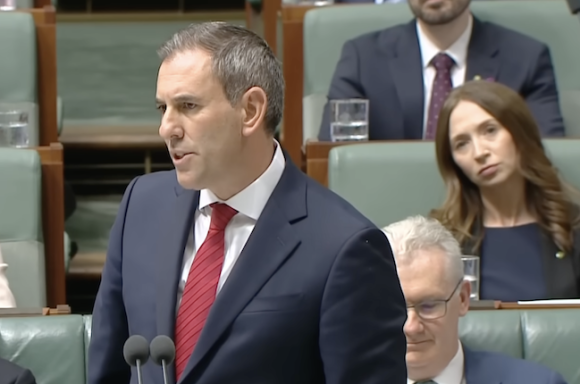
The beginning of the end
It may have once been convincing that faith in markets, hostility to redistribution, and generous tax concessions for capital would lead Australia to greatness, but the realities of everyday life are eroding that conviction. What once passed for economic realism now looks like ideological inertia.
This is precisely why capital gains tax reform is now more likely to come from Labor. Unlike the Coalition, Labor has begun, cautiously but clearly, to treat inequality as a legitimate object of economic policy rather than a market outcome to be endured.
The CGT debate therefore matters far beyond tax design. It marks a moment in which long‑standing assumptions about Australian economic policy are being openly questioned, and where the choice between democratic fairness and asset‑based privilege is once again visible.
If Labor proceeds with reform, it will not simply be adjusting a tax setting but signalling clearly that economic fairness still matters in Australia. Much work remains to be done, but this could well be the beginning of the end for Australian neoliberalism.
Carl Rhodes is Professor of Business and Society at the University of Technology, Sydney. He has written several books on the relationship between liberal democracy and contemporary capitalism. You can follow him on X/Twitter @ProfCarlRhodes.
Support independent journalism Subscribe to IA.


Related Articles