
Incendiary exchanges destined to ignite national discourse, wild showdowns between livid MPs.
Fake scandals, alleged cover-ups, dodgy rorts claims, rumoured fractures within government.
It sounds like a typical session of federal parliament, right?
But in the fictional realm of online disinformation, only the names have been added to discredit the innocent.
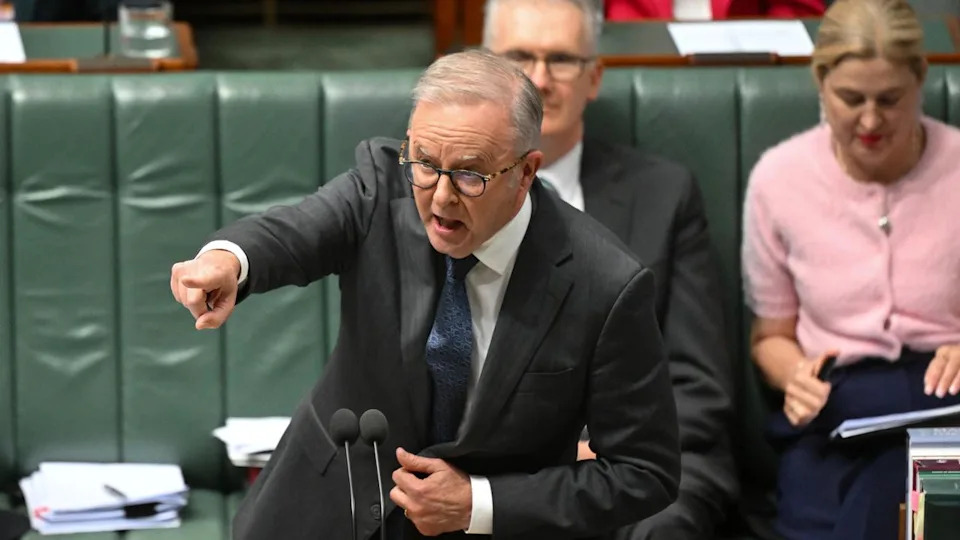
Drama during Question Time is hardly new but AI is being used to corrupt the political narrative. (Lukas Coch/AAP PHOTOS)
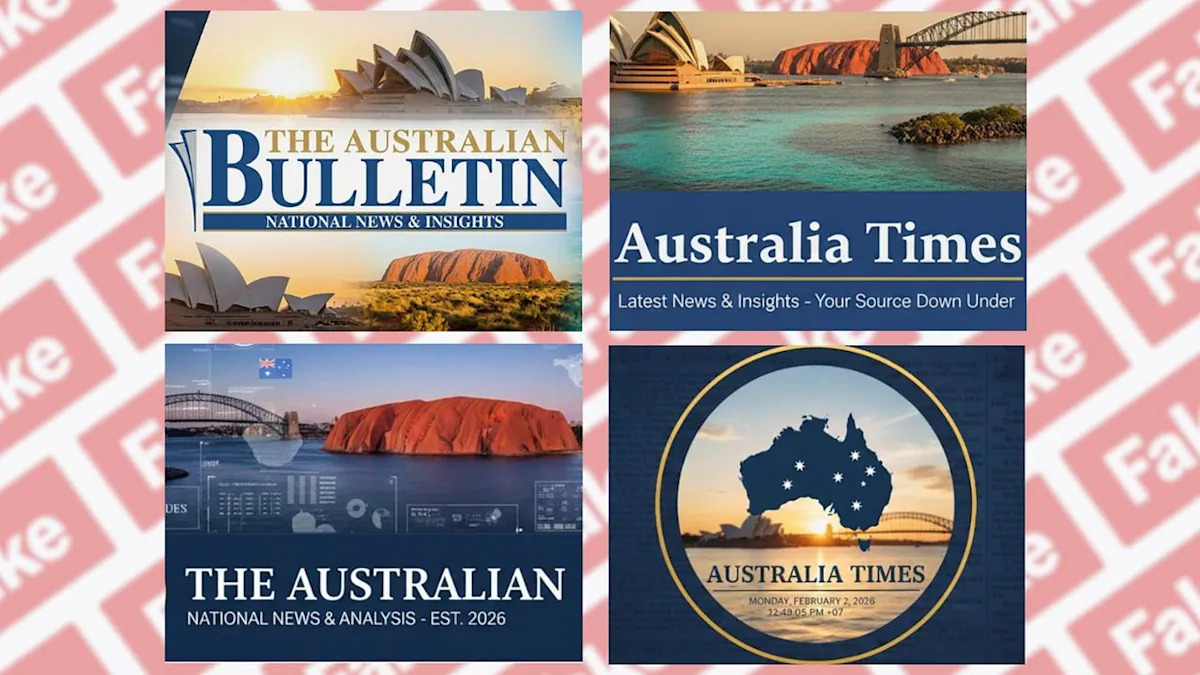
An AAP FactCheck investigation reveals that a select series of Facebook pages have taken to posing as reputable news organisations in a bid to politically mislead hundreds of thousands of Australian social media users.
Pages called The Australian, Australia Times and The Australian Bulletin are publishing content generated using artificial intelligence multiple times daily about the likes of Prime Minister Anthony Albanese, One Nation leader Pauline Hanson, Foreign Affairs Minister Penny Wong and WA Senator Fatima Payman.
Most of the made-up material focuses on the workings of federal parliament, although some is devoted to bogus confrontations between political commentators and MPs during television interviews.
Curiously, the pages are run offshore by users in Vietnam designed to direct readers to an external website strewn with adverts.
Experts say the content appears to be part of a co-ordinated operation pushing large volumes of AI-generated political disinformation to drive engagement and monetise web traffic.
One of the pages, The Australian, appears to trade on the credibility of the Murdoch-owned national daily broadsheet of the same name.

The fake news pages even have their own logos. (PR IMAGE PHOTO)
Facebook’s page transparency details reveal it is operated by 12 people from Vietnam and in a former life, was a fan page for long-running British TV soap Emmerdale about the comings and goings in a fictional village in the Yorkshire Dales.
The other two pages have also been through multiple name changes, with many also related to the TV series, which first aired in 1972 and at its height, attracted more than 11 million viewers per episode.
The Australian Bulletin is managed by users in Vietnam and Indonesia, while details for the Australia Times page are unclear.
The Australian page also claims to be authorised by the Australian Christian Lobby, appearing to mimic political authorisation statements typically used on political advertisements to convey authenticity.
However, the lobby has told AAP FactCheck it has no knowledge of the site.
Since the beginning of March, The Australian has posted, on average, 11 times daily and almost exclusively with the aim of presenting Australian political disinformation.
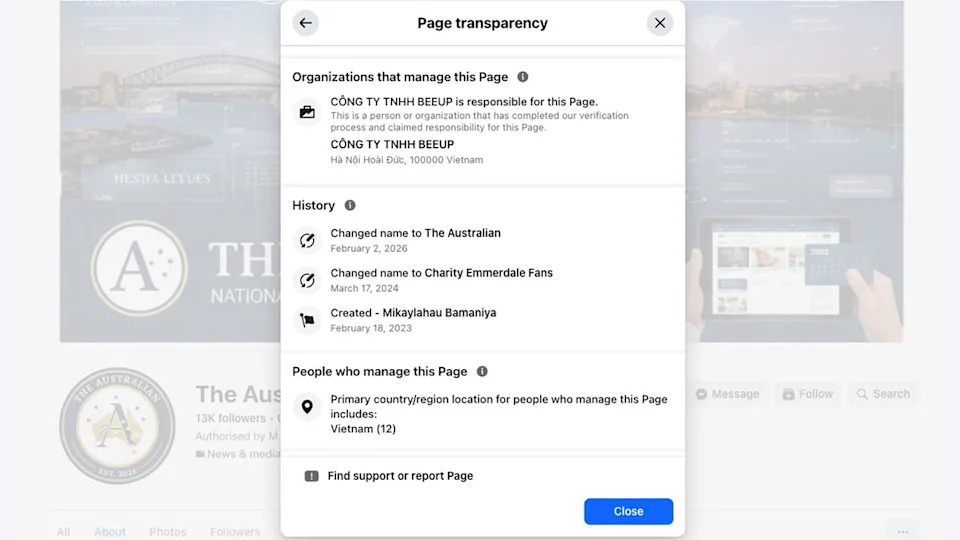
The pages have all gone through multiple name changes and only recently began focusing on Australia. (PR IMAGE PHOTO)
“BREAKING: Parliament falls silent as Pauline Hanson unexpectedly collapses during live parliamentary session,” one post reads alongside an AI-generated image of the Queensland senator.
Several other posts by the fictitious pages also feature disinformation about Senator Hanson’s health.
This prompted her to actually post on social media that multiple concerned members of the public had contacted her office, checking on her wellbeing after viewing the content.
Other posts feature concocted clashes between politicians, made-up quotes and the use of AI-generated images.
The Australian Bulletin and Australia Times simultaneously post identical content to The Australian.
Collectively, the three sites boast more than 36,000 followers.
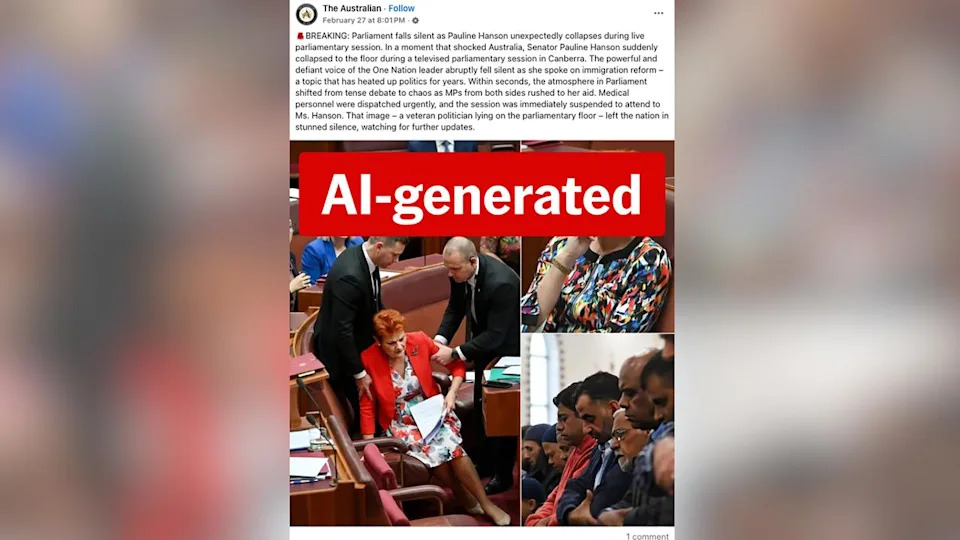
Senator Pauline Hanson is a repeated target of the disinformation pages. (PR IMAGE PHOTO)
While engagement varies significantly between individual posts, some have been shared hundreds of times and seen by thousands more.
With each one published, all three pages direct users to an external website via a link in the comments section.
The site, called soapspoiler.net, appears to reference the pages’ previous incarnation as Emmerdale fan pages.
Other links connect the accounts. Each of the three Facebook pages lists an email address ending in @fbtarget.com.
FbTarget is a Hanoi-based social media fan page management system allowing users to operate multiple pages at once, including scheduling posts, managing inboxes and hiding comments.
FbTarget is also listed on the “contact us” page of the soapspoiler.net website, alongside another Vietnamese company, Bee Up.
Bee Up also manages fan pages and says it provides “knowledge and solutions” for individuals passionate about making money online, based on “accumulated secrets”.
AAP FactCheck put a series of questions to both FbTarget and Bee Up without receiving a response.
Macquarie University Cyber Security Hub executive director Dali Kaafar says the various links suggest a co-ordinated effort consistent with an “industrialised content” model.
“In many cases, the primary motivation behind these networks is commercial,” Professor Kaafar says.
“Operators produce large volumes of low-cost content designed to resemble legitimate news and distribute it through social platforms to generate clicks and advertising revenue.”
Political content is particularly effective for this purpose as it drives engagement and sharing, he adds.
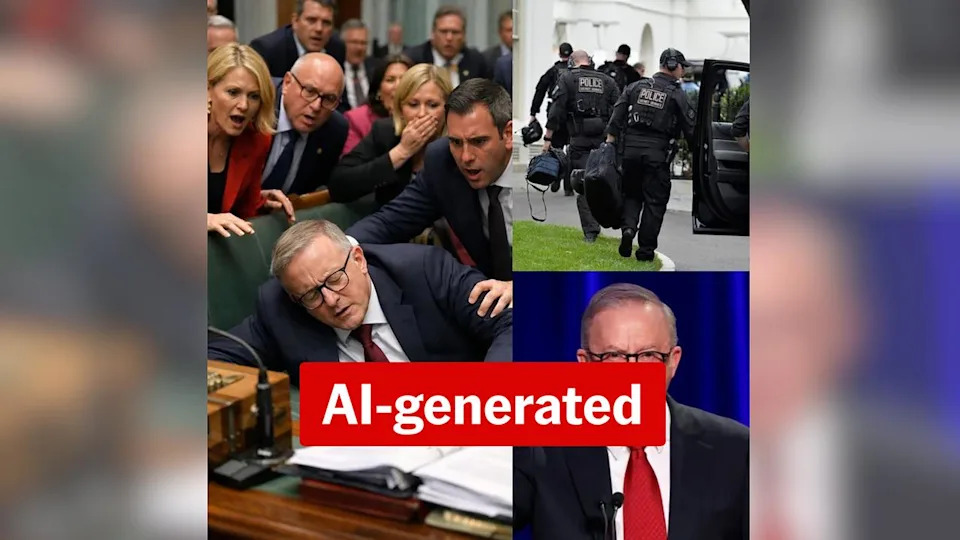
Experts say the sensationalist pages focus on political content because it drives more engagement. (PR IMAGE PHOTO)
Even if the primary motivation is financial, Prof Kaafar says the impact of the political disinformation is real.
“Once a network of pages and websites has been built and accumulated an audience, it can function as a distribution channel that amplifies misleading or polarising narratives,” he says.
“In other words, profit-driven content farms can unintentionally contribute to the spread of political misinformation, especially during periods of heightened political attention.”
Cybercrime investigator at Sydney-based IFW Global Ken Gamble agrees that the pages likely represent an engagement-driven advertising model aimed at maximising profit.
However he points out that discovering those ultimately behind the disinformation is much harder.
“The appearance of a marketing platform or domain linked to the pages does not necessarily mean that company is behind the activity, as these tools can be used by third parties anywhere in the world,” he says.
“Without deeper technical investigation, it would be premature to rule out other actors or sinister motivations.”