
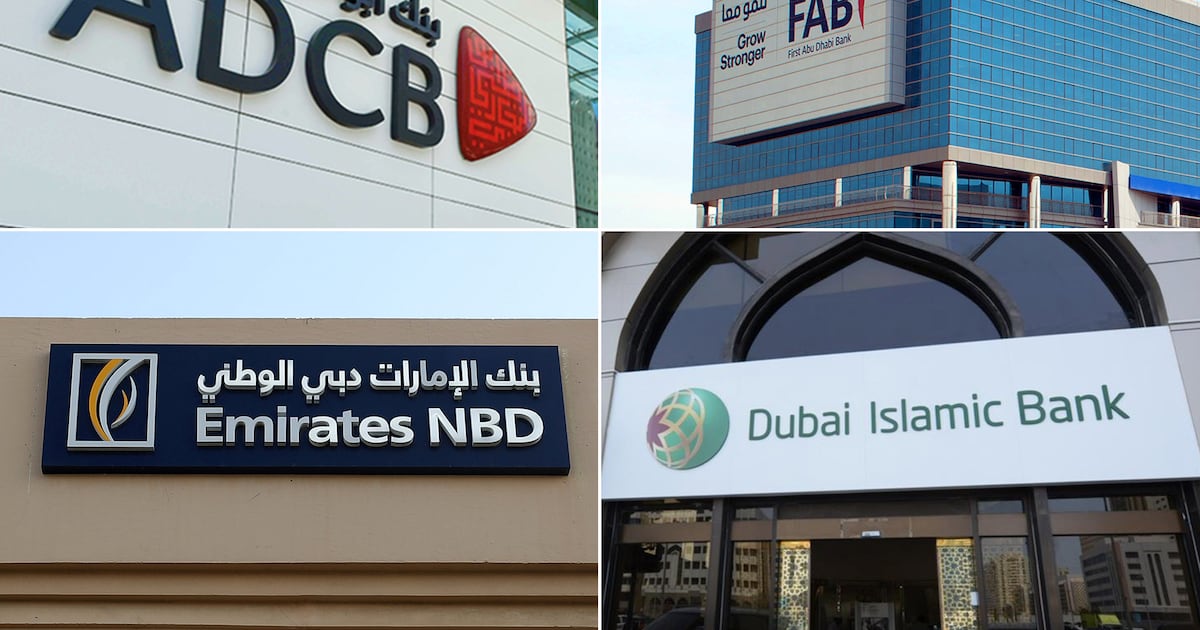
The banking sector in the UAE is “strong” and can sustain the impact of the Iran war and the implications of a subsequent high interest rate regime amid the conflict, a senior bank executive has said.
There has been “no real impact to date” from the raging conflict in the Middle East on financial institutions in the Arab world’s second largest economy, Henrik Raber, head of global banking at Standard Chartered in Dubai, said.
“The UAE banking sector is in a very strong state. We have a lot of liquidity,” he told The National on the sidelines of the Future Investment Initiative in Miami.
Though tourism, hospitality, aviation and other sectors of the economy have experienced a slowdown since the war broke out on February 28, the financial sector remains resilient, the Central Bank of the UAE said earlier this month.
The regulator has also rolled out a “resilience package” for lenders in the country, which allows them to free up additional liquidity and support the UAE’s continued economic growth.
S&P Global Ratings earlier this month also affirmed the UAE’s “AA/A-1+” rating and said its outlook remains stable despite the uncertainty brought by the war’s impact on supply chains, economies and credit conditions.
The ratings agency said investment and consumer confidence will be vulnerable in to the conflict, as will the country’s financial services sector, although the UAE’s liquid asset buffer is expected to contain the conflict’s impact on credit.
Israel and US bombardment of Iran, which has entered the fourth week, and Tehran’s retaliatory strikes on its Arab neighbours have tipped the Middle East into its worst geopolitical turmoil.
The effective closure of the Strait of Hormuz, the narrow waterway through which a fifth of global oil and gas supplies pass, to all but a few commercial vessels has sent shock waves across the global economy.
Continued enthusiasm
However, David Manlowe, chief executive of Franklin Templeton subsidiary B Street Partners, remains confident in the growth prospects of the UAE and the broader region.
“The conflict has not diminished our enthusiasm one bit for the region,” the asset manager said.
Economic diversification efforts and high demand for financing are contributing to a private credit boom in the Middle East as investors seek to diversify returns.
Saudi Arabia’s Public investment Fund and the UAE’s sovereign wealth funds have also been partnering with major players in the industry, including Goldman Sachs and BlackRock.
A report from PwC last year estimates the private credit market in the six-member economic block of the GCC and Egypt will grow by 15 per cent to 30 per cent annually over the next five to six years.
The size of the private credit market in the region is expected to grow between $11 billion and $20 billion in the next four years, according to the report.
“In terms of the need for capital, the role that private capital will play, are unaffected by the conflict,” Mr Manlowe said.
Interest rates add to unease
Concerns, however, are rising with potential cracks in the $1.8 trillion private credit market.
In January, Blue Owl, a private credit lender, sold $1.4 billion of loan assets in three of its private debt funds. In November it abandoned plans of a merger of two of its funds after unease over potential losses.
“All of these occurred over a very short period of time, and that caused people to conflate them and think, ‘oh my gosh, there’s a real underlying systemic problem’,” Mr Manlowe said.
Now, the Iran war is putting a new twist on the private credit market story.
The price of Brent crude, the benchmark for two thirds of global oil, has risen more than 50 per cent amid crisis that has also forced significant production shut-ins across the Middle East due to retaliatory Iranian strikes on key energy sites.
Every 10 per cent sustained increase in oil prices would raise inflation by 40 basis points, and will weaken growth by 0.1 to 0.2 per cent, according to the International Monetary Fund estimates.
Policy adjustment
Central banks are adjusting monetary policy accordingly. The Federal Reserve and Bank of England are expected to keep rates on hold for the remainder of the year, while JP Morgan analysts believe the European Central Bank could deliver two rate hikes.
Higher interest rates could make it more difficult for borrowers with large debts to repay their loans, thus increasing the possibility of a rise in loan defaults.
“We already came from an elevated inflation position following Covid, and we’ve been working quite a few years to get it down. Now we have an energy shock,” Mr Raber said.
“I think we’re going to be fine. Medium-term we’re positive. We just need to get through this short-term spike.”