
Amid rising global fuel costs, a Central Coast business is electrifying Australia’s heavy vehicle fleet.
After a decades-long career in the fuel industry, Lex Forsyth now converts diesel trucks to electric power, using modular, swappable battery systems and charging infrastructure made in Australia.
Iran war live updates: For the latest on the Middle East war, read our blog.
Conversions cost $175,000 per truck, plus charging equipment and spare batteries, pushing the total closer to $750,000.
But with the fuel crisis, Mr Forsyth said an increasing number of trucking companies were reaching out about converting their fleets to electric.
“We were talking to one operator yesterday, his fuel bill has gone up by $350,000 a week, and he’s forecasting next week it’ll be closer to half a million dollars increase in his weekly fuel bill,” he said.
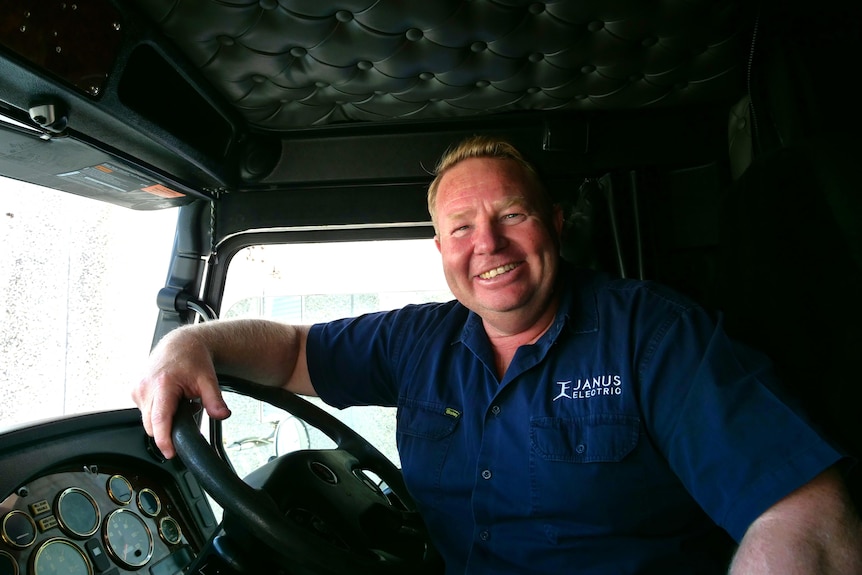
Lex Forsyth has converted 25 trucks from diesel to electric. (ABC Central Coast: Emma Simkin)
Mr Forsyth’s company, Janus Electric, uses a battery swap system, but he believes he needs government support to make the infrastructure more viable.
“This time four years ago, we took our first electric truck to Canberra … and we haven’t heard from them since then,” he said.
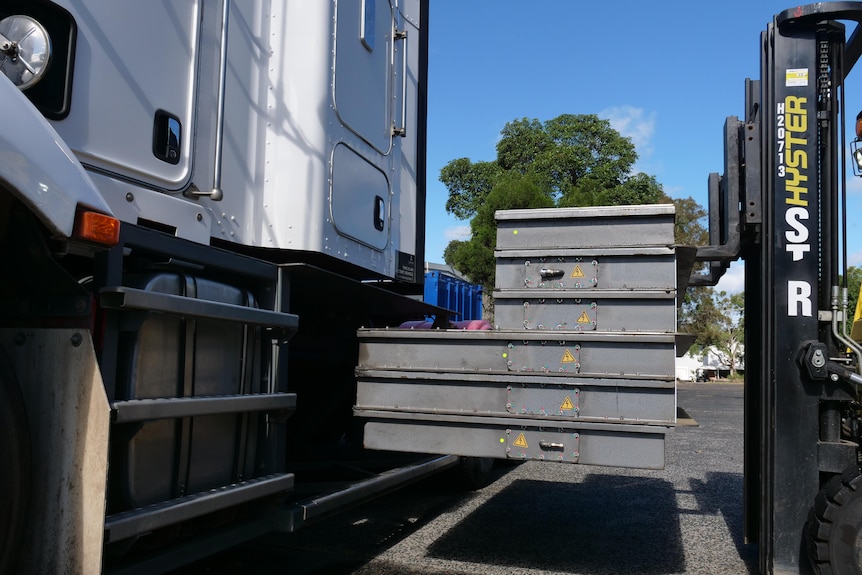
Low batteries are swapped out with full ones, so trucks don’t need to spend time re-charging. (ABC Central Coast: Emma Simkin)
He added that Australia needs to use excess daytime solar better.
“Any trucking operator that’s parking a truck up during the middle of the day to get recharged is probably going to go out of business … so we’ve got to store this energy with swappable batteries,” he said.
Transition to diesel
Elnaz Irannezhad, a senior lecturer in Transport Engineering at the School of Civil and Environmental Engineering at UNSW, said transitioning to electric trucks was feasible, but there remained barriers, including battery weight.
“In order to accommodate the battery weight, you have to load less freight basically,” Dr Irannezhad said.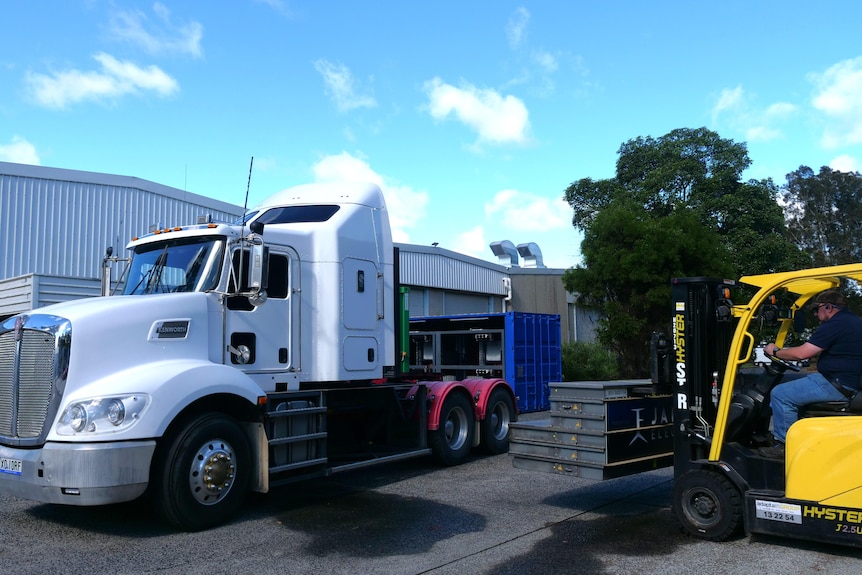
Electric trucks would have to carry less freight, due to the weight of the batteries. (ABC Central Coast: Emma Simkin)
“They’d have to load the vehicle about four tonnes or four-point-five tonnes less on battery electric trucks to meet the compliance requirements, and when you’re talking about productivity, that’s one of the issues.”
Despite these challenges, she said energy diversity was essential.
“The scarcity as well as the price is not going to come down soon, so it necessitates looking at alternative options; hydrogen, battery, absolutely,” she said.
Dr Irannezhad said she expected the geopolitical situation would bring a short-term shock, but it would not be enough to change the trucking industry’s reliance on diesel.
“By 2050, my prediction is that less than 20 per cent of [Australian] trucks would become electric,” she said.
Companies are already making changes
The Smart Energy Council sees a faster transition.
General manager Tim Lamacraft said companies such as furniture giant IKEA were already using electric trucks and more would follow.
How are rising fuel costs or supply issues affecting you or your business?
Share your insights to help inform our journalism.
“Yes, there must be changes to regulation and potentially legislation to get more electric trucks on the road due to their weight, but the reality is, it’s not a question of if, it’s a question of when,” he said.
Another sector grappling with the fuel shortage is rubbish collection, which is exploring alternative fuels such as used food oil.
But electric trucks still present challenges, according to Gayle Sloan, CEO of the Waste Management and Resource Recovery Association.
“We pull like six tonnes on average, and the trucks often can’t stay long enough to do the routes, and the recharging isn’t quick enough,” she said.
“We tend to do about a thousand to fifteen hundred bins per run, over a three- or four-hour route, and then we go back out again. It doesn’t actually work for us electrically as yet.”
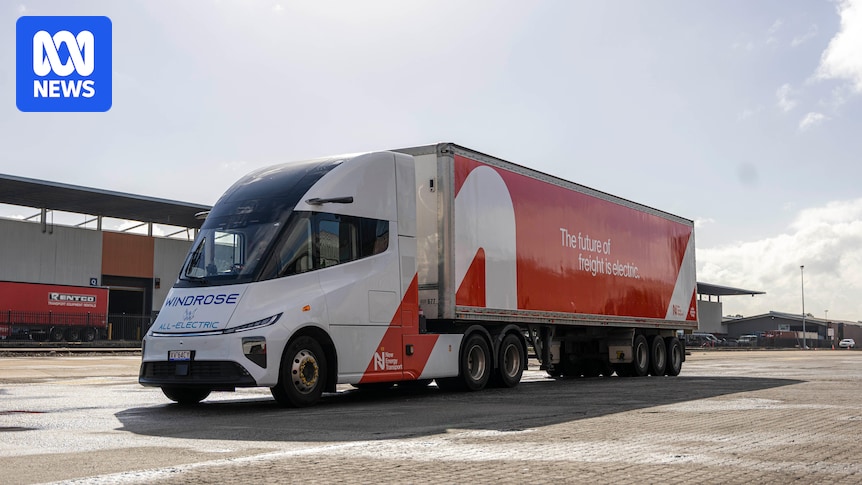
Dan Bleakley, co-founder and co-CEO of New Energy Transport, said the company recently completed Australia’s first end-to-end fully electric delivery, transporting consumer goods from Sydney to Canberra.
He said the trip highlighted both efficiency and cost savings.
“The all-electric prime mover completed the route 25 minutes faster than a diesel truck … and energy costs were reduced by about 85 per cent compared to diesel.”
On the trucks’ range, he said the Windrose Prime Mover used for the delivery had completed 670 kilometres on a single charge in overseas trials and 480km locally from Picton to Beresfield and back.
He also said megawatt charging allowed high-speed charging in excess of 1,000 kilowatts.
“Basically, you could drive for five or six hours, stop for lunch or a break, charge the truck for an hour, and then do another five or six hours,” he said.
Mr Bleakley said there had been “a huge surge in inquiries from both customers and investors over recent weeks” as businesses look to adopt electric trucks.
He is taking the electric prime mover to Parliament House in Canberra on Monday as part of a showcase.
Loading…