
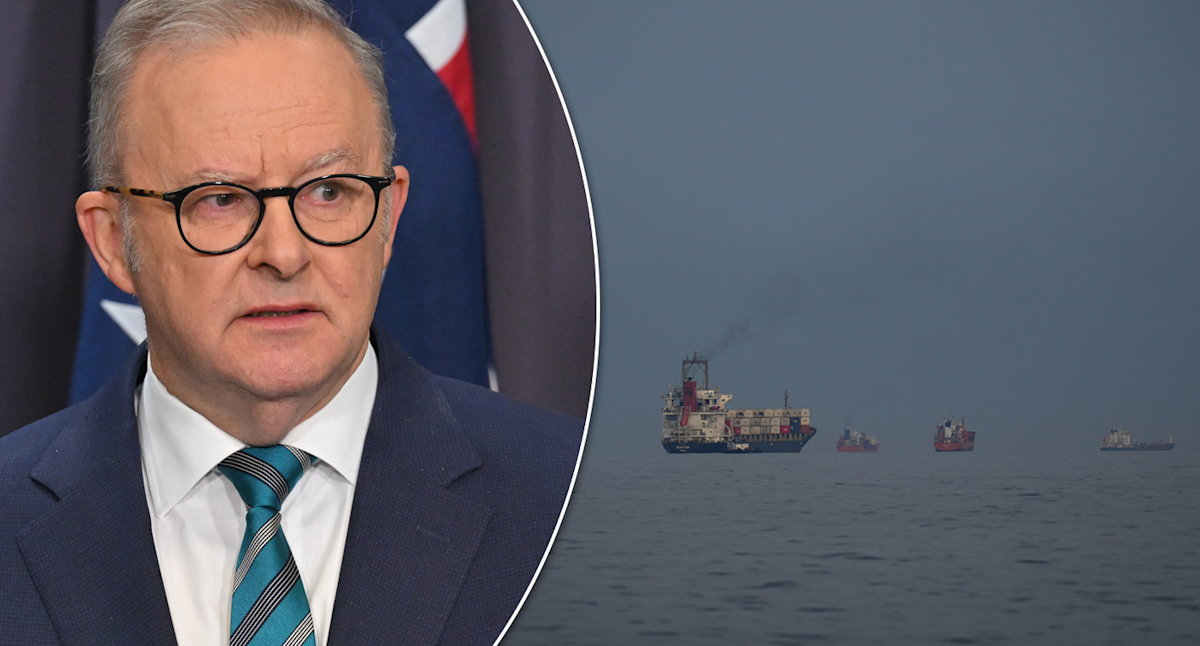
 With surging oil prices and interest rate hikes, the economy and the consumer could be under immense pressure this year. (Source: AAP)
At the outset of the Iran war earlier this month, AMP economist Shane Oliver told Yahoo Finance the ghosts of the 1970s oil shock quietly loomed in the background as the world watched Donald Trump’s “excursion” into the Gulf.
At the time, the Organisation of Arab Petroleum Exporting Countries (OAPEC) enforced a strict oil embargo against nations perceived as supporting Israel in the Yom Kippur War. Oil prices dramatically shot up, followed by years of inflation, stagflation and a widespread global recession in developed economies in the 1980s.
More than a month into the current conflict, those ghosts of the 1970s have become a lot more haunting for policy makers around the world.
“There is certainly haunting echoes of the 1970s in all of this right now,” economist Warren Hogan said on Monday.
RELATED
The managing director of EQ Economics said he didn’t believe Australia would likely head into a period of stagflation if the Iran war drags on, but admitted a recession was likely needed to get the Australian economy where it needs to be after recent shocks and stubborn inflation.
Responding to a listener question on ABC’s RN Breakfast this morning about whether we can “get our economy back onto a stable path without a recession”, he didn’t like the chances.
“It’s looking very unlikely,” he said.
“Unfortunately, we were on an unstable path even before this shock coming out of the Middle East. This is the worst possible thing that could happen to us, where we’re trying to reduce inflation with the minimum of disruption.”
Inflation was rising again before the conflict, and now we’ve had the mother of all disruptions.
“I think we’re going to have a recession of some sort, a garden variety recession, and it will be somewhat disruptive, because we are going to see the job market change as AI comes in over the next few years. So my answer would be, I think it’s a better than even money chance that we’ll have a recession of some type in the next two or three years.”
If it comes to pass, we likely won’t be alone, with Asia and Europe highly vulnerable to the current oil shock.
Historian Niall Ferguson has been quick to point out in recent weeks that these sorts of oil shocks almost always end the same way. In a weekend essay in Britain’s Sunday Times yesterday, he warned readers to brace themselves.
Story continues
“History shows most oil shocks lead to recession,” the headline stated.
“Any crisis in the Middle East sends shockwaves through the global economy. Today’s disruption to the Gulf’s oil supply is already bigger than those of the 1970s,” he wrote.
As for Australia, money markets have now priced in a terminal RBA cash rate of 4.85 per cent, suggesting the Reserve Bank could hike another three times this year.
On top of surging petrol prices, and the prospect of shortages and fuel rationing, the economy and the consumer could be under immense pressure this year. Throw in supply chain disruptions and it’s a recipe for possible disaster.
But when asked if Australia will see stagflation, Hogan was unsure but said something that looks like it was quite possible.
 Inflation will be transmitted quickly through the economy due to already thin margins in many sectors, Hogan said. (Source: AAP)
“I’m not convinced that stagflation, as defined by high unemployment and high inflation, is the likely scenario,” he said.
“It could be high inflation and low economic growth for a few years. But we are in a very different world when it comes to the supply and demand balance for labour – that is, we are in a world of labour shortage. There are hundreds of thousands of job vacancies sitting in our economy.”
He said AI and technology disruptions will likely push unemployment up, but the key will be to get economically displaced workers into new jobs.
“So Stagflation is probably not the right concept, well, not the right way to call it, but it certainly is the right sort of thematic in that low growth and high inflation are already sort of part of the Australian economic scene right now,” Hogan said.
National cabinet will meet today to discuss the Middle East fuel crunch for a second time.
State and territory leaders and business groups have called for a national approach to plot a path through the crisis rather that a fractured response in different jurisdictions.
“We don’t want to head back into that situation that we had a couple of years ago in Covid, where Queensland was doing one thing, NSW had a different approach, Western Australia cut itself off from the rest of the economy, the Victorian economy was locked down for over a year,” Australian Chamber of Commerce and Industry chief executive Andrew McKellar said.
Get the latest Yahoo Finance news – follow us on Facebook, LinkedIn and Instagram.